

Early Education: Building Strong Foundations at Home
The first five years of a child's life represent the most critical period for brain development, social-emotional growth, and cognitive advancement. During this window, children develop the fundamental skills that will support their academic success and personal well-being throughout their entire lives. Quality early education programs provide structured, nurturing environments where young learners can explore, discover, and grow at their own pace while building essential competencies that extend far beyond basic academics.
The Science Behind Early Childhood Development
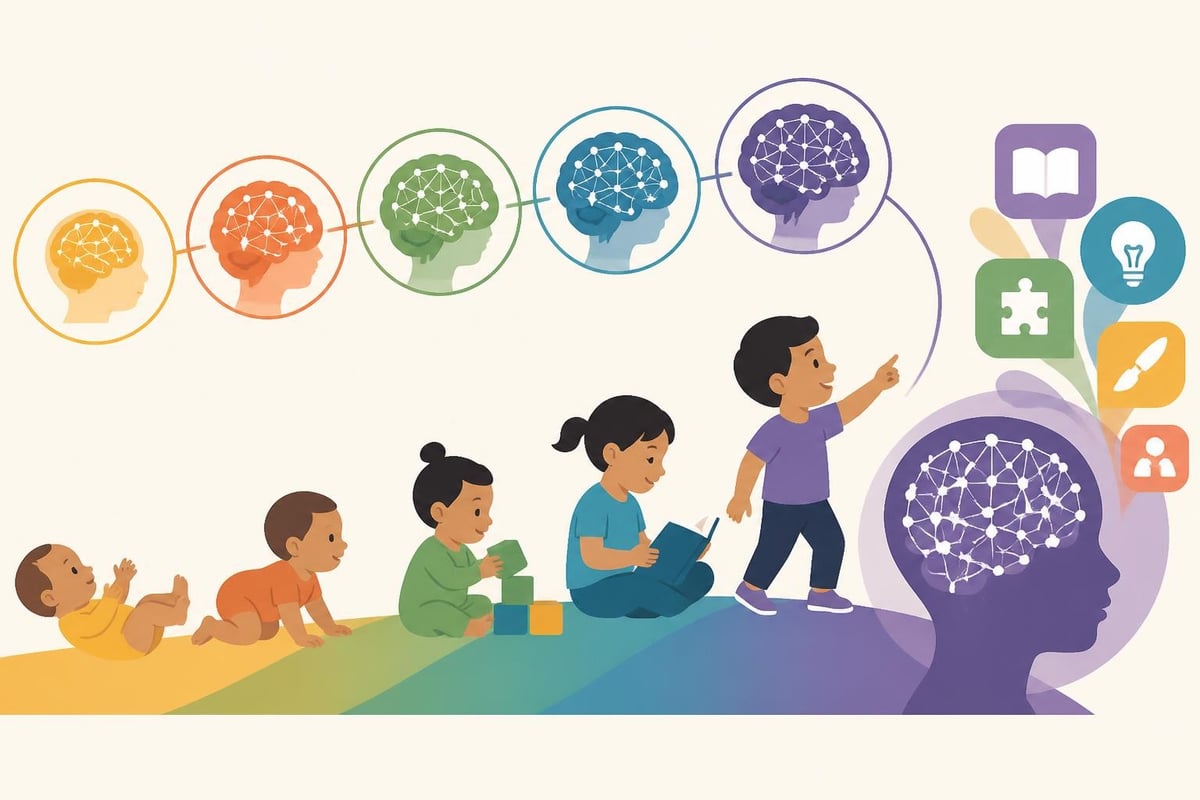
Brain research consistently demonstrates that 90% of brain development occurs before age five, making the early years uniquely important for establishing neural pathways. During this period, children form approximately one million neural connections every second, creating the architecture for all future learning, behavior, and health outcomes.
The U.S. Department of Education recognizes early childhood education as a critical investment in children's futures, supporting programs that enhance outcomes from birth through third grade. This governmental recognition underscores the importance of providing high-quality experiences during these formative years.
Key Developmental Domains
Early education addresses multiple interconnected areas of growth:
- Cognitive development: Problem-solving, memory, language acquisition, and early literacy
- Physical development: Fine and gross motor skills, coordination, and body awareness
- Social-emotional development: Self-regulation, empathy, relationship building, and emotional expression
- Creative development: Imagination, artistic expression, and innovative thinking
Research from the National Bureau of Economic Research demonstrates that early childhood programs deliver particularly strong benefits for disadvantaged children, with effects persisting into adulthood. These programs provide critical support during the most malleable period of human development.
Curriculum Components for Young Learners
Effective early education programs blend structured learning with child-led exploration. The curriculum should balance adult-guided activities with opportunities for independent discovery, creating environments where children feel safe to take risks and make mistakes.
Language and Literacy Foundations
Language development begins at birth and accelerates rapidly during the preschool years. Quality programs incorporate:
- Rich conversational experiences with responsive adults who expand on children's ideas
- Exposure to diverse vocabulary through books, songs, and everyday interactions
- Print-rich environments where children see words connected to meaningful contexts
- Phonological awareness activities that build sound discrimination skills
- Early writing opportunities using various tools and materials
Children who receive strong language support in childhood care education settings develop literacy skills that position them for academic success in kindergarten and beyond.
Mathematical Thinking
Young children are natural mathematicians who constantly categorize, compare, and quantify their world. Early math experiences should include:
| Mathematical Concept | Age-Appropriate Activities |
|---|---|
| Number sense | Counting games, quantity comparison, one-to-one correspondence |
| Patterns | Sorting objects, creating repeating sequences, identifying patterns in nature |
| Spatial relationships | Block building, puzzle solving, positional language |
| Measurement | Comparing sizes, exploring volume with sand and water, discussing weight |
| Data analysis | Graphing preferences, categorizing collections, making predictions |
These foundational mathematical experiences build the conceptual understanding that supports later academic math learning.
Creating Nurturing Learning Environments
The physical environment serves as the "third teacher" in early education settings, providing materials, spaces, and provocations that invite exploration and discovery. Thoughtful environment design considers how children move through spaces and interact with materials throughout their day.
Indoor Learning Spaces
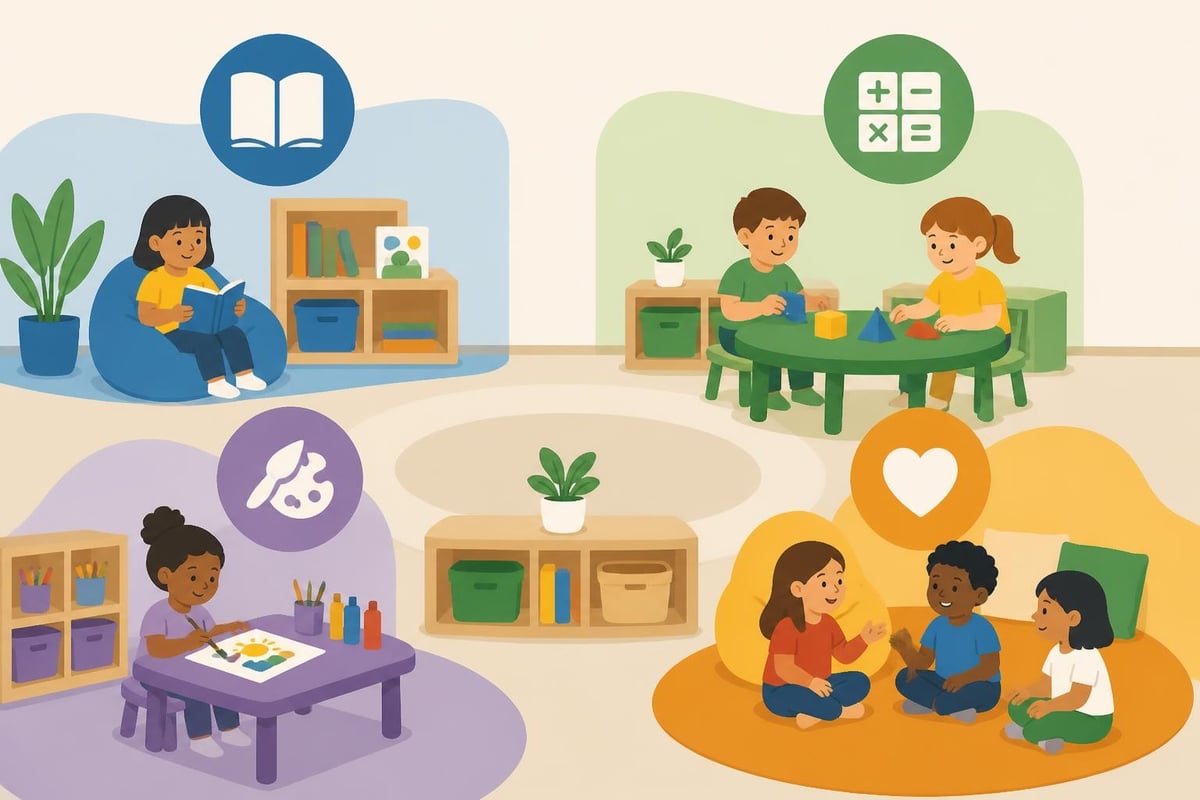
Well-organized indoor environments feature distinct learning centers that support different types of play and learning. Home childcare providers can create rich learning environments even in residential settings by designating specific areas for various activities.
Essential learning centers include:
- Dramatic play area for role-playing and social development
- Block and construction zone for spatial reasoning and problem-solving
- Art studio with diverse materials for creative expression
- Library corner with comfortable seating and age-appropriate books
- Science and discovery table for hands-on exploration
- Quiet space for rest and self-regulation
The Institute of Education Sciences emphasizes that quality learning environments provide both structure and flexibility, allowing children to make choices while maintaining predictable routines.
Outdoor Exploration
Nature provides unparalleled opportunities for sensory experiences, risk-taking, and wonder. Regular outdoor time supports gross motor development, environmental awareness, and stress reduction. A systematic review on environmental education highlights how early exposure to nature fosters lifelong environmental stewardship and awareness.
Outdoor learning experiences should include free play, guided nature exploration, gardening activities, and opportunities to observe seasonal changes.
The Role of Play in Learning
Play is not frivolous; it represents children's most important work. Through play, young learners practice social skills, test hypotheses, solve problems, and make sense of their experiences. Quality early education programs recognize various types of play and their unique contributions to development.
Types of Meaningful Play
Research demonstrates that different play types support specific developmental outcomes:
- Solitary play: Builds concentration, independence, and self-entertainment skills
- Parallel play: Allows observation of peers and gradual social engagement
- Associative play: Develops sharing, communication, and cooperative skills
- Cooperative play: Requires negotiation, role assignment, and collaborative problem-solving
- Constructive play: Enhances planning, persistence, and creative thinking
- Symbolic play: Develops abstract thinking and emotional processing
The Learning Policy Institute emphasizes that high-quality programs integrate play-based learning with intentional teaching, creating experiences where children develop skills through joyful engagement.
Balancing Structure and Freedom
Effective programs establish daily rhythms that provide security while allowing flexibility for children's interests and needs. A typical day might alternate between:
- Large group activities that build community
- Small group instruction targeting specific skills
- Independent choice time for self-directed exploration
- Outdoor play for physical activity and sensory experiences
- Quiet time for rest and reflection
This balanced approach respects children's need for both guidance and autonomy.
Supporting Social-Emotional Development
The ability to recognize and manage emotions, form positive relationships, and navigate social situations may be the most critical skill set children develop during the early years. Programs that prioritize social-emotional learning create foundations for mental health and relationship success throughout life.
Building Emotional Intelligence
Children need explicit support to develop emotional literacy. Educators can facilitate this growth by:
- Labeling emotions during everyday moments
- Validating feelings while guiding appropriate expression
- Modeling self-regulation strategies like deep breathing
- Creating opportunities for empathy development
- Teaching conflict resolution skills through coaching
Research from NYU Steinhardt’s Metro Center demonstrates that program quality significantly impacts children's life trajectories, with social-emotional support serving as a key quality indicator. For families considering support services, partnering with professionals like Alquimedez Mental Health Counseling can provide additional resources for children experiencing emotional or behavioral challenges.
Fostering Positive Relationships
Young children learn about themselves through relationships with caring adults and peers. Infant care services recognize that consistent, responsive caregiving builds secure attachments that enable healthy exploration and learning.
| Relationship Skill | How Educators Support Development |
|---|---|
| Turn-taking | Structured games, conversation practice, sharing routines |
| Cooperation | Group projects, partner activities, collaborative problem-solving |
| Empathy | Discussions about feelings, perspective-taking activities, service projects |
| Respect | Modeling courteous behavior, establishing clear expectations, celebrating diversity |
Partnering with Families
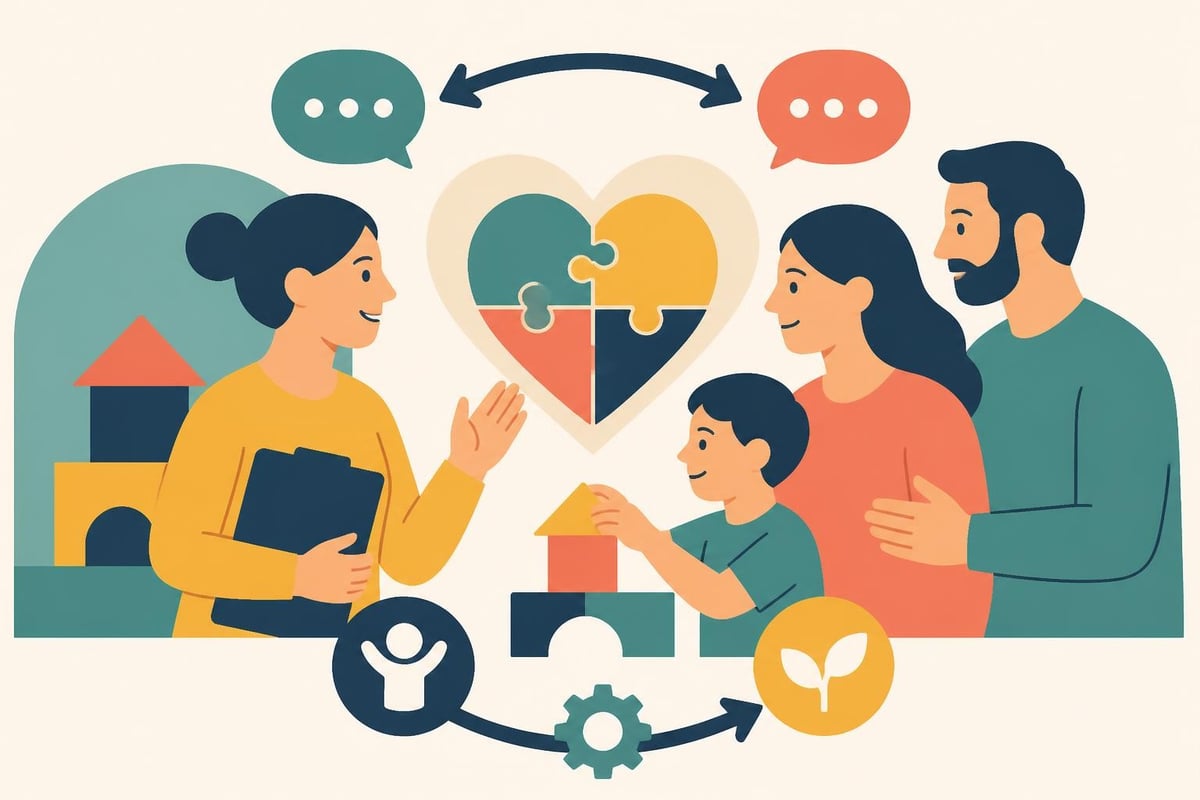
Early education programs achieve the best outcomes when they function as true partnerships with families. Parents and guardians are children's first and most important teachers, and their involvement enhances program effectiveness significantly.
Communication Strategies
Regular, meaningful communication keeps families informed and engaged:
- Daily verbal check-ins during drop-off and pick-up
- Written updates about learning activities and developmental progress
- Digital photo sharing that documents children's experiences
- Scheduled conferences to discuss goals and celebrate growth
- Family events that welcome parents into the learning community
The Office of the Assistant Secretary for Planning and Evaluation highlights the importance of family engagement in high-quality early learning programs, noting that parental involvement correlates with stronger child outcomes.
Culturally Responsive Practice
Effective programs honor the diverse backgrounds, languages, and traditions that families bring to the learning community. This includes:
- Learning about family customs and incorporating them into classroom activities
- Providing materials and books that reflect children's cultural identities
- Supporting home language development alongside English acquisition
- Adapting communication methods to match family preferences
- Creating welcoming spaces where all families feel valued
Quality Indicators in Early Education
Not all programs deliver equal benefits. Research identifies specific quality markers that predict positive child outcomes and distinguish excellent programs from adequate ones.
Structural Quality Elements
These foundational components create conditions for effective teaching:
- Low child-to-teacher ratios enabling individualized attention
- Small group sizes supporting relationship development
- Educated, trained staff with early childhood credentials
- Safe, well-maintained facilities meeting licensing standards
- Developmentally appropriate materials in sufficient quantity
Studies from the Center for Education Policy Analysis examine quality differences across early childhood sectors, finding that staff qualifications and intentional programming significantly impact child development outcomes.
Process Quality Measures
These dynamic elements describe how adults interact with children:
High-quality interactions feature:
- Warm, responsive relationships between adults and children
- Conversations that extend children's thinking and language
- Scaffolded learning that challenges without overwhelming
- Feedback that encourages persistence and growth mindset
- Individualized support based on developmental observation
Programs demonstrating strong process quality produce the most significant gains in children's cognitive, language, and social-emotional development.
Health and Safety Foundations
Physical well-being serves as the foundation for all learning. Early education programs must prioritize children's health, nutrition, and safety while teaching children to care for their own bodies.
Nutrition and Physical Activity
Young children need regular nutritious meals, healthy snacks, and abundant opportunities for movement. Programs should:
- Serve balanced meals following USDA guidelines
- Introduce children to diverse, wholesome foods
- Make mealtimes social learning opportunities
- Provide at least 60 minutes of active play daily
- Teach basic nutrition concepts through cooking activities
- Support developing self-help skills at meals
Safety Protocols
Comprehensive safety measures protect children while teaching age-appropriate self-protection skills:
- Environmental safety: Secured facilities, non-toxic materials, proper supervision ratios
- Health screening: Daily wellness checks, medication administration protocols, illness policies
- Emergency preparedness: Fire drills, lockdown procedures, first aid training
- Transportation safety: If applicable, proper car seats and vehicle maintenance
- Injury prevention: Age-appropriate risk management, playground supervision
Families considering early education and childcare options should ask detailed questions about safety procedures and observe how programs implement protective measures.
Transitions and Continuity
Children experience multiple transitions during the early years, from home to care settings, between age groups, and eventually to kindergarten. Thoughtful transition support eases these changes and maintains developmental continuity.
Supporting Major Transitions
Starting early education programs:
- Gradual entry schedules allowing adjustment time
- Welcome visits before the official start date
- Comfort items from home during initial weeks
- Consistent routines providing predictability
- Extra emotional support during separation
Moving to kindergarten:
Effective programs prepare children for elementary school by building academic readiness alongside independence skills. This includes practicing routines like lining up, following multi-step directions, managing personal belongings, and sustaining attention during group instruction.
Assessment and Documentation
Ongoing observation and documentation inform teaching decisions and help families understand their children's progress. Effective assessment in early education looks quite different from traditional testing.
Authentic Assessment Approaches
Quality programs use multiple methods to understand children's development:
| Assessment Method | Purpose | Examples |
|---|---|---|
| Observational notes | Capture spontaneous learning moments | Anecdotal records, running records |
| Photo documentation | Provide visual evidence of engagement | Learning stories with images |
| Work samples | Show progress over time | Art projects, writing attempts |
| Developmental checklists | Track skill acquisition | Milestone assessments |
| Video recordings | Analyze complex interactions | Social play, problem-solving sequences |
This information guides curriculum planning, identifies children needing additional support, and communicates with families about growth and development.
Professional Development and Quality Improvement
The field of early education continuously evolves as research reveals new insights about how young children learn. Programs committed to excellence invest in ongoing professional development for staff.
Continuing Education Opportunities
Early educators enhance their practice through:
- Formal coursework in child development and pedagogy
- Conference attendance featuring current research
- Professional learning communities with peer educators
- Coaching and mentoring relationships
- Specialized training in areas like special education or dual language learning
Programs that support educator growth create environments where both adults and children thrive as learners.
Quality early education during the critical first five years creates foundations that support children's success throughout their educational journeys and beyond. By addressing cognitive, social-emotional, physical, and creative development through play-based, relationship-centered approaches, effective programs nurture the whole child. If you're seeking a nurturing home childcare environment that prioritizes developmental growth and individualized attention, Step by Step Care provides the expertise and warm environment where your child can flourish during these essential early years.


