

Daycare Website: Complete Guide for Home Childcare in 2026
Creating a professional daycare website has become essential for home childcare providers looking to attract families and build trust in their communities. In 2026, parents searching for quality care start their journey online, comparing options and evaluating providers before ever making a phone call. Your website serves as the first impression and often determines whether a parent will reach out to schedule a tour or move on to the next option. For home-based childcare businesses like Step by Step Care, a well-designed website bridges the gap between your nurturing care environment and the digital expectations of modern families.
Essential Elements Every Daycare Website Needs
Building an effective online presence requires more than just pretty pictures and basic contact information. Your daycare website must address specific parent concerns while showcasing what makes your home childcare unique.
Clear Value Proposition and Introduction
Parents visiting your site need to understand immediately what sets your childcare apart. Your homepage should communicate your philosophy, approach, and the benefits families receive within the first few seconds. Effective daycare website design emphasizes clear value propositions that resonate with parents seeking quality care.
Key components include:
- A welcoming headline that speaks to parent priorities
- Brief description of your childcare approach
- Age ranges you serve
- Available spots or enrollment status
- Primary differentiators (small group sizes, specialized curriculum, flexible hours)
Your about page should expand on your story, qualifications, and experience. Parents want to know the person caring for their children, so authenticity matters more than corporate polish.
Trust Signals and Safety Information
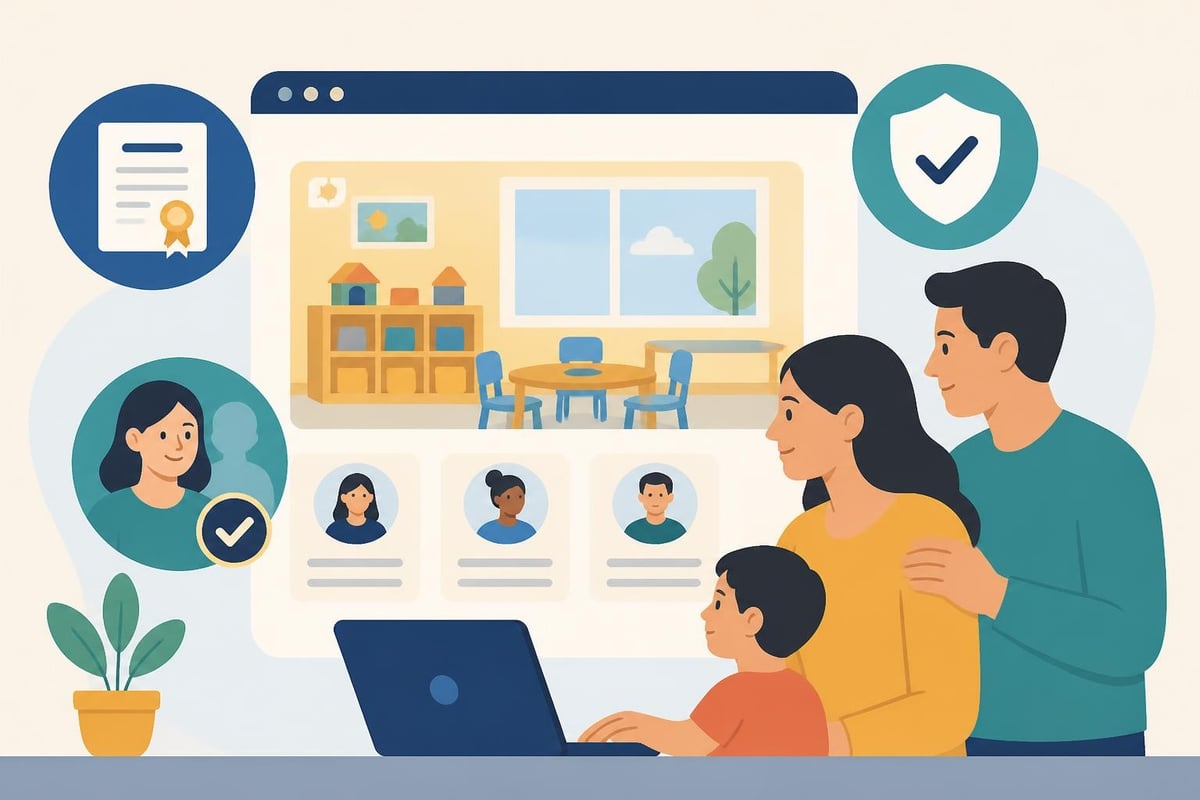
Safety concerns rank highest for parents evaluating childcare options. Your website must address these worries head-on with transparent information about your safety protocols and qualifications.
| Trust Element | What to Include | Why It Matters |
|---|---|---|
| Licensing Information | State license number, certification status | Proves legitimacy and compliance |
| Background Checks | Staff vetting process, ongoing requirements | Demonstrates commitment to safety |
| Safety Protocols | Emergency procedures, illness policies | Shows preparedness and professionalism |
| Insurance Coverage | Liability coverage, accident procedures | Provides parental peace of mind |
Real photography from your actual space builds authenticity far better than stock images. Your gallery should showcase your home environment, outdoor play areas, learning spaces, and daily activities with children engaged and happy.
Designing for Mobile and User Experience
Most parents search for childcare on their smartphones during lunch breaks or while commuting. A mobile-first approach ensures your site performs flawlessly on every device.
Responsive Design Fundamentals
Best practices for daycare website design emphasize mobile optimization as non-negotiable in 2026. Your site should automatically adjust to screen sizes, maintain readable text without zooming, and keep clickable elements appropriately spaced.
Navigation simplicity matters enormously for busy parents. They need to find critical information quickly:
- Tour scheduling or contact form
- Program details and age groups
- Rates and availability
- Location and hours
- Parent testimonials
Fast loading speeds prevent frustration and abandonment. Compress images, minimize code, and choose quality hosting. Parents won't wait more than three seconds for pages to load before moving to competitors.
Strategic Call-to-Action Placement
Every page should guide parents toward the next step. Whether scheduling a tour, calling for information, or filling out an enrollment form, make these actions obvious and easy.
Effective CTAs use action-oriented language like "Schedule Your Tour Today" or "See Available Spots" rather than passive phrases. Place them prominently on your homepage, at the end of program descriptions, and within your contact page.
Content That Converts Visitors to Families
Your daycare website content serves dual purposes: educating parents about your approach while demonstrating your expertise and care quality.
Program and Curriculum Information
Parents want specific details about what their children will experience. Vague descriptions don't build confidence or differentiate your services.
Include comprehensive details about:
- Daily schedules and routines
- Learning activities and developmental goals
- Meals and nutrition (if provided)
- Outdoor time and physical activities
- Educational philosophy and teaching methods
Your services page should break down offerings by age group if you serve infants through preschoolers. Each segment has different needs and parent concerns that deserve targeted content.
Parent Reviews and Testimonials
Social proof powerfully influences parent decisions. Research on what increases tour requests shows testimonials significantly impact conversion rates when prominently displayed.
Display reviews strategically throughout your site, not just on a dedicated testimonials page. Feature quotes on your homepage, within program descriptions, and alongside enrollment information. Your parent reviews section provides the credibility that marketing claims alone cannot achieve.
Video testimonials carry even more weight than text reviews. Short clips of parents discussing their positive experiences create emotional connections with prospective families.
Marketing Your Daycare Website Effectively
Building a beautiful site means nothing if parents can't find it. Strategic marketing ensures your daycare website reaches families actively searching for childcare.
Search Engine Optimization Basics
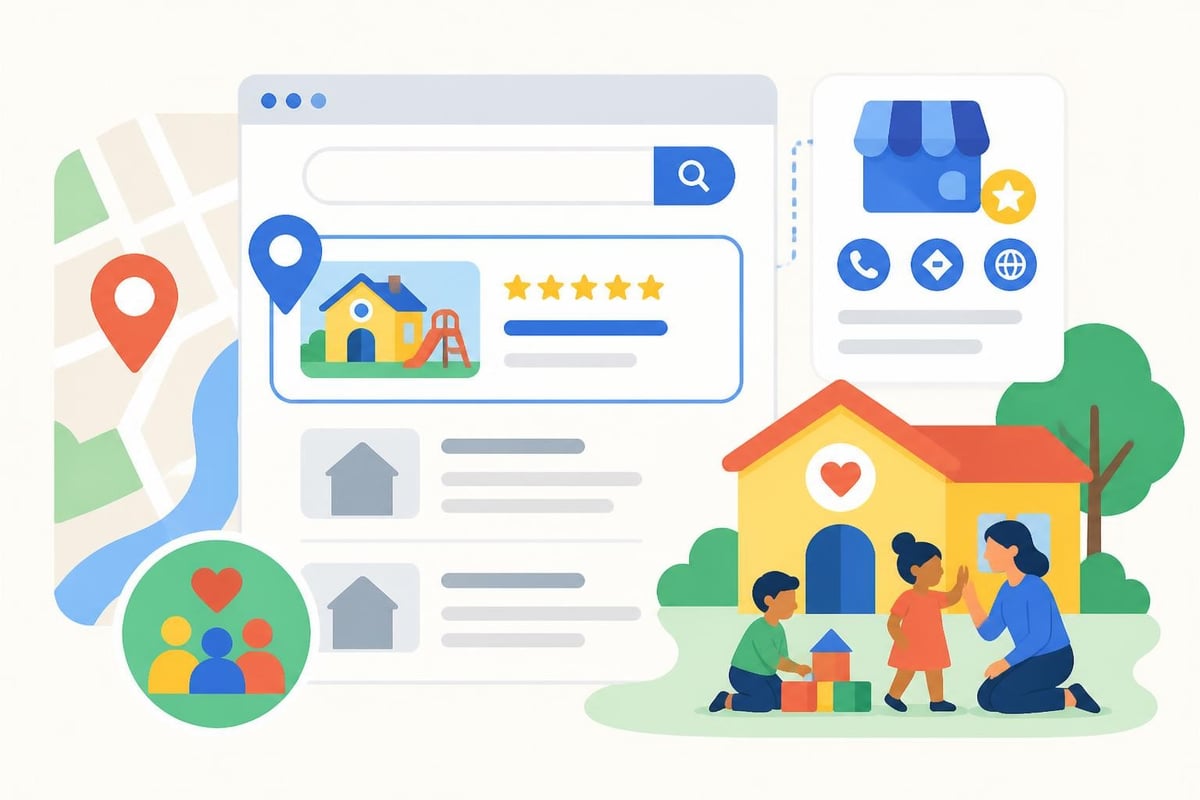
Local SEO determines whether parents in your area discover your home childcare. Optimize your website for location-based searches by including your city, neighborhood, and surrounding areas throughout your content naturally.
Google Business Profile integration remains critical for local visibility. Link your website to your business listing and keep information synchronized across platforms. Platforms like RankPill can help automate ongoing SEO tasks to maintain and improve your search rankings over time.
Technical SEO essentials include:
- Proper page titles with location keywords
- Meta descriptions that encourage clicks
- Fast loading speeds across all devices
- Secure HTTPS connection
- XML sitemap for search engines
Creating valuable content through a regularly updated blog section helps attract parents searching for childcare advice. Your blog posts can address common questions about choosing childcare, preparing children for their first day, or developmental milestones.
Digital Advertising and Link Management
Paid advertising through Google Ads or Facebook can accelerate visibility while organic search rankings build. Target parents within specific geographic radiuses searching for childcare-related terms.
Managing and optimizing your marketing links becomes crucial when running multiple campaigns. Tools like Trimy provide link intelligence and A/B testing capabilities to understand which messages and platforms drive the most tour requests and enrollment inquiries.
Track which marketing channels produce actual enrollments, not just website visits. This data informs budget allocation and strategy refinement for maximum return on investment.
Automation and Efficiency Tools
Home childcare providers wear multiple hats throughout the day. Your daycare website should reduce administrative burden rather than adding to it.
Online Scheduling and Forms
Integrating appointment scheduling directly into your website eliminates phone tag with prospective families. Parents can view available tour times and book instantly based on their schedules.
Digital enrollment forms collect necessary information upfront, streamlining the intake process. Parents appreciate the convenience of completing paperwork at home rather than during initial visits.
Content Creation and Management
Regularly updating your website keeps content fresh and engaging for return visitors while signaling active management to search engines. However, creating consistent content takes time many childcare providers don't have.
Platforms like CreateSell offer guidance on developing digital products and content systems that work on autopilot, allowing you to build content libraries once and update them efficiently. Consider creating downloadable resources like parent handbooks or preparation guides that serve both marketing and educational purposes.
Building Trust Through Visual Content
Top daycare websites share a common element: authentic visual storytelling that helps parents envision their children in your care.
Photography Best Practices
Professional photos of your actual space outperform generic stock images dramatically. Invest in quality photography that showcases:
- Clean, organized learning areas
- Age-appropriate toys and materials
- Safe outdoor play spaces
- Caregivers interacting warmly with children
- Real moments of learning and play
Your photo albums should update regularly, showing seasonal activities and program evolution. This demonstrates ongoing engagement and commitment to quality experiences.
Video Content Strategy
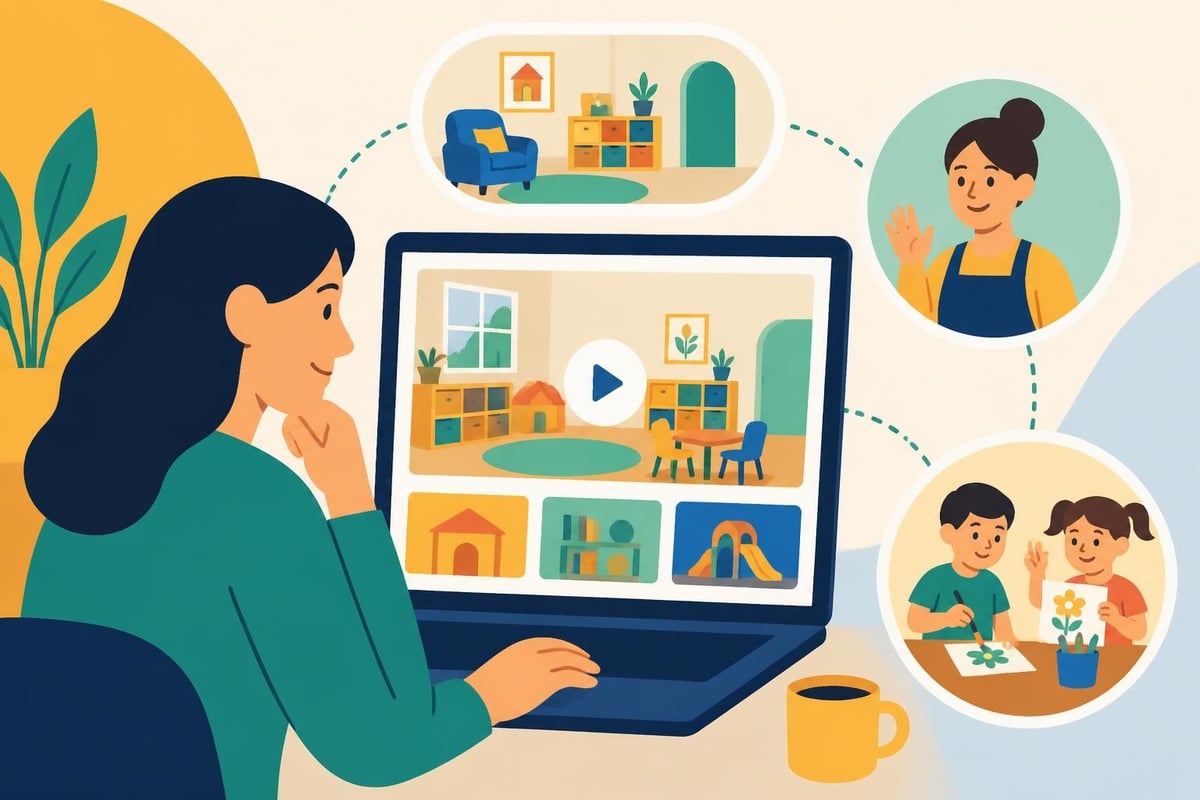
Short videos provide powerful windows into your childcare environment. A facility tour video allows parents to virtually visit before scheduling in-person tours, qualifying leads and saving everyone time.
Consider creating:
- Welcome video introducing yourself and philosophy
- Virtual tour of your home childcare space
- Day-in-the-life montage showing typical activities
- Parent testimonial videos with families' permission
Video content also performs exceptionally well on social media, extending your daycare website's reach beyond organic search traffic.
Converting Website Visitors to Enrolled Families
The ultimate measure of your daycare website's success is enrollment conversion, not just traffic numbers. Strategic design choices guide parents from initial awareness to committed enrollment.
The Parent Journey Mapping
Understanding the typical decision-making process helps optimize your website flow. Parents generally move through these stages:
| Stage | Parent Mindset | Website Needs |
|---|---|---|
| Awareness | "I need childcare options" | Clear service descriptions, location info |
| Consideration | "Is this the right fit?" | Detailed programs, philosophy, testimonials |
| Evaluation | "Can I trust this provider?" | Credentials, safety info, transparent pricing |
| Decision | "How do I enroll?" | Simple contact forms, tour scheduling |
Your content strategy should address questions and concerns at each stage, removing obstacles to moving forward.
Transparent Pricing and Availability
Research on effective daycare websites shows parents appreciate upfront pricing information, even if you prefer discussing details personally. At minimum, provide rate ranges or starting prices to filter out families outside your price point early.
Availability status prevents disappointment and wasted time for both parties. Clearly indicate whether you have immediate openings, waitlist status, or upcoming availability by age group.
Leveraging Technology for Growth
Modern daycare website platforms offer capabilities beyond basic brochure sites. Strategic technology adoption can accelerate growth while maintaining the personal touch families expect from home childcare.
Advertising Creative Testing
If you invest in paid advertising, testing different ad creatives dramatically impacts cost per lead and conversion rates. Services like AdsRaw enable rapid creation and testing of video ads without expensive production costs, helping you identify messages that resonate most with your target families.
Analytics and Continuous Improvement
Installing Google Analytics or similar tracking provides insights into visitor behavior, popular pages, and drop-off points. This data reveals opportunities to improve conversion rates.
Monitor these key metrics monthly:
- Total website visitors and trend direction
- Tour request form submissions
- Phone call tracking (if implemented)
- Most visited pages
- Average time on site
- Mobile vs desktop traffic percentages
Small adjustments based on real data compound into significant improvements over time. If parents frequently visit your rates page but don't convert, perhaps additional trust signals or testimonials on that page would help.
Showcasing Your Team and Expertise
For home childcare providers, parents are choosing you as much as choosing your program. Personal connection begins on your daycare website before the first conversation.
Caregiver Profiles and Qualifications
Your team page should highlight everyone involved in caring for children, including their backgrounds, certifications, and what they bring to your program. Personal touches like favorite childhood memories or why they chose childcare make profiles memorable.
Include professional photos of team members in action with children rather than stiff headshots. These images communicate warmth and genuine care more effectively than formal portraits.
Thought Leadership Content
Sharing your expertise through articles about childhood care and education positions you as a knowledgeable professional rather than just another childcare option. Topics might include developmental milestones, managing separation anxiety, or preparing for kindergarten readiness.
This content serves dual purposes: demonstrating expertise to prospective families while providing ongoing value to current families who return to your site as a resource.
Legal and Privacy Considerations
Your daycare website must comply with privacy regulations and industry standards, especially regarding children's information and images.
Privacy Policies and Consent
Clearly stated privacy policies explain how you collect, use, and protect family information gathered through your website. Even simple contact forms require transparent data handling practices.
Never display children's full names alongside photos without explicit parent permission. Many providers use first names only or no names at all to protect privacy while still showcasing program activities.
Accessibility Standards
Your website should be accessible to families with disabilities, following WCAG guidelines for digital accessibility. This includes proper heading structure, alternative text for images, sufficient color contrast, and keyboard navigation support.
Accessibility isn't just ethical, it expands your potential family base and demonstrates inclusive values that many parents appreciate.
Staying Current and Competitive
The childcare landscape and digital expectations evolve constantly. Your daycare website requires ongoing attention to remain effective and competitive.
Regular Content Updates
Stale content signals neglect to prospective families. Update your blog regularly, refresh photos seasonally, and revise program information as your offerings evolve. Even small changes like updating your early education resources signal active management.
Competitive Analysis
Periodically review exemplary daycare websites to understand current design trends and parent expectations. What features do leading providers offer? How do they address parent concerns? What can you adopt or adapt for your own site?
Your home childcare has unique advantages over larger centers, including personalized attention, family-like environment, and flexibility. Your website should emphasize these differentiators prominently.
Technology Evolution
Web design standards, device capabilities, and parent expectations shift continuously. Budget for website updates every 2-3 years to maintain modern appearance and functionality. Between major redesigns, incremental improvements keep your site competitive without complete overhauls.
Your daycare website serves as the digital front door to your home childcare business, making first impressions and building trust before families ever visit in person. By focusing on authentic photography, transparent information, mobile optimization, and parent-centered content, you create an online presence that converts visitors into enrolled families. Ready to welcome new families into a nurturing home childcare environment? Step by Step Care offers the personalized attention and quality programming parents are searching for when they explore childcare options online.


