

Childcare and Education: Building Foundations in 2026
The connection between quality childcare and education has never been more important for families seeking comprehensive early development opportunities for their children. As we navigate 2026, parents increasingly recognize that choosing the right childcare setting means finding a program that seamlessly blends nurturing care with intentional educational experiences. Home-based childcare providers, in particular, are uniquely positioned to offer personalized learning environments where children receive both the warmth of family-style care and the structured educational foundation they need to thrive.
The Foundation of Quality Early Learning
Quality childcare and education programs share common characteristics that set them apart from basic supervision. These programs prioritize child development across multiple domains, including cognitive, social-emotional, physical, and language skills.
Integrated Development Approaches
In home childcare settings, providers have the flexibility to create environments where learning happens naturally throughout the day. Rather than separating "care time" from "learning time," effective programs recognize that every interaction contributes to a child's development.
Key components of integrated development include:
- Daily routines that incorporate learning opportunities
- Play-based activities that build cognitive skills
- Social interactions that develop emotional intelligence
- Physical activities that strengthen motor skills
- Language-rich environments that support communication
Research from the CDC on early care and education demonstrates how providers play a crucial role in promoting children's health and well-being while supporting educational goals. This dual focus creates comprehensive programs that address the whole child.
Developmental Milestones and Learning Goals
Understanding how childcare and education intersect requires knowledge of age-appropriate expectations. Home childcare providers must balance developmental milestones with individual learning paces, creating customized experiences for each child in their care.
| Age Range | Developmental Focus | Educational Activities | Care Considerations |
|---|---|---|---|
| 0-12 months | Sensory exploration, attachment | Tummy time, music, simple toys | Feeding schedules, sleep routines |
| 1-2 years | Mobility, language emergence | Sorting games, picture books, outdoor play | Toddler safety, emotional support |
| 2-3 years | Independence, social skills | Pretend play, art projects, group activities | Toilet training, boundary setting |
| 3-5 years | Pre-literacy, problem-solving | Letter recognition, counting, science exploration | Preparation for kindergarten |
Family Engagement as a Partnership
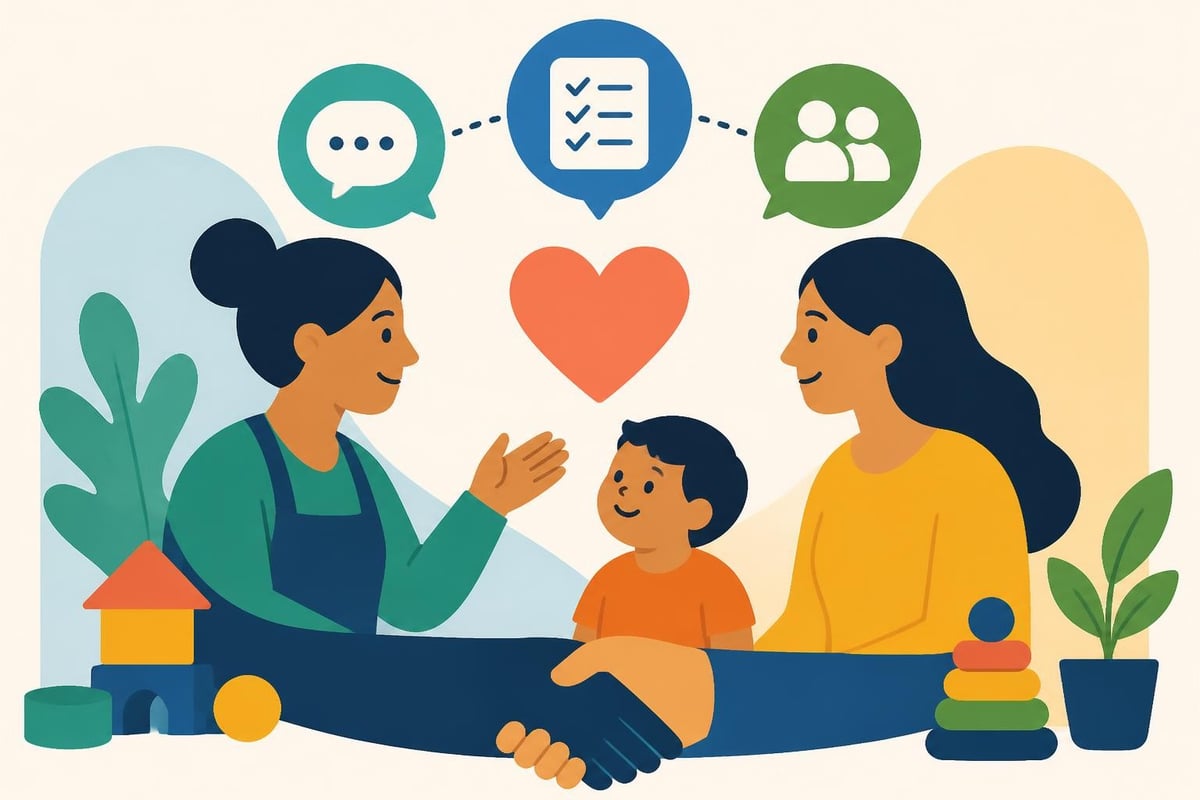
The most successful childcare and education programs recognize that parents are children's first and most important teachers. Home childcare settings naturally facilitate strong family connections through daily communication and collaborative relationships.
Building Collaborative Relationships
Effective family engagement goes beyond brief pickup and drop-off conversations. Providers should establish systems for regular, meaningful communication that keeps families informed and involved in their children's learning journeys.
Home childcare providers can strengthen family partnerships by:
- Creating communication routines with daily updates on activities, meals, and milestones
- Sharing developmental observations to help parents understand their child's progress
- Inviting family participation in special activities or cultural celebrations
- Providing resources that extend learning into the home environment
- Listening to family priorities and incorporating their values into care approaches
The CDC’s guidance on positive parenting and family engagement offers strategies for building these essential partnerships. When families feel connected to their child's care environment, children benefit from consistent expectations and reinforced learning across settings.
Cultural Responsiveness in Care
Childcare and education programs must reflect and honor the diverse backgrounds of the families they serve. Home childcare settings offer unique opportunities for cultural integration, as providers can incorporate family traditions, languages, and values into their daily routines.
This cultural responsiveness strengthens the bond between home and childcare, helping children develop strong identities while learning to appreciate diversity. Providers who actively seek to understand and incorporate family cultures create more welcoming environments where all children feel valued.
Curriculum Development in Home Settings
While large centers may have dedicated curriculum specialists, home childcare providers often develop their own educational approaches. This flexibility allows for highly personalized learning experiences that respond to individual children's interests and needs.
Creating Intentional Learning Environments
The physical space in home childcare and education settings serves as a critical teaching tool. Thoughtful environment design supports independent exploration, encourages social interaction, and facilitates various types of learning.
Essential learning areas include:
- Quiet zones for books, puzzles, and focused activities
- Creative spaces for art, music, and dramatic play
- Active areas for gross motor development and physical play
- Discovery corners for science, nature, and sensory exploration
- Social gathering spots for group activities and meals
Each area should contain age-appropriate materials that children can access independently, promoting decision-making skills and self-directed learning. Rotating materials regularly maintains interest and introduces new concepts while reinforcing existing knowledge.
Balancing Structure and Flexibility
Successful childcare and education programs establish predictable routines while remaining flexible enough to follow children's interests. This balance provides security through consistency while allowing spontaneous learning opportunities.
A typical daily schedule might include:
| Time Block | Activity Type | Educational Purpose |
|---|---|---|
| Morning arrival | Free play, breakfast | Social-emotional skills, independence |
| Circle time | Group learning | Language, cognitive development |
| Outdoor play | Physical activity | Gross motor skills, nature exploration |
| Structured activities | Guided learning | Specific skill development |
| Quiet time | Rest, individual activities | Self-regulation, fine motor skills |
| Afternoon projects | Creative expression | Problem-solving, creativity |
This framework ensures that children receive exposure to various learning modalities while maintaining the flexibility to extend engaging activities or adjust based on children's needs.
Health and Safety as Educational Foundations
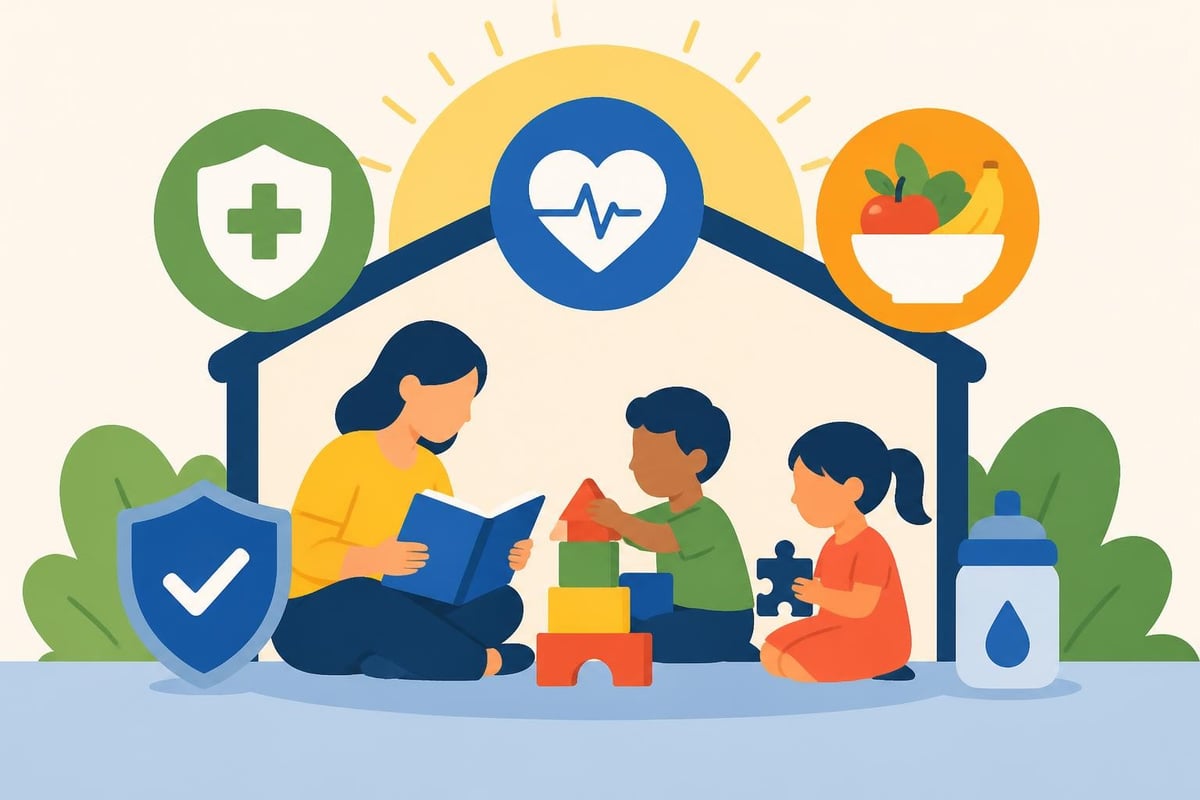
Quality childcare and education cannot exist without strong health and safety practices. These foundations create the secure environment necessary for learning to occur and demonstrate respect for children's well-being.
Regulatory Compliance and Beyond
State licensing regulations for childcare establish minimum standards for health and safety. Exceptional home childcare providers view these requirements as starting points rather than destinations, continuously seeking to enhance their practices.
Beyond meeting basic requirements, quality programs implement comprehensive health and safety measures including regular sanitization protocols, allergen management systems, emergency preparedness plans, and wellness monitoring procedures.
Nutrition as a Learning Opportunity
Meals and snacks in childcare settings serve dual purposes as both nutritional necessities and educational experiences. Home childcare providers can involve children in food preparation, teach about healthy choices, and create positive relationships with eating.
These experiences build life skills while supporting physical development and cognitive function. Children who receive nutritious meals in supportive environments demonstrate better focus, improved behavior, and enhanced learning capacity.
Professional Development and Quality Improvement
The childcare and education field continually evolves as research reveals new insights about child development and effective teaching practices. Home childcare providers committed to excellence engage in ongoing professional development to refine their skills and knowledge.
Continuous Learning for Providers
Professional growth opportunities help childcare professionals stay current with best practices and enhance their ability to support children's learning. Resources like educational research databases provide access to evidence-based strategies and emerging trends in early childhood education.
Professional development options include:
- Online courses and webinars on child development topics
- Local networking groups for home childcare providers
- Conferences and workshops on early education practices
- Specialized training in areas like special needs support or bilingual education
- Mentorship relationships with experienced educators
Many home childcare providers at Step by Step Care prioritize continuous learning to ensure they offer the highest quality experiences for the children in their care.
Quality Rating and Improvement Systems
Some states have implemented quality rating systems that help families identify high-performing childcare and education programs. These systems typically evaluate factors like staff qualifications, learning environments, family engagement practices, and child outcomes.
Home childcare providers can voluntarily participate in these systems, demonstrating their commitment to quality and receiving support for ongoing improvements. Higher ratings often correlate with better developmental outcomes for children and increased family satisfaction.
Special Considerations in Early Education
Effective childcare and education programs recognize that children develop along individual timelines and may have unique learning needs. Home childcare settings offer advantages for supporting diverse learners through highly personalized approaches.
Supporting Children with Special Needs
Inclusive childcare and education practices benefit all children by promoting acceptance, flexibility, and individualized support. Home childcare providers can adapt their environments and activities to accommodate various developmental differences, learning styles, and physical needs.
Creating inclusive programs requires:
- Understanding each child's strengths and areas for growth
- Modifying activities to ensure all children can participate meaningfully
- Collaborating with families and specialists to implement effective strategies
- Providing appropriate accommodations without drawing unnecessary attention
- Fostering peer acceptance through discussions about differences and similarities
Resources from specialized organizations provide guidance for supporting children with various needs, helping home childcare providers create truly inclusive environments.
Dual Language Learners
Children growing up in multilingual households bring rich linguistic resources to childcare settings. Quality programs support these children's development in both their home language and English, recognizing that bilingualism offers cognitive advantages.
Home childcare providers can support dual language learners by incorporating words and phrases from children's home languages, using visual supports to aid comprehension, speaking clearly and naturally rather than oversimplifying, and celebrating linguistic diversity as a strength.
Technology Integration in Modern Childcare
As we progress through 2026, technology plays an increasingly important role in childcare and education, though its use must be developmentally appropriate and intentional. Home childcare providers balance traditional hands-on learning with selective technology integration that enhances rather than replaces human interaction.
Appropriate Technology Use
Technology in early childhood settings should serve specific educational purposes rather than function as entertainment or babysitting. Appropriate uses include:
- Documentation tools for capturing and sharing children's learning moments
- Family communication platforms that facilitate real-time updates and photo sharing
- Educational apps used briefly to reinforce specific concepts
- Virtual field trips that expose children to experiences beyond their immediate environment
- Music and movement resources that support creative expression
Screen time remains limited in quality programs, with priority given to active, hands-on learning experiences that build the neural connections essential for early development.
Digital Communication with Families
Modern family engagement relies heavily on digital tools that keep parents connected to their children's days. Many providers use specialized apps or platforms to share photos, daily reports, developmental milestones, and upcoming events.
These tools strengthen the partnership between home and childcare settings, helping families feel involved even when they cannot be physically present. However, digital communication should complement rather than replace face-to-face conversations during pickup and drop-off times.
Transitioning Between Care Levels
Children's needs change as they grow, requiring thoughtful transitions between different childcare and education settings. Home childcare providers play important roles in preparing children for these changes and supporting families through transition periods.
Preparing for Kindergarten
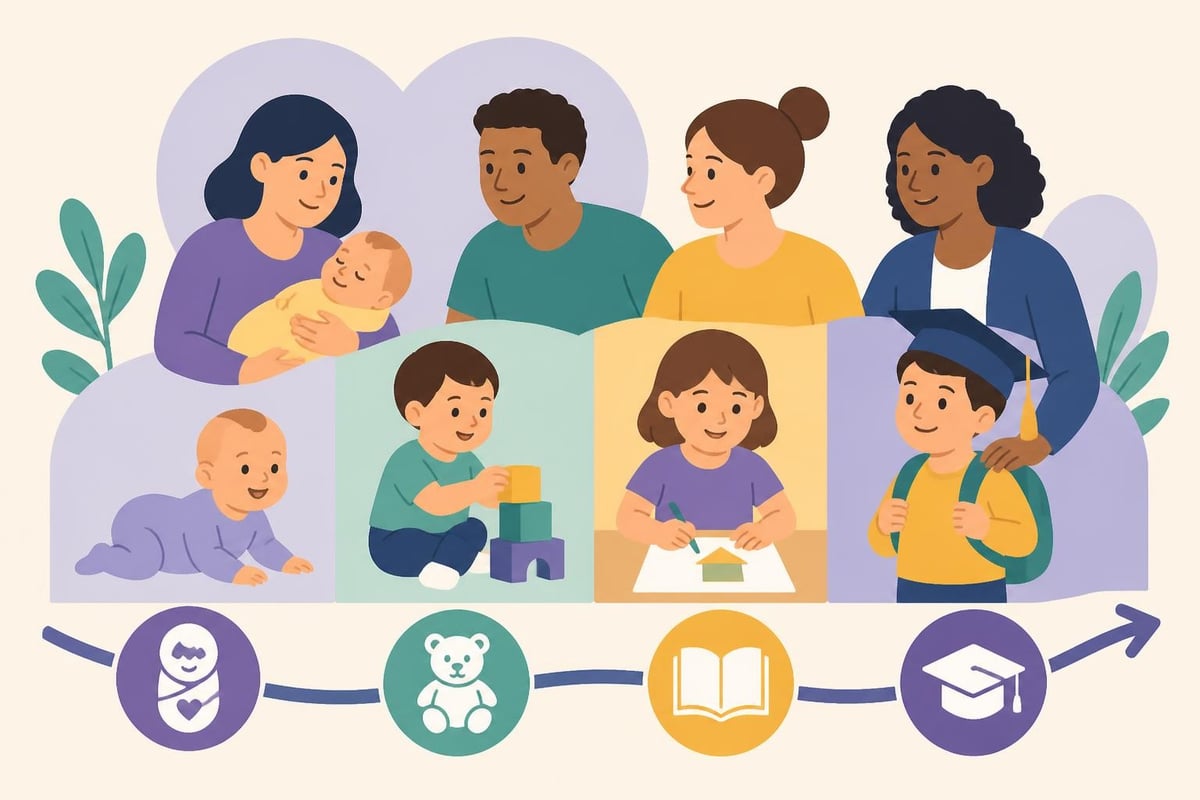
One of the most significant transitions occurs when children move from childcare to formal schooling. Quality programs begin kindergarten preparation well in advance, building the academic, social, and self-regulation skills children need for success.
| Skill Area | Development Focus | Supporting Activities |
|---|---|---|
| Academic readiness | Letter recognition, number concepts, pre-reading | Alphabet games, counting activities, storytelling |
| Social skills | Sharing, following directions, group participation | Cooperative games, circle time, peer interactions |
| Independence | Self-care, task completion, problem-solving | Dressing practice, cleanup routines, choice-making |
| Emotional regulation | Expressing feelings, handling frustration, waiting | Emotion discussions, calming strategies, turn-taking |
Families seeking infant education programs that eventually lead to kindergarten readiness should look for providers who maintain a developmental continuum, supporting children from infancy through preschool years.
Supporting Smooth Transitions
Whether children are moving to a new room within a program or transitioning to a different setting entirely, home childcare providers can ease the process through gradual introduction, clear communication, consistency maintenance, and emotional support.
Discussing upcoming changes with children in age-appropriate ways helps them develop positive expectations. Visiting new settings before transitions occur reduces anxiety and builds familiarity. Maintaining connections with familiar caregivers during early transition periods provides security as children adjust.
Building Community Connections
Exceptional childcare and education programs extend beyond their physical walls to connect children with their broader communities. Home childcare providers can leverage local resources to enrich children's experiences and build relationships that benefit families.
Local Partnerships and Resources
Connecting with community organizations creates opportunities for enhanced learning and family support. Libraries offer storytimes and book lending programs, parks provide outdoor exploration spaces, local businesses may welcome field trips, health departments provide wellness screenings and resources, and family service organizations offer support programs.
These connections expose children to diverse experiences while demonstrating how their childcare environment fits within the larger community. Understanding the role of early care providers in public health helps providers recognize their broader impact beyond individual children.
Creating Support Networks
Home childcare providers benefit from connecting with peers who understand the unique joys and challenges of this work. Local provider networks offer opportunities for collaboration, resource sharing, problem-solving, and professional support.
These networks strengthen the overall quality of childcare and education in communities by facilitating knowledge exchange and mutual encouragement. New providers gain wisdom from experienced colleagues, while veterans discover fresh perspectives and renewed energy.
Financial Considerations and Accessibility
Quality childcare and education programs must balance excellence with affordability, ensuring that diverse families can access high-quality early learning experiences. Home childcare providers navigate complex financial considerations while maintaining sustainable businesses.
Pricing Structures and Value
Determining appropriate pricing requires considering operational costs, market rates, quality standards, and family affordability. Transparent pricing helps families understand the value they receive and the expenses providers incur in delivering quality care.
Many home childcare providers offer flexible payment options, sibling discounts, or adjusted rates for families facing financial challenges. These approaches increase accessibility while recognizing the true cost of quality care.
Subsidy Programs and Assistance
Various government programs help eligible families afford childcare, making quality programs accessible to more children. Home childcare providers who accept subsidies expand opportunities for low-income families while supporting their own business sustainability.
Understanding subsidy requirements and application processes helps providers guide families toward available resources. This support strengthens community equity by ensuring economic circumstances don't prevent children from accessing quality early learning experiences.
Measuring Success in Early Learning
Assessing progress in childcare and education requires looking beyond traditional academic measures to consider holistic development across all domains. Home childcare providers use various methods to document growth and share achievements with families.
Developmental Assessment Approaches
Effective assessment happens naturally through observation during daily activities rather than through formal testing. Providers notice and document children's emerging skills, interests, challenges, and achievements through anecdotal records, photo documentation, portfolio collections, and developmental checklists.
This ongoing assessment informs curriculum planning, helps providers individualize learning experiences, identifies potential developmental concerns early, and provides concrete evidence of progress to share with families.
Celebrating Growth and Achievement
Recognizing children's accomplishments builds confidence and motivation while helping families appreciate their children's development. Home childcare settings can celebrate growth through individual recognition, family sharing events, documentation displays, and milestone celebrations.
These celebrations focus on effort and progress rather than competition, fostering growth mindsets and positive self-concepts. Children learn that learning is a journey worth celebrating at every step.
The integration of quality childcare and education creates powerful foundations for lifelong learning and development, particularly in home-based settings where personalized attention meets intentional teaching. Families seeking comprehensive early learning experiences for their children benefit from providers who understand this critical connection and implement it daily through nurturing care and purposeful educational activities. If you're looking for a home childcare environment that prioritizes both your child's wellbeing and developmental growth, Step by Step Care offers the personalized attention and educational focus your family deserves.


