

Early Childhood Education Hours: A Complete Guide
Understanding early childhood education hours is essential for parents navigating childcare options and providers designing quality programs. The structure and length of the educational day significantly influence child development, family schedules, and learning outcomes. Whether you're considering home childcare or evaluating program options, knowing what constitutes appropriate and effective hours helps you make informed decisions for your child's growth and your family's needs.
Standard Operating Hours for Early Childhood Programs
Most early childhood education programs operate between specific timeframes that align with typical working hours, though considerable variation exists based on community needs and provider types.
Traditional Full-Time Schedules
Full-time early childhood programs typically run from 7:00 AM to 6:00 PM, providing 10-11 hours of potential care daily. This schedule accommodates most families with standard work hours, allowing parents to commute and maintain regular employment.
Many programs offer core educational hours from 9:00 AM to 3:00 PM, with extended care available before and after these times. The core hours focus on structured learning activities, while extended periods often incorporate more flexible play and enrichment opportunities.
Key features of traditional schedules:
- Morning arrival flexibility between 6:30-9:00 AM
- Structured curriculum delivery during mid-morning through early afternoon
- Afternoon departure options from 3:00-6:30 PM
- Built-in transition times for drop-off and pick-up
Part-Time and Half-Day Options
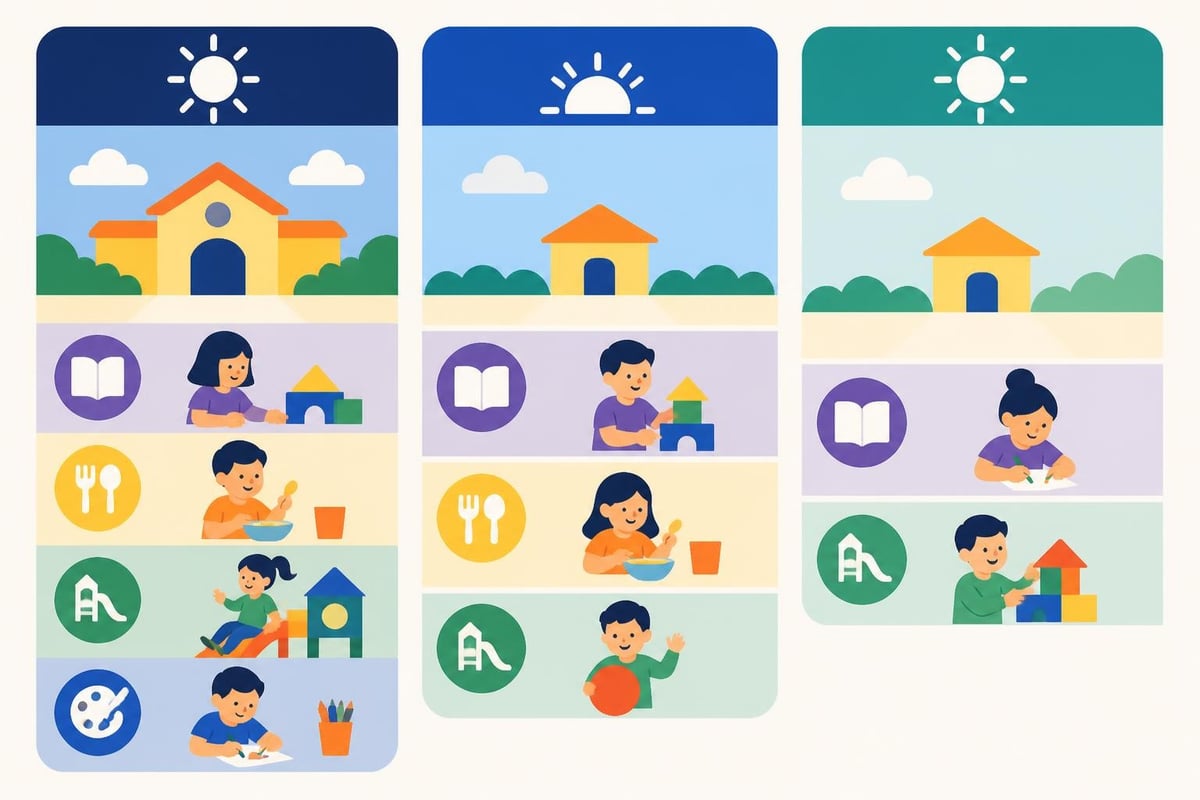
Part-time programs serve families needing fewer weekly hours or children benefiting from shorter daily sessions. These arrangements typically span 2-4 hours per day, often operating either mornings (8:30 AM-12:30 PM) or afternoons (1:00 PM-5:00 PM).
Half-day programs work particularly well for families with flexible schedules, stay-at-home parents seeking socialization opportunities, or children transitioning from home care. According to research on classroom activity time allocation, even limited hours can provide substantial developmental benefits when properly structured.
Time Allocation Within Educational Hours
How programs divide available hours matters as much as total duration. Quality early childhood education balances multiple activity types to support holistic development.
Learning Activity Distribution
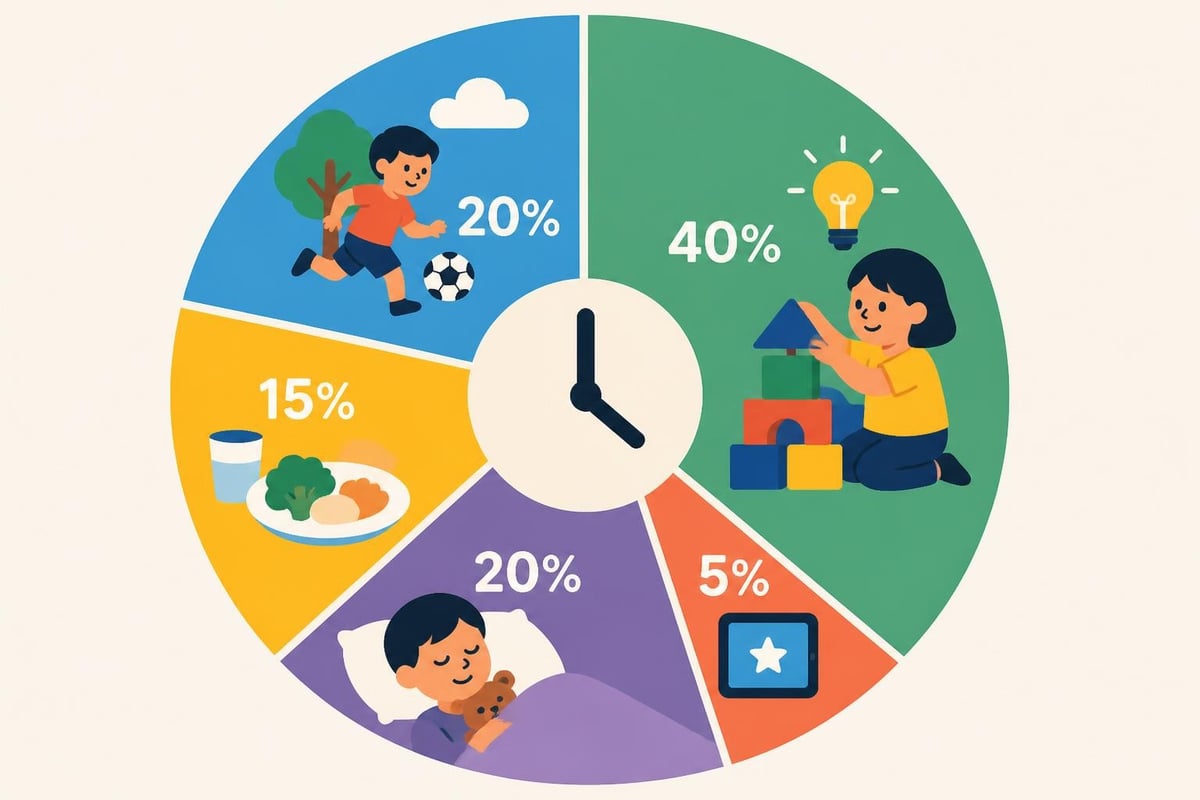
Research shows effective programs allocate time across several key categories throughout their operational hours:
| Activity Type | Recommended Daily Time | Purpose |
|---|---|---|
| Structured Learning | 60-90 minutes | Literacy, numeracy, concept development |
| Free Play | 90-120 minutes | Creativity, social skills, self-direction |
| Outdoor Activity | 60+ minutes | Physical development, gross motor skills |
| Meals and Snacks | 60-75 minutes | Nutrition, social interaction, self-help skills |
| Rest/Quiet Time | 60-90 minutes | Physical restoration, emotional regulation |
| Transitions | 45-60 minutes | Routine building, independence |
The CDC’s physical activity standards emphasize that children need substantial active play time, recommending at least 15 minutes of physical activity per hour of care.
Balancing Structure and Flexibility
Quality programs maintain consistent routines while allowing flexibility for individual needs and spontaneous learning opportunities. This balance helps children develop self-regulation and time awareness without creating rigid constraints that limit exploration.
Home childcare settings often excel at this flexibility, adjusting daily schedules to accommodate mixed-age groups and family preferences. Providers can extend outdoor time on beautiful days or shift activities based on children's interests and energy levels.
Benefits of flexible scheduling:
- Responsive to individual developmental needs
- Accommodates varying attention spans
- Allows deeper engagement with emerging interests
- Reduces stress from rushed transitions
Nontraditional Hours and Extended Care
Many families require childcare outside conventional hours due to shift work, irregular schedules, or weekend employment. Understanding families’ access to nontraditional-hour child care reveals significant gaps in availability despite considerable need.
Evening and Weekend Programs
Nontraditional early childhood education hours include evening care (after 6:00 PM), overnight care, and weekend services. These programs face unique challenges in maintaining educational quality while adapting to less conventional timeframes.
Evening programs often emphasize calming activities, preparing children for bedtime routines when picked up late. Weekend care typically incorporates more enrichment activities and family-style experiences, creating homelike environments that comfort children during non-traditional care times.
Overnight and 24-Hour Care
Some families require overnight childcare due to healthcare shifts, emergency services work, or other overnight employment. These programs must carefully balance educational activities with appropriate sleep schedules and nighttime routines.
Quality overnight care maintains small group sizes, provides individual sleeping arrangements, and employs educators trained in supporting children's emotional needs during extended separations from family. Understanding daycare options in Virginia helps families identify providers offering various schedule configurations.

Developmental Considerations for Program Length
The appropriate number of early childhood education hours varies by child age, temperament, and developmental needs. What works for one family may not suit another.
Infants and Toddlers
Very young children typically benefit from shorter program hours initially, gradually extending as they develop stamina and comfort with group settings. Many infants start with 4-6 hour days, increasing to full-time schedules as they approach toddlerhood.
Considerations for infant and toddler hours:
- Attachment and separation anxiety management
- Multiple nap schedules requiring quiet spaces
- Individualized feeding and routine needs
- Lower child-to-staff ratios requiring more intensive care
Research on child-staff ratios and outcomes demonstrates that younger children particularly benefit from lower ratios, which may influence the number of hours programs can effectively serve them.
Preschool and Pre-Kindergarten Ages
Children ages 3-5 generally handle longer program hours well, especially when activities remain varied and engaging. Full-time schedules work for most children this age, though some still benefit from part-time arrangements.
The key is ensuring that early childhood education hours include appropriate rest periods. Most preschoolers need 60-90 minutes of quiet or rest time, even if they don't sleep, to recharge for afternoon activities.
Quality Indicators Across Different Hour Configurations
Program quality doesn't automatically correlate with hours offered, but certain standards apply regardless of schedule length. Federal curriculum requirements establish developmentally appropriate practice guidelines applicable to various program types.
Essential Quality Elements
High-quality programs share common features whether operating 4 hours or 12 hours daily:
- Qualified educators with early childhood credentials
- Low child-to-teacher ratios appropriate for age groups
- Evidence-based curriculum addressing all developmental domains
- Safe, stimulating learning environments
- Regular communication with families
- Ongoing professional development for staff
Exploring early childhood education fundamentals provides deeper insight into quality components parents should evaluate.
Measuring Time Quality vs. Quantity
Simply spending more hours in care doesn't guarantee better outcomes. The quality of interactions, materials, and experiences during available time proves more influential than raw hours alone.
Research comparing formal and informal provider quality shows that high-quality informal settings (including home childcare) can produce excellent outcomes when educators implement intentional practices and maintain appropriate environments.
| Quality Factor | Impact on Outcomes | Assessment Method |
|---|---|---|
| Teacher-child interactions | High | Observation scales, interaction ratings |
| Curriculum implementation | High | Activity documentation, learning assessments |
| Environmental setup | Moderate | Safety checklists, material inventories |
| Total hours in care | Low-Moderate | Attendance records, schedule documentation |
Screen Time Management Within Educational Hours
Modern early childhood education hours must address technology use and screen time limitations. The CDC’s screen time guidelines recommend minimal or no recreational screen time for children under 2 and limited, high-quality educational content for older preschoolers.
Recommended Screen Limits by Age
Quality programs strictly limit passive screen time:
- Under 18 months: No screen time except video chatting
- 18-24 months: High-quality programming only, co-viewed with adults
- 2-5 years: Maximum 1 hour daily of educational content
Home childcare providers often eliminate screens entirely during early childhood education hours, focusing instead on hands-on exploration, outdoor play, and interactive learning experiences.
Creating Optimal Schedules for Mixed-Age Groups
Home childcare settings frequently serve children of various ages simultaneously, requiring thoughtful schedule design that meets diverse developmental needs within the same early childhood education hours.
Coordinating Multiple Age Groups
Effective mixed-age scheduling incorporates both combined activities and age-specific learning times:
Combined activity periods:
- Outdoor play where children engage at their developmental levels
- Meal and snack times promoting family-style interaction
- Music, movement, and creative arts adapted for multiple abilities
- Story time with books appealing to various ages
Age-separated learning blocks:
- Targeted literacy activities for preschoolers during infant nap times
- Math and science exploration for older children
- Individual attention during staggered drop-off and pick-up periods
Naptime Coordination Strategies
Coordinating rest periods across age groups presents scheduling challenges. Infants may need multiple naps, toddlers typically need one afternoon nap, and preschoolers might transition to quiet time instead.
Successful providers create overlapping quiet periods, allowing simultaneous rest for multiple ages while maintaining supervision. This approach also provides opportunities for focused attention on non-sleeping children during calmer periods.
Aligning Hours with Family Work Schedules
Early childhood education hours must realistically accommodate parents' employment demands while prioritizing children's needs. This balance requires flexibility and clear communication between families and providers.
Flexibility Options
Progressive programs offer various scheduling accommodations:
- Drop-in care days for irregular schedules
- Extended hour options with advance notice
- Flexible arrival windows reducing morning stress
- Emergency backup arrangements for unexpected situations
- Part-week enrollment for partial work schedules
Finding top-rated daycares includes evaluating schedule flexibility alongside educational quality.
Communication and Planning
Effective schedule management requires ongoing dialogue between providers and families. Regular schedule reviews, advance notice of changes, and mutual respect for established hours create successful partnerships.
Home childcare providers often excel at this personalized communication, building relationships that allow creative problem-solving when schedule conflicts arise. This flexibility represents a significant advantage over larger institutional settings.
Seasonal and Holiday Schedule Adjustments
Early childhood education hours often vary throughout the year, with programs closing for holidays, offering summer schedules, or providing year-round care with modified hours during certain periods.
Year-Round vs. School-Year Programs
Programs following school calendars typically close for summer or operate modified summer sessions with different hours and focus. Year-round programs maintain consistent schedules but may close for major holidays and professional development days.
School-year program considerations:
- 9-month enrollment periods with summer break
- Alignment with elementary school calendars for families with multiple children
- Reduced hours during holiday weeks
- Extended closures requiring backup care arrangements
Year-round program benefits:
- Consistent routine supporting development
- Reduced transition stress
- Accommodation of year-round work schedules
- Continuous relationship with educators
Holiday Closures and Planning
Most programs close for major holidays, requiring families to arrange alternative care. Typical closures include:
- Federal holidays (New Year's Day, Independence Day, Thanksgiving, Christmas)
- Winter break periods (1-2 weeks)
- Spring break (1 week)
- Professional development days (2-4 days annually)
Quality providers share annual calendars early, allowing families adequate planning time. Exploring local options in Springfield helps families find providers whose closure schedules align with their needs.
Regulatory Requirements and Licensing Standards
State licensing regulations establish minimum standards for early childhood education hours, including maximum daily hours, required breaks, and staffing requirements during operational periods.
Maximum Daily Hours
Most states limit continuous care duration to ensure children aren't overly fatigued. Common regulations include:
- Maximum 12-13 hours per child daily
- Required rest periods for full-day attendees
- Mandatory outdoor time (weather permitting)
- Appropriate meal service based on hours of attendance
Staff Schedule Requirements
Licensing standards also govern educator schedules, ensuring adequate supervision throughout operational hours. These include minimum staff presence, break coverage, and ratio maintenance during all operating times.
Making Informed Decisions About Program Hours
Choosing appropriate early childhood education hours requires balancing multiple factors: child needs, family schedules, program quality, and logistical considerations.
Evaluation Checklist
When assessing programs, consider:
- Child's temperament and stamina: Can they handle full days comfortably?
- Developmental stage: What duration supports optimal learning?
- Family work requirements: What hours must be covered?
- Program quality during all hours: Does quality remain consistent throughout the day?
- Transition support: How does the program help children adjust to their schedule?
- Communication systems: Can you stay informed about your child's day?
- Flexibility when needed: How does the provider handle schedule variations?
Learning more about Step by Step Care provides insight into how home childcare can offer personalized schedule solutions tailored to individual family needs.
Trial Periods and Adjustments
Many families benefit from starting with shorter hours and gradually extending as children adjust. Quality providers support this approach, recognizing that successful transitions produce better long-term outcomes than forcing immediate full-time attendance.
Progressive adjustment might look like:
- Week 1: Shortened days (3-4 hours) to build comfort
- Week 2-3: Extended to half days (5-6 hours)
- Week 4+: Full schedule as child demonstrates readiness
Impact of Hours on Child Development Outcomes
Research consistently shows that the quality of early childhood education hours matters more than quantity alone. However, both duration and quality interact to influence developmental trajectories.
Cognitive and Academic Preparation
Children attending quality programs for appropriate durations demonstrate stronger school readiness skills. The key is ensuring sufficient time for meaningful learning experiences without excessive hours that lead to fatigue and stress.
Programs offering 20-35 hours weekly of high-quality early education typically produce optimal academic preparation outcomes, assuming responsive implementation of evidence-based curricula.
Social-Emotional Development
Time with peers supports social skill development, but excessive hours without adequate individual attention can stress some children. The ideal duration varies by child temperament, with some thriving in full-time settings while others excel with part-time enrollment.
Physical Health and Well-being
Appropriate early childhood education hours support physical development through structured active play, nutritious meals, and adequate rest. Programs must allocate sufficient time for these essential components regardless of total operational hours.
Understanding early childhood education hours helps families select programs that support their children's development while accommodating work schedules and family needs. The right balance depends on individual circumstances, but quality interactions and age-appropriate activities remain essential regardless of schedule configuration. At Step by Step Care, we recognize that every family's needs are unique and work with you to create flexible schedules that prioritize your child's well-being while supporting your family's lifestyle-contact us today to discuss how our home childcare approach can provide the personalized attention and scheduling flexibility your family deserves.


