

Top Rated Daycares Near Me: Complete 2026 Guide
Finding quality childcare represents one of the most important decisions parents make for their families. When searching for top rated daycares near me, parents need clear guidance on what distinguishes exceptional care from average options. Whether you're considering traditional daycare centers or exploring home-based childcare settings, understanding the key quality indicators helps you make informed choices that support your child's development and give you peace of mind while you're at work or managing other responsibilities.
Understanding What Makes Daycares Top-Rated
The term "top-rated" encompasses multiple quality factors that go beyond simple star ratings or online reviews. When evaluating top rated daycares near me, parents should examine licensing status, staff credentials, safety protocols, curriculum design, and parent satisfaction levels.
Licensing and Regulatory Compliance
All legitimate childcare providers must maintain current state licensing and meet specific regulatory requirements. These regulations cover critical areas including:
- Staff-to-child ratios appropriate for different age groups
- Background checks and ongoing training for all caregivers
- Health and safety standards for facilities and equipment
- Regular inspections and compliance documentation
Licensed providers demonstrate their commitment to meeting baseline quality standards. Choosing quality childcare starts with verifying licensing status and reviewing recent inspection reports, which many states make publicly available through online databases.
Home-based daycares often operate under different licensing categories than larger centers, but quality home providers maintain the same rigorous standards for safety, health, and developmental programming.
Key Quality Indicators When Searching Locally
When narrowing down your search for top rated daycares near me, specific indicators help distinguish exceptional programs from adequate ones.
Staff Qualifications and Training
The quality of caregivers directly impacts your child's daily experience and developmental progress. Examine these staffing factors:
| Quality Factor | What to Look For | Why It Matters |
|---|---|---|
| Education Level | Associate's degree or higher in early childhood education | Trained staff understand developmental milestones and age-appropriate activities |
| Ongoing Training | Regular professional development hours annually | Current knowledge of best practices and emerging research |
| Turnover Rate | Low staff turnover with long-term employees | Consistent caregivers build stronger relationships with children |
| CPR/First Aid | All staff certified and current | Preparedness for medical emergencies |
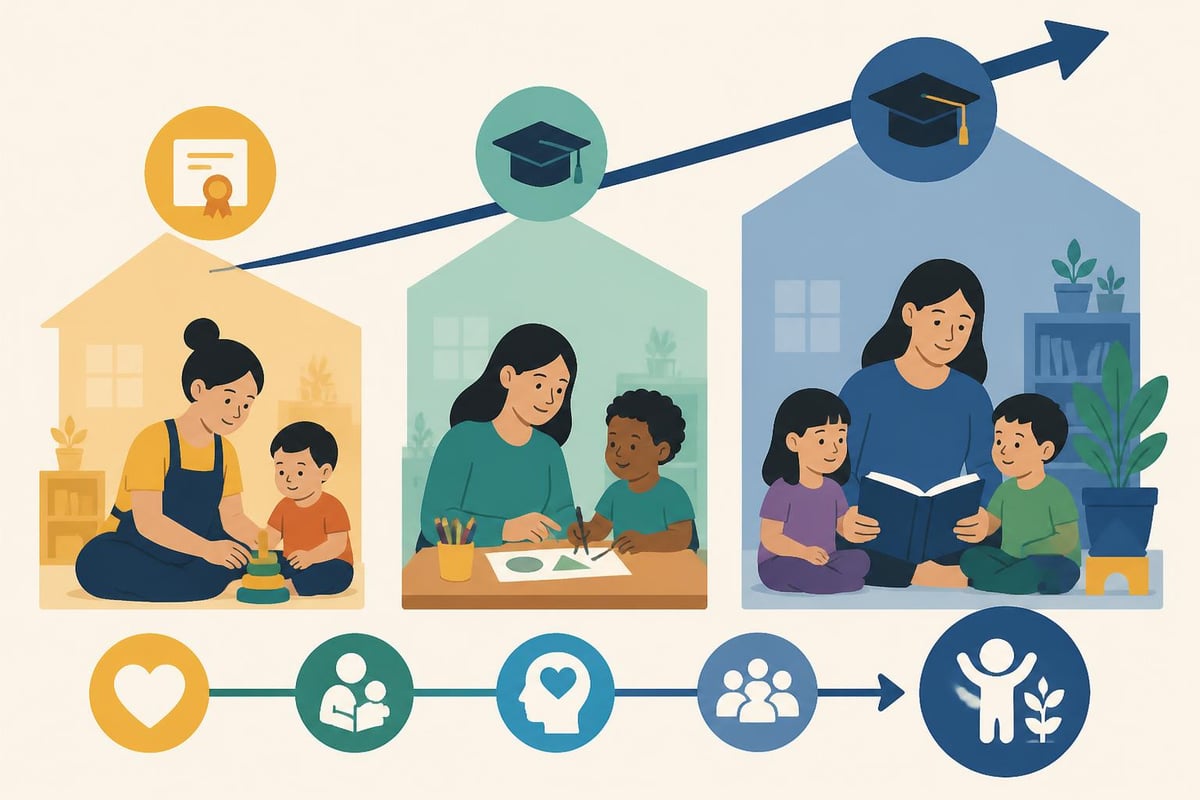
Programs with educated, experienced staff create richer learning environments and respond more effectively to individual children's needs. During facility tours, ask about staff credentials and observe how caregivers interact with children.
Safety Protocols and Environment
Safety forms the foundation of quality childcare. When evaluating top rated daycares near me, conduct thorough safety assessments of each facility you visit. Identifying quality daycare facilities requires attention to visible safety measures and written policies.
Physical safety features include:
- Secure entry systems that prevent unauthorized access
- Age-appropriate furniture and equipment in good condition
- Properly stored cleaning supplies and medications
- Adequate outdoor play areas with safe, maintained equipment
- Emergency evacuation plans and regular safety drills
Home-based childcare settings should demonstrate the same safety consciousness as larger centers, with childproofed spaces, secure storage for hazardous materials, and clear emergency procedures.
Evaluating Curriculum and Developmental Programming
Top-rated childcare goes beyond supervision, incorporating intentional learning experiences that support cognitive, social, emotional, and physical development.
Age-Appropriate Learning Activities
Quality programs design daily schedules that balance structured learning time, free play, outdoor activities, meals, and rest periods. The curriculum should align with developmental stages and include:
- Infant programs focusing on sensory exploration, language exposure, and secure attachment
- Toddler activities emphasizing motor skill development, social interaction, and early language skills
- Preschool curriculum incorporating pre-literacy, math concepts, science exploration, and creative arts
- School-age care offering homework support, enrichment activities, and age-appropriate socialization
Providers should articulate their educational philosophy and demonstrate how daily activities support specific developmental goals. Babylist’s guidance on daycare centers offers helpful insights into evaluating curriculum quality during your search.
Communication and Parent Involvement
Exceptional childcare programs maintain open, consistent communication with families. Regular updates about your child's day, developmental progress, and any concerns create partnership between caregivers and parents.
Look for programs offering:
- Daily reports on activities, meals, naps, and notable moments
- Regular parent-teacher conferences to discuss developmental progress
- Open-door policies welcoming parent visits
- Family engagement events and opportunities for involvement
Comparing Home-Based and Center-Based Care
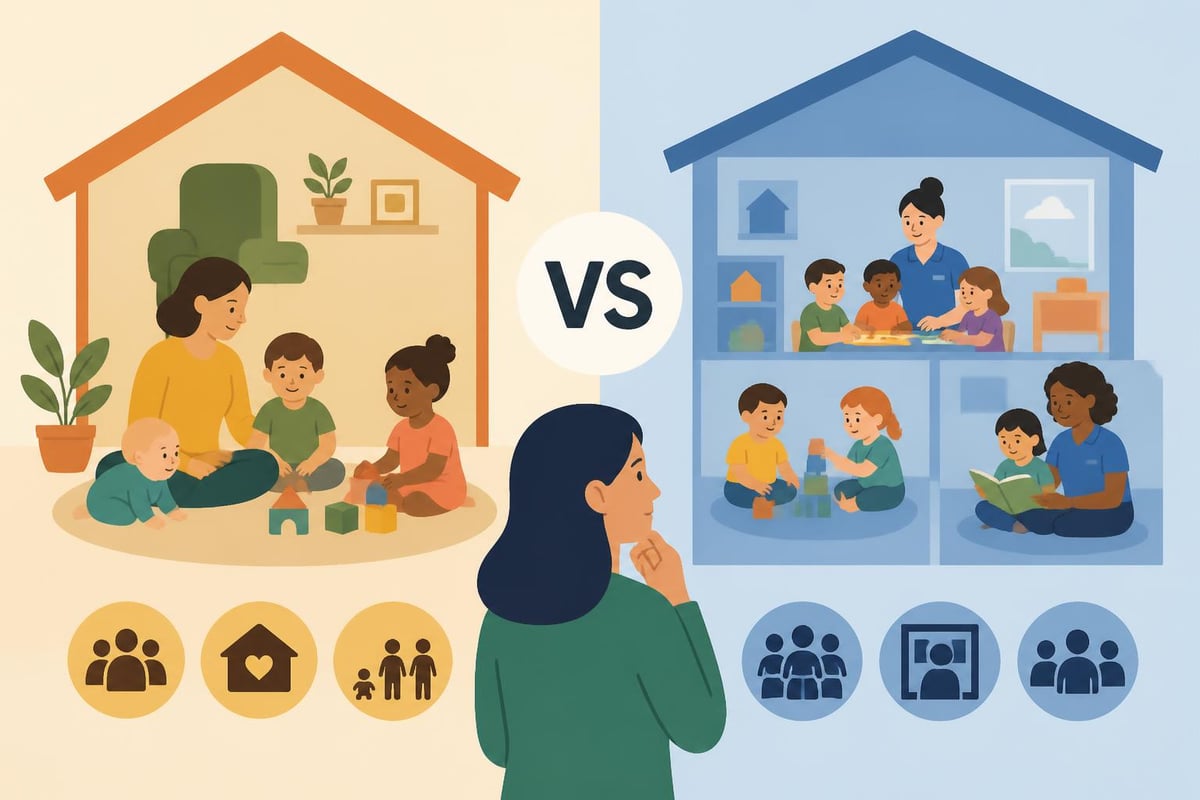
When searching for top rated daycares near me, parents often weigh the benefits of different care settings. Understanding these distinctions helps you choose the environment that best fits your family's needs.
Advantages of Home-Based Childcare
Home daycare settings offer unique benefits that appeal to many families. These smaller, family-style environments typically provide:
- Lower child-to-caregiver ratios allowing more individualized attention
- Mixed-age groupings where younger children learn from older peers and older children develop nurturing skills
- Homelike atmosphere that may ease transitions, especially for young infants
- Flexible scheduling often accommodating non-traditional work hours
- Consistent primary caregiver building strong attachment relationships
In-home daycare options deserve serious consideration when evaluating top rated daycares near me, particularly for families seeking intimate, personalized care environments.
When Center-Based Care Makes Sense
Larger childcare centers offer distinct advantages including:
- Specialized classrooms designed for specific age groups
- Multiple staff members providing diverse perspectives and expertise
- Structured enrichment programs like music, language, or STEM activities
- Backup staffing ensuring consistent care even when individual teachers are absent
Neither setting is inherently superior; the best choice depends on your child's temperament, your family's priorities, and the specific quality of individual programs you're considering.
Conducting Effective Facility Tours
Visiting potential childcare providers in person remains essential when identifying top rated daycares near me. Virtual tours and websites provide helpful initial information, but nothing replaces firsthand observation of the environment and interactions.
Essential Questions to Ask
Prepare a consistent set of questions to ask at each facility. Twenty essential questions can guide your evaluation, covering topics like:
Daily Operations:
- What does a typical day look like for my child's age group?
- How do you handle meals, naps, and transitions?
- What is your policy on screen time and technology use?
Health and Safety:
- How do you handle illness and medication administration?
- What are your sanitization and cleaning protocols?
- How do you manage food allergies and dietary restrictions?
Staff and Programming:
- What qualifications and training do staff members have?
- How long have current staff been with the program?
- How do you support children with different learning styles or special needs?
Communication and Policies:
- How do you communicate with parents about daily activities and concerns?
- What are your policies regarding holidays, closures, and tuition?
- How do you handle behavioral challenges and discipline?
Observing Interactions and Environment
Beyond asking questions, observe carefully during your visit. Watch how caregivers interact with children, noting whether they:
- Get down to children's eye level during conversations
- Respond promptly and warmly to children's needs
- Use positive guidance rather than harsh discipline
- Engage children in meaningful conversations and activities
- Create an atmosphere of respect and encouragement
The physical environment should feel welcoming, organized, and appropriately stimulating without being overwhelming. Look for evidence of children's work displayed, accessible learning materials, and clean, well-maintained spaces.
Leveraging Reviews and Ratings Effectively
Online reviews and rating systems provide valuable insights when searching for top rated daycares near me, but they require careful interpretation.
Understanding Rating Systems
Different platforms use various rating methodologies:
| Rating Source | What They Measure | Limitations |
|---|---|---|
| State Quality Rating Systems | Compliance with enhanced standards beyond licensing | Not all states have rating systems; criteria vary by location |
| Parent Review Sites | Individual family experiences and satisfaction | Subjective opinions; may not represent your priorities |
| Safety Inspection Databases | Compliance with health and safety regulations | Historical data may not reflect current conditions |
| Accreditation Programs | Adherence to professional standards (NAEYC, NECPA) | Voluntary programs; many quality providers aren't accredited |
Combine information from multiple sources rather than relying on a single rating. Recent reviews matter more than older feedback, as programs change over time with new leadership or staff.
Recognizing Red Flags
Certain warning signs should prompt serious concerns or eliminate a provider from consideration:
- Reluctance to allow unscheduled visits or tours
- Licensing violations or recent closure orders
- Consistently negative reviews mentioning similar problems
- High staff turnover with new employees every few months
- Vague or dismissive responses to safety and curriculum questions
- Inadequate supervision during outdoor play or transitions
Trust your instincts. If something feels wrong during a visit or conversation, continue your search for top rated daycares near me elsewhere.
Considering Location and Logistics
Practical considerations significantly impact your childcare experience, even when a program excels in quality metrics.
Proximity and Commute Factors
Location affects your daily routine and ability to respond quickly if needed. Consider:
- Commute time from home and work to the childcare location
- Traffic patterns during drop-off and pick-up hours
- Emergency accessibility if you need to reach your child quickly
- School transitions and how the location works as your child grows
Programs near your home simplify daily routines and help your child feel connected to your neighborhood community. Those near your workplace may ease commuting but complicate sick-day logistics.
Hours, Scheduling, and Flexibility
Operating hours must align with your work schedule and family needs. Verify:
- Regular operating hours and any seasonal schedule changes
- Policies for late pick-up and associated fees
- Holiday closures and vacation schedules
- Part-time versus full-time enrollment options
- Drop-in or backup care availability

Home-based providers often offer greater scheduling flexibility, accommodating early drop-offs, late pick-ups, or non-traditional schedules that larger centers cannot support.
Financial Considerations and Value Assessment
Childcare costs represent a significant family expense, making it essential to understand pricing structures and what you receive for your investment.
Understanding Pricing Models
Childcare tuition varies widely based on location, setting, and age of child. Typical pricing structures include:
- Weekly or monthly tuition with registration fees and supply costs
- Age-based rates with infant care typically costing more than preschool care
- Full-time versus part-time options with different pricing tiers
- Additional fees for meals, activities, late pick-up, or extended hours
Request detailed fee schedules in writing and clarify what's included. Some programs include meals, supplies, and enrichment activities in base tuition, while others charge separately for these items.
Evaluating Cost Versus Quality
The most expensive program isn't necessarily the best fit for your family, nor is the cheapest option always a bargain. When comparing top rated daycares near me, assess value by examining:
| Cost Factor | Quality Consideration |
|---|---|
| Staff wages and benefits | Higher compensation often correlates with experienced, stable staff |
| Curriculum materials and resources | Investment in quality learning materials enhances daily experiences |
| Facility maintenance and improvements | Well-maintained spaces demonstrate organizational priorities |
| Staff-to-child ratios | Lower ratios cost more but provide better attention and safety |
Financial assistance options may include employer childcare benefits, state subsidies for eligible families, or payment plans offered by individual providers.
Making Your Final Decision
After researching, touring, and comparing options, selecting from top rated daycares near me requires synthesizing all the information you've gathered.
Creating a Decision Matrix
Organize your evaluation by scoring each program against your priority criteria:
- List your top 10 non-negotiable requirements
- Score each facility on a consistent scale (1-5 or 1-10)
- Weight factors according to your family's priorities
- Calculate total scores to identify leading candidates
- Review any close matches with additional visits or conversations
This systematic approach helps you move past emotional reactions to make objective comparisons based on what matters most to your family.
Trusting Your Judgment
Data and research inform good decisions, but your parental instincts matter. The relationship between your family and childcare providers extends beyond contractual agreements into a partnership supporting your child's wellbeing and development.
Choose a program where:
- You feel comfortable communicating openly with staff
- Your parenting values align with the provider's approach
- Your child responds positively during trial visits
- You sense genuine care and commitment to children's welfare
Quality home childcare programs like those modeled after Step by Step Care combine professional standards with nurturing, family-centered environments that support children's growth during their foundational years.
Regional Considerations for 2026
Childcare landscapes vary significantly by region, affecting both availability and quality expectations when searching for top rated daycares near me.
Urban Versus Suburban Settings
Urban areas typically offer:
- Greater variety of childcare options and philosophies
- Higher tuition rates reflecting real estate and operating costs
- More specialized programs and educational approaches
- Longer waitlists at top-rated facilities
Suburban and rural areas often feature:
- More home-based childcare options
- Lower tuition rates with comparable quality
- Stronger community connections among families
- Potentially limited availability requiring advance planning
Geographic location influences not only what's available but also community standards and expectations for quality childcare.
State-Specific Quality Initiatives
Many states have implemented Quality Rating and Improvement Systems (QRIS) that help families identify top rated daycares near me through standardized assessments. These systems evaluate:
- Staff qualifications and professional development
- Learning environment and curriculum quality
- Family engagement practices
- Administrative policies and procedures
Participating programs receive ratings (often using stars or levels) indicating quality beyond basic licensing compliance. While participation remains voluntary in most states, QRIS ratings provide objective quality comparisons.
Transitioning to Your Chosen Program
Once you've identified your top choice among top rated daycares near me, preparing for a smooth transition sets the stage for positive experiences.
Enrollment and Paperwork
Complete all required documentation thoroughly and on time:
- Enrollment applications and contracts
- Medical forms and immunization records
- Emergency contact information
- Authorization forms for activities and medical care
- Tuition payment setup and financial agreements
Ask about orientation opportunities where you and your child can visit before the official start date, meeting caregivers and exploring the environment together.
Supporting Your Child's Adjustment
Children adapt to new childcare situations at different paces. Support the transition by:
- Maintaining consistent drop-off routines
- Staying positive and confident during goodbyes
- Communicating regularly with caregivers about adjustment progress
- Allowing extra time for comfort and connection at home
- Trusting the process even through initial tears or resistance
Most children settle into new routines within two to four weeks. Ongoing communication with caregivers helps you monitor adjustment and address any concerns promptly.
Finding top rated daycares near me requires thorough research, careful observation, and thoughtful consideration of your family's unique needs and priorities. By evaluating licensing status, staff qualifications, safety protocols, curriculum quality, and practical logistics, you can identify childcare arrangements that support your child's development while giving you confidence during your working hours. If you're seeking a nurturing, home-based environment that combines professional standards with personalized attention, Step by Step Care offers the quality and commitment that families deserve in their childcare partnerships.


