

Find Good Childcare Near Me: Complete 2026 Guide
Finding good childcare near me is one of the most important decisions parents make, impacting their child's development, safety, and happiness during critical early years. With various childcare options available in 2026, from large daycare centers to intimate home-based programs, understanding what constitutes quality care helps families make informed choices that align with their values and needs. This comprehensive guide explores essential factors, quality indicators, and practical steps to identify the best childcare solution in your local community.
Understanding Different Types of Childcare Options
When searching for good childcare near me, parents encounter several distinct care models, each offering unique advantages. Home-based childcare providers operate from residential settings, creating smaller group environments that often feel more personal and family-oriented. These programs typically serve fewer children than commercial centers, allowing for individualized attention and flexible schedules that accommodate working families.
Center-based care operates from commercial facilities with multiple classrooms and staff members. These programs often feature structured curricula, age-separated groups, and extensive resources. Family childcare homes represent a middle ground, offering professional care in a residential environment with licensing and regulation similar to larger centers.
The choice between these options depends on several factors:
- Child's temperament and needs: Some children thrive in smaller, quieter settings while others benefit from larger peer groups
- Family schedule requirements: Home-based providers often offer more flexible hours
- Budget considerations: Home childcare frequently costs less than commercial centers
- Proximity to home or work: Convenience matters for daily drop-offs and pickups
- Educational philosophy preferences: Different programs emphasize various learning approaches
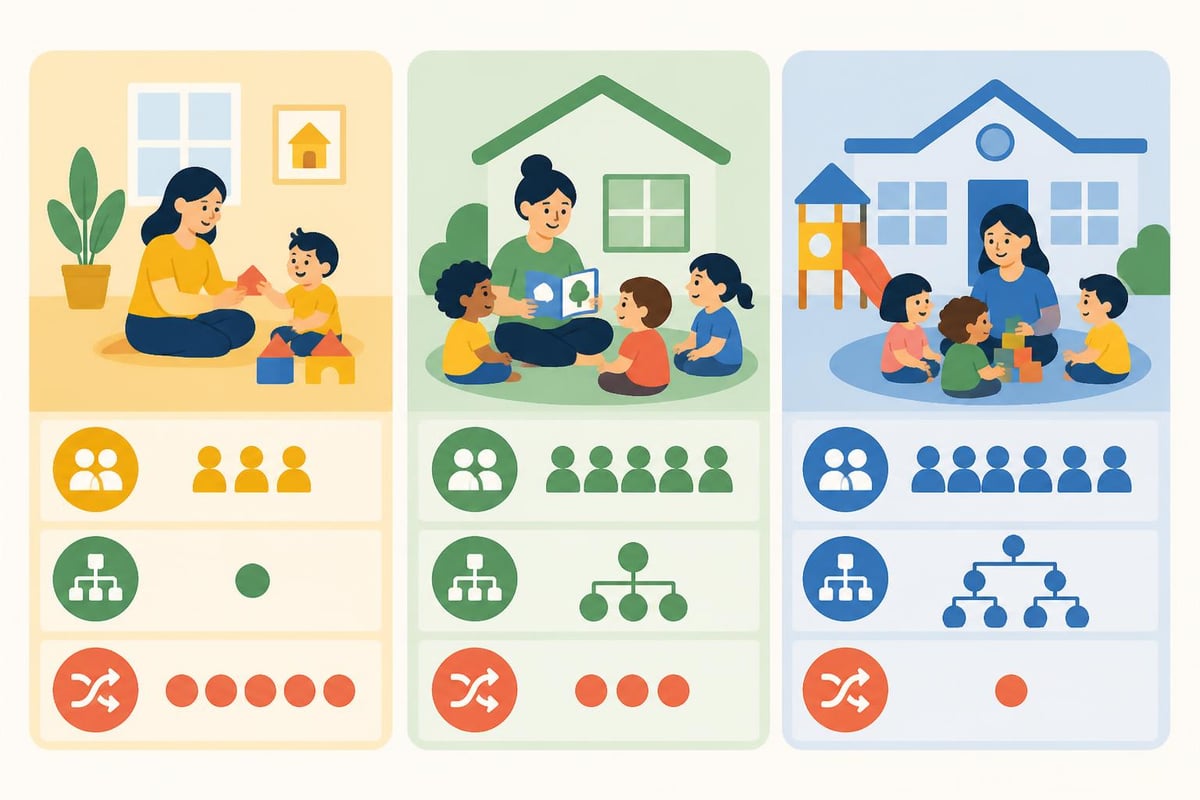
Understanding regulated child care requirements helps parents evaluate whether providers meet basic safety and operational standards. Licensed programs undergo regular inspections and must maintain specific staff-to-child ratios, health protocols, and safety measures.
Quality Indicators That Define Excellent Childcare
Identifying good childcare near me requires knowing which quality markers distinguish exceptional programs from merely adequate ones. The caregiver-to-child ratio stands as perhaps the most critical factor, directly impacting the attention and supervision each child receives. In 2026, best practice recommendations suggest ratios of 1:3 for infants, 1:4 for toddlers, and 1:8 for preschoolers in home settings.
Staff Qualifications and Training
Provider education and ongoing professional development signal commitment to quality care. Look for caregivers with:
- Early childhood education credentials or degrees
- Current CPR and first aid certification
- Regular participation in professional development workshops
- Knowledge of child development stages and milestones
- Experience with age-appropriate activities and curriculum
The child care quality rating systems used by many states provide standardized assessments of programs based on these and other quality measures. These rating systems help parents compare providers objectively.
Health, Safety, and Cleanliness Standards
Physical environment safety cannot be compromised. Quality programs maintain rigorous standards including:
- Childproofed spaces with secured cabinets, covered outlets, and safety gates
- Clean, sanitized toys and surfaces with regular disinfection schedules
- Well-maintained outdoor play areas free from hazards
- Emergency preparedness plans and clearly marked exits
- Proper food storage and meal preparation procedures
| Quality Area | What to Look For | Red Flags |
|---|---|---|
| Environment | Clean, organized, age-appropriate toys | Cluttered spaces, broken equipment, strong odors |
| Supervision | Constant adult presence, appropriate ratios | Children left unsupervised, overcrowding |
| Communication | Daily updates, open-door policy | Reluctance to share information, restricted visits |
| Curriculum | Planned activities, learning objectives | Excessive screen time, no structured activities |
The Home Childcare Advantage
Home-based childcare programs offer distinctive benefits that make them an excellent choice for many families searching for good childcare near me. The intimate setting naturally creates stronger relationships between caregivers, children, and families. Children in home care often develop deep bonds with their providers, experiencing continuity of care that supports emotional security.
Mixed-age groupings in home settings mirror natural family structures, allowing younger children to learn from older peers while giving older children opportunities to develop leadership and nurturing skills. This environment promotes social-emotional development in ways that age-segregated classrooms cannot replicate.
Home childcare providers typically offer more flexibility with schedules, accommodating parents who work non-traditional hours or need occasional extended care. The residential setting also means children experience care in a comfortable, homelike environment rather than an institutional setting, which can ease separation anxiety and create smoother transitions between home and care.
Parents appreciate the consistency of having the same caregiver every day, building trust and enabling providers to truly know each child's personality, preferences, and needs. Programs like Step by Step Care’s approach demonstrate how home-based environments can deliver exceptional developmental outcomes while maintaining the warmth and flexibility families value.
Essential Questions to Ask Potential Providers
Evaluating good childcare near me requires asking pointed questions that reveal how programs operate daily. Beyond touring facilities and reviewing materials, direct conversations with providers uncover critical information about care philosophy, practices, and compatibility with your family's needs.
Operational and Logistical Questions
Start with practical matters:
- What are your hours of operation and holiday closures?
- How do you handle sick children and illness policies?
- What is your backup plan if you're unavailable?
- How many children do you care for simultaneously?
- What meals and snacks do you provide?
- Do you have current licensing and can I see documentation?
Educational Philosophy and Daily Routine
Understanding the program's approach to learning and development helps ensure alignment:
- What does a typical day look like for children in my child's age group?
- How do you balance structured activities and free play?
- What curriculum or educational framework do you follow?
- How do you support children's social-emotional development?
- What outdoor activities and physical play do you incorporate?
- How do you handle challenging behaviors or conflicts between children?
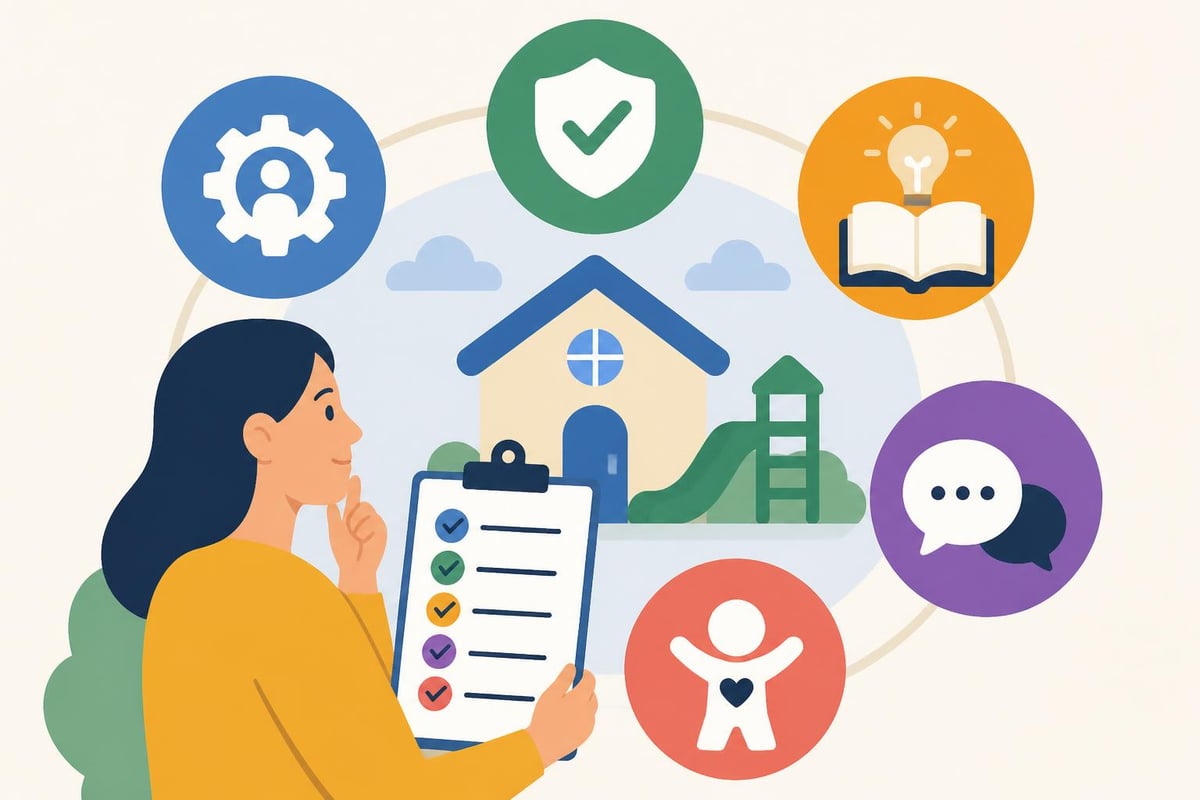
Following the five-step approach to choosing childcare ensures comprehensive evaluation of all important factors before making your final decision.
Conducting Effective Provider Visits
Finding good childcare near me requires in-person observation that goes beyond scheduled tours. While initial visits provide valuable first impressions, observing during regular operating hours reveals authentic daily routines and interactions. Notice how providers engage with children throughout the day, whether they get down to children's level for conversations, and how they respond to different situations.
Watch the children's behavior as a quality indicator. Happy, engaged children who move freely between activities and interact comfortably with caregivers suggest a positive environment. Conversely, children who seem withdrawn, overly rambunctious without redirection, or anxious may signal concerns about the program.
Pay attention to the learning environment's organization. Quality programs designate specific areas for different activities like reading, creative play, and quiet time. Materials should be accessible to children, age-appropriate, and well-maintained. The space should feel inviting and stimulating without being overwhelming or chaotic.
What to Observe During Visits
Create a mental or written checklist covering:
- Provider-child interactions and communication style
- How transitions between activities are managed
- Cleanliness of diapering areas, bathrooms, and eating spaces
- Variety and condition of toys, books, and learning materials
- Outdoor space safety and play equipment condition
- How the provider handles phone calls or interruptions while caring for children
| Positive Indicators | Concerning Signs |
|---|---|
| Warm, responsive interactions | Providers seem distracted or disengaged |
| Children excited to share activities | Children seeking constant attention or acting out |
| Organized, purposeful environment | Chaotic, unstructured atmosphere |
| Clear communication with parents | Vague answers or defensive responses |
| Current licensing posted visibly | Reluctance to show credentials |
Checking References and Background Information
Thorough vetting distinguishes good childcare near me from providers who may not meet quality standards. Request and actually contact at least three current or recent family references. Ask these families specific questions about their experiences, including how the provider handles challenges, communicates about daily activities, and supports children's development.
Verify licensing status through your state's childcare regulatory agency. Most states maintain online databases where parents can check providers' licensing status, inspection reports, and any violations or complaints. Understanding choosing quality childcare standards helps parents know what to look for in these official records.
Research the provider's professional background, including education, training, and years of experience. Providers who invest in ongoing professional development demonstrate commitment to excellence. Look for memberships in professional organizations, specialized training in areas like infant care or special needs, and participation in local childcare networks.
Don't hesitate to request documentation of:
- Current CPR and First Aid certification
- Background checks and clearances
- Vehicle insurance if transportation is provided
- Professional liability insurance
- Health department inspections (for meal preparation)
Understanding Costs and Financial Assistance
Childcare costs vary significantly by region, provider type, and child's age, with infant care typically commanding premium rates. When searching for good childcare near me in 2026, parents should budget between $200-$400 per week for home-based care, though prices fluctuate based on local market conditions and program quality.
Payment structures differ among providers. Some require weekly payments while others prefer monthly billing. Many programs charge registration fees, require deposits, and have policies about payment for vacation weeks or sick days. Clarify all financial expectations upfront to avoid surprises.
Several assistance programs help families afford quality care:
- Child Care and Development Fund (CCDF): Federal program providing subsidies to eligible low-income families
- Dependent Care FSA: Pre-tax employer benefit allowing up to $5,000 annually for childcare expenses
- State-specific programs: Many states offer additional subsidies or tax credits beyond federal assistance
- Employer childcare benefits: Some employers provide childcare stipends or partnerships with local providers
Comparing Value Beyond Price
The least expensive option rarely represents the best value. Consider total cost in context with:
- Provider qualifications and experience level
- Group size and individual attention your child receives
- Curriculum quality and developmental activities offered
- Meals, supplies, and extras included versus additional fees
- Flexibility with schedules and backup care arrangements

Building Strong Provider Partnerships
Once you've selected good childcare near me, establishing effective communication patterns supports your child's success. Quality providers like those at Step by Step Care understand that partnership with families creates the best outcomes for children. Daily communication about your child's activities, mood, meals, and milestones keeps you connected even while working.
Share relevant information about your child's home life that might affect their day, such as disrupted sleep, family changes, or developmental milestones. Providers can better support children when they understand the full context of their experiences. Similarly, listen carefully to provider observations about your child's behavior, friendships, and development.
Respect provider boundaries and policies while advocating for your child's needs. Professional childcare providers maintain schedules, rules, and routines that benefit all children in their care. Work collaboratively to address concerns rather than demanding exceptions that might disrupt the program's functioning.
Red Flags and When to Keep Searching
Recognizing warning signs protects children from inadequate or unsafe care situations. Trust your instincts if something feels wrong during your search for good childcare near me. Certain red flags should immediately eliminate a provider from consideration, regardless of convenience or cost advantages.
Unlicensed providers operating in states requiring licensure represent serious concerns. While some states allow license-exempt care for small groups or relative care, providers should always meet basic regulatory requirements for the care they offer. Never place children with providers who evade or dismiss licensing questions.
Other critical warning signs include:
- Refusing to allow unannounced visits or restricting parent access
- Inability to provide current references from families
- Unclear or inconsistent answers about policies and procedures
- Visible safety hazards in the environment
- Provider seems overwhelmed or unable to manage current group size
- Lack of structured activities or developmental programming
- Poor hygiene or cleanliness standards
- Providers using phones or screens excessively during care hours
Specialized Care Considerations
Some children require providers with specific expertise beyond general childcare qualifications. Families searching for good childcare near me should identify whether their child needs specialized support and seek providers with relevant training and experience.
Infants and Young Toddlers
Infant care demands providers knowledgeable about:
- Safe sleep practices following current AAP guidelines
- Responsive feeding on demand or parent schedules
- Diapering and hygiene routines
- Developmental milestones for first year of life
- Creating secure attachments through consistent, nurturing care
Quality infant programs maintain lower ratios (ideally 1:3) and provide primary caregivers who build strong bonds with babies and families.
Children with Special Needs
Children with developmental delays, disabilities, or health conditions benefit from providers who:
- Have experience or training in special education or inclusive care
- Can implement therapist recommendations and IEP goals
- Communicate effectively with intervention specialists
- Adapt activities and environments for different abilities
- Demonstrate patience and genuine comfort supporting diverse needs
Preparing for Kindergarten
For preschool-aged children, programs emphasizing school readiness provide valuable preparation. Look for providers incorporating:
| Skill Area | Activities and Approaches |
|---|---|
| Pre-literacy | Letter recognition, phonemic awareness, story time, print-rich environment |
| Math concepts | Counting, sorting, patterns, shapes, basic measurement |
| Social skills | Sharing, taking turns, following directions, group participation |
| Independence | Self-care tasks, cleanup routines, making choices |
| Fine motor | Writing practice, cutting, manipulating small objects |
Transitioning Your Child to New Care
Successfully settling children into good childcare near me requires thoughtful transition planning. Begin preparing your child several weeks before the start date by talking positively about their new caregiver and activities they'll enjoy. Visit the provider together multiple times so your child becomes familiar with the space and people.
Create predictable goodbye routines that provide security during drop-offs. Keep partings brief and positive, expressing confidence that your child will have a wonderful day. Providers experienced with transitions can offer strategies specific to your child's temperament and age.
Expect an adjustment period lasting anywhere from a few days to several weeks. Some regression in behavior, sleep, or toileting is normal as children adapt to new routines. Maintain consistent home routines and offer extra patience and connection time during this period. Regular communication with your provider helps both of you support your child through the transition.
Staying Engaged and Monitoring Quality
Finding good childcare near me represents just the beginning of your childcare journey. Ongoing engagement ensures the program continues meeting your child's evolving needs. Maintain regular conversations with providers about your child's development, friendships, and daily experiences. Providers should welcome questions and share both positive moments and concerns openly.
Periodic observation visits during care hours help you monitor quality maintenance. While daily drop-offs provide glimpses, longer observations reveal fuller pictures of routines, interactions, and activities. Most quality providers maintain open-door policies allowing parents to visit anytime.
Stay informed about provider professional development and program improvements. Providers committed to excellence continuously refine their practices, incorporate new research about child development, and invest in better materials and resources. The quality standards used by rating programs offer frameworks for understanding continuous quality improvement in early childhood settings.
Watch for changes in your child's behavior that might signal problems, including:
- Increased reluctance about attending care or separation anxiety
- Unexplained injuries or consistent minor accidents
- Behavioral regression or new challenging behaviors
- Withdrawal or changes in appetite
- Reluctance to discuss care experiences
Address concerns promptly and directly with providers. Most issues resolve through open communication, but persistent problems may require finding alternative care arrangements.
Finding quality care for your child requires careful research, thoughtful observation, and trust in your parental instincts about what environment best serves your family's needs. By understanding quality indicators, asking essential questions, and building strong partnerships with caregivers, you create foundations for positive early childhood experiences that support development and growth. Step by Step Care offers the home-based, nurturing environment where children thrive through individualized attention, flexible scheduling, and genuine commitment to each child's unique journey. Contact us today to learn how our program can provide the quality care your family deserves.


