

Early Learning: Building Foundations for Lifelong Success
The first years of a child's life represent the most critical period for brain development and skill acquisition. During this time, children develop foundational abilities that will shape their academic success, social competence, and emotional well-being throughout their lives. For home childcare providers, understanding the principles and practices that support early learning is essential to creating environments where young children can thrive. This comprehensive guide explores evidence-based approaches, developmental milestones, and practical strategies that empower caregivers to nurture young minds effectively.
Understanding the Science Behind Early Learning
Research consistently demonstrates that children's brains develop more rapidly between birth and age five than at any other time in their lives. During these formative years, neural connections form at an astonishing rate of more than one million per second. These connections create the architecture for all future learning, behavior, and health outcomes.
The quality of early experiences directly influences how these neural pathways develop. Positive interactions, responsive caregiving, and stimulating environments strengthen beneficial connections, while chronic stress or neglect can impair brain development. Home childcare providers play a crucial role in creating the nurturing conditions that support optimal growth.
Critical Developmental Domains
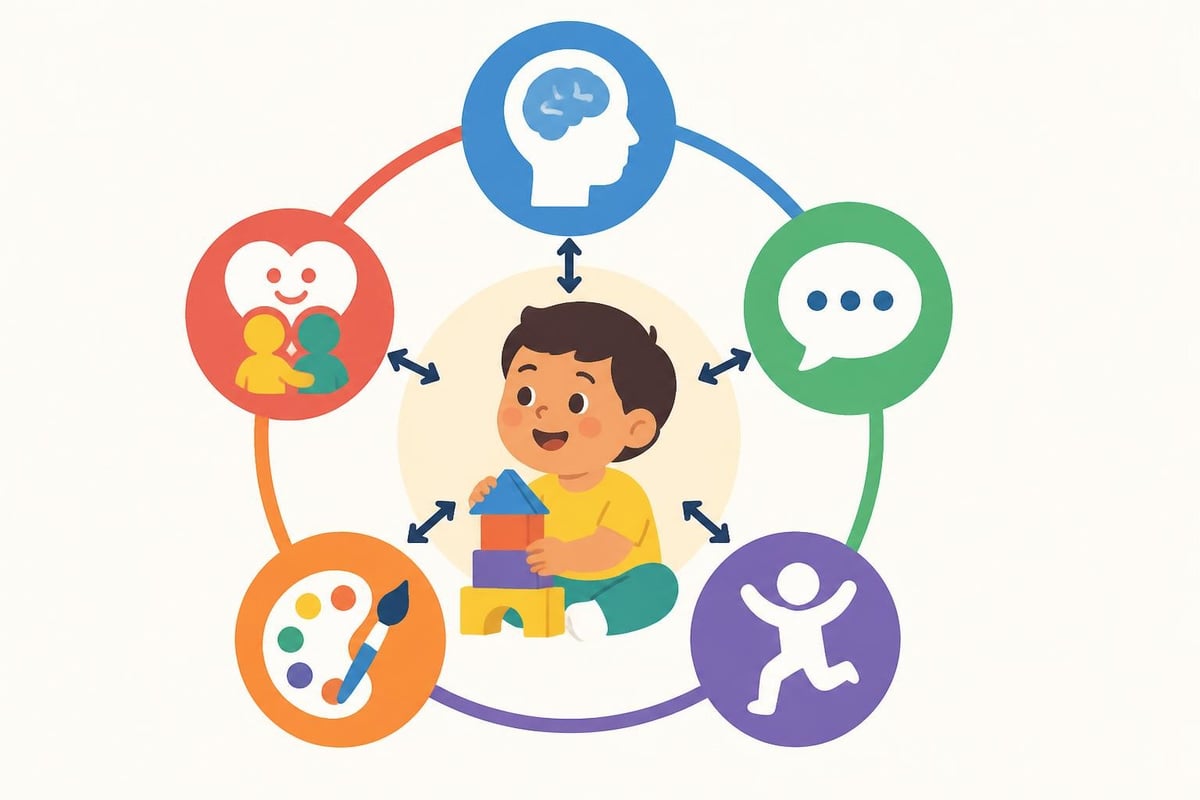
Early childhood development encompasses multiple interconnected domains that require simultaneous attention:
- Cognitive development: Problem-solving, memory, attention, and thinking skills
- Language and literacy: Communication, vocabulary, pre-reading, and writing skills
- Social-emotional development: Self-regulation, relationship building, and emotional understanding
- Physical development: Gross motor skills, fine motor skills, and overall health
- Creative expression: Imagination, artistic abilities, and musical awareness
Each domain influences the others, creating a complex web of growth that requires comprehensive support. The ECTA Center’s Research and Reference Portal provides extensive resources on how these developmental areas interconnect and progress over time.
Creating Developmentally Appropriate Learning Environments
The physical environment in home childcare settings significantly impacts children's ability to explore, discover, and learn. Unlike traditional center-based care, home environments offer unique opportunities for creating intimate, family-like settings that support early learning through familiar contexts.
Designing Spaces That Encourage Exploration
Effective learning environments balance safety with opportunities for age-appropriate risk-taking and discovery. Consider these essential elements:
- Defined activity areas that support different types of play (quiet reading corners, active play zones, creative art spaces)
- Accessible materials organized at children's eye level to promote independence and choice
- Natural light and outdoor access for connection with nature and physical activity
- Flexible furniture that can be rearranged to accommodate different group sizes and activities
- Cultural representation through books, toys, and decorations that reflect diverse families and experiences
The arrangement of space communicates expectations about behavior and learning. Open areas invite movement and gross motor play, while cozy nooks encourage quiet reflection and literacy activities. Understanding childhood care education principles helps providers create balanced environments that meet diverse developmental needs.
Material Selection and Rotation
Quality matters more than quantity when selecting learning materials. Open-ended materials like blocks, art supplies, dramatic play items, and natural objects (pinecones, shells, smooth stones) stimulate creativity and problem-solving more effectively than single-purpose toys.
| Material Type | Developmental Benefits | Examples |
|---|---|---|
| Manipulatives | Fine motor skills, math concepts, problem-solving | Puzzles, sorting toys, building blocks, beads |
| Dramatic Play | Social skills, language, imagination, emotional processing | Play kitchen, dress-up clothes, dolls, toy vehicles |
| Art Supplies | Creative expression, fine motor development, sensory exploration | Crayons, paint, clay, collage materials, scissors |
| Books | Language development, literacy, comprehension, empathy | Board books, picture books, chapter books, poetry |
| Outdoor Equipment | Gross motor skills, risk assessment, physical health | Riding toys, balls, climbing structures, gardening tools |
Regular rotation of materials maintains children's interest and allows providers to introduce new concepts aligned with developmental progression and emerging interests.
Implementing Evidence-Based Teaching Strategies
Effective early learning doesn't happen by accident. It requires intentional planning, observation, and responsive interaction. The Center on the Social and Emotional Foundations for Early Learning emphasizes that high-quality teaching strategies build upon children's natural curiosity while supporting their social-emotional competence.
The Power of Play-Based Learning
Play is children's work, and it serves as the primary vehicle through which young children make sense of their world. Through play, children develop cognitive skills, practice social interactions, process emotions, and build physical capabilities simultaneously.
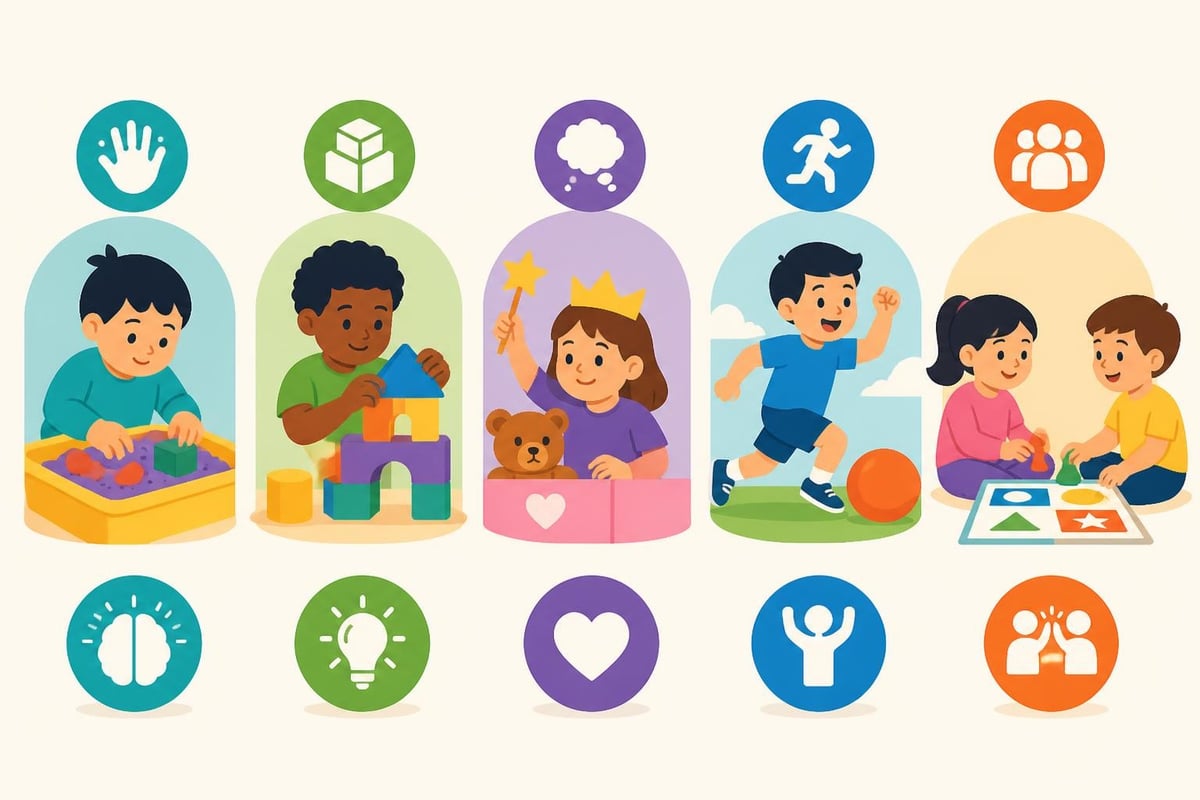
Types of play that support comprehensive development:
- Sensory play (water tables, sand boxes, playdough)
- Construction play (blocks, magnetic tiles, loose parts)
- Pretend play (role-playing, storytelling, puppet shows)
- Physical play (running, climbing, dancing, ball games)
- Games with rules (simple board games, group games, turn-taking activities)
Home childcare providers can enhance play-based learning by participating as play partners, asking open-ended questions, and extending children's thinking without directing their play. This scaffolding approach helps children reach just beyond their current abilities while maintaining ownership of their learning experiences.
Observation and Documentation
Understanding where each child stands developmentally requires systematic observation. Skilled providers watch for patterns in children's behavior, interests, and capabilities, using these insights to plan appropriate learning experiences.
Observing, documenting, and assessing children’s development involves multiple methods:
- Anecdotal records: Brief written observations of significant behaviors or achievements
- Developmental checklists: Structured tools that track progress across domains
- Photo documentation: Visual records that capture learning moments and growth over time
- Work samples: Children's drawings, writing attempts, and creative projects
- Family input: Information from parents about home behaviors and milestones
This documentation serves multiple purposes: it informs daily planning, supports communication with families, and creates a developmental record that celebrates each child's unique growth trajectory.
Supporting Language and Literacy Development
Language forms the foundation for all academic learning, and the early years represent a critical window for language acquisition. Children in high-quality infant care settings experience thousands more words daily than those in less enriched environments, creating substantial differences in vocabulary and comprehension.
Strategies for Language-Rich Environments
Creating opportunities for meaningful conversation throughout the day builds language skills naturally. Effective strategies include:
During daily routines:
- Narrating activities as they happen ("I'm washing your hands with warm, soapy water")
- Asking open-ended questions that require more than yes/no answers
- Expanding on children's utterances ("Dog!" becomes "Yes, that's a big, brown dog running in the park")
- Reading books multiple times, allowing children to predict and retell stories
During play experiences:
- Introducing new vocabulary in context ("Let's use the funnel to pour water into this container")
- Encouraging children to explain their thinking and describe their creations
- Facilitating peer conversations by modeling turn-taking and active listening
- Using songs, rhymes, and fingerplays that build phonological awareness
Early Literacy Foundations
Literacy development begins long before children learn to read conventionally. Print-rich environments, where children see written language used purposefully, help them understand that print carries meaning.
| Pre-Literacy Skill | Activities That Build This Skill |
|---|---|
| Print awareness | Labeling classroom items, pointing out environmental print, writing children's names |
| Phonological awareness | Rhyming games, syllable clapping, identifying initial sounds in words |
| Letter knowledge | Alphabet books, letter hunts, name recognition activities |
| Comprehension | Story discussions, prediction activities, retelling with props |
| Writing concepts | Drawing materials, scribble writing, dictating stories to adults |
Fostering Social-Emotional Competence
Children's ability to manage emotions, form relationships, and navigate social situations predicts school success more reliably than cognitive skills alone. Providers working in early childhood childcare settings must prioritize social-emotional development alongside academic preparation.
Building Secure Relationships
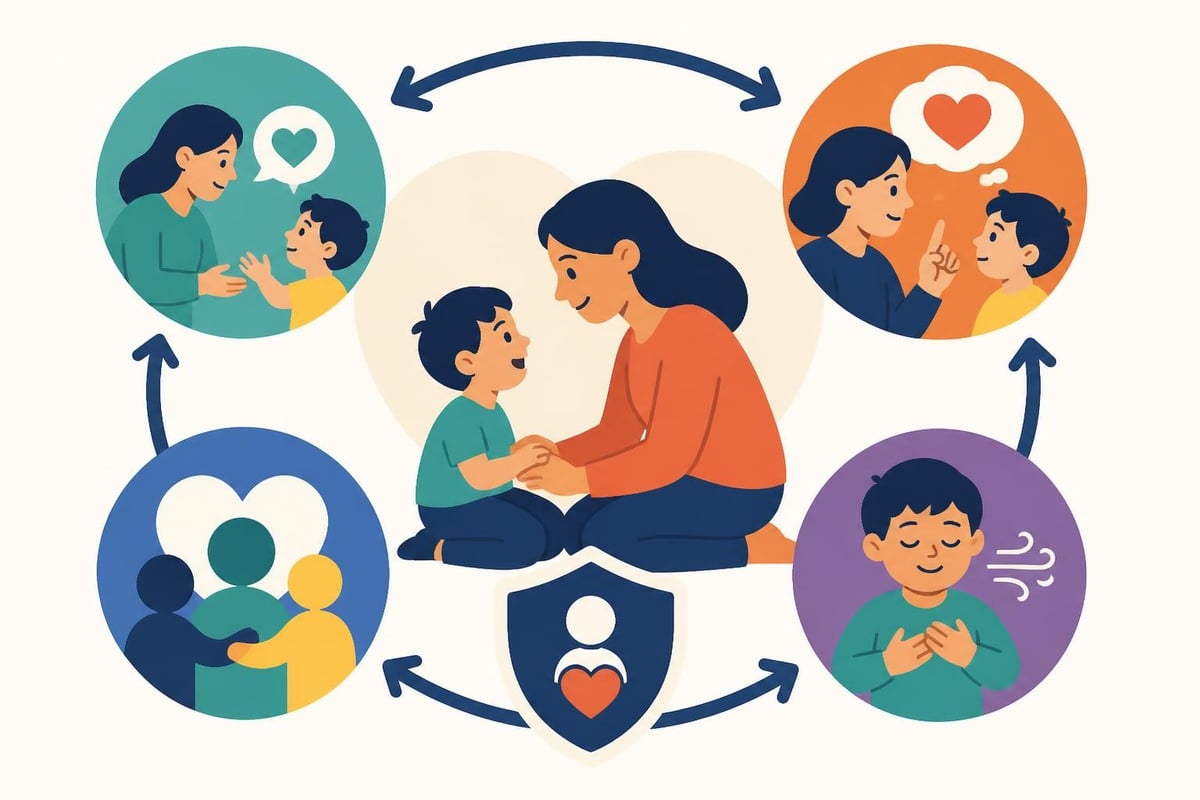
Responsive, consistent caregiving creates the secure attachments that allow children to explore confidently and recover from setbacks. Key practices include:
- Predictable routines that help children feel safe and understand expectations
- Warm, positive interactions that communicate acceptance and value
- Emotional coaching that helps children identify, understand, and manage feelings
- Conflict resolution support that teaches problem-solving rather than punishment
- Individualized attention that recognizes each child's unique temperament and needs
The ECE Resource Hub offers extensive materials on implementing practices that support healthy social-emotional development from birth through five years.
Teaching Self-Regulation Skills
Self-regulation-the ability to manage emotions, attention, and behavior-develops gradually through the early years. Providers support this development by:
- Modeling calm responses to frustration and disappointment
- Providing tools for emotional expression (feeling charts, calm-down corners, comfort objects)
- Teaching specific strategies like deep breathing, counting, or taking breaks
- Setting clear, consistent limits with empathetic explanations
- Recognizing and praising self-control efforts
Partnering With Families for Optimal Outcomes
Early learning succeeds best when home and care settings work together seamlessly. Families possess invaluable knowledge about their children's interests, temperaments, cultural backgrounds, and developmental histories. Effective providers view families as essential partners rather than simply consumers of services.
Communication Strategies That Build Trust
Strong family partnerships require intentional communication that flows in both directions. Consider implementing:
Daily connection points:
- Brief conversations at drop-off and pick-up focusing on the child's experiences
- Digital communication tools that share photos, milestones, and daily activities
- Learning journals that travel between home and care setting
- Regular newsletters highlighting curriculum themes and developmental focuses
Deeper engagement opportunities:
- Quarterly conferences to discuss developmental progress and goals
- Family events that welcome parents into the learning environment
- Resources sharing that extends learning activities into the home
- Cultural celebrations that honor families' diverse traditions and values
Understanding childcare and early education from a family perspective helps providers recognize that parents need support, information, and partnership rather than judgment.
Continuous Professional Growth and Learning
The field of early childhood education continually evolves as research reveals new insights about how young children learn and develop. Committed providers embrace ongoing professional development to refine their practice and stay current with evidence-based strategies.
Resources for Professional Development
Numerous high-quality resources support home childcare providers' continued learning:
- Research-based practice guides from organizations like Penn State’s Better Kid Care program that translate research into practical strategies
- Online courses and webinars addressing specific topics like behavior guidance, curriculum planning, or special needs inclusion
- Professional learning communities where providers share challenges, successes, and innovative approaches
- Formal education programs that deepen understanding of child development theory and practice
The ECTA Center’s evidence-based practice resources help providers identify and implement strategies proven to produce positive outcomes for children and families.
Applying Developmentally Appropriate Practice
Developmentally appropriate practice (DAP) forms the cornerstone of effective early childhood education. This framework, extensively documented in resources like Penn State’s DAP application guide, requires providers to make decisions based on three critical knowledge areas:
| Knowledge Component | Application in Practice |
|---|---|
| Child development and learning | Understanding typical developmental sequences and individual variation |
| Individual children's strengths, interests, and needs | Observing and responding to each child's unique characteristics |
| Social and cultural contexts | Recognizing how family, community, and culture shape development |
Effective providers continuously reference all three knowledge areas when planning environments, selecting materials, designing activities, and interacting with children. This reflective practice ensures that learning childcare experiences align with both developmental science and individual children's realities.
Creating Inclusive Learning Communities
Every child deserves access to high-quality early learning experiences regardless of ability, background, or circumstance. Inclusive practices benefit all children by exposing them to diversity, teaching empathy, and modeling acceptance.
Supporting Diverse Learners
Children enter care settings with vastly different experiences, abilities, languages, and learning styles. Responsive providers:
- Differentiate instruction by offering activities at multiple complexity levels simultaneously
- Use universal design principles that make learning accessible to children with various abilities
- Incorporate multilingual resources that honor children's home languages while supporting English development
- Adapt materials and routines to accommodate individual needs without singling children out
- Collaborate with specialists when children need additional supports or interventions
Creating truly inclusive environments requires examining personal biases, questioning assumptions, and committing to equity in all aspects of care and education.
Celebrating Cultural Diversity
Children develop strong identities when they see their families, cultures, and communities reflected in their learning environments. Beyond surface-level multiculturalism (food, flags, and festivals), authentic cultural responsiveness involves:
- Building genuine relationships with families to understand their values and priorities
- Incorporating diverse materials into daily routines, not just special occasions
- Inviting families to share their knowledge, languages, and traditions
- Examining curriculum and materials for stereotypes and misrepresentation
- Teaching children to recognize unfairness and stand up for others
Health, Safety, and Well-Being Foundations
Physical health and safety form the foundation upon which all early learning builds. Children cannot focus on exploration and discovery when they feel unsafe, hungry, or unwell. Comprehensive care addresses both immediate safety and long-term wellness.
Nutrition and Physical Activity
Healthy eating habits and active lifestyles established in early childhood influence health outcomes throughout life. Providers support wellness by:
Nutrition practices:
- Offering balanced meals and snacks with whole grains, fruits, vegetables, and proteins
- Creating pleasant mealtimes that teach social skills and healthy relationships with food
- Accommodating dietary restrictions, allergies, and cultural food preferences
- Modeling healthy eating and positive mealtime conversations
- Avoiding food as reward or punishment
Physical activity integration:
- Providing daily outdoor time for gross motor development and nature connection
- Incorporating movement throughout the day, not just during designated playtime
- Teaching fundamental movement skills like running, jumping, catching, and balancing
- Offering active alternatives to screen time
- Recognizing that different children have different activity needs and preferences
Safe Environments and Emergency Preparedness
Vigilant supervision and well-maintained environments prevent most injuries. Beyond basic safety measures, prepared providers have emergency plans for various scenarios, maintain current first aid and CPR certifications, and regularly practice evacuation procedures with children.
Understanding and implementing effective early learning practices creates the foundation for children's lifelong success across all developmental domains. Quality care requires continuous attention to relationship building, environmental design, curriculum planning, and professional growth. Step by Step Care provides nurturing home-based childcare where your child's individual needs, interests, and developmental trajectory guide every interaction and experience. Contact us today to learn how we can partner with your family to support your child's early learning journey.


