

First Day Care: A Complete Guide for Parents in 2026
Starting first day care marks a significant milestone in both a child's and parent's life. Whether you're transitioning to home childcare or a traditional facility, understanding what to expect and how to prepare can transform this potentially stressful experience into a positive beginning. The emotions, logistics, and practical considerations all deserve thoughtful attention as you prepare for this important step.
Understanding the First Day Care Experience
The first day care experience varies dramatically depending on your child's temperament, age, and previous separation experiences. Some children adapt quickly to new environments, while others need more time to adjust to unfamiliar faces and routines.
Parents often worry about the same key concerns:
- Will my child cry when I leave?
- How will caregivers handle my child's specific needs?
- What if my child doesn't eat or nap?
- How do I know they're safe and happy?
These worries are completely normal and shared by nearly every parent navigating this transition. The good news is that with proper preparation and the right childcare environment, most children adjust within days to weeks.
Age-Specific Considerations
Different ages bring different challenges and advantages when starting care. Infants typically adapt to new caregivers more easily than toddlers, who have stronger separation awareness. Preschoolers may experience anxiety but can also communicate their feelings more effectively.
| Age Group | Common Reactions | Typical Adjustment Period |
|---|---|---|
| Infants (0-12 months) | May cry initially but often calm quickly | 1-2 weeks |
| Toddlers (1-3 years) | Strong separation anxiety, clinginess | 2-4 weeks |
| Preschoolers (3-5 years) | Verbal resistance, testing boundaries | 1-3 weeks |
Preparation Strategies Before First Day Care
Successful transitions start weeks before the actual first day care begins. Preparing your child for childcare involves both practical and emotional groundwork that builds confidence for everyone involved.
Visiting the Care Environment
Schedule multiple visits to the childcare location before the official start date. Let your child explore the space, meet caregivers, and touch toys while you're present. This familiarization reduces anxiety because the environment won't feel completely foreign on day one.
During these visits, observe how caregivers interact with other children. Notice the daily schedule posted on walls, ask about nap routines, and inquire about how they handle transitions throughout the day. At Step by Step Care, we encourage families to visit and spend time getting comfortable with our home-based environment before enrollment begins.
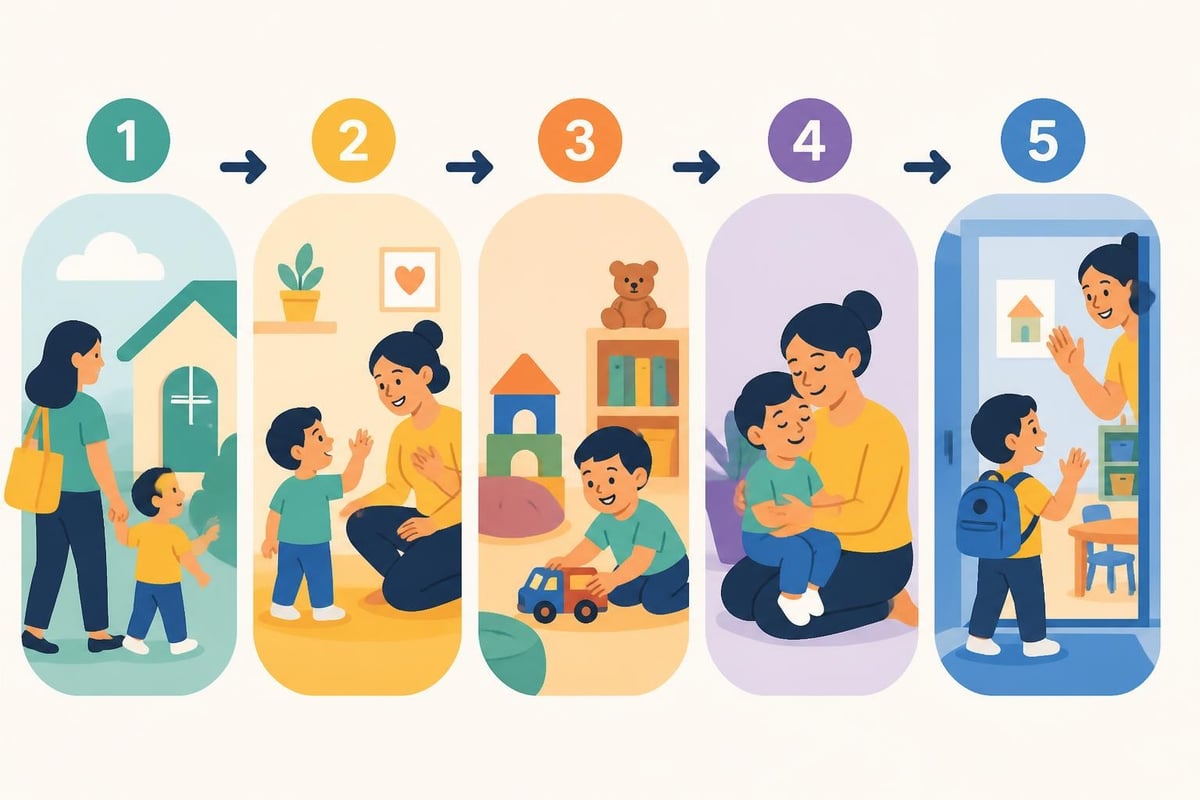
Establishing Consistent Routines
Children thrive on predictability. Two weeks before starting care, begin aligning your home routines with the childcare schedule. If care starts at 8 AM, practice the morning routine at that time. Adjust nap times, meal times, and bedtimes to match what they'll experience in care.
Key routine elements to synchronize:
- Wake-up time and morning activities
- Breakfast timing and types of foods
- Morning nap schedule
- Lunch timing
- Afternoon activities and rest periods
This synchronization helps your child's body clock adjust before the actual transition happens. Understanding what to expect during the first week can help you plan these adjustments more effectively.
Communicating About the Change
Talk to your child about the upcoming first day care experience using positive, age-appropriate language. For younger children, use simple phrases like "You'll go to Ms. Charlotte's house and play with friends." Older children benefit from more detailed explanations about why they're starting care and what their day will look like.
Read books about starting daycare or visiting new places. Role-play drop-off and pickup scenarios using stuffed animals. Create excitement by letting your child choose a special backpack or lunch box. These conversations build anticipation rather than fear.
Essential Items to Pack for First Day Care
Physical preparation matters as much as emotional readiness. Creating a comprehensive packing list ensures you don't forget critical items during the morning rush.
Daily Essentials Checklist
Every childcare setting has specific requirements, but most need the following basics. Preparing necessary items should happen the night before to reduce morning stress.
Clothing and comfort items:
- Two complete changes of clothes (including socks and underwear)
- Diapers and wipes if not potty trained
- Favorite blanket or small stuffed animal
- Weather-appropriate outdoor gear
- Indoor shoes or slippers
Food and feeding supplies:
- Labeled bottles with formula or breast milk for infants
- Sippy cups or water bottles
- Lunch and snacks following facility guidelines
- Bibs and burp cloths for younger children
Labeling Everything
One critical step parents often overlook is labeling every single item your child brings. Use permanent markers or labels on clothing tags, food containers, bottles, blankets, and even shoes. In group settings, similar items easily get mixed up, and clear labeling prevents losses and confusion.
Managing the Drop-Off Process
The actual drop-off moment on first day care represents the most emotionally charged part of the experience. How you handle this separation sets the tone for your child's entire day.
Creating a Goodbye Ritual
Develop a brief, consistent goodbye ritual that you'll use every single day. This might be two hugs, one kiss, and saying "I'll be back after nap time." Keep it short and sweet-prolonged goodbyes typically increase distress for both parent and child.
Effective goodbye strategies include:
- Arrive at a consistent time each day
- Help your child put away their belongings
- Engage briefly with an activity or caregiver
- Perform your goodbye ritual
- Leave promptly and confidently
Never sneak away while your child is distracted. This breaks trust and can create worse separation anxiety for future drop-offs. Even if tears start, a confident departure with reassurance that you'll return works better than hesitation.

Handling Tears and Resistance
Crying at drop-off is completely normal, especially during the first few weeks. Most children calm down within minutes after parents leave, even though those tears feel devastating in the moment. Expert tips for managing separation anxiety can help parents cope with this difficult aspect.
Trust your caregivers to comfort and redirect your child. Quality providers know how to ease transitions through distraction, engaging activities, and nurturing attention. Many centers offer updates via text or photos throughout the day to reassure worried parents.
What Happens After You Leave
Understanding the typical first day care schedule helps parents visualize their child's experience while separated. Most home childcare providers follow structured routines that balance learning, play, meals, and rest.
Typical Daily Schedule
Morning hours usually focus on free play and structured activities as children arrive at different times. Mid-morning brings circle time, learning activities, or outdoor play. Lunch happens around noon, followed by quiet time or naps for younger children.
Sample home daycare schedule:
| Time | Activity |
|---|---|
| 8:00-9:00 AM | Arrival, free play, breakfast |
| 9:00-10:00 AM | Circle time, structured learning |
| 10:00-11:00 AM | Outdoor play or gross motor activities |
| 11:00 AM-12:00 PM | Snack time, quiet activities |
| 12:00-12:30 PM | Lunch |
| 12:30-2:30 PM | Nap time or quiet rest |
| 2:30-4:00 PM | Afternoon snack, free play |
| 4:00-6:00 PM | Outdoor time, pickup |
How Caregivers Support New Children
Experienced providers use specific strategies to help new children feel secure. They might assign a buddy from the existing group, offer extra comfort during transitions, or keep new children close during the first few days.
At quality home childcare settings like those you'll find when researching top-rated daycares near you, caregivers track eating, sleeping, and bathroom habits carefully for new children. This information gets shared with parents during pickup to help everyone understand how the adjustment is progressing.
Pickup Time and Reconnection
The reunion at pickup requires thoughtful handling too. Your child may react in unexpected ways when you return-some children run excitedly to parents, while others ignore them or even show anger about the separation.
Understanding Pickup Reactions
Different reactions are all normal processing methods for young children. A child who ignores you at pickup isn't being rude-they're showing that they felt secure enough to invest emotionally in the care environment. A child who melts down isn't telling you the day was terrible-they're releasing pent-up emotions they held together all day.
Give your child a moment to transition. Don't rush them out the door immediately. Let them show you something they made or finish an activity. Ask caregivers for a quick summary of the day, including highlights, challenges, and any important information.
Post-Care Routine
Establish a consistent after-care routine just as you created a morning routine. This might include a special snack in the car, quiet time at home, or a walk to decompress. Young children often need to release emotions from holding it together all day, so expect some regression, clinginess, or emotional outbursts in the evening.

The Adjustment Period Beyond First Day Care
The first day represents just the beginning of a longer adjustment process. Understanding the first week expectations helps parents maintain realistic perspectives about this transition timeline.
Week-by-Week Progression
Most children show improvement each week, though progress isn't always linear. Some children have great first days followed by harder second days once the novelty wears off. Others start rough and gradually warm up.
Typical adjustment patterns:
- Week 1: High emotions, exhaustion, possible behavior changes at home
- Week 2: Some settling in, developing preferences for activities and friends
- Week 3: More consistent emotions, better drop-offs
- Week 4+: Comfortable routine, excited about care activities
Supporting Adjustment at Home
Your home environment significantly impacts how quickly your child adjusts to first day care and beyond. Maintain consistent bedtimes since tired children struggle more with transitions. Provide extra cuddles and one-on-one attention during non-care hours. Avoid introducing other major changes during this adjustment period.
Watch for signs that adjustment isn't progressing normally. Regression lasting beyond a month, physical symptoms like frequent illness, or behavioral changes that worsen rather than improve might indicate the care situation isn't the right fit. Trust your instincts and communicate concerns with providers.
Communication with Your Childcare Provider
Strong parent-provider communication forms the foundation of successful first day care experiences and ongoing care relationships. Open dialogue ensures everyone works together to support your child's development and wellbeing.
Daily Information Sharing
Quality providers share information about your child's day through various methods-daily sheets, apps, verbal reports, or photos. This communication should cover meals, naps, bathroom habits, activities, social interactions, and any concerns.
You should feel comfortable sharing detailed information about your child's personality, preferences, and needs. Providers benefit from knowing that your child needs their stuffed bear for naps, gets cranky when hungry, or loves dinosaurs. This information helps caregivers provide personalized attention.
Building Partnership
View your relationship with caregivers as a partnership rather than a service transaction. Learning about your provider’s approach helps you understand their philosophy and methods. Regular check-ins beyond daily updates-perhaps monthly conversations-allow for deeper discussions about development and progress.
Share changes happening at home that might affect your child's behavior at care. New siblings, family stress, schedule changes, or developmental leaps all impact how children behave in care settings. The more caregivers know, the better they can support your child.
Addressing Common First Day Care Challenges
Even with perfect preparation, challenges arise during the first day care transition. Knowing how to address common issues prevents small problems from becoming major obstacles.
Sleep Disruptions
Many children struggle with sleep during the care adjustment period. Some resist naps at the new location, while others come home exhausted and crash earlier than usual. Tips for managing these transitions can help parents navigate sleep challenges effectively.
Maintain consistent bedtime routines even if naps get disrupted. Most children gradually adjust their nap patterns to match the care schedule within 2-3 weeks. Talk to providers about your child's sleep preferences and work together on strategies.
Eating Issues
New children sometimes refuse to eat at first day care due to unfamiliar foods, different schedules, or emotional stress. Some providers require parents to pack all meals, while others provide food-understand the policy and plan accordingly.
Strategies for eating challenges:
- Pack familiar favorites for the first few weeks
- Don't stress about quantities-children won't starve
- Share your child's food preferences and allergies clearly
- Gradually introduce foods they'll encounter in care at home first
- Trust that hunger eventually overrides hesitation
Illness and Immunity Building
Increased illness frequency represents one of the most frustrating aspects of starting care. When children from multiple families gather, germs spread more easily. Most children experience 6-8 colds during their first year in group care as their immune systems build resistance.
Follow your provider's illness policies strictly. Sending sick children to care spreads illness to others and shows disrespect for the provider's health and other families. Build a backup care plan for sick days-a trusted family member, backup sitter, or workplace flexibility.
Special Considerations for Home-Based Childcare
Home childcare environments like those offered at Step by Step Care provide unique benefits and considerations compared to larger center-based facilities. Understanding these differences helps you maximize the advantages of this intimate care setting.
Smaller Group Dynamics
Home daycares typically serve fewer children, creating more personalized attention and relationship-building opportunities. Your child receives individualized care and develops closer bonds with providers and the small peer group. This intimate setting often feels less overwhelming for children during the first day care experience and beyond.
Multi-age groupings in home settings provide natural opportunities for younger children to learn from older ones and older children to develop nurturing skills. These mixed-age interactions mirror family dynamics and create rich social learning environments.
Home-Like Environment Benefits
The residential setting of home childcare creates a naturally comfortable atmosphere that eases first day care anxiety. Children often adjust faster to spaces that feel similar to their own homes compared to institutional settings. The homelike environment typically includes real kitchens, comfortable furniture, and outdoor play spaces that feel familiar.
Providers in home settings often maintain more flexible schedules and can accommodate individual family needs more easily than larger centers with rigid policies. This flexibility proves especially valuable during the adjustment period when children might need modified schedules or extra transition support.
Starting first day care marks a significant transition that requires preparation, patience, and trust in both your child's resilience and your provider's expertise. Remember that adjustment takes time, emotional responses are normal, and most challenges resolve within the first month as new routines become familiar. If you're looking for a nurturing home childcare environment in the Springfield area, Step by Step Care offers personalized attention in a warm, home-based setting designed to make your child's transition as smooth as possible. Contact us to learn more about our approach and schedule a visit to see how we support families through this important milestone.


