

Infant Education: Building Strong Foundations Early
The first year of life represents a period of extraordinary brain development and learning. Infant education encompasses far more than simple babysitting-it involves intentional practices that support cognitive, social, emotional, and physical growth during these critical early months. For home childcare providers, understanding the principles of effective infant education creates opportunities to provide meaningful experiences that shape lifelong learning trajectories. Quality early care during infancy establishes neural pathways, builds secure attachments, and creates the foundation for all future educational experiences.
Understanding Developmental Needs in Infant Education
Infant education must align with the unique developmental stages babies experience during their first year. Newborns arrive with innate abilities to learn, but their brains require specific types of stimulation and interaction to develop properly.
During the first three months, infants focus primarily on sensory experiences and building trust through consistent caregiving. They learn to recognize voices, faces, and patterns in their environment. Between four and six months, babies become more interactive, reaching for objects, responding to their names, and beginning to understand cause-and-effect relationships.
The Science Behind Early Brain Development
Research examining brain activity in one-month-old infants demonstrates how early environmental factors influence neurological development from the very beginning of life. This underscores why quality infant education matters even in the earliest weeks.
The infant brain forms over one million neural connections every second during the first year. These connections strengthen through repeated experiences and interactions. When caregivers respond consistently to an infant's cues, speak to them regularly, and provide varied sensory experiences, they actively build the architecture of the developing brain.
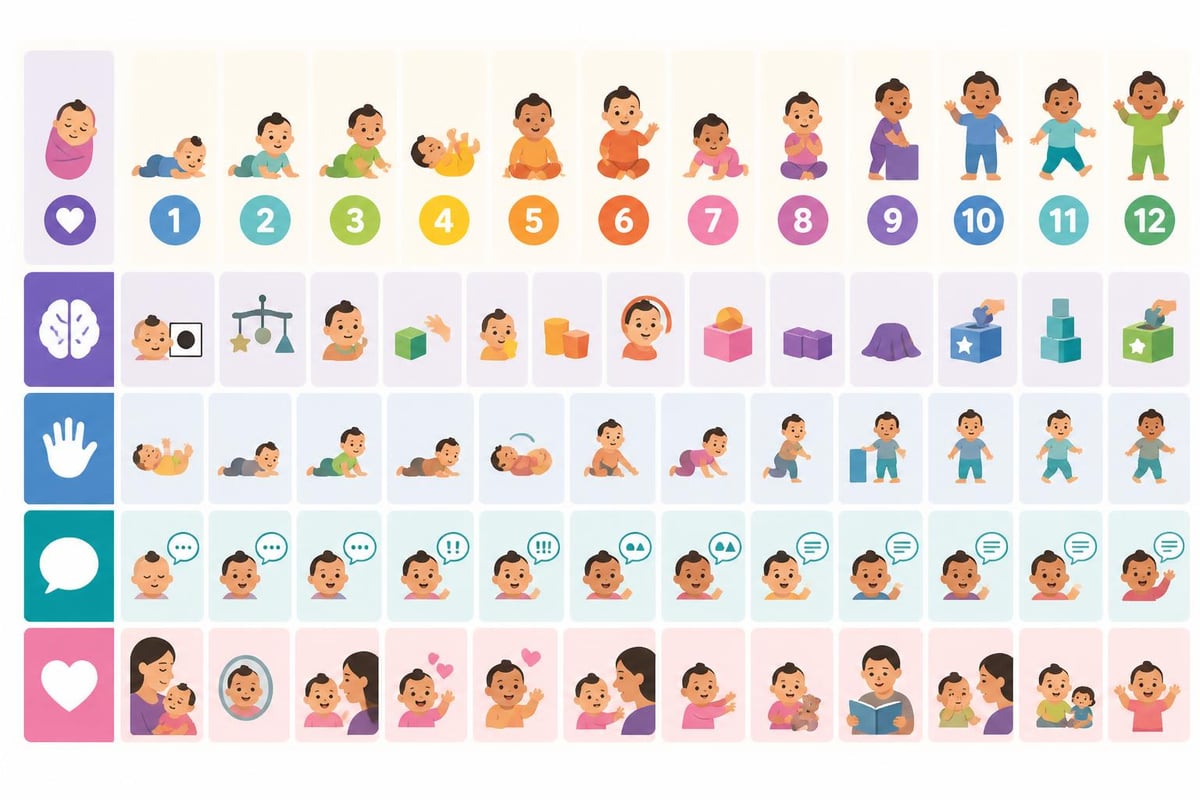
Key developmental areas in infant education include:
- Cognitive development: Problem-solving, memory, and understanding object permanence
- Language acquisition: Receptive language skills, babbling, and early communication attempts
- Motor skills: Gross motor control (rolling, sitting, crawling) and fine motor coordination
- Social-emotional growth: Attachment formation, emotional regulation, and early social interactions
- Sensory processing: Integration of sight, sound, touch, taste, and movement experiences
Quality infant care programs recognize these interconnected developmental domains and create environments that support holistic growth.
Play-Based Learning for Infants
Play serves as the primary vehicle for infant education. Through play, babies explore their world, test hypotheses, and develop essential skills. However, infant play looks different from the structured activities used with older children.
Responsive and intentional play activities empower infants by following their lead and building on their natural curiosity. Caregivers who understand this approach create richer learning experiences even during routine care moments.
Types of Developmentally Appropriate Play
Floor time represents one of the most valuable play experiences for infants. Placing babies on their stomachs strengthens neck and shoulder muscles while encouraging them to reach, grasp, and eventually crawl. Simple toys positioned just beyond reach motivate movement and problem-solving.
Sensory exploration engages multiple learning pathways simultaneously. Offering different textures, sounds, and visual stimuli helps infants categorize and understand their environment. Safe household items often work better than expensive toys-wooden spoons, fabric swatches, and plastic containers provide endless investigation opportunities.
Interactive games like peek-a-boo teach object permanence and cause-and-effect relationships. These simple activities also strengthen emotional bonds and help infants learn to anticipate events.
| Play Type | Age Range | Benefits | Examples |
|---|---|---|---|
| Sensory Play | 0-3 months | Stimulates neural pathways, supports body awareness | Gentle massage, varied textures, black-and-white images |
| Exploratory Play | 3-6 months | Develops motor skills, cause-and-effect understanding | Rattles, soft blocks, crinkle toys |
| Interactive Play | 6-9 months | Builds social skills, language development | Peek-a-boo, pat-a-cake, simple songs |
| Discovery Play | 9-12 months | Encourages problem-solving, independence | Stacking cups, shape sorters, push toys |
The home childcare environment offers unique advantages for infant education through play. Smaller group sizes allow providers to observe each child carefully and tailor activities to individual interests and developmental stages.
Language Development and Communication
Language learning begins from birth, long before infants speak their first words. Infant education must prioritize rich verbal interactions that build vocabulary, comprehension, and communication skills.
The quality of conversational interactions between educators and infants significantly impacts language development outcomes. Caregivers who engage in back-and-forth exchanges, even with pre-verbal infants, create powerful learning opportunities.
Building Language Through Daily Routines
Narrating daily activities provides continuous language exposure. When caregivers describe what they're doing during diaper changes, feeding, or dressing, they teach vocabulary in context. "I'm putting on your soft blue sock. Now the other foot-there's your sock!" introduces words, concepts, and sentence patterns.
Responsive communication means treating infant sounds as meaningful conversation. When a baby coos or babbles, responding with words validates their communication attempts and models turn-taking. This back-and-forth exchange, called "serve and return," builds critical neural pathways.
Reading to infants daily establishes literacy foundations and creates positive associations with books. Board books with simple images, varied textures, and rhythmic text engage young learners. The goal isn't comprehension but rather exposure to language patterns, new vocabulary, and the pleasure of shared reading experiences.
Singing, whether traditional nursery rhymes or made-up songs, teaches rhythm, phonetic patterns, and emotional expression. Music-based activities in infant education support language acquisition while strengthening caregiver-child bonds.
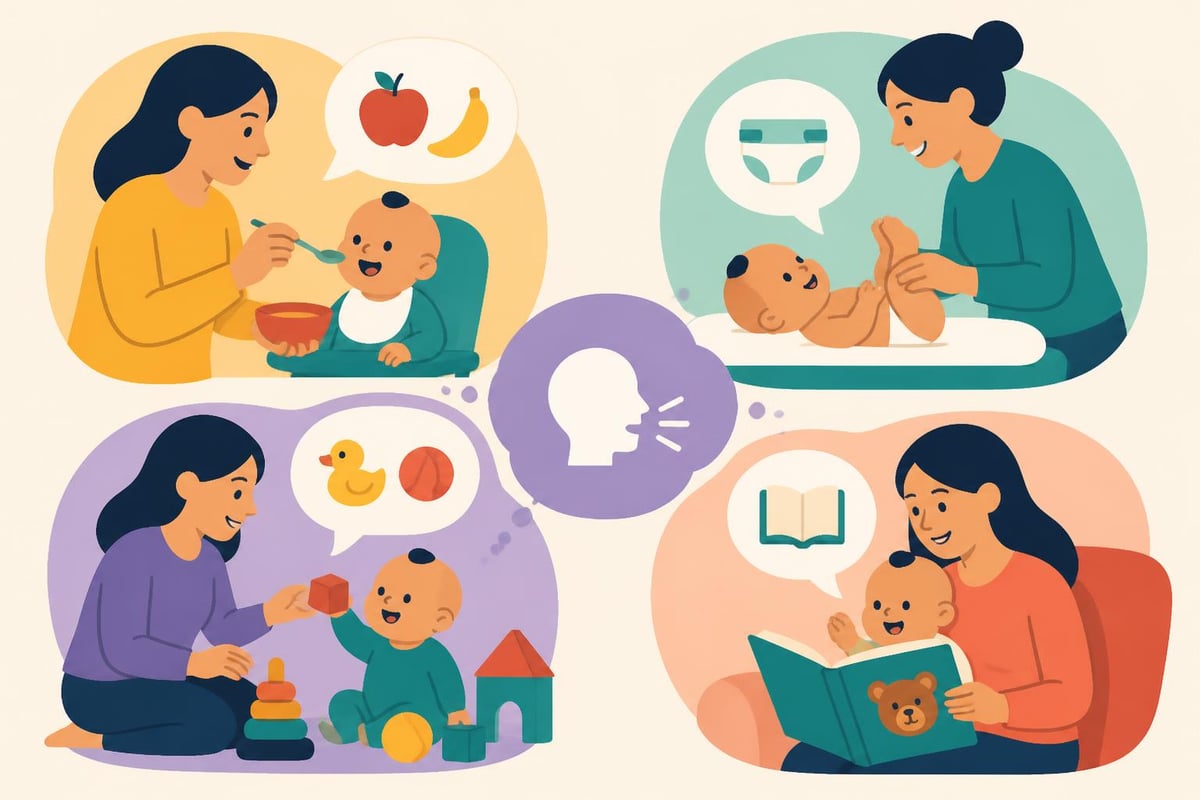
Research shows that the quantity and quality of words infants hear predict later language abilities and academic success. Home childcare providers who understand this research can make every interaction count.
Creating Secure Attachments Through Responsive Caregiving
Emotional security forms the foundation of all learning. Infant education succeeds only when babies feel safe, valued, and understood. Responsive caregiving practices build the secure attachments that enable exploration and growth.
Understanding infants’ emotional and social experiences during transitions to early childhood care settings highlights the importance of sensitive, consistent caregiving during these vulnerable periods.
The Responsive Caregiving Approach
Responsive caregiving means reading infant cues accurately and responding promptly and appropriately. When babies cry, they communicate needs-hunger, discomfort, overstimulation, or the desire for connection. Caregivers who respond consistently teach infants that their needs matter and the world is predictable.
This approach requires careful observation. Does the baby turn away when overstimulated? Do they make specific sounds when hungry versus tired? Recognizing individual communication patterns allows providers to meet needs before distress escalates.
Primary caregiving systems in home childcare settings, where one provider takes main responsibility for specific infants, support attachment formation. Consistent routines, familiar faces, and predictable responses create the security infants need to explore their environment confidently.
Key responsive caregiving practices include:
- Maintaining consistent routines while remaining flexible to individual needs
- Responding promptly to cries and communication attempts
- Reading nonverbal cues like body language, facial expressions, and sounds
- Providing comfort during transitions, stress, or new experiences
- Celebrating achievements with enthusiasm and encouragement
- Respecting individual temperaments and developmental timelines
These practices don't spoil infants-they build the emotional regulation skills and confidence that support all future learning.
Supporting Physical Development and Motor Skills
Physical development during infancy progresses rapidly from reflexive movements to intentional actions. Infant education must provide safe opportunities for movement exploration while supporting emerging motor skills.
Gross Motor Development
Tummy time remains essential for building core strength needed for rolling, sitting, and eventually walking. Starting with just a few minutes several times daily, caregivers can gradually increase duration as infants build tolerance and strength.
Creating safe floor spaces where infants can move freely encourages natural progression through developmental milestones. Unlike equipment that restricts movement, open floor areas allow babies to rock, roll, scoot, and crawl as their bodies develop readiness.
Providers should avoid rushing motor milestones. Each infant follows an individual timeline, and premature positioning (like propping babies to sit before they can manage independently) can interfere with natural development sequences.
Fine Motor Coordination
Fine motor skills develop as infants gain control over smaller muscle groups. Reaching, grasping, and manipulating objects requires practice and appropriate materials.
Age-appropriate materials support skill development:
- 0-3 months: High-contrast images, lightweight rattles, soft toys for batting
- 3-6 months: Textured toys, items that make sounds when shaken or squeezed
- 6-9 months: Objects for banging, containers for filling and dumping
- 9-12 months: Items for stacking, simple shape sorters, large crayons
Safety considerations remain paramount. All materials must be too large to swallow, free from small parts, and made from non-toxic materials.
Nutrition and Feeding Practices in Infant Education
Feeding represents both a nutritional necessity and a learning opportunity. Infant feeding best practices support growth and development through responsive techniques and caregiver-family communication.
Responsive feeding means recognizing and responding to infant hunger and fullness cues. Babies who are allowed to regulate their own intake develop healthier relationships with food and better self-regulation skills.
| Age Range | Feeding Focus | Developmental Connection |
|---|---|---|
| 0-4 months | Breast milk or formula only | Building trust through feeding responsiveness |
| 4-6 months | Introduction of solid foods (if ready) | Exploring textures, developing oral motor skills |
| 6-9 months | Variety of pureed and mashed foods | Learning tastes, self-feeding attempts |
| 9-12 months | Finger foods, family foods (modified) | Independence, fine motor practice, social eating |
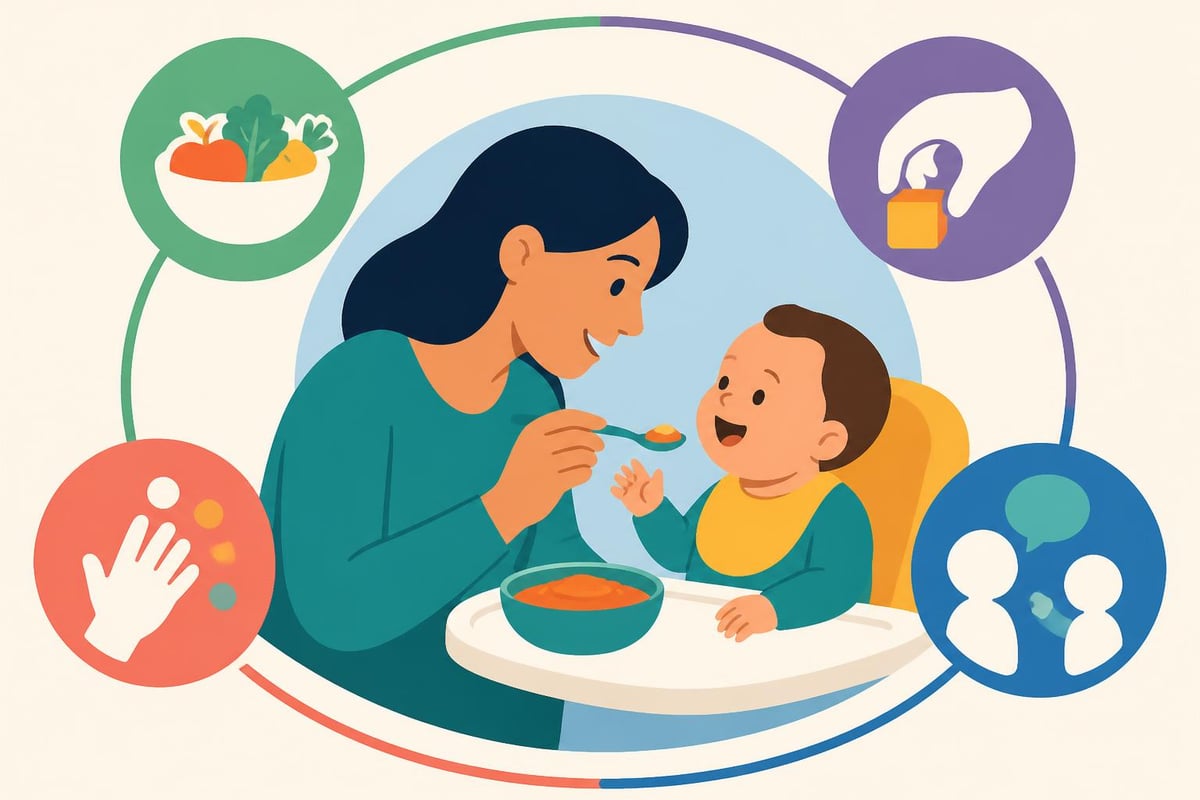
Mealtimes offer rich learning experiences beyond nutrition. Language development occurs as caregivers name foods and describe tastes and textures. Fine motor skills strengthen as babies learn to grasp finger foods. Social skills emerge during shared eating experiences.
Home childcare providers should maintain close communication with families about feeding schedules, preferences, and any concerns. Consistency between home and care settings supports infant comfort and nutritional adequacy.
Environmental Design for Infant Learning
The physical environment significantly impacts infant education outcomes. Thoughtful space design supports development while ensuring safety and comfort.
Creating Learning Zones
Even small spaces can include distinct areas for different activities. A cozy corner with soft pillows and books creates a quiet space for language activities and rest. An open floor area with mats supports motor development. A low mirror encourages self-awareness and visual tracking.
Safety remains the primary consideration in infant environments. Spaces must be clean, temperature-controlled, and free from hazards. All furniture should be sturdy and properly secured. Outlets need covers, and small objects must stay out of reach.
Natural light, when possible, supports healthy circadian rhythms and provides optimal conditions for visual development. When natural light is limited, full-spectrum bulbs offer better quality than standard lighting.
Materials should be rotated regularly to maintain interest without overwhelming infants. Too many toys create overstimulation; a carefully curated selection changed weekly provides novelty while allowing deep exploration.
The home childcare setting naturally offers advantages-real household items, varied rooms, and outdoor access provide authentic learning environments that commercial centers cannot replicate.
Partnering With Families in Infant Education
Effective infant education requires strong partnerships between caregivers and families. Parents remain the primary educators and decision-makers for their children, while providers extend and complement home learning.
Daily communication keeps families informed about their infant's experiences, developmental progress, and emerging skills. Whether through brief conversations during pickup, daily reports, or photo sharing, consistent information exchange builds trust and continuity.
Predictors of cognitive development in infants from low-income families demonstrate that supportive relationships and quality caregiving can mitigate risk factors, highlighting the critical role providers play in supporting all families.
Building Collaborative Relationships
Respecting family cultures, values, and preferences demonstrates partnership. When families share feeding preferences, sleep routines, or cultural practices, incorporating these into care shows respect and maintains consistency for infants.
Sharing developmental observations helps families understand their child's progress. Rather than comparing infants or creating pressure around milestones, providers can celebrate individual achievements and note emerging skills.
Education extends both directions in strong partnerships. Families know their children best and can share insights about temperament, preferences, and effective strategies. Providers bring professional knowledge about child development and research-based practices.
Challenges should be addressed collaboratively. If a provider notices a potential developmental concern, approaching families with sensitivity and specific observations-rather than labels or diagnoses-opens productive conversations about next steps.
Providers might explore resources available through top-rated daycares in their area to stay current with best practices and community resources for families.
Continuous Professional Development in Infant Education
The field of early childhood education continuously evolves as research reveals new insights about infant development and effective practices. Home childcare providers committed to quality must engage in ongoing professional learning.
Professional development opportunities include:
- Workshops and conferences focused on infant development and caregiving
- Online courses covering topics from brain development to inclusive practices
- Professional reading of current research and best-practice guides
- Peer learning networks where providers share strategies and support
- Reflective supervision that examines practice and identifies growth areas
Staying informed about current research ensures practices align with evidence-based approaches rather than outdated methods. Understanding how infant education impacts long-term outcomes motivates continued excellence in daily caregiving.
Documentation and reflection help providers recognize patterns, celebrate growth, and identify areas for improvement. Taking photos, keeping brief notes about activities and responses, and regularly reviewing these records supports intentional practice.
Quality infant education requires both heart and head-genuine care for children combined with professional knowledge about development and effective practices. Home childcare providers who commit to both create environments where infants thrive.
Quality infant education during the critical first year establishes foundations that support all future learning and development. By implementing responsive caregiving, creating language-rich environments, and partnering effectively with families, home childcare providers make lasting impacts on young lives. If you're seeking exceptional care that combines warmth with professional expertise, Step by Step Care offers the nurturing, developmentally appropriate environment where your infant can flourish during these precious early months.


