

Best Childcare Near Me: Expert Guide to Finding Quality Care
Finding the best childcare near me is one of the most important decisions parents face. The right childcare environment shapes your child's early development, provides peace of mind while you work, and becomes a second home for your little one. Whether you're searching for infant care, toddler programs, or preschool options, understanding what makes quality childcare and knowing how to evaluate providers in your area will help you make an informed choice that supports your family's unique needs.
Understanding Your Childcare Options
When searching for the best childcare near me, parents encounter several types of care settings. Each option offers distinct advantages depending on your child's age, personality, and your family's preferences.
Childcare.gov outlines various child care options, including centers, family child care homes, and prekindergarten programs. Home-based childcare provides a residential setting where licensed providers care for small groups of children. This intimate environment often feels like an extension of your own home, with mixed-age groups that allow younger children to learn from older ones.
Home-Based vs. Center-Based Care
| Feature | Home-Based Childcare | Center-Based Care |
|---|---|---|
| Group Size | 4-12 children typically | 15-60+ children |
| Environment | Residential, home-like | Institutional, classroom-style |
| Staff Ratios | Often 1:4 to 1:6 | Varies by age group |
| Flexibility | Often more flexible hours | Fixed schedule |
| Cost | Generally lower | Generally higher |
Home-based programs like those offered at Step by Step Care create nurturing environments where children develop strong bonds with their caregivers. The smaller setting allows providers to customize activities based on each child's developmental stage and interests.
Childcare centers operate in commercial spaces with multiple classrooms and staff members. These facilities typically have separate rooms for different age groups and structured curricula. In-home nannies provide one-on-one care in your own home, offering maximum flexibility but at a higher cost.

Essential Quality Indicators to Evaluate
The best childcare near me isn't just convenient-it meets rigorous quality standards that ensure your child's safety, development, and happiness. Choosing quality childcare requires evaluating multiple factors beyond location and price.
Licensing and Accreditation
Every legitimate childcare provider must hold proper state licensing. This ensures compliance with health, safety, and operational standards. Request to see current licenses and inspection reports. Many states make this information publicly available through databases like DaycareScan.
Accreditation from national organizations goes beyond basic licensing requirements. While not mandatory, accreditation demonstrates a provider's commitment to excellence and continuous improvement.
Health and Safety Standards
When visiting potential providers, observe these critical safety elements:
- Secure entrances with controlled access
- Childproofed spaces free from hazards
- Clean, well-maintained facilities and equipment
- Proper food storage and meal preparation areas
- Emergency evacuation plans and first aid supplies
- Safe outdoor play areas with age-appropriate equipment
The California Childcare Health Program discusses health and safety standards that quality programs implement. Ask providers about their illness policies, medication administration procedures, and emergency protocols.
Staff Qualifications and Consistency
The caregivers themselves are the heart of any childcare program. Research the qualifications required in your state and look for providers who exceed minimum requirements.
Key staff considerations include:
- Educational background in early childhood development
- CPR and first aid certification
- Background checks and fingerprinting
- Ongoing professional development
- Low turnover rates indicating job satisfaction
At Step by Step Care, experienced providers create stable, nurturing relationships with children. Consistency in caregivers helps children feel secure and supports healthy attachment.
The Search Process: Finding Local Options
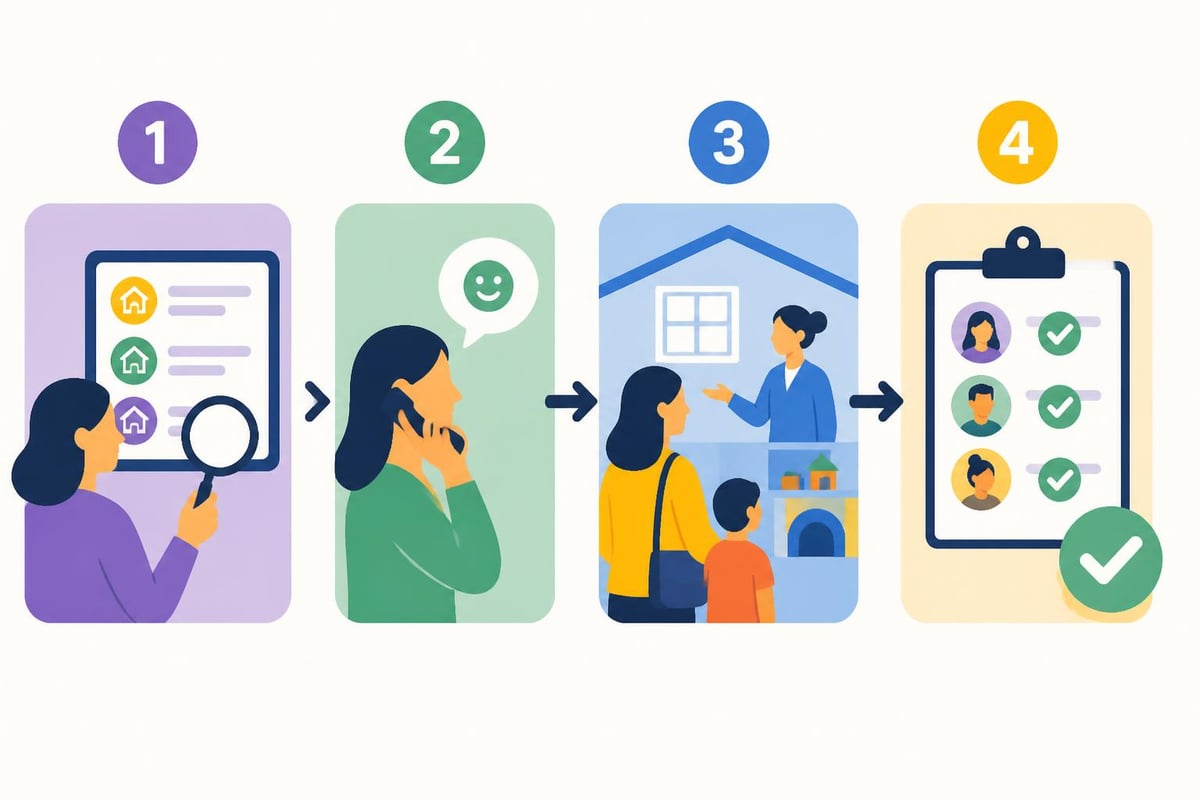
Beginning your search for the best childcare near me requires a systematic approach. Start by defining your non-negotiables-budget, location, hours, and care philosophy.
Gathering Recommendations and Reviews
Personal recommendations from trusted sources provide valuable insights. Talk to neighbors, coworkers, and friends about their childcare experiences. Local parenting groups on social media often share candid reviews and recommendations.
Online research complements personal referrals. Review provider websites, check their social media presence, and read testimonials. Look for facilities that maintain active communication with families and showcase their daily activities.
Creating Your Shortlist
Develop a list of 5-8 potential providers within your desired radius. Consider these practical factors:
- Commute time: Calculate drive time during typical drop-off and pick-up hours
- Operating hours: Ensure they align with your work schedule
- Enrollment availability: Some programs have long waiting lists
- Cost structure: Understand fees, deposits, and payment schedules
Care.com offers expert advice on what to look for during your search, including questions about curriculum and daily routines.
Conducting Effective Facility Tours
The facility visit reveals information you can't gather from websites or phone calls. Schedule tours when children are present to observe real interactions and daily operations.
What to Observe During Your Visit
The physical environment should feel warm, clean, and stimulating. Look for age-appropriate toys, learning materials, and spaces for different activities. Indoor areas need adequate lighting and ventilation. Outdoor spaces should offer varied play opportunities.
Caregiver interactions matter most. Watch how staff members communicate with children. Do they get down to the child's eye level? Do they respond promptly to needs? Are they engaged or distracted? Quality caregivers demonstrate patience, warmth, and genuine interest in each child.
Critical Questions to Ask Providers
Come prepared with a comprehensive list of questions. The Family and Childcare Trust provides a guide with practical questions for evaluating providers.
Ask about daily structure:
- What does a typical day look like?
- How much time do children spend in structured activities vs. free play?
- How are meals and snacks handled?
- What is the nap/quiet time routine?
Inquire about communication:
- How do you keep parents informed about their child's day?
- What is your policy for parent visits?
- How do you handle behavioral concerns?
- What channels do you use for urgent communication?
Discuss development and learning:
- What curriculum or educational approach do you follow?
- How do you support children at different developmental stages?
- What activities promote social-emotional growth?
- How do you track and share developmental progress?
Evaluating Program Philosophy and Curriculum
The best childcare near me aligns with your family's values and educational priorities. Different programs emphasize various approaches to early childhood education.
Common Educational Approaches
| Approach | Focus | Best For |
|---|---|---|
| Play-Based | Learning through exploration and play | Creative, active children |
| Montessori | Self-directed learning with specialized materials | Independent learners |
| Reggio Emilia | Project-based, child-led inquiry | Curious, expressive children |
| Traditional/Academic | Structured lessons and skill-building | Children approaching kindergarten |
Home-based programs often blend multiple approaches, adapting to children's natural rhythms and interests. This flexibility allows providers to meet individual needs while maintaining structure.
Social-Emotional Development
Quality childcare extends beyond academics. The best programs prioritize emotional intelligence, conflict resolution, and relationship-building skills. Ask how providers handle separation anxiety, friendship conflicts, and big emotions.
Look for programs that:
- Teach children to identify and express feelings
- Model respectful communication
- Provide opportunities for cooperative play
- Support children in problem-solving
- Build self-confidence through appropriate challenges
Step by Step Care emphasizes nurturing the whole child, recognizing that social and emotional foundations support all other learning.
Trusting Your Instincts and Making the Decision
After researching, touring, and interviewing, you'll likely have strong feelings about which option feels right. Your intuition matters in this decision.
The Gut Check
Beyond checklists and credentials, consider how you felt in each environment. Did the provider welcome your questions? Did the children seem happy and engaged? Could you envision your child thriving there? These impressions provide valuable data alongside objective criteria.
Red flags to never ignore:
- Reluctance to answer questions or provide references
- Unsafe or unsanitary conditions
- High child-to-staff ratios
- Children appearing unhappy, fearful, or neglected
- Pressure to make immediate decisions
- Unwillingness to accommodate reasonable visits
Reference Checks and Trial Periods
Before finalizing your choice, speak with current and former families. Ask about their experiences with communication, flexibility during emergencies, and how well the provider met their child's needs. Texas Child Care Connection offers a checklist for evaluating providers that includes reference questions.
Many programs offer trial days or gradual transition periods. These opportunities allow you and your child to experience the setting before committing fully. Pay attention to how your child responds after a few visits.
Understanding Costs and Financial Assistance
Childcare represents a significant investment in your family budget. The best childcare near me balances quality with affordability, though costs vary widely by region and care type.
Typical Cost Factors
Home-based childcare generally costs less than center-based programs. Prices reflect factors including:
- Provider experience and credentials
- Group size and child-to-staff ratios
- Hours of operation and flexibility
- Included meals, supplies, and activities
- Geographic location and local demand
Request detailed fee schedules that outline tuition, registration fees, supply fees, and policies for holidays or absences. Understand payment expectations and any penalties for late pickup or payment.
Financial Support Options
Many families qualify for assistance programs that reduce childcare costs. Child Care and Development Fund (CCDF) subsidies help low-to-moderate income families afford quality care. Tax credits like the Child and Dependent Care Credit provide relief when filing taxes.
Some employers offer dependent care flexible spending accounts (FSAs) that allow you to set aside pre-tax dollars for childcare expenses. Contact your HR department to explore available benefits.

Preparing for the Transition
Once you've selected the best childcare near me for your family, thoughtful preparation eases the transition for everyone involved.
Building the Relationship
Start communication with your chosen provider before the first day. Share information about your child's personality, routines, preferences, and any special needs. Discuss your family's values and priorities. This foundation helps providers personalize care from day one.
Visit the facility together with your child several times before the official start date. Familiarity with the space, caregivers, and other children reduces anxiety. Bring comfort items like a favorite blanket or stuffed animal during the adjustment period.
Establishing Routines
Create consistent morning and pickup routines:
- Wake up with sufficient time to avoid rushing
- Pack bags the night before
- Develop a goodbye ritual that's brief but comforting
- Stay positive and confident during drop-off
- Ask providers about your child's day during pickup
Consistency helps children feel secure during transitions. Maintain stable sleep schedules and weekend routines to support adjustment.
Ongoing Communication and Partnership
Quality childcare requires partnership between families and providers. Regular communication ensures everyone stays aligned on the child's development, challenges, and successes.
Establish your preferred communication methods-whether daily reports, photo updates, or weekly conversations. Attend parent meetings, celebrations, and opportunities to volunteer. Your involvement demonstrates to your child that home and childcare work together.
Address concerns promptly and directly with providers. Small issues are easier to resolve before they become problems. Likewise, share positive feedback when you notice excellent care or your child's progress.
Recognizing Quality Care Over Time
Your search for the best childcare near me doesn't end once your child starts attending. Ongoing observation ensures the program continues meeting your family's needs as your child grows.
Signs of Positive Experiences
Children who thrive in their childcare setting typically demonstrate excitement about going, form attachments to caregivers and peers, and show developmental progress. They talk positively about activities and friends. Behavioral regression or resistance may signal problems worth investigating.
Monitor these indicators:
- Your child's enthusiasm about childcare
- Open communication from providers
- Regular updates on developmental milestones
- Consistent implementation of agreed-upon routines
- Flexibility in addressing your family's changing needs
- Professional response to concerns or conflicts
When to Reconsider Your Choice
Life circumstances change, and so do children's needs. What worked beautifully for an infant may not serve a curious three-year-old. Providers should grow with your child, adjusting approaches as development progresses.
Consider exploring new options if you notice declining quality, communication breakdowns, safety concerns, or misalignment with your child's developmental needs. The right childcare evolves alongside your family.
Finding quality childcare requires research, intuition, and careful evaluation of how well providers meet your family's unique needs. The best childcare near me combines safety, nurturing relationships, developmental support, and alignment with your values. When you're ready to explore home-based childcare that prioritizes individual attention and family partnership, Step by Step Care welcomes you to learn more about our program and schedule a visit to see how we support children's growth in a warm, engaging environment.


