

Step Into Learning Childcare: A Complete Guide
Choosing the right childcare environment for your little one represents one of the most important decisions you'll make as a parent. The step into learning childcare approach emphasizes developmental growth through intentional activities, personalized attention, and nurturing environments that feel like home. This comprehensive guide explores how quality home-based childcare programs create foundations for lifelong learning while providing the warmth and security young children need to thrive.
Understanding the Step Into Learning Philosophy
The step into learning childcare model centers on recognizing that every child develops at their own pace while benefiting from structured learning opportunities. Unlike traditional institutional settings, this approach combines the comfort of a home environment with evidence-based educational practices.
Home-based childcare providers who embrace this philosophy focus on several core principles:
- Creating individualized learning plans that respect each child's unique developmental timeline
- Integrating educational activities seamlessly into daily routines and play
- Building strong relationships between caregivers, children, and families
- Maintaining small group sizes to ensure personalized attention
The U.S. Department of Education recognizes that early learning initiatives play a critical role in preparing children for academic success. Home childcare settings offer unique advantages in implementing these principles through intimate, relationship-focused care.
Why Home-Based Settings Support Learning
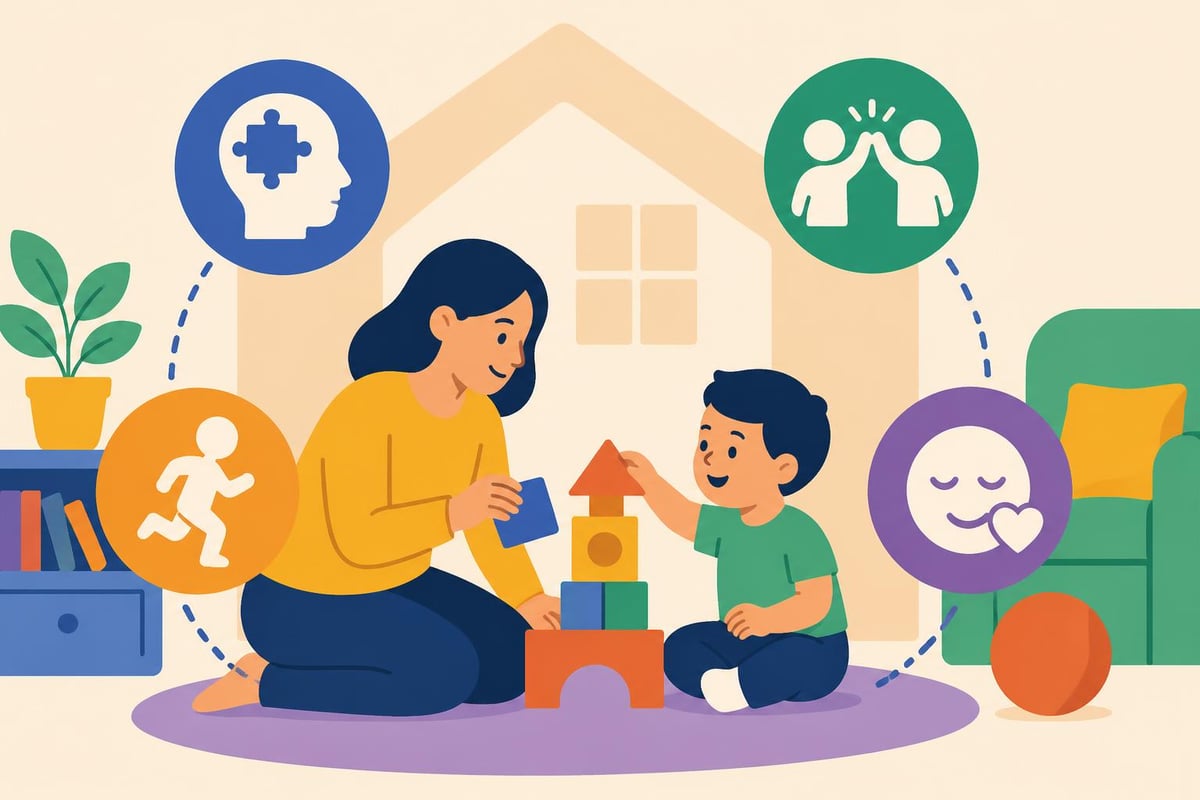
Home childcare environments provide distinct benefits for implementing step into learning childcare approaches. The familiar setting reduces stress for young children, allowing them to focus energy on exploration and growth rather than managing anxiety in large institutional spaces.
Small group sizes mean caregivers can observe subtle developmental changes and adjust activities accordingly. When a provider notices a toddler showing interest in colors, they can immediately incorporate color-recognition games into the day's activities without waiting for curriculum approval or coordinating with multiple staff members.
Key Components of Effective Learning Programs
Quality step into learning childcare programs share common elements that distinguish them from basic babysitting services. Understanding these components helps parents identify providers who truly prioritize child development.
Structured Daily Schedules
Consistency provides security for young children while creating predictable opportunities for learning. Effective home childcare programs establish routines that balance:
- Circle time for group learning and social development
- Free play for creativity and self-directed exploration
- Outdoor activities for physical development and nature engagement
- Quiet time for rest and independent activities
- Meal times that teach social skills and healthy habits
These structured periods don't mean rigid inflexibility. The best caregivers adapt schedules to children's needs while maintaining overall consistency that helps little ones feel secure.
Developmentally Appropriate Activities
Step into learning childcare emphasizes activities matched to children's current abilities while gently stretching them toward new skills. Providers assess where each child stands across multiple domains and plan accordingly.
| Developmental Domain | Age 2-3 Activities | Age 3-4 Activities | Age 4-5 Activities |
|---|---|---|---|
| Cognitive | Shape sorting, simple puzzles | Counting games, pattern recognition | Letter recognition, basic math concepts |
| Physical | Large motor play, simple climbing | Tricycles, coordinated movements | Ball skills, complex playground equipment |
| Social-Emotional | Parallel play, sharing practice | Cooperative games, emotion naming | Friendship building, conflict resolution |
| Language | Vocabulary building, simple songs | Story retelling, expanded sentences | Pre-reading skills, complex conversations |
This targeted approach ensures children experience success while being appropriately challenged. The CDC emphasizes developmental milestones as guideposts for creating enriching learning experiences.
Creating Learning-Rich Environments
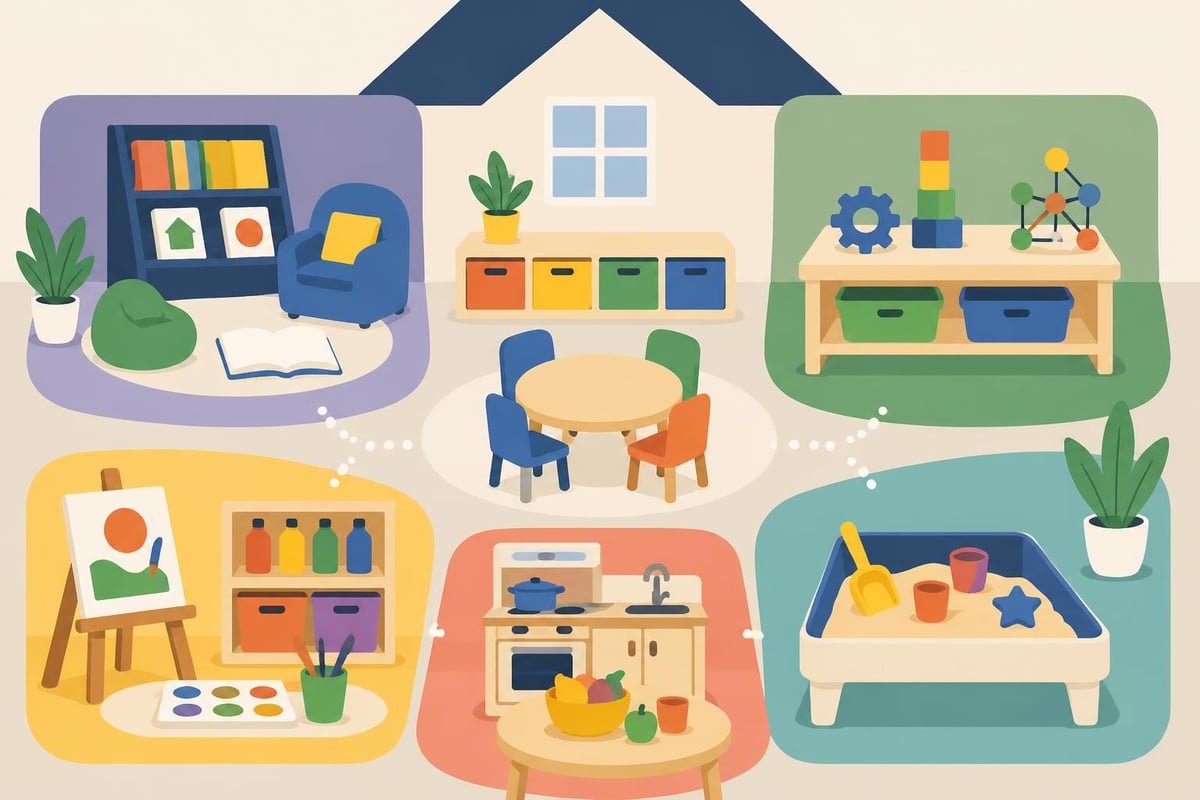
The physical environment in step into learning childcare settings serves as the "third teacher" alongside caregivers and peers. Thoughtful home childcare providers organize spaces to invite exploration and support multiple types of learning simultaneously.
Learning Centers Within Home Spaces
Even modest homes can incorporate dedicated learning areas that rotate based on children's developing interests:
- Literacy corner with age-appropriate books, comfortable seating, and storytelling props
- STEM station featuring building blocks, simple machines, and nature exploration materials
- Creative arts area stocked with various media and open-ended supplies
- Dramatic play zone with costumes, play kitchen items, and role-playing materials
- Sensory table offering tactile experiences through sand, water, or other safe materials
These designated spaces help children understand expectations while encouraging independent exploration. Materials remain accessible at child height, promoting autonomy and decision-making skills.
Safety Meets Stimulation
Quality home childcare balances safety requirements with stimulating environments. Providers childproof spaces thoroughly while ensuring children can still take appropriate risks that build confidence and physical skills.
Safety considerations include:
- Secure furniture and eliminate tip-over hazards
- Use non-toxic materials for all learning supplies
- Maintain clear pathways between activity areas
- Install proper gates and barriers where needed
- Keep emergency information and supplies readily accessible
At Step by Step Care, creating environments where children feel both safe and excited to explore represents a foundational commitment.
Building Strong Caregiver-Child Relationships
The step into learning childcare approach recognizes that secure attachments enable learning. Young children explore more confidently and take greater cognitive risks when they trust their caregivers completely.
Responsive Caregiving Practices
Effective providers read children's cues and respond appropriately to their needs. This responsiveness extends beyond basic care to emotional support and learning guidance.
When a toddler struggles with frustration during a challenging puzzle, responsive caregivers:
- Acknowledge the child's feelings without rushing to solve the problem
- Offer graduated support based on the child's signals
- Celebrate effort and persistence, not just success
- Use the moment to build emotional regulation skills
This approach builds resilience alongside cognitive abilities. Children learn they can handle challenges because their caregiver believes in their capabilities.
Transparent Communication With Families
Step into learning childcare thrives on partnership between providers and parents. Daily communication ensures consistency between home and care settings while helping families understand their child's developmental journey.
Quality providers share:
- Specific observations about developmental progress
- Photos or examples of learning activities
- Strategies families can use at home to reinforce skills
- Honest conversations about challenges or concerns
- Celebrations of milestones and achievements
This transparency builds trust and creates a unified team focused on each child's success. Parents appreciate understanding what happens during care hours and how they can support continued growth.
Integrating Play-Based Learning
Play serves as children's primary work during early years. Step into learning childcare harnesses play's power for teaching everything from physics concepts to social skills.
Types of Play and Their Learning Benefits
Different play types support distinct developmental domains, and quality programs ensure children experience diverse play opportunities throughout each week.
| Play Type | Learning Domains | Example Activities |
|---|---|---|
| Constructive | Spatial reasoning, problem-solving, planning | Building with blocks, creating with clay, assembling puzzles |
| Symbolic/Pretend | Abstract thinking, language, social skills | Playing house, acting out stories, using props imaginatively |
| Physical | Gross motor, body awareness, risk assessment | Climbing, running games, dancing, obstacle courses |
| Games With Rules | Self-regulation, cooperation, strategic thinking | Simple board games, group activities, turn-taking games |
Caregivers who understand play's educational value enhance learning by asking open-ended questions, introducing new vocabulary, and gently extending children's thinking without dominating their play.
Balancing Child-Led and Adult-Guided Activities
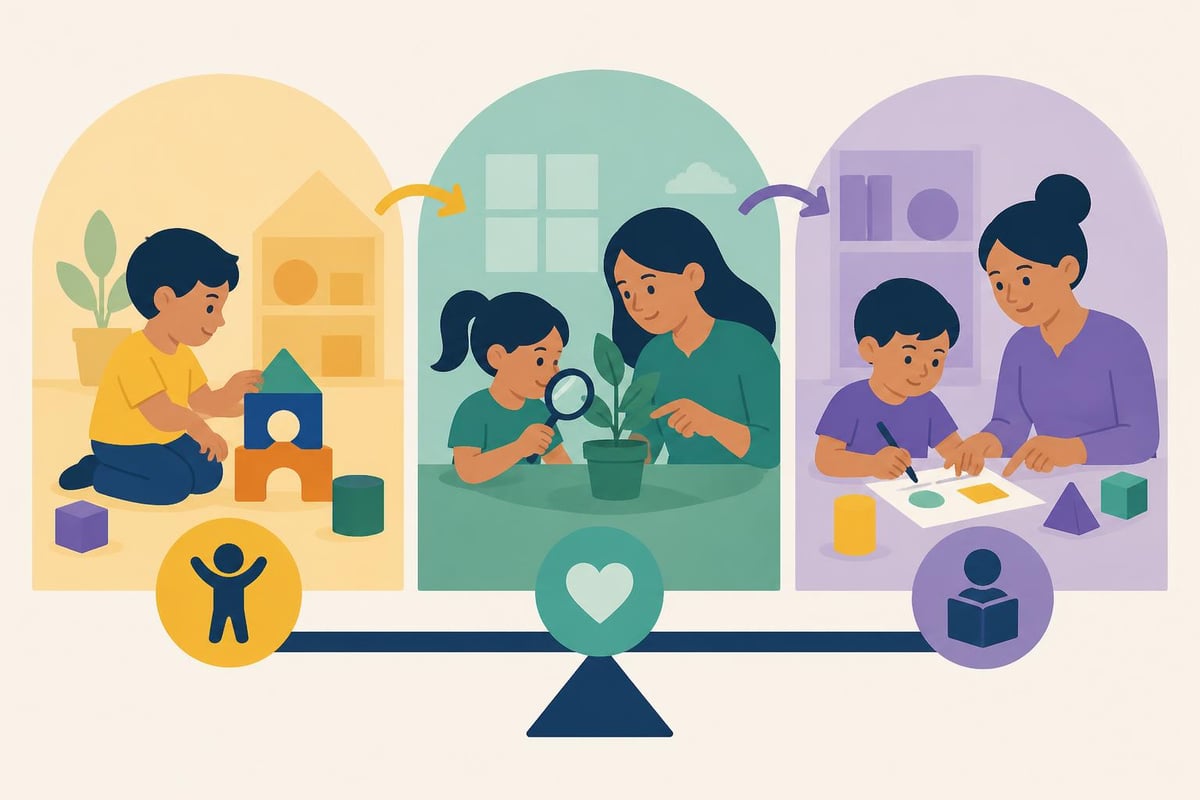
Effective step into learning childcare programs maintain equilibrium between children's self-directed play and teacher-planned activities. Both serve important developmental purposes.
Child-led play allows creativity, autonomy, and intrinsic motivation to flourish. Children pursue their genuine interests and develop self-direction skills. Adult-guided activities introduce new concepts, ensure exposure to important developmental domains, and provide structured learning experiences children might not discover independently.
The ratio shifts based on age, with younger children needing more self-directed time and older preschoolers benefiting from increased structured learning as they prepare for kindergarten.
Preparing Children for Future Success
The step into learning childcare model views early years as foundational for long-term educational achievement. Quality home childcare programs intentionally develop skills children need for kindergarten and beyond.
School Readiness Skills
Beyond academic knowledge, successful kindergarten transition requires multiple competencies:
- Social skills including cooperation, sharing, and conflict resolution
- Emotional regulation to manage feelings and handle frustration
- Executive function encompassing attention, working memory, and flexible thinking
- Independence in self-care tasks and following multi-step directions
- Curiosity and love of learning that motivates engagement with new challenges
These skills develop through consistent, intentional practices embedded in daily routines rather than isolated lessons. A child who helps set the table learns counting, sequencing, and responsibility simultaneously.
Building Confidence and Resilience
Perhaps the most valuable preparation step into learning childcare provides involves helping children see themselves as capable learners. When young children develop confidence in their ability to master new skills, they approach future challenges with growth mindsets.
Caregivers build this confidence through:
- Providing appropriately challenging tasks that stretch without overwhelming
- Emphasizing effort and strategies rather than innate ability
- Allowing children to struggle productively before offering help
- Celebrating mistakes as learning opportunities
- Supporting risk-taking in safe environments
Children who experience this foundation carry these attitudes into formal schooling, where they serve as protective factors against academic stress and setbacks.
Selecting the Right Provider
Understanding step into learning childcare principles helps families evaluate potential providers and identify those truly committed to developmental excellence.
Questions to Ask Potential Caregivers
- How do you plan activities based on individual children's interests and abilities?
- What does a typical day look like in your program?
- How do you handle challenging behaviors or conflicts between children?
- What opportunities do children have for outdoor play and physical activity?
- How do you communicate with families about their child's progress?
- What is your approach to kindergarten preparation?
- How do you continue your own professional development in early childhood education?
Providers who articulate clear philosophies aligned with step into learning childcare demonstrate intentionality about their practice. Those who struggle to explain their approach or rely on generic answers may provide basic supervision without developmental focus.
Red Flags and Green Flags
When visiting potential home childcare settings, observe both the environment and interactions between provider and children.
Green flags indicating quality step into learning childcare:
- Children engaged in varied activities matching their developmental levels
- Provider speaks respectfully to children and gets down to their eye level
- Space organized with accessible materials and clear learning areas
- Mixture of child-led play and planned activities throughout the schedule
- Provider can discuss specific developmental goals for each enrolled child
Red flags suggesting inadequate developmental focus:
- Television or screens used extensively as primary entertainment
- Children appear bored or aimless without structured opportunities
- Provider unable to articulate learning objectives or developmental philosophy
- Lack of age-appropriate materials or learning resources
- Dismissive responses to questions about educational approaches
Trust your instincts alongside objective evaluation criteria when making this important decision.
Supporting Learning at Home
Parents reinforce step into learning childcare benefits by extending similar principles into home environments. Consistency between settings maximizes developmental impact.
Simple Home Activities
You don't need expensive materials or elaborate plans to support learning. Simple activities embedded in daily life build skills effectively:
- Cooking together teaches measurement, sequencing, and following directions
- Grocery shopping provides counting practice, color recognition, and category sorting
- Bedtime reading builds vocabulary, comprehension, and love of books
- Nature walks encourage observation, questioning, and scientific thinking
- Household chores develop responsibility, motor skills, and task completion
These everyday moments become learning opportunities when adults slow down, involve children actively, and ask open-ended questions that promote thinking.
Partnering With Your Provider
Share observations about your child's interests, challenges, and home behaviors with your caregiver. This information helps them tailor activities and address developmental needs more effectively.
Similarly, ask your provider about strategies working well during care hours. Consistency in approaches to challenges like separation anxiety, sharing conflicts, or emotional regulation helps children generalize skills across settings.
Many families find connecting with their care team regularly creates seamless support for their child's development.
Quality step into learning childcare creates lasting foundations for educational success, social competence, and emotional wellbeing. By choosing providers who emphasize developmental growth through play-based, relationship-focused care, families give their children advantages that extend far beyond the early years. If you're seeking home childcare that truly prioritizes your child's learning journey in a nurturing environment, Step by Step Care offers the personalized attention and developmental expertise your family deserves.


