

Start a In Home Daycare: Complete 2026 Launch Guide
Starting a home-based childcare business offers a rewarding opportunity to make a meaningful impact on young children's lives while building a flexible career. Whether you're a parent looking to stay home with your own children, a teacher seeking more autonomy, or an entrepreneur passionate about early childhood development, this venture combines purpose with profitability. The journey to start a in home daycare requires careful planning, compliance with state regulations, and dedication to creating a safe, nurturing environment for the families you'll serve.
Understanding Licensing Requirements and State Regulations
Every state maintains specific regulations governing home-based childcare operations, and understanding these requirements is your first critical step. Most states require licensing once you care for more than a certain number of children, typically ranging from three to six unrelated children.
The licensing process typically begins with submitting an application to your state's Department of Social Services or equivalent childcare regulatory agency. You'll need to complete several components before receiving approval:
- Background checks and fingerprinting for all household members over 18
- CPR and first aid certification for all caregivers
- Comprehensive home safety inspection
- Documentation of required training hours in early childhood education
- Proof of current immunizations and health screenings
- Fire safety inspection and compliance verification
When you start a daycare at home, the timeline from application to approval generally spans three to six months, depending on your state's processing times and your preparation level. Some states offer different tiers of licensing based on capacity and services offered, so research whether you want to pursue a small family daycare license or a larger group daycare home license.
Navigating State-Specific Requirements
Different states have vastly different requirements, making it essential to research your specific location. For example, if you're planning to open a home daycare in Georgia, you'll need to complete specific training modules and meet unique health and safety standards that differ from other states.
Texas providers must obtain a permit from the Department of Family and Protective Services, while California requires providers to complete preventive health and safety training before licensure. Pennsylvania has distinct requirements for family daycare homes versus group daycare homes, and understanding these nuances prevents costly delays.
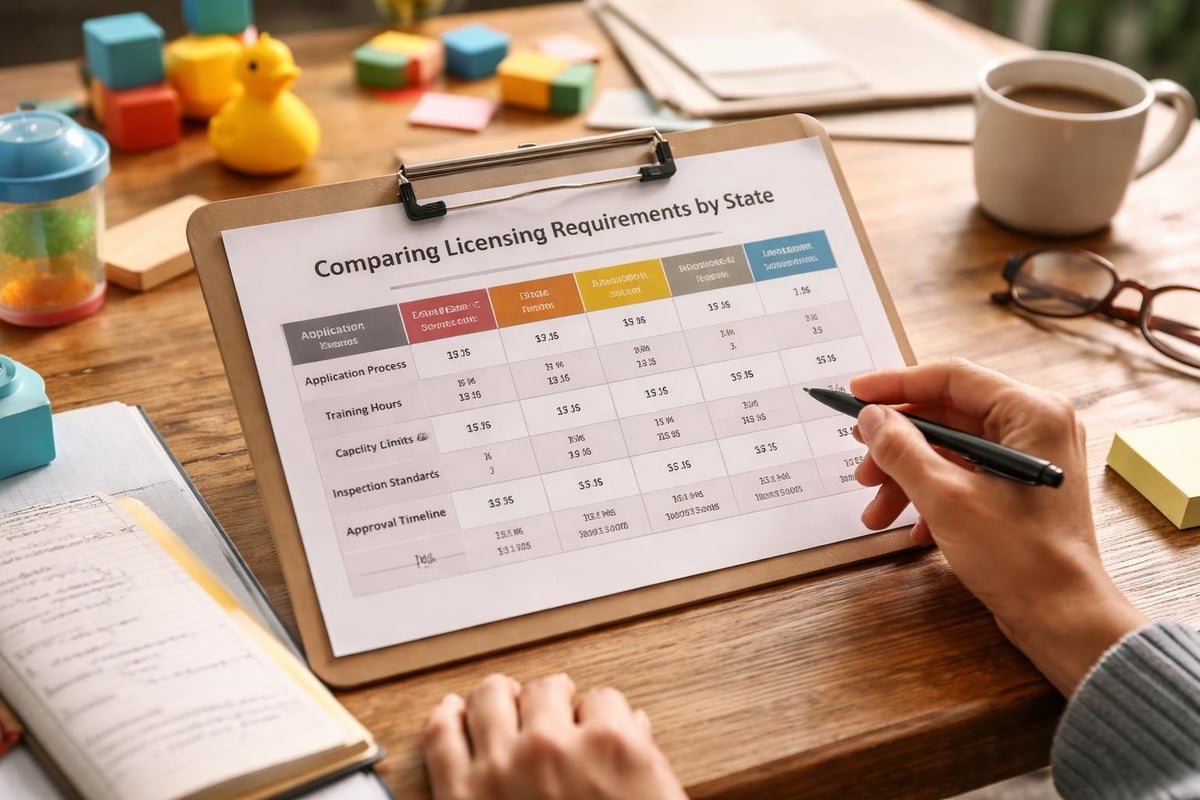
| State Requirement | Small Family Home | Large Family Home | Group Home |
|---|---|---|---|
| Maximum Capacity | 6 children | 8-12 children | 12+ children |
| Required Training Hours | 12-20 hours | 20-40 hours | 40+ hours |
| Inspection Frequency | Annual | Biannual | Quarterly |
| Background Check Renewal | Every 3 years | Every 2 years | Annual |
Working with experienced childcare providers can help you navigate your state's specific requirements and avoid common pitfalls during the licensing process.
Preparing Your Home Environment
Creating a safe, stimulating environment is paramount when you start a in home daycare. Your home transforms from a private residence into a regulated childcare facility, requiring modifications to meet safety standards and accommodate multiple children throughout the day.
Begin with a comprehensive safety assessment of every room children will access. Install safety gates at stairways, secure all cabinets containing hazardous materials with childproof locks, and ensure electrical outlets have safety covers. Remove or secure furniture with sharp edges, and verify that window cords are safely stored or eliminated.
Space Allocation and Zoning Considerations
Most states mandate minimum square footage requirements per child, typically 35-50 square feet of indoor space and 75 square feet of outdoor play area per child. Measure your available space carefully to determine your maximum capacity realistically.
Before making significant modifications, verify that your property zoning allows home-based businesses. Some residential neighborhoods have restrictions against operating commercial enterprises, including daycares. Contact your local zoning board and homeowners association, if applicable, to secure necessary approvals.
Consider dedicating specific areas for different activities:
- Nap area: Quiet space with appropriate sleeping equipment and proper supervision visibility
- Play zones: Designated areas for active play, quiet activities, and messy projects
- Dining area: Safe eating space with appropriate furniture and easy cleanup
- Diaper changing station: Sanitary area meeting health code requirements
- Outdoor play space: Fenced area with age-appropriate equipment and soft landing surfaces
Your insurance policy must also adapt to your new business use. Standard homeowners insurance typically excludes business activities, so secure specialized daycare liability insurance covering property damage, injuries, and professional liability. Additional coverage options include vehicle insurance if you'll transport children and workers' compensation if you hire employees.
Developing Your Business Foundation
The administrative side of launching your daycare requires equal attention to the physical setup. Establishing a solid business foundation ensures legal protection and operational efficiency as you grow.
Business Structure Selection
Choose a legal structure that balances liability protection with tax efficiency. Most home daycare providers operate as sole proprietorships initially due to simplicity, but forming an LLC offers personal asset protection if legal issues arise. Consult with a business attorney or accountant to determine the best structure for your situation.
Register your business name with your state and obtain an Employer Identification Number (EIN) from the IRS, even if you don't initially hire employees. This number is essential for opening business bank accounts, filing taxes, and accepting certain payment types.
Financial Planning and Rate Setting
Conduct thorough market research to understand competitive pricing in your area. Consider factors like:
- Geographic location and local cost of living
- Your credentials and experience level
- Hours of operation and schedule flexibility
- Meals and supplies included versus additional charges
- Age groups served and special services offered
Create detailed financial projections including startup costs, monthly operating expenses, and revenue targets. Startup expenses typically range from $2,000 to $10,000, covering licensing fees, safety equipment, educational materials, insurance, marketing, and initial supplies.
Track all expenses meticulously from day one. Home daycare providers qualify for specific tax deductions, including a portion of mortgage or rent, utilities, home maintenance, food costs, supplies, and equipment. The IRS allows providers to deduct either actual expenses or use the standard meal and snack rates.

Creating Curriculum and Daily Schedules
Professional childcare extends far beyond supervision. Families seek providers who offer enriching, developmentally appropriate activities that prepare children for future academic success.
Design age-appropriate curricula incorporating multiple learning domains:
- Cognitive development: Puzzles, sorting activities, counting games, and problem-solving challenges
- Language and literacy: Story time, singing, vocabulary building, and early writing experiences
- Physical development: Outdoor play, fine motor activities, dancing, and movement games
- Social-emotional growth: Cooperative play, emotion recognition, sharing practice, and conflict resolution
- Creative expression: Art projects, music, dramatic play, and open-ended exploration
Structure your daily schedule with consistent routines that provide security while maintaining flexibility for individual needs. A sample daycare daily schedule might include:
| Time | Activity | Focus Area |
|---|---|---|
| 7:00-8:30 AM | Arrival and free play | Social skills, transition support |
| 8:30-9:00 AM | Breakfast | Nutrition, table manners, independence |
| 9:00-10:00 AM | Circle time and structured learning | Literacy, cognitive development |
| 10:00-11:30 AM | Outdoor play | Physical development, exploration |
| 11:30-12:00 PM | Lunch | Nutrition, social skills |
| 12:00-2:30 PM | Quiet time/naps | Rest, individual quiet activities |
| 2:30-3:00 PM | Snack time | Nutrition, conversation skills |
| 3:00-4:30 PM | Centers and activities | Child-directed learning, creativity |
| 4:30-6:00 PM | Outdoor play and pickup | Physical activity, family communication |
When you learn about in-home childcare best practices, you'll discover that consistency combined with responsive caregiving creates the optimal environment for development.
Building Policies and Parent Communication Systems
Clear, comprehensive policies prevent misunderstandings and establish professional boundaries with families. Develop a parent handbook covering all operational aspects before enrolling your first child.
Essential Policy Areas
Operating Hours and Schedule
Define your standard operating hours, holiday closures, and weather-related closure procedures. Specify late pickup fees and procedures to discourage habitual tardiness.
Payment and Financial Policies
Detail your fee structure, payment schedule, accepted payment methods, late payment consequences, and deposit requirements. Address vacation policies, sick day policies, and whether you charge for days the child is absent.
Health and Illness Guidelines
Establish clear criteria for when children must stay home, including fever thresholds, contagious conditions, and return-to-care requirements. Include your medication administration policy and emergency medical authorization procedures.
Behavior Management and Discipline
Outline your positive guidance approach and unacceptable behaviors. Explain how you'll communicate behavioral concerns and circumstances that might result in termination of care.
Communication Expectations
Define how you'll share daily updates, schedule parent-teacher conferences, and handle concerns. Many successful providers use daily communication logs, weekly newsletters, and monthly calendars to keep families informed.
Implement a communication system that works for your style and parents' preferences. Options include communication apps designed for childcare providers, daily written reports, photo-sharing platforms, and regular email updates.
Marketing Your New Daycare Business
Once you've completed preparations to start a in home daycare, attracting your first families becomes the priority. Successful marketing combines online presence, community networking, and reputation building.
Digital Marketing Strategies
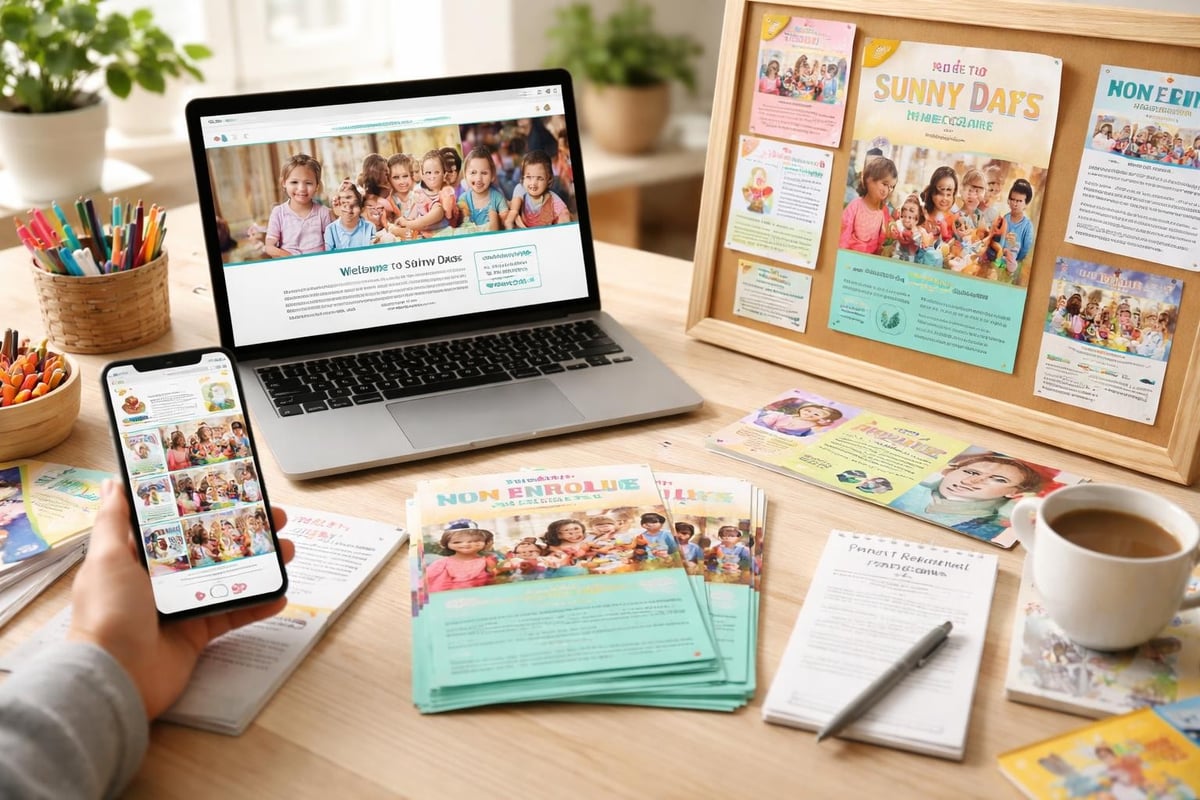
Create a professional website showcasing your credentials, curriculum approach, facility photos, and parent testimonials. Include clear contact information and an inquiry form for interested families. Viewing parent reviews from established providers demonstrates the power of testimonials in attracting new families.
Establish profiles on childcare-specific platforms like Care.com, Sittercity, and local parenting Facebook groups. Maintain active social media presence sharing educational content, activity highlights, and availability updates.
Local Community Outreach
Network within your community through multiple channels:
- Join local parenting groups and attend family-friendly events
- Connect with pediatricians, obstetricians, and family physicians who can refer families
- Participate in community bulletin boards at libraries, community centers, and grocery stores
- Partner with local businesses serving families with young children
- Attend chamber of commerce meetings and local business networking events
Referral Programs and Word-of-Mouth
Your best marketing tool is satisfied parents sharing their positive experiences. Incentivize referrals by offering discounts or gift cards when current families refer new enrollments. Maintain exceptional quality and communication to generate organic word-of-mouth recommendations.
Managing Daily Operations and Record Keeping
Efficient systems separate successful home daycares from those that struggle with administrative overwhelm. Establish organizational processes from the beginning rather than creating them reactively as problems arise.
Documentation and Record Management
Maintain comprehensive files for each enrolled child including:
- Enrollment application and contract
- Emergency contact information and medical authorization forms
- Immunization records and health assessments
- Attendance records and daily logs
- Developmental observations and milestone tracking
- Incident reports and accident documentation
- Payment records and billing statements
Store records securely with both physical and digital backups. Many providers use childcare management software to streamline attendance tracking, billing, parent communication, and developmental assessments.
Quality Improvement and Professional Development
Commit to ongoing professional development to enhance your skills and maintain licensing requirements. Attend workshops, pursue additional certifications like the Child Development Associate (CDA) credential, and stay current with early childhood education research and best practices.
The comprehensive guide to starting a daycare business emphasizes that successful providers continuously refine their practices based on observation, feedback, and professional learning.
Join professional organizations such as the National Association for Family Child Care (NAFCC) to access resources, advocacy support, and networking opportunities with other providers facing similar challenges.
Understanding Food Program Participation
The Child and Adult Care Food Program (CACFP) provides reimbursement for nutritious meals and snacks served to enrolled children, significantly reducing your food costs while ensuring quality nutrition.
Enrollment in CACFP requires partnering with a sponsoring organization that handles administrative requirements and processes reimbursements. Sponsors provide training on meal pattern requirements, menu planning, and documentation procedures.
Benefits of CACFP participation include:
- Monthly reimbursement for eligible meals and snacks
- Nutrition education and menu planning support
- Marketing advantage when attracting health-conscious families
- Professional credibility through program compliance
Document every meal and snack served with required attendance records to ensure accurate reimbursement. While the administrative requirements add to your workload, most providers find the financial benefits substantial.
Scaling Your Business for Future Growth
As you establish your reputation and fill your initial capacity, consider growth opportunities that align with your goals and resources. Not every provider wants to expand, but understanding your options allows strategic decision-making.
Expansion Possibilities
Adding staff allows you to increase enrollment beyond what you can supervise alone. Hiring requires additional considerations including employment law compliance, payroll taxes, workers' compensation insurance, and supervisory responsibilities.
Some providers transition from home-based care to commercial facilities as demand grows, though this represents a significant investment and regulatory shift. Others maintain their home-based model while raising rates and adding premium services like extended hours, enrichment programs, or specialized curriculum.
Maintaining Quality During Growth
Resist the temptation to expand faster than you can maintain quality standards. Your reputation depends on consistently excellent care, and overextending yourself compromises the experience for all enrolled families.
Set clear growth milestones based on financial stability, waitlist demand, and your capacity to manage additional responsibilities without sacrificing work-life balance or care quality.
| Growth Stage | Capacity | Staffing | Annual Revenue Potential |
|---|---|---|---|
| Start-up | 3-4 children | Owner only | $25,000-$40,000 |
| Established | 6-8 children | Owner + part-time help | $50,000-$80,000 |
| Expanded | 10-12 children | Owner + 1-2 employees | $80,000-$120,000 |
| Multi-location | 12+ per location | Multiple staff | $120,000+ |
When you're ready to start a in home daycare, remember that success comes from balancing business acumen with genuine passion for early childhood education. The administrative and regulatory requirements might seem overwhelming initially, but thousands of providers successfully navigate this process annually to build thriving businesses.
Establishing Emergency Preparedness Protocols
Safety extends beyond daily supervision to comprehensive emergency planning. Develop written emergency plans addressing multiple scenarios and practice them regularly with children in age-appropriate ways.
Required Emergency Plans
Create detailed action plans for:
- Fire evacuation with multiple exit routes and designated meeting locations
- Severe weather procedures including tornado and hurricane protocols
- Medical emergencies with clear steps for various injury types
- Lockdown procedures for dangerous situations or intruders
- Missing child protocols with immediate action steps
- Natural disasters specific to your geographic region
Maintain updated emergency supplies including first aid kits, emergency contact information, battery-powered radio, flashlights, bottled water, and non-perishable snacks. Conduct monthly fire drills and quarterly practice for other emergency types.
Communication During Emergencies
Establish a communication tree ensuring you can quickly notify all families during emergencies. Collect multiple contact methods for each family and test your notification system periodically. During actual emergencies, your sponsoring agency or licensing representative must also receive notification according to state requirements.
Navigating Initial Challenges and Common Obstacles
Every provider encounters challenges when launching their business. Anticipating common obstacles helps you prepare solutions rather than reacting in crisis mode.
Slow Enrollment
Most providers experience gradual enrollment rather than immediately filling capacity. Prepare financially for several months of partial enrollment while building your reputation. Continue consistent marketing efforts and maintain professional standards even with just one or two children, as these families become your best advocates.
Difficult Family Dynamics
Occasionally you'll encounter families whose expectations, communication style, or child's needs don't align with your program. Establish clear termination policies in your contract and don't hesitate to end arrangements that consistently cause stress or conflict. Your business thrives when you serve families who value and respect your services.
Licensing Inspection Anxiety
Initial licensing inspections feel intimidating, but inspectors want you to succeed. Prepare thoroughly by reviewing all requirements, completing a self-assessment using the official inspection checklist, and addressing deficiencies before your scheduled inspection. Most violations are minor and easily correctable.
Work-Life Balance
Operating a business from your home blurs professional and personal boundaries. Establish firm boundaries around your personal time, even when not caring for children. Designate separate spaces for business and family use when possible, and resist the urge to work during every waking moment.
Your physical and emotional wellbeing directly impacts the quality of care you provide. Prioritize self-care, maintain relationships outside of work, and take regular breaks to prevent burnout. Connect with experienced providers who understand the unique challenges of home-based childcare to find support and perspective.
The journey to start a in home daycare requires dedication, patience, and resilience, but the rewards of shaping young lives while building a sustainable business make the challenges worthwhile. As you move through each phase from planning to operation, remember that every successful provider started exactly where you are now, and your commitment to quality care positions you for long-term success.
Launching your home daycare business represents a significant investment of time, resources, and energy, but the professional and personal rewards make it one of the most fulfilling career paths available. By following established procedures, maintaining unwavering commitment to quality, and continuously developing your skills, you'll create a program that serves families and children exceptionally well. If you're looking for inspiration or guidance from established providers who have successfully built thriving childcare programs, Step by Step Care demonstrates the professional excellence and family-centered approach that defines outstanding home-based childcare. Whether you're just beginning your research or ready to submit your licensing application, taking that first step toward opening your doors sets you on a path that transforms not just your career, but the lives of countless children and families in your community.


