

In Home Childcare: A Complete Guide for Parents
Choosing the right childcare arrangement represents one of the most critical decisions parents face. In home childcare offers a unique solution that combines the comfort of a home setting with professional care tailored to each child's needs. This comprehensive guide explores the essential aspects of in home childcare, helping parents make informed decisions about their children's early development and care.
Understanding In Home Childcare Models
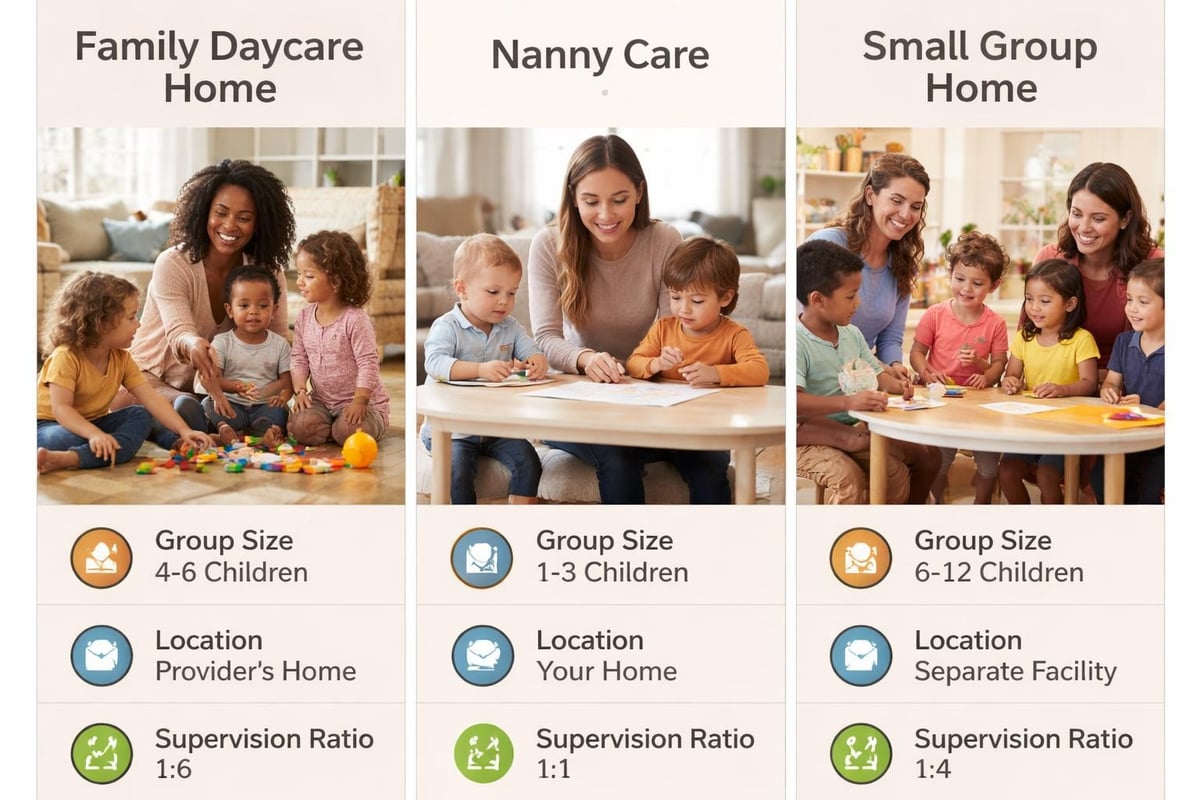
In home childcare encompasses several distinct models, each offering unique advantages for families. The most common arrangement involves a provider caring for children in their own licensed home, creating a family-like atmosphere with mixed-age groups. This setting typically serves smaller groups than traditional daycare centers, allowing for more individualized attention and stronger relationships between caregivers and children.
Family daycare homes represent a structured version of this model, where providers obtain state licensing and follow specific regulations. These programs often care for up to six children simultaneously, depending on state requirements and the ages of children enrolled.
Another model involves nannies or caregivers coming to the child's own home, providing one-on-one or sibling care in familiar surroundings. This arrangement offers maximum convenience for parents and minimal disruption to children's routines.
Licensing and Regulatory Requirements
The regulatory landscape for in home childcare varies significantly across states. Most states require family daycare homes to obtain licensing when caring for a certain number of unrelated children. California regulations outline specific documentation requirements, illustrating the complexity of compliance in various jurisdictions.
Licensed providers must meet specific standards regarding:
- Health and safety inspections of the physical environment
- Background checks for all household members over a certain age
- Training requirements in child development, first aid, and CPR
- Ratios limiting the number of children per caregiver
- Record keeping for attendance, emergency contacts, and immunizations
Understanding these requirements helps parents verify that potential providers meet professional standards. Quality providers welcome questions about their licensing status and maintain transparent documentation practices.
Benefits of In Home Childcare
Parents choose in home childcare for numerous compelling reasons that extend beyond convenience. The home environment naturally promotes emotional security, particularly for younger children who thrive in familiar, cozy settings. Research from the Administration for Children and Families demonstrates that home-based settings can provide high-quality care that supports positive developmental outcomes.
Personalized Attention and Flexibility
Small group sizes enable providers to tailor activities to individual developmental stages and learning styles. A provider caring for three to six children can respond immediately to needs, adjust schedules for naps or meals, and accommodate family preferences regarding routines and discipline approaches.
This flexibility extends to scheduling as well. Many in home childcare providers offer extended hours that align with non-traditional work schedules, making them invaluable for parents working evenings, weekends, or irregular shifts. Unlike center-based care with strict pickup times, home providers often accommodate slight variations in drop-off and pickup schedules.
| Benefit Category | Description | Impact on Families |
|---|---|---|
| Individualized Care | Lower child-to-adult ratios | Stronger developmental support |
| Flexible Scheduling | Extended and variable hours | Better work-life balance |
| Home Environment | Familiar, comfortable setting | Reduced separation anxiety |
| Mixed-Age Groups | Sibling-like interactions | Enhanced social development |
| Cultural Continuity | Personalized cultural practices | Stronger identity formation |
Cost Considerations
Financial factors significantly influence childcare decisions for American families. According to the U.S. Census Bureau, childcare costs have risen substantially, creating financial strain for many working parents. In home childcare often provides a more affordable alternative to center-based care, particularly for families with multiple children.
Many providers offer sibling discounts, recognizing that families benefit from keeping children together. The per-child cost typically decreases when multiple family members attend the same program. Additionally, the informal nature of some arrangements allows for flexible payment structures, though parents should ensure all agreements are documented clearly.
Selecting Quality In Home Childcare
Identifying high-quality care requires careful evaluation of multiple factors. The compendium of quality measures from federal research provides frameworks that parents can adapt when assessing potential providers.
Essential Evaluation Criteria
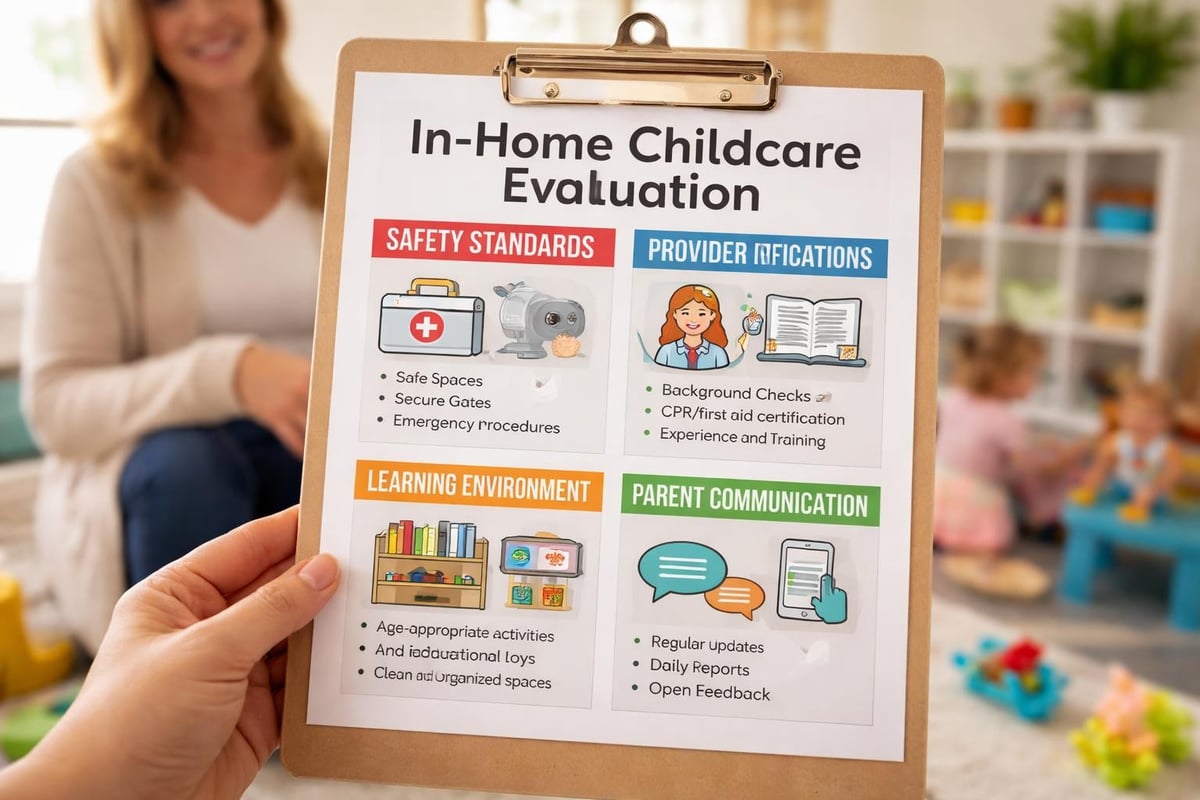
Begin your search by identifying licensed providers through state databases or local resource and referral agencies. During initial contacts, ask about educational background, years of experience, and current enrollment. Quality providers maintain waiting lists and plan for gradual transitions when new children join the program.
Schedule visits during operational hours to observe interactions between the provider and children. Pay attention to:
- How the provider responds to children's questions and needs
- The tone of voice and body language used during redirections
- Whether children appear engaged, happy, and comfortable
- The variety and appropriateness of available toys and materials
- Cleanliness and safety of indoor and outdoor spaces
Request references from current and former families. Speaking with other parents provides insights into communication styles, reliability, and how the provider handles challenges like illness or behavioral issues.
Communication and Partnership
Successful in home childcare relationships depend on strong communication between providers and families. Establish expectations upfront regarding daily reports, scheduled conferences, and preferred contact methods. Many providers now use apps or messaging platforms to share photos, updates, and important information throughout the day.
Discuss your child's specific needs, including:
- Dietary restrictions and mealtime preferences
- Sleep routines and naptime schedules
- Behavioral approaches and discipline philosophies
- Developmental goals and learning priorities
- Cultural practices important to your family
The best partnerships involve mutual respect and recognition that parents and providers both contribute unique expertise. Parents know their children best, while experienced providers bring professional knowledge of child development and age-appropriate practices.
Curriculum and Daily Activities
Professional in home childcare extends far beyond supervision. Quality providers implement intentional curricula that support cognitive, physical, social, and emotional development. While the approach may be less formal than center-based programs, research on home-based quality confirms that structured learning experiences occur effectively in home environments.
Age-Appropriate Learning Experiences
Effective providers plan activities that challenge children at their current developmental level while encouraging growth. Infants benefit from sensory exploration, tummy time, and responsive interactions that build attachment. Toddlers need opportunities for gross motor development, simple art projects, and beginning social interactions with peers.
Preschool-aged children thrive with more structured learning that introduces pre-literacy skills, mathematical concepts, and scientific thinking through play-based exploration. Quality programs incorporate:
- Circle time for songs, stories, and group discussions
- Free play allowing child-directed exploration and creativity
- Outdoor time for physical activity and nature observation
- Art and sensory activities supporting fine motor development
- Dramatic play encouraging imagination and social skills
Ask potential providers to describe a typical day and explain how activities align with developmental milestones. Those who articulate clear educational goals demonstrate professional commitment to children's learning.
Health, Safety, and Emergency Preparedness
In home childcare settings must prioritize children's physical wellbeing through comprehensive safety measures. Licensed providers undergo regular inspections, but parents should independently verify that homes meet essential standards.
Safety Standards and Protocols
Walk through the space examining potential hazards. Electrical outlets should have covers, stairs should have gates, and cleaning supplies must be stored securely out of reach. Providers should maintain working smoke detectors, carbon monoxide detectors, and fire extinguishers.
Inquire about emergency procedures including:
- Evacuation plans for fire or natural disasters
- Shelter-in-place protocols for severe weather
- First aid supplies and location
- Emergency contact procedures
- Backup care arrangements if the provider becomes ill
Quality providers conduct regular safety drills with children, teaching age-appropriate responses to emergencies. They also maintain current CPR and first aid certifications, demonstrating preparedness to handle medical situations.
| Safety Area | Minimum Standards | Best Practices |
|---|---|---|
| Supervision | Constant visual/auditory monitoring | Proactive positioning and engagement |
| Environment | State-required safety features | Regular safety audits and updates |
| Health | Illness policies and handwashing | Preventive health education |
| Emergencies | Written plans and contact info | Regular drills and staff training |
Illness Policies and Health Practices
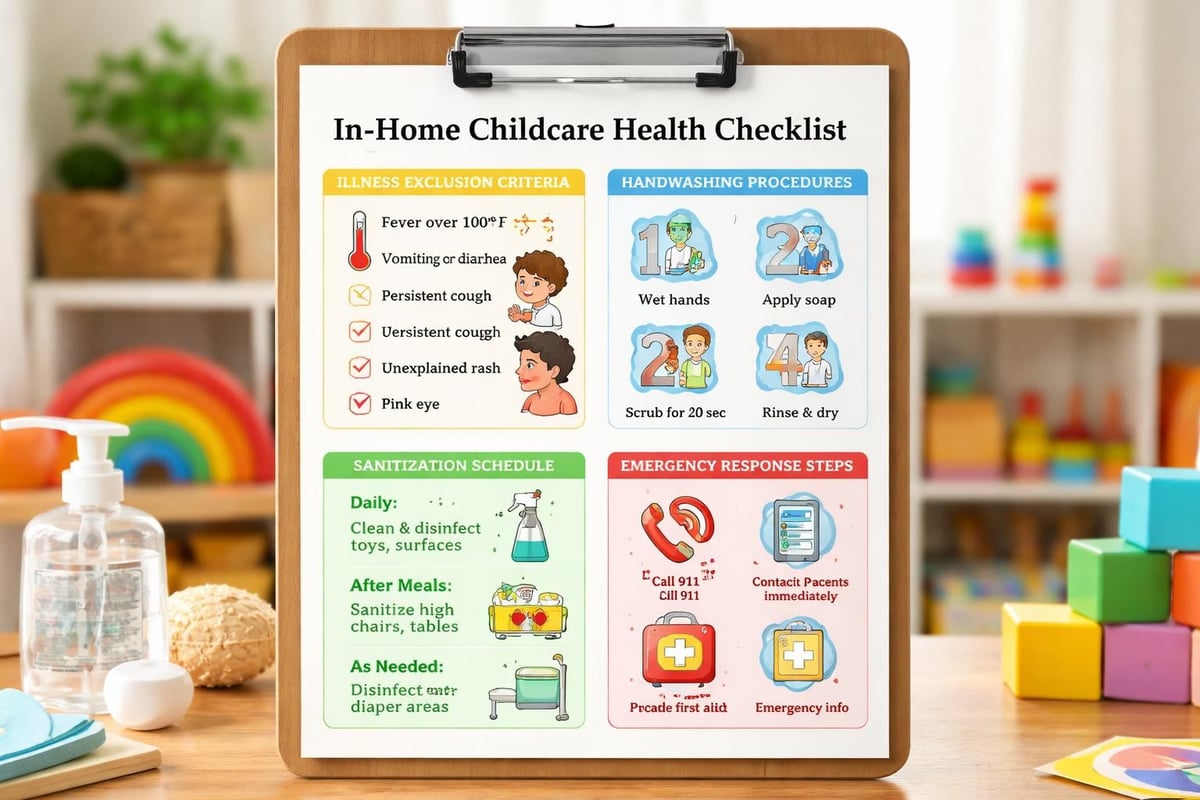
Clear illness policies protect all children in care while supporting working parents. Providers should explain which symptoms require children to stay home and when they can return after illness. Standard exclusion criteria typically include fever, vomiting, diarrhea, and contagious conditions like conjunctivitis.
Discuss medication administration policies, including required documentation and storage procedures. Some states require specific training before providers can administer prescription or over-the-counter medications.
Building Developmental Foundations
The early years establish critical foundations for lifelong learning and wellbeing. In home childcare supports development across multiple domains through everyday interactions and intentional activities. Providers who understand developmental milestones create experiences that challenge children appropriately without causing frustration.
Social-Emotional Development
Small group settings naturally facilitate social-emotional growth. Children learn to share, take turns, express emotions appropriately, and develop empathy through daily interactions with peers and caregivers. Mixed-age groups, common in in home childcare, provide additional benefits as younger children learn from older ones while older children develop nurturing skills.
Responsive caregiving forms the foundation of healthy attachment and emotional regulation. When providers consistently respond to children's needs with warmth and appropriate support, children develop security and confidence. These relationships serve as models for future relationships throughout life.
Cognitive and Language Development
Every interaction provides opportunities for learning. Quality providers narrate activities, ask open-ended questions, and introduce new vocabulary throughout the day. Reading books, singing songs, and engaging in conversations support language development more effectively than passive screen time.
Encourage providers to explain how they support school readiness for older preschoolers. Effective approaches include introducing letters and numbers through games, developing pre-reading skills through rhyming and sound awareness, and encouraging problem-solving through puzzles and construction activities.
Transitioning to In Home Childcare
Starting childcare represents a significant transition for both children and parents. Thoughtful preparation eases this process and sets the stage for positive experiences. Most quality providers recommend gradual transitions, beginning with short visits while parents remain present.
Preparing Your Child
Talk positively about the upcoming change, describing what your child will do and who they'll meet. Read books about starting childcare and visit the provider's home several times before the first full day. Bring familiar comfort items like a special blanket or stuffed animal to provide security in the new environment.
Maintain consistent goodbye routines, keeping departures brief and positive even if your child protests. Extended goodbyes often increase distress. Trust that experienced providers know how to comfort children, and most settle within minutes of parents leaving.
Supporting Ongoing Success
After starting care, maintain open communication with your provider. Share observations from home and ask about your child's experiences during the day. Address concerns promptly rather than allowing frustrations to build. The partnership between parents and providers directly impacts children's comfort and development.
Organizations like Step by Step Care understand the importance of smooth transitions and work closely with families to ensure children feel secure and supported from their very first day. Professional providers recognize that each child adapts at their own pace and adjust their approach accordingly.
Professional Development and Quality Improvement
The childcare field increasingly recognizes the importance of ongoing professional development for in home providers. While formal education requirements vary by state, committed providers pursue training opportunities that enhance their skills and knowledge.
Quality improvement initiatives often include:
- Participation in quality rating and improvement systems
- College coursework in early childhood education
- Professional conferences and workshops
- Peer learning communities and mentorship programs
- Specialized training in areas like infant care or special needs
When interviewing providers, ask about recent training and professional goals. Those who actively pursue learning demonstrate commitment to excellence. Step by Step Care’s team exemplifies this dedication to continuous improvement through ongoing education and skill development.
Building Community Connections
Excellent in home childcare providers don't operate in isolation. They connect with community resources including libraries for storytimes, parks for outdoor play, and museums for field trips. These experiences enrich children's learning and provide social opportunities with peers beyond the immediate care group.
Providers may also participate in local provider networks, sharing resources and supporting one another professionally. These connections benefit children by keeping providers energized and informed about best practices.
Legal and Financial Documentation
Professional in home childcare involves clear documentation protecting both families and providers. Written agreements should specify rates, payment schedules, holidays, vacation policies, and termination procedures. Detailed contracts prevent misunderstandings and provide reference points when questions arise.
Parents should receive receipts for tax purposes, as childcare expenses may qualify for dependent care tax credits. Ensure providers can furnish necessary documentation including their taxpayer identification number or social security number.
Insurance and Liability
Verify that providers maintain appropriate business insurance covering liability and accidents. Homeowner's insurance typically doesn't cover business activities, so providers need specialized coverage. This protection benefits everyone, ensuring financial resources exist if accidents occur despite careful precautions.
Some states offer technical assistance helping home-based providers understand insurance requirements and access affordable coverage options. Families can explore resources through their state's child care resource and referral agency for additional information about standards in their area.
Choosing in home childcare requires careful consideration of numerous factors, from licensing and safety standards to curriculum approaches and communication styles. By thoroughly evaluating potential providers and maintaining strong partnerships, families access high-quality care supporting children's development in nurturing home environments. Step by Step Care provides professional in home childcare with the personalized attention and developmental focus your family deserves, offering peace of mind as you balance work and family responsibilities.


