

Early Childhood Office: Essential Guide for 2026
Running a successful home childcare business requires more than just a passion for working with young children. Behind every quality program lies an organized administrative foundation that keeps operations running smoothly. Your early childhood office serves as the command center for enrollment paperwork, health records, curriculum planning, billing systems, and regulatory compliance. Whether you operate from a dedicated room or a compact corner workspace, establishing efficient office systems directly impacts your ability to provide excellent care while maintaining professional standards and meeting state requirements.
Creating an Efficient Administrative Space
The physical setup of your early childhood office significantly influences your productivity and stress levels. Home-based childcare providers often work with limited space, making strategic organization essential.
Designating Your Workspace
Choose a location that balances accessibility with privacy. Your office area needs to be easily accessible during operating hours yet secure enough to protect confidential family information. Many successful providers convert a spare bedroom, utilize a section of their basement, or carve out dedicated space in a home office.
Key considerations for your workspace:
- Lockable filing cabinets for confidential records
- Adequate lighting for reading documents and computer work
- A door or partition to minimize distractions during administrative tasks
- Proximity to your childcare area for quick check-ins
- Sufficient electrical outlets for computers, printers, and charging devices
The setup should support both focused work and quick tasks between activities with children. Consider investing in a quality desk chair since you'll spend considerable time reviewing assessment practices for administrators, updating records, and communicating with families.

Storage Solutions That Work
Effective storage systems prevent the paper chaos that plagues many childcare operations. Implement a filing system that allows you to locate any document within sixty seconds.
| Storage Type | Best Used For | Organization Tip |
|---|---|---|
| Vertical files | Active family records, monthly reports | Color-code by classroom or age group |
| Banker's boxes | Archived records (7-year retention) | Label with year and contents clearly |
| Binders | Curriculum plans, policy manuals | Use tabs and page protectors |
| Digital cloud storage | Backups, photos, digital forms | Organize by school year and category |
| Desktop organizers | Current week's paperwork, forms to file | Process completely at week's end |
Your early childhood office should include separate storage areas for current-year materials versus archived documents. State regulations typically require maintaining records for several years, making systematic archiving crucial for compliance audits.
Essential Systems for Home Childcare Administration
Streamlined administrative systems differentiate professional operations from chaotic ones. Your early childhood office functions as the nerve center where these systems intersect.
Enrollment and Family Records Management
Maintaining complete and current family records protects your business legally while ensuring you have critical information accessible during emergencies. Each family's file should contain enrollment agreements, emergency contacts, medical information, immunization records, and signed policies.
Develop a checklist for new enrollments to ensure no required document gets overlooked. Many providers struggle with incomplete paperwork because they lack systematic intake processes. Your early childhood office should house master copies of all required forms, allowing quick reproduction when families need duplicates.
Complete enrollment file components:
- Signed enrollment contract with current rates
- Emergency contact information (verified annually)
- Authorized pickup list with photo identification copies
- Medical information and medication authorization forms
- Immunization records meeting state requirements
- Dietary restrictions and allergy action plans
- Permission forms for photos, field trips, and media
- Income verification for subsidy programs (if applicable)
Consider transitioning to digital record-keeping systems that allow secure access from multiple devices. Cloud-based solutions provide automatic backups and enable parents to submit forms electronically, reducing paperwork flowing through your office.
Financial Record Organization
Your early childhood office must maintain impeccable financial records for tax purposes, parent billing, and business planning. Separate business finances from personal accounts, maintaining dedicated records for all childcare-related income and expenses.
Implement a weekly billing routine rather than letting invoices pile up. Consistent payment collection directly impacts your cash flow and reduces awkward conversations with families. Many providers find success with automated payment systems that process tuition on set dates each month.
Track these financial categories carefully:
- Tuition payments received (by family and payment method)
- Food program reimbursements and related expenses
- Supply purchases with receipts
- Continuing education costs
- Licensing fees and insurance premiums
- Utilities and household expenses (calculate childcare percentage)
- Equipment purchases and depreciation
- Mileage for field trips and business errands
When organizing financial documents in your early childhood office, maintain monthly folders that contain all related paperwork for easier tax preparation and audit responses.
Compliance and Regulatory Management
State licensing requirements generate significant paperwork that flows through your early childhood office. Staying ahead of compliance deadlines prevents last-minute stress and potential violations.
Building a Compliance Calendar
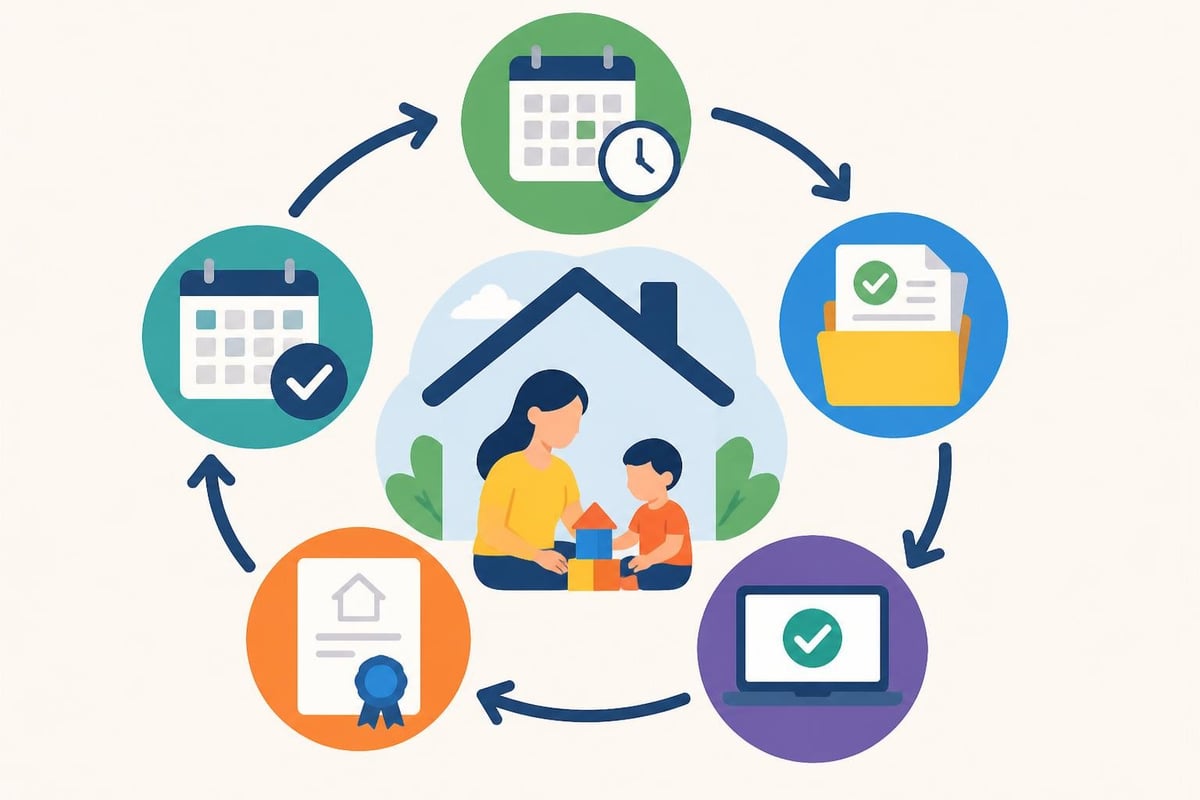
Create a master calendar highlighting all regulatory deadlines, renewal dates, and required training completions. This system ensures nothing falls through the cracks during busy periods.
Your compliance calendar should track:
- Licensing renewal dates (typically annual or biennial)
- Staff background check expiration dates
- CPR and first aid certification renewals
- Fire and safety inspection schedules
- Required training hours and completion deadlines
- Vehicle inspection dates (if providing transportation)
- Food program monitoring visit windows
Post this calendar prominently in your early childhood office and set digital reminders for items requiring advance preparation. Some licenses require renewal applications sixty days before expiration, making proactive tracking essential.
Documentation Best Practices
Inspectors can request specific documentation with minimal notice. Organizing compliance records systematically demonstrates professionalism and reduces inspection stress. Keep a dedicated binder containing your current license, inspection reports, emergency procedures, and staff credentials where inspectors can easily review materials.
The design guidelines for child care centers emphasize creating safe, accessible environments, which extends to how you organize and maintain required documentation in your administrative systems.
Curriculum Planning and Child Assessment Space
Your early childhood office provides dedicated space for thoughtful curriculum development away from the immediate demands of active children. Quality programs require intentional planning that connects developmental goals with engaging activities.
Organizing Curriculum Resources
Establish a library of age-appropriate activity ideas, children's book lists, and seasonal themes within your office space. Many providers maintain physical binders alongside digital Pinterest boards and shared drives containing curriculum resources.
Consider organizing materials by:
- Developmental domains (cognitive, physical, social-emotional, language)
- Age groups served in your program
- Seasonal and holiday themes
- Special focus areas (STEM, literacy, outdoor learning)
- Cultural diversity and inclusion activities
Your early childhood office should contain current child assessment tools and observation records. Regular developmental screening helps identify children who might benefit from additional support while documenting progress for families. Maintaining private space for reviewing assessments protects confidentiality when discussing individual children with families or specialists.
Creating Efficient Lesson Planning Systems
Weekly lesson planning becomes more manageable with established templates and routines. Dedicate specific time in your early childhood office for planning rather than attempting curriculum development while supervising children.
| Planning Component | Time Investment | Storage Location |
|---|---|---|
| Weekly activity overview | 30-45 minutes weekly | Displayed in classroom |
| Individual learning goals | 15 minutes per child monthly | Secure office files |
| Supply shopping lists | 20 minutes weekly | Office bulletin board |
| Parent newsletter content | 30 minutes weekly | Digital draft folder |
Many home childcare providers find that planning during naptime or after hours in their dedicated office space yields better results than fragmented planning throughout the day. The focused environment allows deeper thinking about how activities support specific developmental objectives for the children in your care.
Communication Hub Functions
Modern early childhood programs require frequent communication with families, vendors, licensing staff, and community partners. Your early childhood office centralizes these communication channels.
Parent Communication Systems
Establish consistent communication patterns that keep families informed without overwhelming them with constant updates. Your office serves as the launching point for newsletters, daily reports, billing statements, and policy updates.
Effective communication channels include:
- Daily written or digital reports for infants and toddlers
- Weekly classroom newsletters highlighting activities and learning
- Monthly billing statements with clear payment due dates
- Quarterly conferences discussing developmental progress
- Annual policy review meetings and updated handbooks
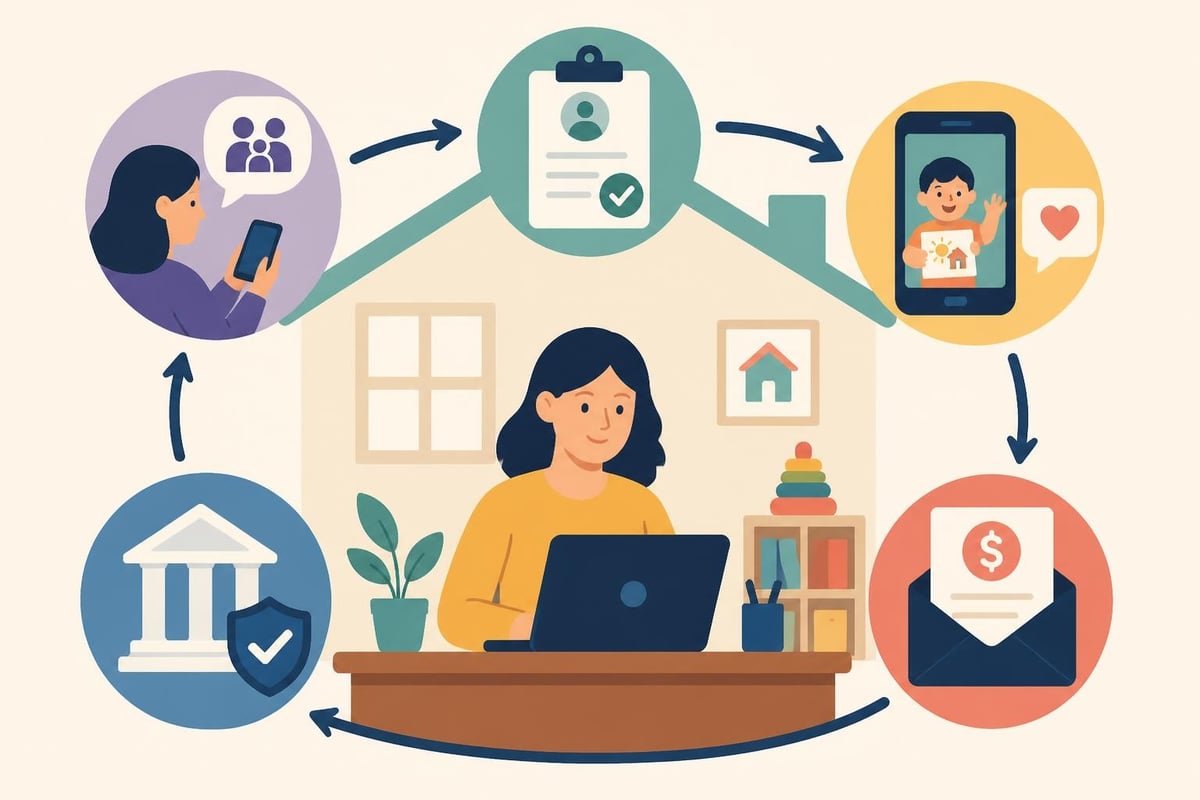
Many providers now use childcare management apps that streamline communication while reducing paper flowing through the office. These platforms typically include messaging, photo sharing, billing, and attendance tracking in unified systems accessible to families.
Looking at infant care programs specifically, communication becomes even more critical as families want detailed information about their baby's day, from feeding schedules to diaper changes and sleep patterns.
Professional Development Coordination
Your early childhood office houses training certificates, professional development plans, and continuing education resources. Most states require annual training hours for childcare providers, making organized tracking essential.
Maintain a professional development binder containing:
- Current training transcripts and certificates
- Planned courses for upcoming renewal periods
- Conference and workshop registration confirmations
- Professional association memberships
- Specialized credential documentation
Subscribe to early childhood education journals and newsletters that arrive at your office, providing regular professional learning opportunities. Setting aside reading time during administrative hours keeps you current with best practices and emerging research.
Technology Integration for Modern Operations
The early childhood office in 2026 leverages technology to streamline previously time-consuming tasks. Even small home-based operations benefit from strategic technology adoption.
Essential Software and Tools
Investing in the right technology reduces administrative burden while improving accuracy and professionalism. Consider which tools address your specific pain points rather than adopting technology for its own sake.
High-impact technology for childcare administration:
- Childcare management software (enrollment, billing, communication)
- Accounting programs designed for small businesses
- Digital signature platforms for paperless enrollment
- Cloud storage for secure document backup
- Payment processing systems for automated tuition collection
- Scheduling tools for coordinating family conferences and events
When evaluating software options for your early childhood office, prioritize systems offering mobile access. The ability to update attendance, share photos, or message families from your phone provides flexibility during the active childcare day.
Digital Organization Strategies
Moving toward paperless systems doesn't happen overnight. Develop a transition plan that digitizes new documents while gradually converting existing paper files to electronic format.
Start with high-traffic documents that families frequently request, such as enrollment forms, policy handbooks, and permission slips. Creating fillable PDF versions reduces printing costs while making forms accessible to families 24/7.
Backup systems protect against catastrophic data loss. Follow the 3-2-1 rule: maintain three copies of important data, stored on two different media types, with one copy stored offsite. Cloud services simplify this process for home childcare providers who lack IT infrastructure.
Space Planning for Growth
As your program expands, your early childhood office needs evolve. Planning for growth prevents outgrowing your administrative systems before recognizing the problem.
Scalable Systems From the Start
Design filing systems, digital folders, and workflow processes that accommodate additional families without requiring complete reorganization. Using consistent naming conventions and logical category structures makes expansion seamless.
Many providers initially organize records alphabetically by child's first name, only to encounter confusion when siblings enroll or multiple children share common names. Switching to last name organization or assigned family ID numbers from the beginning prevents future reorganization projects.
The insights from architectural design guidelines for early childhood education apply to administrative spaces as well, emphasizing the importance of flexible designs that adapt to changing needs.
When to Expand Your Office Space
Recognizing when your current early childhood office setup no longer serves your program prevents administrative bottlenecks from affecting care quality. Warning signs include:
- Regularly working late into evenings on administrative tasks
- Difficulty locating important documents when needed
- Accumulated piles of unfiled paperwork
- Stress around licensing inspections due to disorganization
- Missing billing or enrollment deadlines
- Feeling overwhelmed by administrative responsibilities
These indicators suggest your systems need refinement or your physical space requires expansion. Sometimes the solution involves better organization rather than more square footage. Other situations genuinely require dedicating additional space to administrative functions.
Safety and Confidentiality Considerations
Your early childhood office contains sensitive information requiring protection. Implementing security measures safeguards families while protecting your business from liability.
Physical Security Measures
Confidential records must remain secure from unauthorized access. This includes not only preventing stranger access but also ensuring enrolled children cannot reach sensitive documents during your program hours.
Essential security measures:
- Lockable filing cabinets for all family records
- Password-protected computers with automatic screen locks
- Shredders for disposing of confidential documents
- Secure backup storage for financial records
- Restricted office access during childcare hours
- Privacy screens on monitors visible from childcare areas
Consider the guidance from the American Academy of Pediatrics on setting office hours and best practices regarding protecting patient information, which parallels the confidentiality obligations in childcare settings.
Digital Security Protocols
Electronic records require equally robust protection. Cyber security for childcare providers focuses on preventing unauthorized access to family information and business data.
Implement these digital security practices in your early childhood office:
- Strong, unique passwords for all systems and accounts
- Two-factor authentication on financial and administrative platforms
- Regular software updates addressing security vulnerabilities
- Encrypted email for transmitting confidential information
- Secure Wi-Fi networks separate from family and guest access
- Regular data backups stored securely
- Clear policies about staff access to electronic records
Train anyone with office access on confidentiality requirements and appropriate information handling. Even family members helping with administrative tasks need guidance on protecting sensitive information.
Streamlining Daily Administrative Routines
The most beautifully organized early childhood office fails without consistent routines for maintaining systems. Developing daily and weekly administrative habits prevents organizational backsliding.
Daily Administrative Tasks
Integrate brief administrative routines into your daily schedule rather than letting tasks accumulate. Spending ten minutes on paperwork daily prevents overwhelming catch-up sessions.
Daily office checklist:
- Process and file any new paperwork received from families
- Update attendance records in your tracking system
- Review and respond to parent communications
- Note supply needs for upcoming shopping
- Check calendar for tomorrow's activities and prepare accordingly
These quick daily touches keep your early childhood office functional without consuming excessive time during your childcare hours. Many providers complete these tasks during naptime or immediately after children depart.
Weekly Administrative Blocks
Reserve dedicated time weekly for substantial administrative work requiring focus. Protecting this time prevents administrative tasks from invading evenings and weekends.
Schedule weekly blocks for:
- Lesson planning for the upcoming week
- Invoicing and payment processing
- Updating child assessment observations
- Reviewing and restocking supplies
- Communication with families (newsletters, updates)
- Professional reading and development activities
The specific amount of time varies based on enrollment numbers and program complexity. Most home childcare providers need between four and eight hours weekly for thorough administrative work. Treating this time as seriously as you treat childcare hours ensures administrative tasks receive appropriate attention.
Building Collaborative Relationships Through Your Office
Your early childhood office serves as the coordination point for relationships extending beyond enrolled families. Professional home childcare operations connect with various community partners and resources.
Community Resource Networks
Maintaining organized contact information and partnership documentation helps you efficiently connect families with needed services. Your office should contain updated resource lists for:
- Early intervention services and developmental specialists
- Pediatricians and dental clinics accepting new patients
- Food assistance programs and family support services
- Parenting classes and family events
- Special needs resources and support groups
- Translation services for non-English speaking families
The importance of facilitating cross-departmental collaboration in early childhood systems extends to home-based providers building referral networks that serve families comprehensively.
Professional Networking
Your early childhood office becomes more effective when connected to broader professional communities. Join local childcare associations, participate in provider networks, and maintain relationships with licensing specialists who can answer questions.
Keep business cards, meeting notes, and collaboration agreements organized for easy reference when opportunities arise. Many home childcare providers find valuable support through informal peer networks where providers share resources, coverage for vacations, and professional encouragement.
Quality Improvement Through Administrative Excellence
The connection between organized administration and quality care might seem indirect, but your early childhood office directly impacts program quality. When administrative systems function smoothly, you dedicate more energy to interactions with children rather than searching for missing forms or catching up on overdue paperwork.
Using Data for Program Enhancement
Your administrative records contain valuable information for program improvement. Regular review of attendance patterns, enrollment trends, and family feedback reveals opportunities for enhancement.
Analyze your records quarterly to identify:
- Peak enrollment periods and recruitment opportunities
- Common family concerns requiring policy clarification
- Successful activities generating positive feedback
- Areas where children consistently demonstrate growth
- Supply costs that might benefit from bulk purchasing
This data-driven approach transforms your early childhood office from a paperwork repository into a strategic planning center supporting continuous quality improvement.
Documentation Supporting Accreditation
Programs pursuing quality accreditation require extensive documentation demonstrating compliance with enhanced standards. Your early childhood office organization significantly impacts accreditation readiness.
Accreditation processes typically require evidence of:
- Ongoing child assessment and individualized planning
- Family engagement and communication systems
- Staff professional development and qualifications
- Health, safety, and nutrition practices
- Curriculum implementation aligned with developmental standards
- Program evaluation and quality improvement efforts
Starting with strong organizational systems makes accreditation preparation manageable rather than overwhelming. Facilities like those featured in the Step by Step Care gallery demonstrate the commitment to quality that extends from the physical environment through administrative excellence.
Establishing an efficient early childhood office transforms how you operate your home childcare business, reducing stress while improving service quality for families. The systems, organization strategies, and routines discussed here provide a foundation for professional operations that support both regulatory compliance and continuous quality improvement. Whether you're launching a new program or refining established operations, investing in administrative excellence pays dividends in sustainability and satisfaction. Step by Step Care understands the challenges home childcare providers face and offers resources to support your success. Contact us to learn how our experience can help you build the strong administrative foundation your program deserves.


