

Best Daycares Near Me With Cameras: Your 2026 Guide
Finding quality childcare that gives you complete peace of mind is one of the most important decisions you'll make as a parent. In 2026, video surveillance has become a standard expectation in childcare facilities, transforming how parents stay connected to their children throughout the day. When searching for the best daycares near me with cameras, you're not just looking for any facility-you're seeking a partnership built on transparency, safety, and trust.
Why Camera Systems Matter in Modern Childcare
Video monitoring has evolved from a luxury feature to an essential component of quality childcare. Parents today expect real-time visibility into their child's day, and progressive childcare providers understand this need.
The Safety and Security Benefits
Camera systems serve multiple critical functions in childcare environments. They provide documentation of daily activities, deter inappropriate behavior, and create accountability for all staff members. When incidents occur-whether medical emergencies, accidents, or behavioral issues-footage provides an objective record that protects both children and caregivers.
Key security advantages include:
- Monitoring entry and exit points to prevent unauthorized access
- Documenting pickup and drop-off times with timestamp verification
- Reviewing incidents to understand exactly what happened
- Providing evidence for insurance claims or legal matters
- Creating transparency that builds trust between parents and providers
The presence of cameras also supports staff training and quality improvement. Administrators can review footage to identify best practices, recognize exceptional care, and address areas needing improvement. This continuous quality monitoring elevates the entire childcare experience.
Building Trust Through Transparency
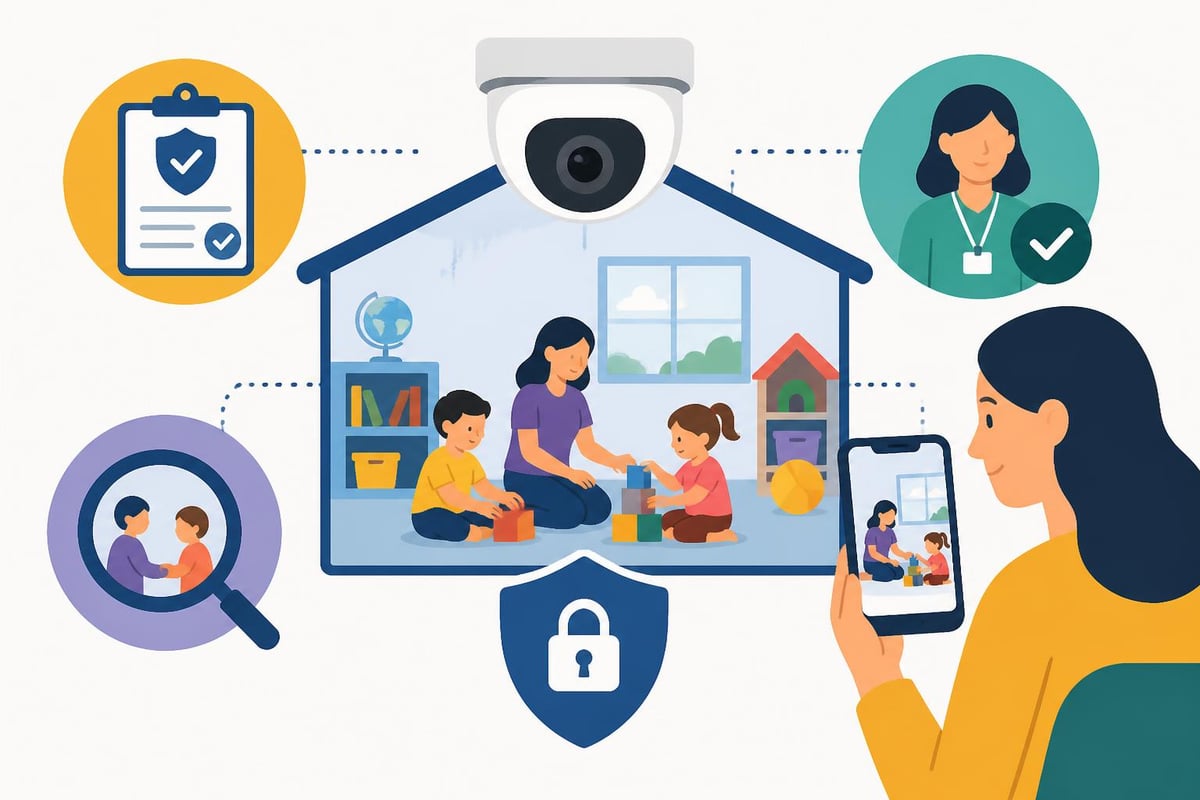
When you search for the best daycares near me with cameras, you're prioritizing transparency. Modern parents want to see their children's environment, observe interactions with caregivers, and feel connected even when physically apart.
Live streaming capabilities have become particularly valuable in 2026. Many facilities now offer secure, password-protected portals where parents can check in throughout the day. This visibility reduces anxiety, especially during the adjustment period when children are new to care.
However, privacy considerations and legal requirements vary significantly by state and locality. Quality providers balance transparency with privacy, implementing cameras thoughtfully and communicating clearly about their policies.
Evaluating Camera Systems When Choosing Childcare
Not all camera systems offer the same features or benefits. Understanding what to look for helps you identify truly exceptional facilities.
Essential Features to Look For
| Feature | Why It Matters | Questions to Ask |
|---|---|---|
| Live streaming access | Lets you check in anytime | Is there a parent portal? What are access hours? |
| High-definition video | Clear visibility of activities and interactions | What resolution do cameras record? |
| Multiple camera angles | Complete coverage of all activity areas | How many cameras cover each room? |
| Secure data storage | Protects footage from unauthorized access | How long is footage retained? Who can access it? |
| Audio capabilities | Provides context for visual footage | Do cameras record sound? What are privacy limitations? |
The placement of cameras matters significantly. Look for facilities with cameras positioned to cover play areas, eating spaces, nap rooms, and entrance points. Bathroom and diaper-changing areas typically have restricted camera access to protect privacy, which is appropriate and expected.
Understanding Access and Privacy Policies
When evaluating the best daycares near me with cameras, ask detailed questions about access policies. Who can view footage? How do parents access live feeds? What happens if you want to review past footage?
Professional facilities have clear, written policies addressing these questions. They should explain:
- Parent access procedures and login credentials
- Staff monitoring protocols and supervision
- Data retention periods (typically 30-90 days)
- Circumstances under which footage can be reviewed
- Privacy protections for all children in care
Understanding how surveillance impacts the childcare environment helps you evaluate whether a facility's approach aligns with your values. Some families prefer extensive monitoring, while others prioritize a more traditional approach with selective camera use.
Different Types of Childcare Camera Systems
The childcare industry uses various camera technologies, each with distinct advantages and limitations.
Traditional CCTV Systems
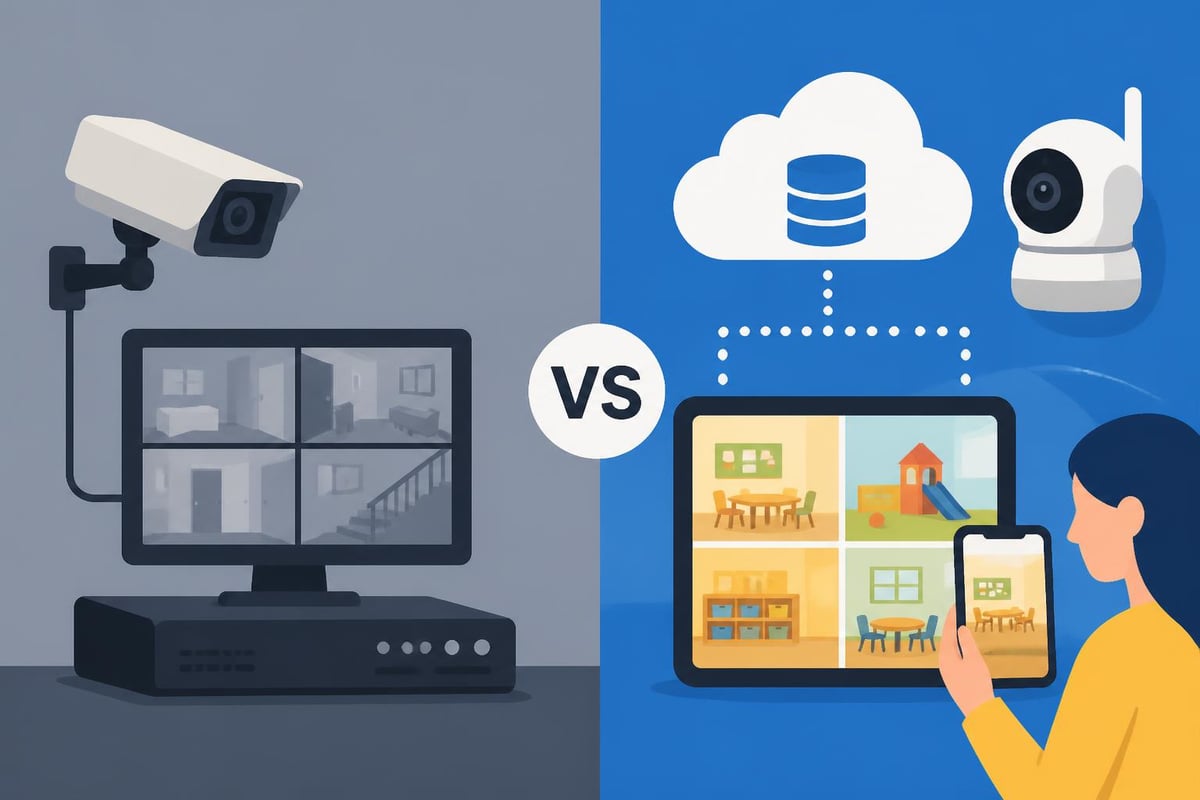
Closed-circuit television systems represent the foundation of childcare surveillance. These systems record continuously to local storage devices, providing reliable documentation without requiring internet connectivity.
Advantages:
- Reliable operation without internet dependency
- Lower ongoing costs after installation
- Professional-grade video quality
- Dedicated recording equipment
Limitations:
- No remote viewing capabilities for parents
- Requires physical access to review footage
- Limited storage capacity without upgrades
- Higher upfront installation costs
Internet-Connected Streaming Systems
Modern facilities increasingly use IP cameras that stream video over the internet. These systems enable the remote access that parents value when searching for the best daycares near me with cameras.
These platforms often include additional features like motion detection alerts, cloud storage, and multi-device compatibility. Parents can check in from smartphones, tablets, or computers using secure credentials.
Hybrid Approaches
Many quality providers combine both approaches, using local recording for reliability while offering selective live streaming for parent peace of mind. This hybrid model balances security, privacy, and transparency effectively.
The types of camera systems used in daycare centers continue evolving as technology advances, but the fundamental purpose remains constant: protecting children and building family trust.
Legal and Regulatory Considerations
Camera requirements and restrictions vary significantly across states and even between local jurisdictions. Understanding the legal landscape helps you evaluate whether a facility meets appropriate standards.
State-by-State Variations
Some states mandate cameras in licensed childcare facilities, while others leave the decision to individual providers. In 2026, approximately 15 states have specific legislation addressing childcare surveillance, though enforcement and specific requirements differ.
Comprehensive video surveillance policies must address consent requirements, appropriate camera placement, audio recording limitations, and footage access protocols. Facilities operating in multiple locations must comply with varying state regulations.
Audio Recording Restrictions
Many jurisdictions impose stricter regulations on audio recording than video surveillance. Two-party consent laws in several states prohibit recording conversations without permission from all participants. This explains why many daycare cameras capture video only, without sound.
When cameras do record audio, facilities should clearly communicate this fact and obtain appropriate consents. Parents seeking the best daycares near me with cameras should understand these limitations and why they exist.
Making Your Search More Effective
Finding ideal childcare with appropriate surveillance requires strategic searching and thoughtful evaluation.
Questions to Ask During Tours
- How many cameras are installed, and where are they positioned?
- Can I access live feeds? If so, what technology platform do you use?
- How long do you retain recorded footage?
- Under what circumstances can parents review past footage?
- Who has access to camera feeds and recordings?
- What privacy protections exist for changing areas and bathrooms?
- How do you notify parents about camera outages or technical issues?
- Are cameras monitored in real-time by staff for safety?
These questions reveal not just the technical capabilities but also the facility's philosophy about transparency and parent involvement.
Red Flags to Watch For
Certain responses or observations should raise concerns during your search. Be cautious if a facility:
- Refuses to explain their camera policies clearly
- Has cameras in inappropriate locations (bathrooms, changing areas)
- Cannot demonstrate how parents access feeds
- Has outdated or non-functioning equipment
- Lacks written policies about footage access and retention
- Shows reluctance to discuss surveillance practices
Quality providers welcome questions about cameras because they recognize video monitoring as a partnership tool, not a surveillance burden.
Balancing Technology With Personal Connection
While cameras provide valuable oversight, they shouldn't replace direct communication with caregivers. The best facilities use technology to enhance, not substitute for, the parent-provider relationship.
The Human Element Still Matters Most
Video feeds show activities but can't capture everything that makes childcare special. Daily conversations with teachers, written updates about developmental milestones, and personal relationships remain irreplaceable.
Exploring whether CCTV makes childcare settings safer reveals that technology works best when combined with excellent staff training, low teacher-to-child ratios, and genuine commitment to quality care.
When visiting top-rated daycares near me, observe how staff interact with children. Are they engaged and attentive? Do they communicate warmly? Technology supports great care but cannot create it independently.
Finding the Right Balance for Your Family
Some parents check cameras frequently, finding comfort in regular check-ins. Others prefer occasional viewing, trusting their provider while maintaining the option to observe when desired. Neither approach is wrong-the key is finding a facility whose camera policies match your comfort level.
Consider your own preferences honestly. Do you want continuous access, or would scheduled windows work better? Would constant availability reduce your anxiety or increase it? Understanding your needs helps you communicate effectively with potential providers.
Home-Based Childcare and Camera Systems
Home childcare settings present unique opportunities and challenges regarding surveillance systems. Smaller, home-based operations may have different approaches than larger institutional centers.
Advantages in Home Environments
Home-based providers often implement cameras more flexibly, creating personalized monitoring solutions. With fewer rooms to cover and smaller group sizes, comprehensive coverage becomes more affordable and manageable.
Many home childcare providers offer live streaming access as a competitive differentiator, recognizing that technology helps families feel connected. The intimate setting combined with video access creates a powerful combination for working parents.
Privacy Considerations in Home Settings
Home providers must balance childcare transparency with personal privacy since care happens in their residence. Cameras typically focus on designated play and activity areas while avoiding private family spaces.
If you're researching the best daycares near me with cameras and considering home-based options, ask how the provider separates business and personal spaces. Clear boundaries protect everyone's privacy while maintaining appropriate oversight.
Cost Considerations and Value Assessment
Camera systems represent an investment for childcare providers, and fees sometimes reflect this technology. Understanding the cost structure helps you assess value appropriately.
What You're Paying For
Quality camera systems involve several cost components:
- Initial hardware purchase and installation
- Ongoing cloud storage or server maintenance
- Internet bandwidth for streaming capabilities
- Software licensing for parent portal access
- System monitoring and technical support
- Regular equipment updates and replacements
Facilities offering robust camera access may charge slightly higher tuition to cover these expenses. The question becomes whether this premium delivers sufficient value for your family's peace of mind.
Comparing Value Across Providers
| Provider Type | Typical Camera Features | Average Cost Impact |
|---|---|---|
| Home-based care | 2-4 cameras, basic streaming | $0-50/month premium |
| Small center (20-40 children) | 6-10 cameras, parent portal | $50-100/month premium |
| Large center (40+ children) | 15+ cameras, advanced features | $100-150/month premium |
| Premium facilities | Comprehensive coverage, AI features | $150+/month premium |
Remember that camera quality represents just one component of overall childcare quality. Reviewing facility galleries and learning about teaching teams provides additional insight into whether a provider matches your needs.
Technology Trends Shaping Childcare in 2026
The childcare surveillance landscape continues evolving rapidly. Understanding emerging trends helps you evaluate whether facilities invest in continuous improvement.
Artificial Intelligence and Smart Monitoring
Advanced systems now incorporate AI capabilities that alert staff to potential safety concerns automatically. These features include:
- Facial recognition for pickup authorization verification
- Activity monitoring to detect falls or injuries immediately
- Crowd detection to ensure appropriate supervision ratios
- Behavior pattern analysis for developmental insights
While sophisticated, these technologies raise additional privacy questions. Understanding CCTV in childcare settings requires awareness of both benefits and potential concerns as capabilities expand.
Integration With Other Communication Tools
Modern childcare platforms increasingly integrate video access with daily reports, photos, messaging, and billing. This consolidation creates seamless communication, reducing the number of apps parents manage.
When searching for the best daycares near me with cameras, ask whether video access integrates with other parent communication features. Unified platforms offer superior user experience compared to fragmented systems.
Making Your Final Decision
Ultimately, camera systems represent one criterion among many when selecting childcare. They provide valuable transparency but shouldn't overshadow other essential quality indicators.
Creating Your Evaluation Framework
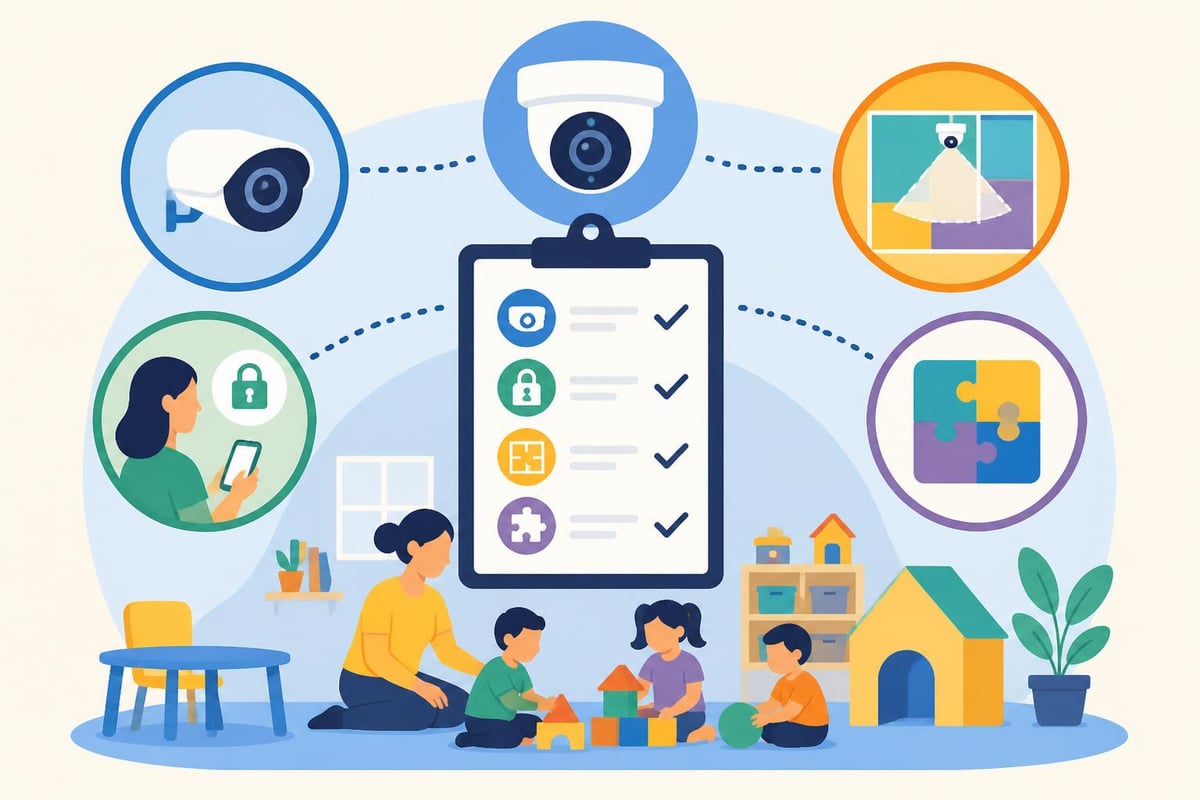
Develop a structured approach to comparing facilities:
- Safety and Security (including cameras, but also emergency procedures, staff training, facility maintenance)
- Educational Philosophy (curriculum, developmental approach, learning environment)
- Staff Quality (credentials, experience, warmth, communication)
- Practical Considerations (location, hours, pricing, availability)
- Technology and Communication (camera access, daily updates, parent engagement)
Weight these categories according to your priorities. For some families, cameras rank as the top concern. Others prioritize educational approach or staff experience more heavily.
Trusting Your Instincts
Data and features matter, but so does your gut feeling. After touring facilities and meeting staff, reflect on where you felt most comfortable. Where did you envision your child thriving? Which caregivers communicated in ways that resonated with your parenting style?
The best daycares near me with cameras are ultimately the ones that combine technology with genuine care, professional competence, and alignment with your family values. If you're seeking quality childcare in Springfield, VA or surrounding areas, prioritize facilities that demonstrate this balance effectively.
Additional Resources and Continued Research
Your search for ideal childcare should include multiple information sources beyond camera capabilities alone.
What to Read and Research
Understanding the pros and cons of daycare cameras provides balanced perspective on surveillance technology. Reading both supportive and critical viewpoints helps you form educated opinions about what matters most.
Explore licensing databases, parent reviews, and social media presence for facilities you're considering. Join local parent groups to gather firsthand experiences and recommendations. The most valuable insights often come from families currently enrolled.
Staying Informed About Your Rights
Parent rights regarding camera access, footage review, and privacy protection vary by location. Familiarize yourself with your state's childcare licensing requirements and any specific camera-related regulations.
Don't hesitate to request written copies of camera policies before enrolling. Professional facilities provide clear documentation and welcome informed questions from prospective families.
Continuing the Conversation
After enrollment, maintain ongoing dialogue about camera systems and how they serve your family. Provide feedback if technical issues arise or if you'd like to see improvements. Quality providers appreciate parent input and continuously refine their practices.
For those interested in learning more about childcare best practices, staying connected with provider communications helps you understand how facilities evolve and improve over time.
Finding the best daycares near me with cameras requires balancing technology, quality care, and family values. Video monitoring enhances transparency and safety when implemented thoughtfully, but it represents just one component of exceptional childcare. If you're ready to explore childcare options that prioritize both modern technology and nurturing environments, Step by Step Care offers the personal attention and professional standards your family deserves-reach out today to schedule a tour and see our approach to quality home childcare firsthand.


