

Education and Childcare: Building Strong Foundations
The intersection of education and childcare represents one of the most critical periods in a child's development. During the early years, children absorb information at an unprecedented rate, forming neural connections that establish the foundation for lifelong learning. Quality programs recognize that nurturing care and intentional learning experiences are inseparable components of healthy child development. For families seeking reliable care solutions, understanding how these elements work together helps ensure children receive the comprehensive support they need during their most formative years.
The Foundation of Early Learning in Care Settings
Early childhood represents a unique window of opportunity for cognitive, social, and emotional development. Research consistently shows that children who participate in high-quality early care environments demonstrate stronger academic performance, better social skills, and improved executive function compared to peers without such experiences.
How Care and Learning Integrate Naturally
Home-based childcare providers create environments where education and childcare blend seamlessly throughout daily routines. Meal preparation becomes a mathematics lesson through counting and measuring. Story time develops literacy skills while fostering emotional connections. Outdoor play builds gross motor skills while introducing scientific concepts about nature and weather.
Key learning domains addressed in quality care programs include:
- Language and literacy development through conversations and books
- Mathematical thinking via counting, sorting, and pattern recognition
- Scientific exploration through hands-on discovery activities
- Social-emotional growth during peer interactions and conflict resolution
- Physical development through active play and fine motor activities
- Creative expression using art, music, and imaginative play
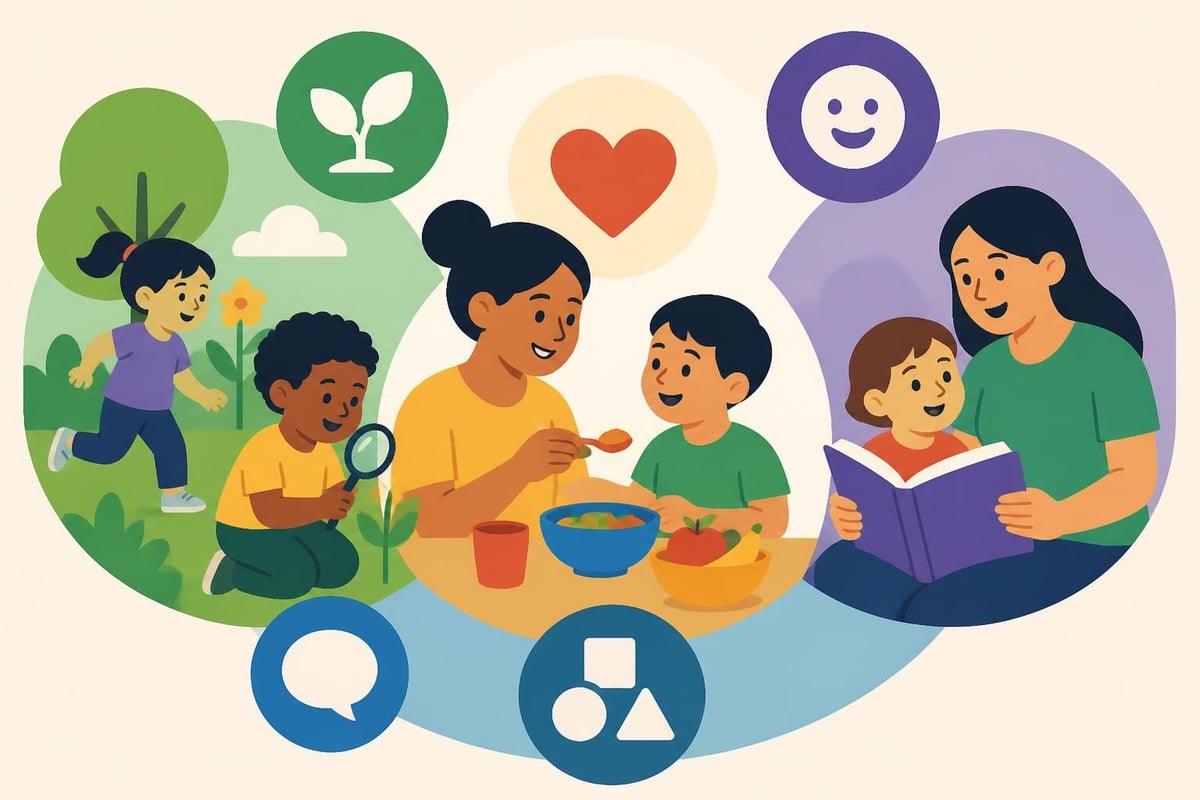
These learning opportunities don't require elaborate setups or expensive materials. The CDC’s early care resources emphasize that responsive caregiving and enriched environments form the cornerstone of effective early education. Providers who understand child development can transform ordinary moments into extraordinary learning experiences.
The Role of Structured and Unstructured Time
Balancing planned activities with free exploration creates optimal conditions for growth. Structured learning activities provide focused skill development, while unstructured play allows children to apply knowledge creatively, practice decision-making, and develop independence.
Quality programs typically follow a rhythm that includes:
- Morning circle time for calendar, weather, and group discussion
- Focused learning centers or activities addressing specific skills
- Extended free play periods for child-directed exploration
- Outdoor time for physical activity and nature study
- Quiet time for rest and individual pursuits
- Closing activities that review the day's experiences
This balanced approach ensures children receive guidance while maintaining the freedom to explore their interests and develop autonomy.
Building Educational Frameworks in Home Settings
Home childcare providers occupy a unique position in the education and childcare landscape. Unlike institutional settings, home environments offer intimacy, flexibility, and family-like dynamics that support individualized learning approaches. At Step by Step Care, these advantages create opportunities for deeply personalized educational experiences.
Creating Learning-Rich Environments
Transforming a home into an educational setting requires thoughtful organization and resource selection. Effective learning spaces include:
| Learning Area | Materials | Educational Purpose |
|---|---|---|
| Literacy Corner | Books, letters, writing tools | Language development, pre-reading skills |
| Math & Manipulatives | Blocks, puzzles, counting objects | Spatial reasoning, number sense |
| Science Station | Natural objects, magnifiers, specimens | Observation skills, hypothesis testing |
| Art Center | Open-ended materials, creative supplies | Fine motor skills, self-expression |
| Dramatic Play | Costumes, props, household items | Imagination, social skills, vocabulary |
These areas don't need to occupy separate rooms. Creative providers use shelving units, bins, and rotation systems to maximize available space while maintaining organization. The key is ensuring materials remain accessible at children's height and that spaces invite exploration.
Curriculum Development for Mixed-Age Groups
One challenge specific to home childcare involves serving children of varying ages simultaneously. Rather than viewing this as a limitation, skilled providers recognize the educational benefits of mixed-age groupings.
Advantages of multi-age learning environments:
- Younger children learn through observation and modeling
- Older children reinforce knowledge by teaching concepts
- Natural mentoring relationships develop between age groups
- Individualization becomes the norm rather than the exception
- Children progress at their own pace without artificial grade-level constraints
Successful providers design activities with multiple entry points, allowing each child to engage at their developmental level. A cooking project might have toddlers stirring ingredients while preschoolers measure and kindergarteners read recipe steps.
Supporting Families Through Education and Childcare
The relationship between providers and families significantly impacts children's success. When care programs and homes work as partners, children experience consistency in expectations, values, and learning approaches.
Communication Systems That Strengthen Learning
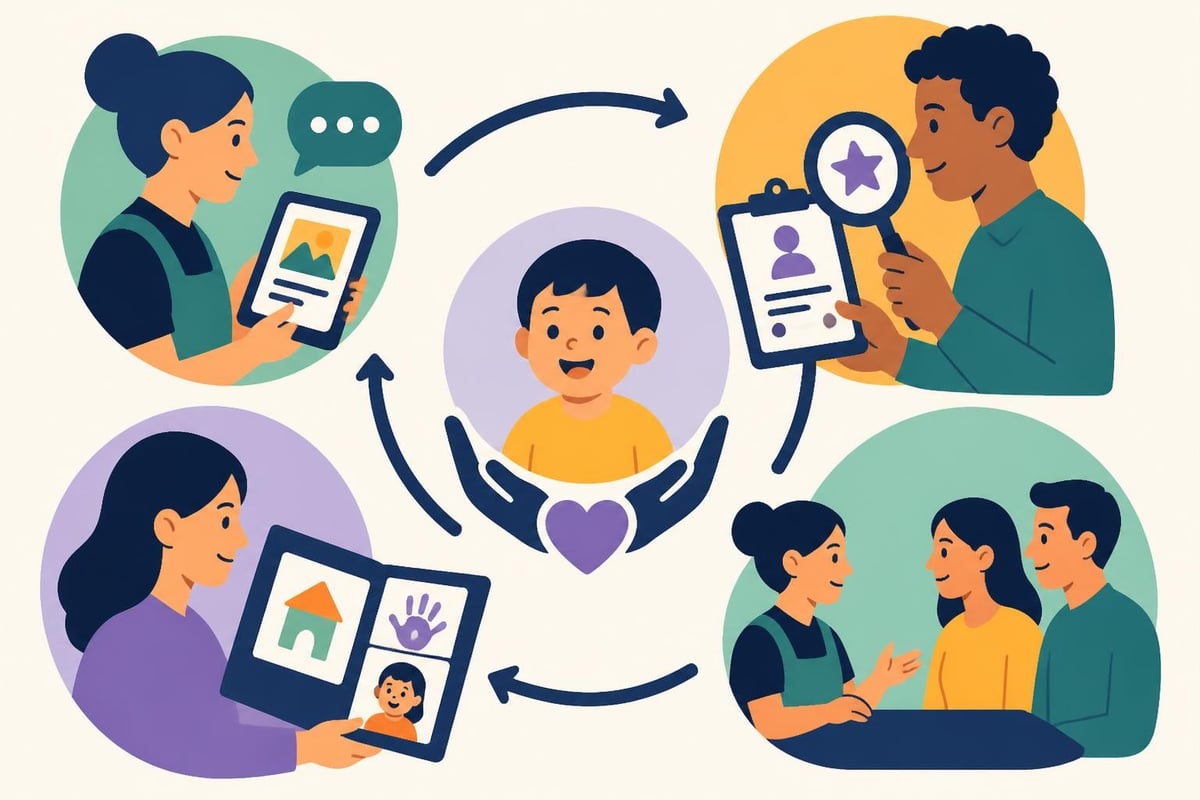
Daily communication keeps families informed about their children's experiences and progress. Modern technology enhances traditional methods:
- Digital portfolios documenting learning through photos and observations
- Daily reports sharing meals, naps, activities, and developmental milestones
- Weekly newsletters highlighting upcoming themes and learning objectives
- Parent conferences providing in-depth progress discussions
- Resource sharing offering extension activities for home reinforcement
These communication channels help families understand the intentional learning happening during care hours. When parents recognize that block building develops spatial reasoning and mathematical thinking, they view play with new appreciation.
Extending Learning Into Home Environments
Providers who share specific strategies empower families to continue educational support at home. Simple suggestions make significant differences:
- Narrate daily activities to build vocabulary
- Ask open-ended questions instead of yes/no queries
- Read together daily, following the child's interests
- Provide open-ended materials like blocks, art supplies, and dress-up items
- Limit screen time in favor of active, hands-on experiences
- Create predictable routines that help children feel secure
According to the National Center for Education Statistics, family engagement correlates strongly with positive educational outcomes across all age groups. By equipping parents with practical tools, providers amplify their impact beyond care hours.
Professional Development and Quality Improvement
The field of education and childcare continues evolving as research reveals new insights about how young children learn. Committed providers pursue ongoing professional development to enhance their practice and stay current with best practices.
Essential Knowledge Areas for Care Providers
Effective early educators build expertise across multiple domains. The Educational Resources Information Center offers research-based information supporting provider learning in critical areas:
- Child development theory understanding how children grow and learn
- Curriculum planning creating age-appropriate learning experiences
- Observation and assessment tracking progress and identifying needs
- Health and safety protocols maintaining secure environments
- Behavior guidance strategies supporting positive social-emotional development
- Family engagement techniques building strong partnerships
- Cultural competency honoring diverse backgrounds and perspectives
Many providers participate in credential programs, attend workshops, join professional organizations, and engage in peer learning communities. This commitment to growth directly benefits the children in their care.
Quality Rating Systems and Standards
Various states have implemented quality rating and improvement systems (QRIS) that establish standards for education and childcare programs. These frameworks typically evaluate:
| Quality Indicator | Assessment Criteria | Impact on Children |
|---|---|---|
| Learning Environment | Space organization, materials, safety | Engagement, exploration opportunities |
| Curriculum & Activities | Developmental appropriateness, variety | Skill acquisition across domains |
| Teacher-Child Interactions | Responsiveness, warmth, intentionality | Attachment, confidence, learning motivation |
| Staff Qualifications | Training, credentials, experience | Consistency, expertise, professionalism |
| Family Partnerships | Communication, involvement opportunities | Home-program alignment, support continuity |
Programs pursuing higher ratings in these systems demonstrate commitment to continuous improvement. Families researching care options can use these ratings as one factor in their decision-making process, though personal fit and values alignment matter equally.
Addressing Individual Learning Needs
Every child brings unique strengths, challenges, interests, and learning styles to care settings. Responsive providers recognize and honor this diversity through differentiated approaches.
Supporting Children With Special Needs
Inclusive education and childcare benefits all children by fostering acceptance, empathy, and appreciation for differences. The Early Childhood Technical Assistance Center provides resources for integrating children with disabilities into typical care settings.
Strategies for inclusive care include:
- Adapting activities to allow multiple participation methods
- Providing assistive devices and specialized materials as needed
- Collaborating with therapists and specialists serving the child
- Training staff in specific support strategies
- Educating typically developing children about differences
- Partnering closely with families on goals and approaches
Many children thrive in infant care programs and other small-group settings that offer individualized attention and flexible pacing. Home-based providers often excel at accommodation because low ratios allow intensive focus on each child's needs.
Recognizing and Nurturing Giftedness
Advanced learners also require differentiation to remain engaged and challenged. Providers can support gifted young children through:
- Offering complex materials and open-ended challenges
- Allowing deeper exploration of topics that fascinate them
- Connecting them with older peers for appropriate challenge
- Providing enrichment opportunities beyond typical curriculum
- Partnering with families on extension activities
The goal isn't acceleration for its own sake, but rather ensuring each child operates within their optimal learning zone-challenged enough to grow but not so frustrated they disengage.
Health, Nutrition, and Learning Connections
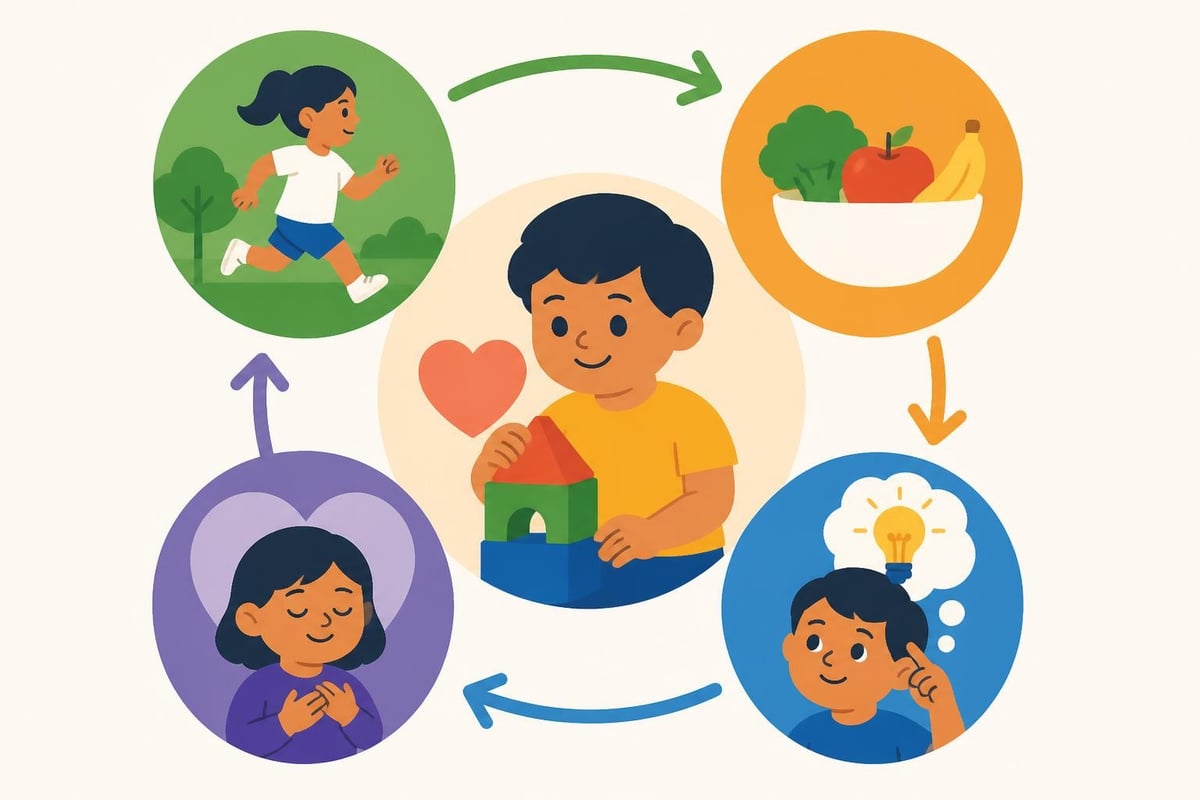
Physical wellbeing forms the foundation upon which learning occurs. Children cannot focus on educational activities when they're hungry, tired, or unwell. Comprehensive education and childcare programs address whole-child needs.
Nutrition's Role in Cognitive Development
Brain development during early childhood requires proper nutrition. Quality care programs provide:
- Balanced meals and snacks following USDA guidelines
- Family-style dining that builds social skills and autonomy
- Exposure to diverse foods developing adventurous eating habits
- Cooking activities that teach life skills and academic concepts
- Accommodation of allergies and dietary restrictions ensuring all children's needs are met
Meal times become learning opportunities as children practice table manners, engage in conversation, serve themselves, and try new foods. These experiences build executive function, social competence, and healthy relationships with food.
Active Play and Physical Development
Young children learn through movement. Physical activity supports not only motor skill development but also cognitive function, emotional regulation, and social competence. Effective programs incorporate:
- Daily outdoor time in varied weather conditions
- Gross motor activities like running, climbing, and balancing
- Fine motor practice through art, manipulatives, and self-care tasks
- Sensory experiences involving touch, sound, sight, smell, and movement
- Dance, yoga, and structured movement activities
Research shows that children who engage in regular physical activity demonstrate better attention, memory, and academic performance. The connection between body and mind is inseparable during early development.
Technology and Early Education
Digital tools play an increasingly prominent role in society, raising questions about their appropriate use in early education and childcare. Thoughtful integration focuses on enhancing rather than replacing hands-on, relationship-based learning.
Developmentally Appropriate Technology Use
The American Academy of Pediatrics recommends minimal screen time for young children, with emphasis on co-viewing and interactive content. In care settings, technology might include:
- Documentation tools for capturing learning moments and sharing with families
- Music and movement resources supporting creative expression
- Video calls connecting children with family members during the day
- Interactive stories on tablets used sparingly and alongside physical books
- Educational apps offering developmentally appropriate content with adult participation
The key is ensuring technology serves learning goals rather than functioning as a babysitter or time-filler. Emerging research on educational AI standards suggests that future tools may offer more personalized, pedagogically sound learning support, but human relationships remain irreplaceable in early childhood.
Digital Communication With Families
Technology strengthens the education and childcare partnership through enhanced communication. Secure apps and platforms allow providers to:
- Share photos and videos documenting daily experiences
- Send real-time updates about meals, naps, and activities
- Track developmental progress with digital portfolios
- Communicate privately about individual children's needs
- Share resources, articles, and activity ideas with families
These tools increase transparency and help families feel connected even when apart from their children. However, they supplement rather than replace face-to-face conversations and personal relationships.
Cultural Responsiveness in Early Programs
America's increasing diversity requires education and childcare programs that honor multiple cultural perspectives, languages, and family structures. Culturally responsive practice recognizes that families are children's first teachers and that home culture provides important context for learning.
Building Inclusive Communities
Providers create welcoming environments for diverse families through:
| Strategy | Implementation | Benefit |
|---|---|---|
| Multilingual materials | Signs, newsletters, books in home languages | Validates linguistic diversity |
| Diverse representation | Dolls, books, images reflecting varied identities | Children see themselves and others |
| Cultural celebrations | Acknowledging various holidays and traditions | Builds awareness and appreciation |
| Flexible communication | Offering multiple channels and translation support | Ensures all families stay informed |
| Anti-bias curriculum | Addressing stereotypes and promoting equity | Develops critical thinking and empathy |
These practices benefit all children, not just those from minoritized groups. Growing up in diverse environments prepares children for participation in our multicultural society.
Partnering Across Cultural Differences
When provider and family backgrounds differ, intentional communication becomes especially important. Effective strategies include:
- Asking families about their values, goals, and practices
- Explaining program approaches while remaining open to adaptation
- Recognizing that different doesn't mean deficient
- Finding common ground while honoring differences
- Seeking cultural informants when unfamiliar with traditions
- Reflecting on personal biases and assumptions
Quality family day care educators understand that culturally responsive care requires ongoing learning, humility, and relationship-building.
Outdoor Learning Environments
Nature provides unparalleled opportunities for education and childcare integration. Outdoor spaces offer sensory richness, open-ended materials, and experiences impossible to replicate indoors.
Benefits of Nature-Based Programming
Children who spend significant time outdoors demonstrate:
- Enhanced creativity sparked by natural loose parts and open spaces
- Improved physical health through active play and fresh air
- Reduced stress due to calming effects of natural environments
- Scientific thinking developed through direct observation and experimentation
- Environmental stewardship fostered by regular nature connection
- Risk assessment skills practiced in varied terrain and weather
Even small outdoor areas can provide rich learning when thoughtfully designed. Container gardens, bird feeders, sensory paths, and simple loose parts like sticks and stones create engagement.
Seasonal Learning Opportunities
The changing seasons offer natural curriculum themes:
- Spring: Plant growth, baby animals, weather changes, new life cycles
- Summer: Insect study, water play, shadow exploration, garden tending
- Fall: Leaf changes, harvest, migration, preparation for winter
- Winter: Snow properties, animal adaptations, ice experiments, quiet observation
This cyclical pattern helps children understand time, change, and natural rhythms. Experiences grounded in direct observation create deeper learning than secondhand information from books or screens.
Assessment and Documentation
Tracking children's growth helps providers adjust their approaches and communicate progress to families. Effective assessment in education and childcare settings looks quite different from traditional testing.
Authentic Assessment Methods
Rather than relying on artificial testing situations, quality programs use:
- Observation notes capturing children's activities, language, and interactions
- Photo documentation showing engagement and accomplishment
- Work samples demonstrating developing skills over time
- Developmental checklists tracking milestone achievement
- Learning stories narrating significant moments in detail
- Portfolio collections assembling various evidence types
These methods provide rich, contextualized information about children's capabilities and growth areas. They inform planning while honoring the reality that young children develop unevenly across domains and demonstrate knowledge in varied ways.
Using Assessment to Improve Practice
Documentation serves multiple purposes beyond reporting to families. Reflective providers use assessment data to:
- Identify curriculum gaps and strengths
- Recognize patterns suggesting environmental adjustments
- Determine whether materials match children's interests and abilities
- Evaluate the effectiveness of specific teaching strategies
- Plan next steps for individual children and the group
This cycle of observation, documentation, reflection, and planning characterizes high-quality, responsive education and childcare practice.
Understanding how education and childcare interconnect helps families make informed decisions about their children's early experiences. Quality programs recognize that learning happens continuously through relationships, routines, and responsive interactions. Whether you're seeking care for an infant, toddler, or preschooler, Step by Step Care provides a nurturing home environment where your child's development is supported through intentional, play-based learning experiences tailored to their unique needs and interests.


