

Childcare Early Education: Essential Guide for 2026
Choosing the right childcare early education program represents one of the most important decisions families make during their child's formative years. Between birth and age five, children experience rapid brain development that establishes the foundation for future learning, behavior, and health outcomes. Quality early education environments provide much more than supervision-they create structured opportunities for children to develop cognitive, social, emotional, and physical skills through intentional programming and nurturing relationships.
Understanding the Foundations of Early Childhood Education
Childcare early education encompasses formal and informal learning experiences designed specifically for children from infancy through kindergarten entry. These programs operate in various settings including centers, homes, and preschools, each offering unique advantages for different family needs.
The most effective early education programs recognize that young children learn primarily through play and exploration. Rather than forcing academic concepts prematurely, quality educators create environments where children naturally develop pre-literacy, numeracy, and problem-solving skills through hands-on activities. This approach respects developmental stages while building enthusiasm for learning that lasts throughout a child's educational journey.
What Sets Quality Programs Apart
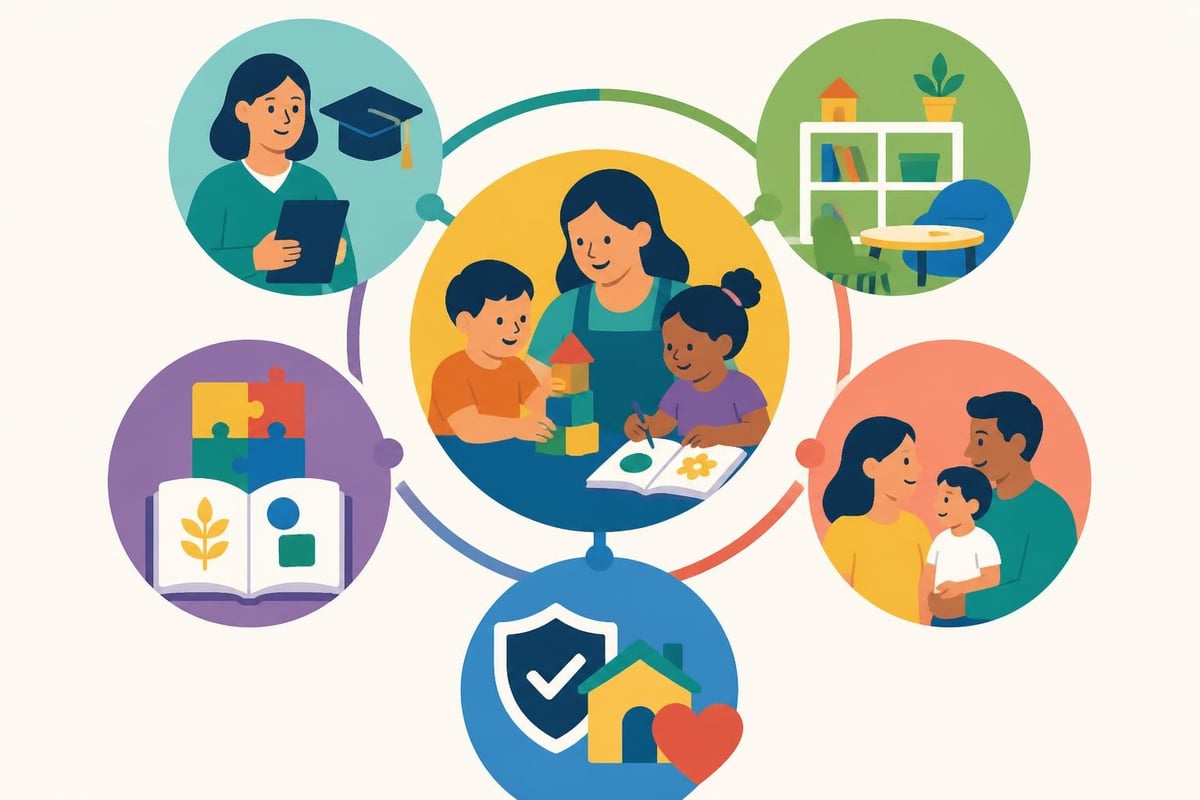
Research consistently demonstrates that not all childcare early education experiences produce equal outcomes. Several distinguishing factors separate exceptional programs from merely adequate ones:
- Low child-to-teacher ratios that enable individualized attention and responsive caregiving
- Qualified educators with specialized training in child development and early childhood education
- Evidence-based curriculum aligned with state learning standards and developmental milestones
- Safe, enriching environments designed specifically for young learners
- Strong family partnerships that extend learning beyond program hours
According to the CDC’s guidelines for early care and education, health and safety protocols form the baseline for any quality program, but truly exceptional environments go further by intentionally promoting social-emotional development alongside cognitive growth.
The Home Childcare Advantage
Home-based childcare early education programs offer distinct benefits that larger center-based facilities cannot easily replicate. These intimate settings typically serve smaller groups of children in residential environments that feel familiar and comfortable to young learners.
Benefits of Home-Based Early Learning
The home setting creates a natural environment for mixed-age learning, where younger children learn by observing older peers while older children reinforce their knowledge by helping younger ones. This family-style arrangement mirrors the social structures children experience outside formal education, preparing them for real-world interactions.
Key advantages include:
- Consistent caregiver relationships that promote secure attachment and emotional regulation
- Flexible scheduling that accommodates varying family needs
- Homelike environments that reduce stress and anxiety in young children
- Smaller group sizes enabling more individualized attention
- Mixed-age socialization that develops leadership and empathy skills
Many families seeking home childcare appreciate the personal attention their children receive in these settings. Research shows children in high-quality home-based programs achieve similar or better outcomes compared to center-based care, particularly in social-emotional development.
Ensuring Quality in Home Settings
While home-based childcare early education offers numerous advantages, families must verify that providers meet appropriate standards. State licensing requirements vary significantly, but quality home providers typically pursue voluntary accreditation or participate in quality rating and improvement systems.
| Quality Indicator | What to Look For | Why It Matters |
|---|---|---|
| Licensing/Registration | Current, valid credentials | Ensures basic health and safety compliance |
| Professional Development | Ongoing training in child development | Reflects commitment to best practices |
| Curriculum Approach | Intentional, developmentally appropriate activities | Supports comprehensive skill development |
| Safety Measures | Childproofing, emergency plans, first aid certification | Protects children from preventable injuries |
| Family Communication | Regular updates, open dialogue, parent involvement | Creates consistency between home and care setting |
Developmental Domains in Early Education Programs
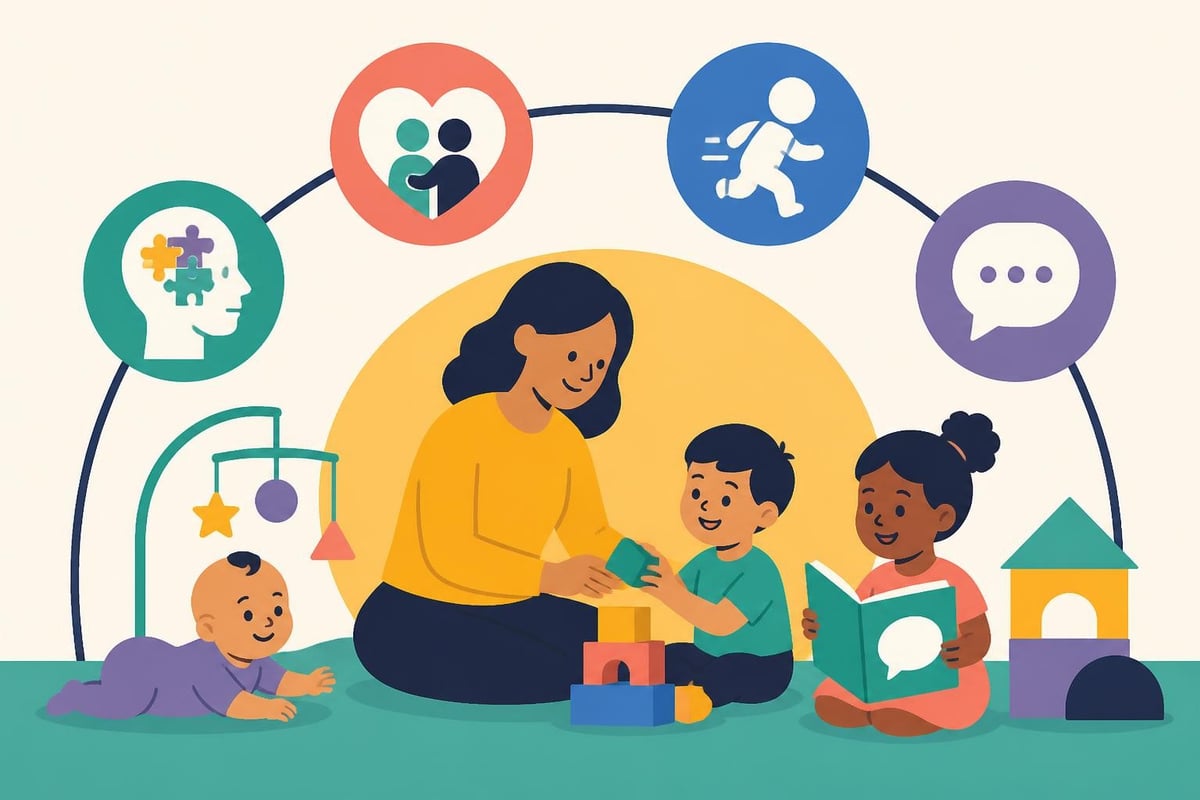
Effective childcare early education programs address all areas of child development simultaneously rather than focusing narrowly on academic preparation. This holistic approach recognizes that children develop as integrated beings where progress in one domain supports advancement in others.
Cognitive Development and School Readiness
Cognitive skill-building in quality early education happens naturally through carefully designed play experiences. Children develop mathematical thinking by sorting objects, measuring ingredients during cooking projects, and recognizing patterns in nature. Literacy emerges through daily story time, exposure to print-rich environments, and opportunities to experiment with writing materials.
For infant care programs, cognitive development focuses on sensory exploration, object permanence, and cause-and-effect understanding. As children mature into toddler and preschool years, programs introduce more complex problem-solving activities, early science concepts, and pre-literacy skills.
Social-Emotional Learning Foundations
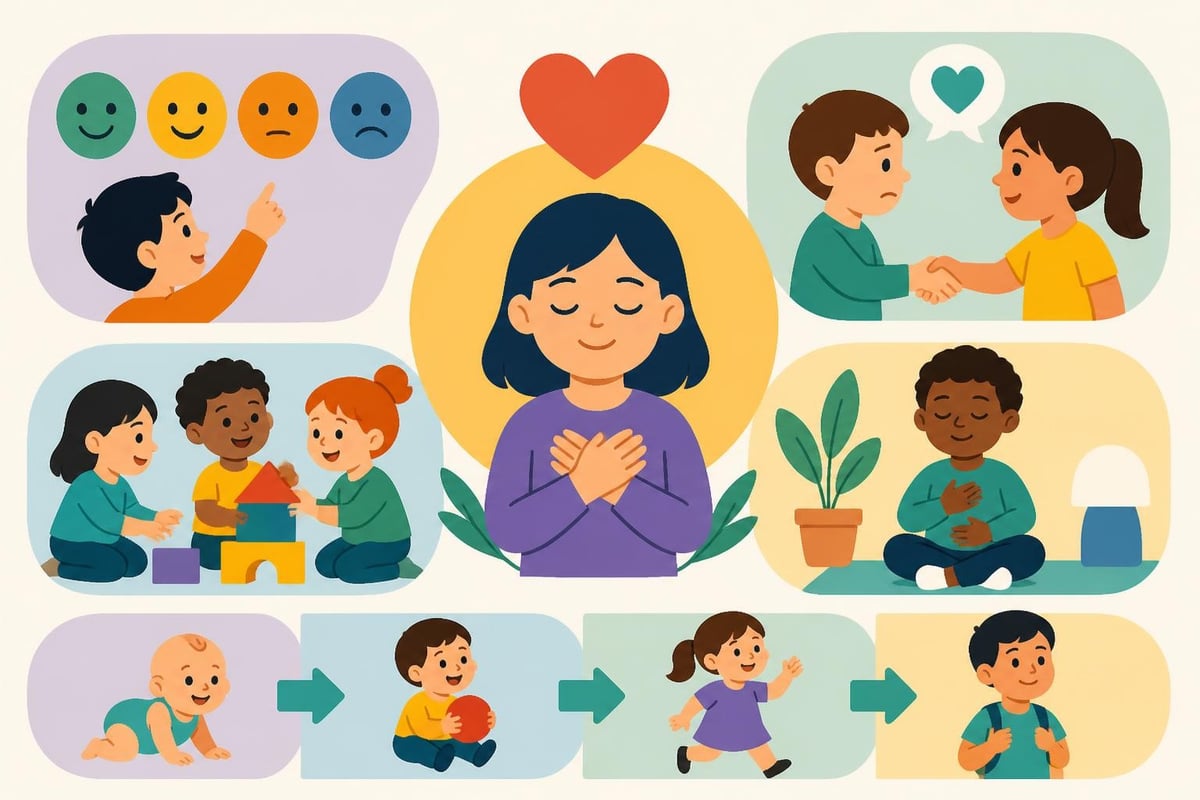
Perhaps the most critical component of childcare early education involves helping children develop emotional intelligence and social competence. Young children need safe environments to practice identifying feelings, managing big emotions, and navigating peer relationships with guidance from skilled educators.
Quality programs incorporate social-emotional learning throughout the day by:
- Modeling appropriate communication and conflict resolution strategies
- Creating predictable routines that help children feel secure
- Acknowledging and validating children's emotional experiences
- Teaching self-regulation techniques appropriate to developmental levels
- Facilitating positive peer interactions through cooperative activities
The positive parenting and family engagement resources provided by the CDC emphasize how consistency between home and care settings strengthens children's emotional development and behavioral regulation.
Physical Development and Health
Physical development encompasses both gross motor skills like running, climbing, and balancing, and fine motor abilities such as grasping utensils, manipulating small objects, and eventually writing. Quality childcare early education programs provide daily opportunities for active play alongside quieter activities that develop hand-eye coordination and finger strength.
Health promotion extends beyond physical activity to include:
- Nutritious meals and snacks that model healthy eating habits
- Consistent handwashing and hygiene routines
- Adequate rest periods appropriate to age
- Outdoor play in various weather conditions
- Age-appropriate health and safety education
Selecting the Right Early Education Program
Finding the ideal childcare early education fit requires families to consider multiple factors beyond convenience and cost. The National Resource Center for Health and Safety in Child Care and Early Education provides comprehensive standards that can guide evaluation of prospective programs.
Essential Questions for Program Evaluation
When visiting potential programs, observe classroom environments and ask targeted questions that reveal program quality:
Curriculum and Learning Approach:
- How do you balance structured activities with child-directed play?
- What developmental assessments do you use to track progress?
- How is learning individualized for children with different needs and interests?
Educator Qualifications:
- What education and training do staff members have?
- How does the program support ongoing professional development?
- What is the average tenure of teaching staff?
Health and Safety:
- What protocols address illness, injuries, and emergencies?
- How are meals planned and prepared?
- What cleaning and sanitization procedures are followed?
Family Partnership:
- How will you communicate about my child's daily experiences and progress?
- What opportunities exist for family involvement?
- How do you handle concerns or conflicts?
Many families appreciate reviewing testimonials from current families to understand how programs function in practice rather than just in theory.
The Role of Regulation and Quality Standards
While all licensed childcare early education programs must meet minimum state requirements, quality-focused providers typically exceed these baselines significantly. Understanding the regulatory landscape helps families distinguish between basic compliance and genuine excellence.
State Licensing Requirements
Each state establishes its own licensing standards for childcare early education programs, creating considerable variation across the country. Pennsylvania, for example, has developed comprehensive early learning initiatives that include quality benchmarks and support systems for providers.
Typical licensing requirements address:
- Staff background checks and minimum qualification standards
- Child-to-teacher ratios and maximum group sizes
- Physical environment safety and space requirements
- Health screening and immunization policies
- Record-keeping and administrative procedures
These regulations establish important safety baselines but don't necessarily ensure high-quality educational experiences. Families should view licensing as a starting point rather than a comprehensive quality indicator.
Beyond Compliance: Quality Rating Systems
Many states have implemented Quality Rating and Improvement Systems (QRIS) that evaluate childcare early education programs on factors beyond basic licensing requirements. These voluntary systems typically award star ratings based on:
| Rating Criteria | Purpose | Impact on Children |
|---|---|---|
| Staff education and training | Ensures educators understand child development | Higher-quality interactions and learning experiences |
| Learning environment quality | Assesses materials, space organization, and engagement | More opportunities for exploration and skill-building |
| Curriculum implementation | Evaluates intentional teaching practices | Better developmental outcomes across domains |
| Family partnerships | Measures communication and involvement | Stronger home-school connections and consistency |
| Administrative practices | Reviews policies and continuous improvement | More stable, professionally managed programs |
Programs participating in quality rating systems demonstrate commitment to excellence beyond minimum requirements. Families researching the best daycare options should inquire about quality ratings alongside licensing status.
Building Strong Family-Provider Partnerships
Successful childcare early education experiences depend heavily on collaborative relationships between families and educators. When parents and providers work as partners, children receive consistent messaging, coordinated support, and seamless transitions between home and care settings.
Effective Communication Strategies
Quality programs establish multiple communication channels to keep families informed and involved. Daily reports for infants and toddlers might include feeding times, diaper changes, and notable activities, while preschool families might receive weekly newsletters highlighting curriculum themes and upcoming events.
Digital tools have transformed family communication in recent years, enabling real-time photo sharing, milestone documentation, and instant messaging between parents and educators. However, technology should complement rather than replace face-to-face conversations during pickup and dropoff.
Providers should proactively share both celebrations and concerns, creating an environment where families feel comfortable discussing challenges without judgment. This open dialogue proves especially important when addressing behavioral issues, developmental delays, or family circumstances affecting children.
Supporting Learning at Home
The most effective childcare early education programs help families extend learning beyond program hours by sharing activity ideas, book recommendations, and simple games that reinforce current curriculum themes. This doesn't mean homework for preschoolers but rather naturally incorporating learning into daily routines like cooking, shopping, and outdoor play.
Educators can strengthen home-school connections by:
- Providing suggested conversation starters based on recent activities
- Sharing songs, fingerplays, and stories introduced in the classroom
- Recommending age-appropriate apps or videos aligned with curriculum goals
- Explaining how everyday experiences support specific developmental skills
- Celebrating cultural diversity by incorporating family traditions and languages
Safety and Health in Early Learning Environments
Protecting children's health and safety represents the fundamental responsibility of any childcare early education program. The CDC’s safety guidelines for early care establish evidence-based practices that prevent injuries and illness while promoting healthy development.
Creating Safe Physical Environments
Effective safety measures go beyond obvious precautions like outlet covers and cabinet locks. Comprehensive safety planning addresses:
- Age-appropriate equipment properly maintained and installed
- Adequate supervision ensuring children remain within sight and sound at all times
- Hazard-free spaces regularly inspected for potential dangers
- Emergency preparedness including evacuation plans and disaster supplies
- Secure entry systems that prevent unauthorized access
Outdoor play areas require particular attention to surfacing materials, equipment maintenance, and sun exposure protection. Indoor spaces need careful attention to cleaning protocols, ventilation, and furniture stability.
Health Promotion and Illness Prevention
Beyond preventing injury, quality childcare early education programs actively promote health through nutrition education, physical activity encouragement, and hygiene instruction. Young children learn healthy habits more readily through consistent routines than through explicit teaching.
Essential health practices include:
- Frequent handwashing before meals, after bathroom use, and following outdoor play
- Exclusion policies that balance public health concerns with family needs
- Proper food handling and allergy management protocols
- Regular health screenings and developmental monitoring
- Mental health support and trauma-informed care approaches
Programs serving infants and toddlers must pay particular attention to safe sleep practices, following current recommendations to reduce SIDS risk while meeting individual children's needs.
Professional Development for Early Educators
The quality of childcare early education experiences directly correlates with educator knowledge, skills, and ongoing professional growth. Effective programs invest in staff development, recognizing that well-trained, supported teachers create better outcomes for children.
Educational Requirements and Training
While licensing minimums vary by state and setting, research consistently shows that educators with specialized training in early childhood education provide higher-quality interactions and learning experiences. Professional preparation should address child development theory, curriculum planning, classroom management, family engagement, and cultural responsiveness.
Many states have established career pathways that encourage educators to pursue progressively higher credentials through:
- Child Development Associate (CDA) certification
- Associate degrees in Early Childhood Education
- Bachelor's degrees in Early Childhood or related fields
- Specialized training in infant-toddler care or special education
Quality programs support staff education through tuition assistance, flexible scheduling, and recognition of advancing credentials with increased compensation.
Continuous Learning and Support
Initial education provides essential foundations, but effective educators continue learning throughout their careers by participating in workshops, conferences, peer learning communities, and mentorship relationships. Topics for ongoing development might include trauma-informed practices, dual-language learning, inclusive education strategies, or specific curriculum models.
Resources like the ECTA Center’s research portal provide evidence-based information that helps educators stay current with best practices. Regular program-level professional development ensures all staff members share common knowledge and implement consistent approaches.
The Economic Impact of Quality Early Education
Investment in childcare early education generates returns far exceeding initial costs, benefiting individual children, families, and entire communities. Economic analyses consistently demonstrate that accessible, high-quality early learning programs produce substantial long-term savings through reduced special education placement, lower grade retention rates, decreased involvement with criminal justice systems, and higher lifetime earnings.
Supporting Working Families
Reliable childcare enables parents to maintain employment, pursue education, and contribute economically while ensuring children receive nurturing care. When families struggle to find affordable, quality childcare early education options, parents-particularly mothers-often reduce work hours or exit the workforce entirely.
Communities benefit economically when early education programs:
- Enable workforce participation among parents
- Create employment for early childhood professionals
- Reduce costs associated with poor educational outcomes
- Prepare future workers with essential skills and work habits
- Support local businesses through family spending capacity
Organizations like Early Years NC work to strengthen early care and education systems by assisting families in finding quality programs while supporting educator professional development and conducting research that informs policy decisions.
Return on Investment
Multiple longitudinal studies tracking children who attended high-quality early education programs have documented remarkable long-term benefits including higher graduation rates, increased college attendance, better health outcomes, and reduced criminal involvement. Every dollar invested in quality early education returns an estimated $7-13 to society through these combined effects.
For individual children, particularly those from economically disadvantaged backgrounds, access to quality childcare early education can fundamentally alter life trajectories by building strong foundations for learning and providing stable, nurturing relationships during critical developmental periods.
Specialized Programming and Inclusion
Excellent childcare early education programs serve children with diverse abilities, learning styles, cultural backgrounds, and family structures through intentionally inclusive practices and individualized support.
Supporting Children with Special Needs
Inclusive early education benefits all children by promoting acceptance, understanding, and appreciation of differences while ensuring children with disabilities receive necessary services in natural learning environments. Quality programs collaborate with families and specialists to implement individualized education plans (IEPs) or individualized family service plans (IFSPs) that address specific developmental goals.
Inclusive practices include:
- Universal design principles that create accessible environments for all learners
- Differentiated instruction meeting varied learning needs
- Embedded learning opportunities throughout daily routines
- Specialized equipment and adaptive materials as needed
- Coordination with therapists and intervention specialists
Cultural and Linguistic Responsiveness
Children thrive when early education environments reflect and celebrate their home cultures and languages. Culturally responsive childcare early education programs go beyond superficial multicultural activities to genuinely honor diverse perspectives, incorporate family wisdom, and support home language development alongside English acquisition.
Effective strategies include recruiting diverse staff, displaying images reflecting varied family structures and ethnicities, incorporating multicultural materials authentically, learning key phrases in children's home languages, and partnering with families to understand cultural values around child-rearing and education.
Technology Integration in Early Learning
While screen time debates continue, thoughtful technology integration in childcare early education programs can enhance rather than replace hands-on learning when used strategically and sparingly.
Appropriate Technology Use
The key to beneficial technology integration lies in choosing high-quality, interactive content that promotes rather than passively entertains. Quality programs limit screen exposure for young children while occasionally incorporating:
- Interactive e-books that support literacy development
- Video calls connecting with distant family members or community experts
- Documentation tools capturing learning moments for family sharing
- Age-appropriate educational apps used collaboratively with educators
- Virtual field trips expanding experiences beyond immediate environments
Technology should never replace critical developmental experiences like outdoor play, hands-on exploration, creative arts, and interpersonal interaction that young children need for healthy development.
Quality childcare early education during the formative years builds foundations that support lifelong learning, health, and success across all life domains. The right program provides nurturing relationships, developmentally appropriate experiences, and safe environments where children develop confidence, curiosity, and essential skills. If you're seeking a home-based childcare early education program that prioritizes individual attention, family partnerships, and comprehensive child development, Step by Step Care offers the intimate, nurturing environment where your child can thrive while reaching important developmental milestones at their own pace.


