

Day Care in Home Settings: Complete 2026 Guide
Finding the right childcare solution for your family represents one of the most important decisions you'll make as a parent. When considering day care in home-based settings, you're exploring an option that combines professional childcare expertise with the warmth and intimacy of a residential environment. This guide examines what home-based day care looks like in 2026, from regulatory requirements to developmental benefits, helping you understand whether this personalized approach aligns with your family's needs.
Understanding Home-Based Day Care Models
Home-based childcare operates differently from traditional center-based programs. A licensed provider cares for a small group of children in their own residence, creating an environment that often feels more personal and family-oriented than larger facilities.
The distinction between family day care homes and group day care homes matters when selecting day care in your community. Family day care homes typically serve up to six children at a time, while group day care homes may accommodate between seven and twelve children with additional staff support. These smaller ratios allow providers to develop deeper relationships with each child and family.
Regulatory Framework and Safety Standards
Every state maintains specific licensing requirements for home-based childcare providers. According to CDC guidelines on state licensing, these regulations ensure consistent health and safety standards across different care settings.
The regulated child care system requires providers to meet stringent criteria including:
- Background checks and fingerprinting for all household members
- Home safety inspections covering electrical, plumbing, and structural elements
- Fire safety equipment and emergency evacuation plans
- Age-appropriate toys and learning materials
- Proper food storage and meal preparation areas
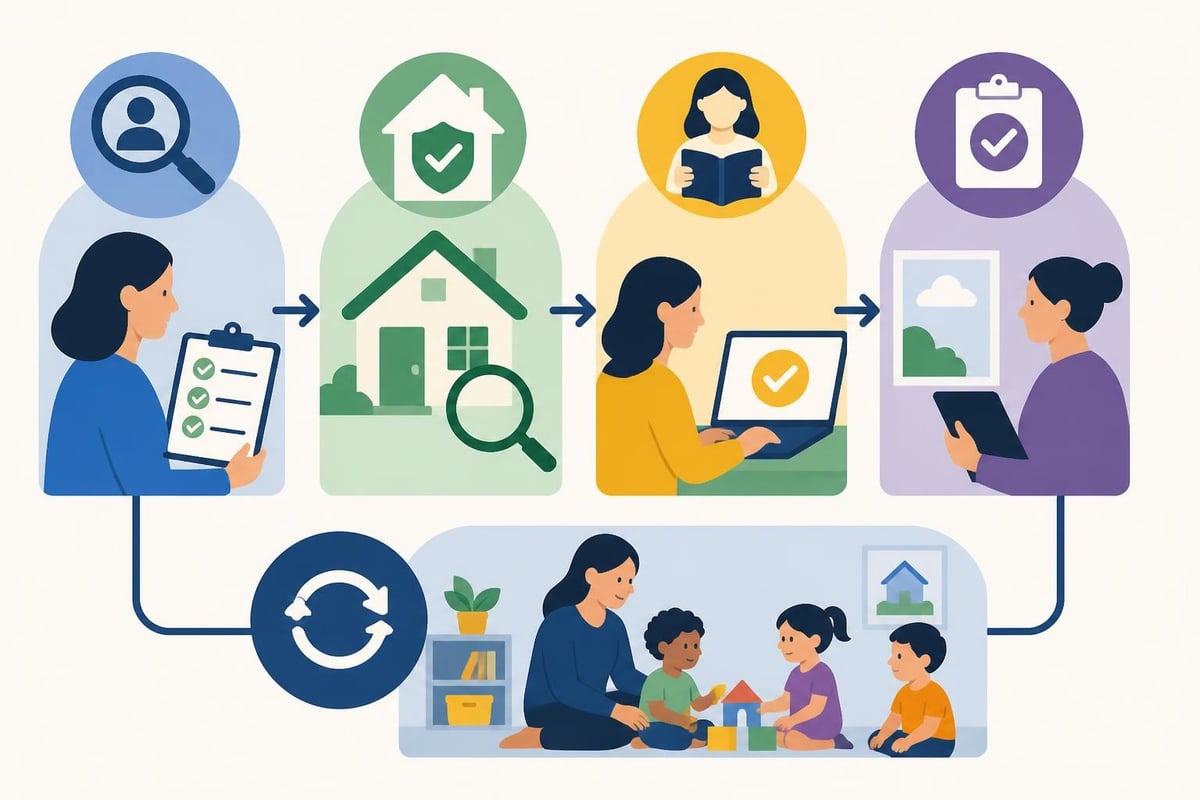
State-specific regulations vary considerably. For instance, Illinois licensing standards for day care homes outline detailed requirements covering everything from square footage per child to outdoor play space specifications. Understanding your state's particular requirements ensures you select day care in a properly licensed and compliant setting.
The Economic Landscape of Home Childcare
The financial aspects of day care in 2026 reflect both challenges and opportunities for families and providers. Current day care industry statistics reveal significant insights about costs and accessibility.
| Care Setting | Average Weekly Cost | Adult-to-Child Ratio | Typical Hours |
|---|---|---|---|
| Home-Based Day Care | $200-$350 | 1:4 to 1:6 | Flexible |
| Center-Based Infant Care | $300-$450 | 1:3 to 1:4 | Fixed |
| Center-Based Toddler | $275-$400 | 1:4 to 1:6 | Fixed |
Home-based providers often offer more flexible pricing structures than larger centers. Many accept children part-time or offer hourly arrangements that accommodate parents with non-traditional work schedules. This flexibility makes day care in home settings particularly valuable for families with varying childcare needs throughout the week.
Market Trends and Growth
The child day care services sector analysis indicates steady growth in demand for home-based care options. Parents increasingly value the individualized attention and smaller group sizes that characterize these settings.
Several factors drive this trend:
- Pandemic-related preferences for smaller, more contained environments
- Desire for personalized care that adapts to individual developmental needs
- Recognition of benefits associated with mixed-age grouping
- Cost considerations as families seek quality care at sustainable prices
Developmental Benefits of Home-Based Settings
When evaluating day care in residential environments, understanding the unique developmental advantages proves essential. The home setting creates distinctive opportunities for learning and growth that differ from traditional centers.
Social-Emotional Development in Mixed-Age Groups
Home childcare naturally facilitates mixed-age interactions. Younger children observe and learn from older peers, while older children develop leadership skills and empathy through helping younger ones. This family-style grouping mirrors sibling relationships and builds social competencies that translate beyond the care setting.
Key social benefits include:
- Enhanced language development through peer modeling
- Improved emotional regulation from observing varied responses
- Stronger conflict resolution skills from navigating age-diverse interactions
- Greater sense of community and belonging
Individualized Learning Approaches
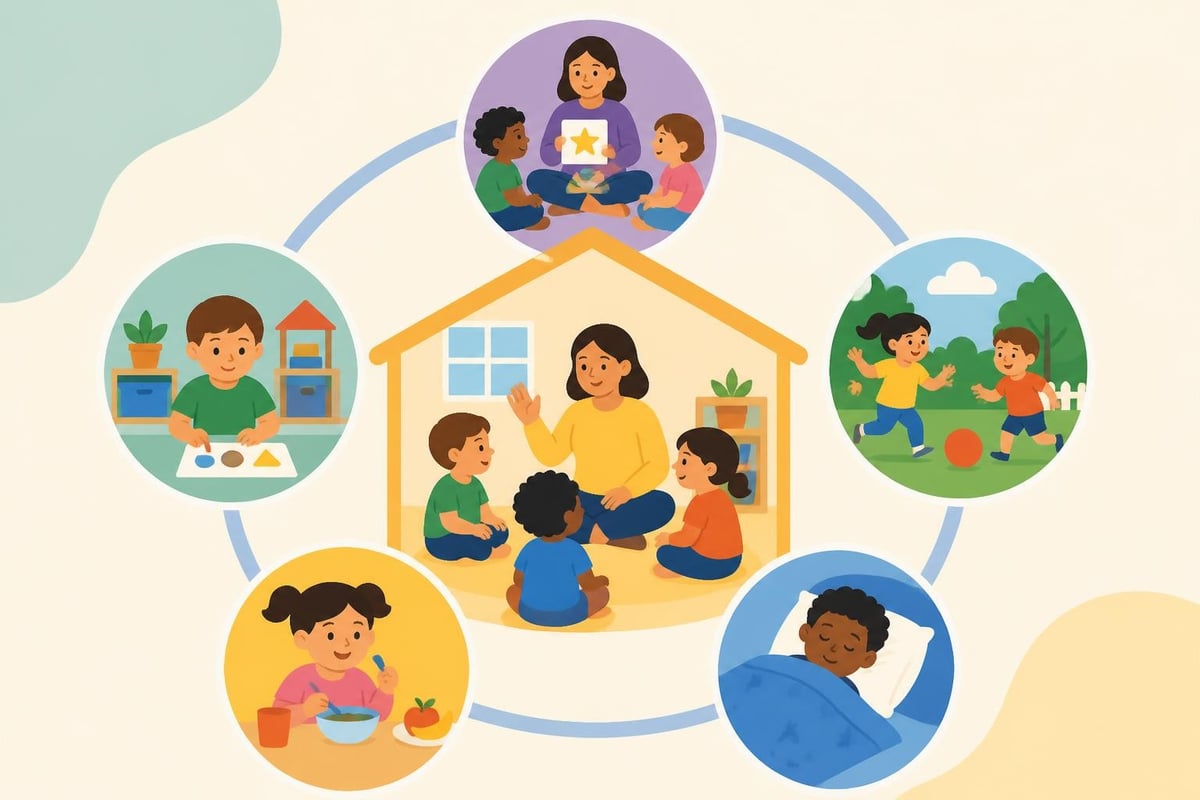
Smaller group sizes enable providers to tailor activities to each child's developmental stage and interests. Unlike centers that must coordinate larger groups through standardized schedules, home-based day care in 2026 emphasizes responsive, child-led learning.
A provider might spend extended time with one child exploring their fascination with insects while simultaneously supporting another child's emerging literacy skills. This flexibility supports early childhood education principles that recognize individual learning timelines and styles.
Choosing Quality Day Care in Your Area
Selecting appropriate childcare requires careful evaluation of multiple factors beyond basic licensing compliance. When searching for top-rated daycares near me, parents should assess both tangible and intangible elements.
Essential Evaluation Criteria
| Category | What to Look For | Questions to Ask |
|---|---|---|
| Environment | Clean, organized, child-friendly spaces | How do you childproof the home? What outdoor space is available? |
| Curriculum | Age-appropriate activities and learning goals | What does a typical day include? How do you track development? |
| Communication | Regular updates and open dialogue | How will we communicate daily? What's your policy on visits? |
| Provider Qualifications | Training, experience, references | What certifications do you hold? Can I speak with current families? |
The provider's philosophy and approach should align with your parenting values. Some emphasize structured learning activities, while others favor play-based exploration. Neither approach is inherently superior, but compatibility with your family's educational philosophy enhances the partnership.
Regional Considerations
Location significantly impacts availability and characteristics of home-based childcare. For families exploring daycare in Virginia, understanding state-specific regulations and regional norms helps set appropriate expectations.
Urban areas typically offer more provider options but may face higher costs due to real estate expenses. Suburban and rural communities might have fewer choices but often feature more outdoor space and lower rates. Consider commute times, backup care arrangements, and proximity to your workplace or home when narrowing options.
Nutrition and Health in Home Settings
Federal programs support quality nutrition in day care in home environments. The Child and Adult Care Food Program regulations provide reimbursement to eligible providers who serve nutritious meals and snacks meeting USDA guidelines.
Meal Planning and Dietary Accommodations
Home providers often prepare meals fresh daily, accommodating dietary restrictions and cultural preferences more easily than larger facilities using catering services. This personalized approach benefits children with allergies, religious dietary requirements, or selective eating patterns.
Nutrition advantages in home settings:
- Fresh meal preparation with visible cooking processes
- Family-style dining that encourages social skills
- Easier accommodation of special diets and allergies
- Greater flexibility for introducing new foods
- Opportunities for cooking activities as learning experiences
Health and safety protocols in home day care mirror those in centers but with added personal accountability. Providers maintain detailed health records, administer medications following documented procedures, and implement illness policies protecting all children in care.
Building Strong Provider Relationships
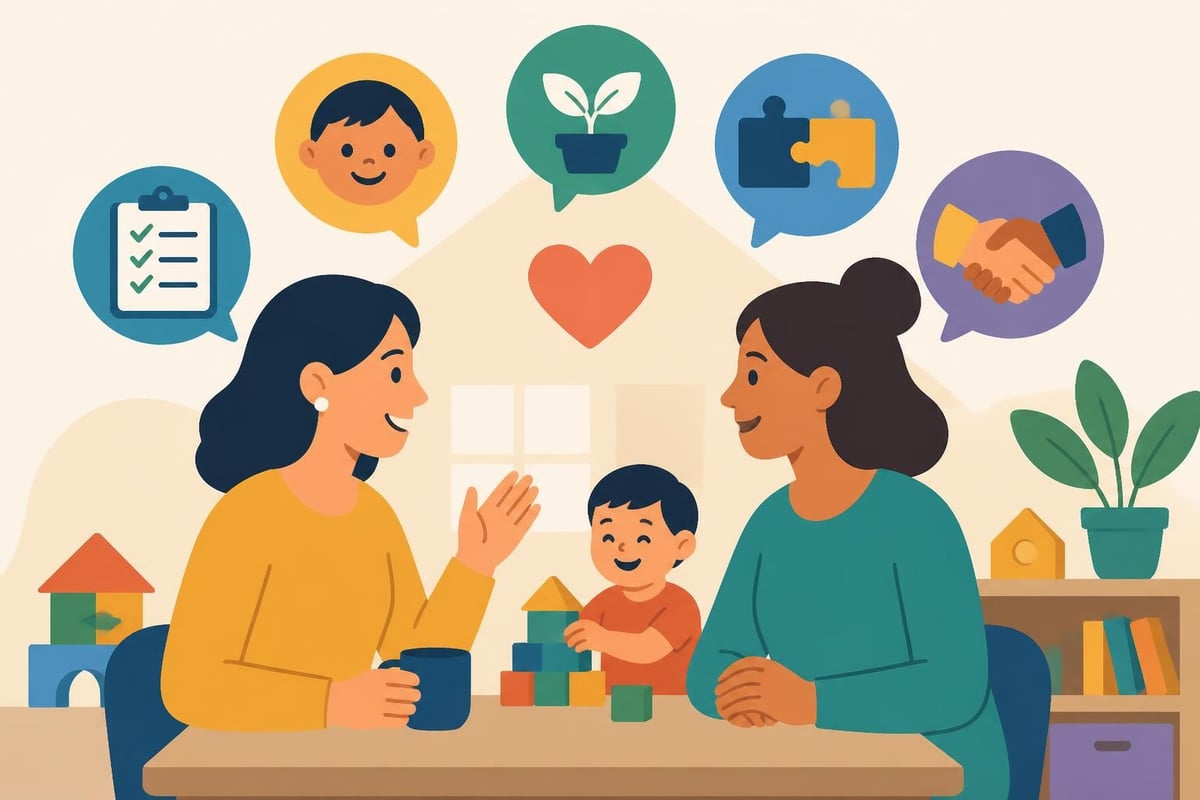
The partnership between families and providers forms the foundation of successful day care in home settings. Unlike centers with multiple staff members and administrative layers, home providers develop direct, personal relationships with parents.
Communication Strategies
Effective communication happens through multiple channels. Daily verbal check-ins during pickup provide immediate updates, while digital tools offer photos and developmental observations throughout the day. Many providers maintain private social media groups or use childcare apps to share activities and milestones.
Establishing clear expectations from the beginning prevents misunderstandings. Address topics including:
- Payment schedules and late fee policies
- Sick child guidelines and exclusion criteria
- Holiday closures and vacation schedules
- Emergency contact procedures
- Discipline approaches and behavior management
Conflict Resolution and Feedback
No childcare arrangement remains perfect indefinitely. Address concerns promptly and respectfully, approaching the provider as a partner rather than a service vendor. Most issues resolve through open conversation, particularly when both parties prioritize the child's wellbeing.
Regular check-ins beyond daily transitions strengthen the relationship. Schedule quarterly conversations to discuss developmental progress, upcoming transitions, and any adjustments needed to better serve your child.
Special Considerations for Different Age Groups
Day care in home settings serves children from infancy through school age, with distinct considerations for each developmental stage.
Infant Care Specifics
Home providers caring for infants must meet additional safety requirements and maintain lower ratios. The intimate setting particularly benefits babies, who thrive on consistent caregiving relationships and predictable routines.
Parents should verify that providers:
- Follow safe sleep practices (back sleeping, empty cribs)
- Support breastfeeding through proper milk storage and feeding
- Provide adequate tummy time and developmental activities
- Maintain meticulous sanitation for bottles and toys
Toddler and Preschool Programming
Toddlers and preschoolers benefit from the balance of structure and flexibility inherent in home day care. Providers can extend activities when children show deep engagement or pivot when interest wanes, supporting natural learning rhythms.
Quality programs for this age group incorporate:
- Pre-literacy activities including reading and storytelling
- Fine and gross motor skill development
- Social-emotional learning through guided play
- Creative expression through art and music
- Early math concepts through hands-on exploration
School-Age and Summer Care
Many home providers offer before and after school care, plus full-day summer programs. This continuity benefits families by maintaining a single childcare relationship throughout childhood. Mixed-age groupings allow school-age children to develop mentoring skills while enjoying age-appropriate activities during designated times.
The Provider's Perspective
Understanding what makes day care in home settings successful from the provider's viewpoint enhances family partnerships. Home childcare represents both a business and a calling, requiring significant investment in training, materials, and home modifications.
Professional Development
Quality providers pursue ongoing education beyond minimum licensing requirements. Training topics include child development, behavior management, curriculum planning, business operations, and health and safety updates. Many join professional associations offering resources, networking, and advocacy.
Business Operations
Running a home-based day care involves managing numerous business functions. Providers must handle enrollment contracts, tuition collection, tax reporting, insurance coverage, and regulatory compliance while simultaneously caring for children. Supporting these administrative needs through prompt payments and completed paperwork strengthens the provider-family relationship.
Technology Integration in Modern Home Day Care
Contemporary home childcare incorporates technology thoughtfully to enhance learning and communication without replacing hands-on experiences. Providers use digital tools for administrative tasks, parent communication, and selective educational content.
Common technology applications:
- Childcare management software for attendance and billing
- Digital portfolios documenting developmental progress
- Educational apps supporting specific learning goals
- Communication platforms for real-time updates
- Security cameras providing parents peace of mind
Screen time guidelines for young children remain important. Quality providers limit passive screen exposure while occasionally incorporating interactive educational content that aligns with learning objectives and sparks discussion.
Preparing Your Child for Home Day Care
Successful transitions to day care in home settings require preparation and patience. Each child adapts differently based on temperament, prior experiences, and age.
Gradual Introduction Strategies
Most providers recommend shortened initial visits before full-day attendance begins. This gradual approach allows children to explore the new environment, meet other children, and build trust with the provider while you remain present.
Consider a transition schedule like:
- Week 1: Two one-hour visits with parent present
- Week 2: Two two-hour visits, parent leaves briefly
- Week 3: First full morning, building to full day
- Week 4: Regular schedule begins
Managing Separation Anxiety
Separation anxiety represents normal development, particularly for younger children. Work with your provider to establish consistent drop-off routines that acknowledge feelings while providing reassurance. Brief, confident goodbyes typically work better than prolonged departures, even when children cry.
Regional Spotlight: Finding Day Care in Springfield VA
Families seeking daycare Springfield VA options benefit from the area's diverse childcare landscape. The region offers numerous licensed home providers alongside center-based facilities, giving families meaningful choice in care settings.
Springfield's residential character makes it particularly suited to home-based day care, with many providers offering welcoming, family-oriented environments. The community's strong emphasis on education and child development supports providers committed to excellence.
When evaluating local options, visit our gallery to see examples of quality home childcare environments and the engaging activities providers incorporate daily.
Understanding Provider Credentials and Background
Verification of provider qualifications protects your child and ensures care quality. Beyond basic licensing, investigate additional certifications and training that demonstrate professional commitment.
Important credentials include:
- CPR and First Aid certification (current)
- Child Development Associate (CDA) credential
- State-specific childcare training hours
- Food handler's certification
- Specialized training in areas like special needs or infant care
Request references from current and former families. Speak with these families about their experiences, asking specific questions about communication, flexibility, child happiness, and how the provider handles challenges. Learning about our team’s qualifications provides insight into the expertise quality providers bring to home childcare.
Financial Planning for Childcare Costs
Day care in any setting represents a significant family expense. Understanding total costs and available assistance programs helps families budget effectively.
Cost Components Beyond Tuition
While weekly or monthly tuition forms the primary expense, additional costs may include:
- Registration and annual fees
- Supply fees for diapers, wipes, or materials
- Late pickup charges
- Fees for field trips or special activities
- Holiday gifts or appreciation for providers
Assistance Programs and Tax Benefits
Several programs help families afford quality childcare. The Child Care and Development Fund provides subsidies to eligible low-income families. Many employers offer dependent care Flexible Spending Accounts (FSAs) allowing pre-tax dollars to fund childcare expenses.
The federal Child and Dependent Care Tax Credit provides additional relief, allowing families to claim a percentage of childcare expenses on their tax returns. State-level programs may offer supplementary assistance, so research options specific to your location.
Maintaining Continuity During Transitions
Children in day care in home settings develop strong attachments to providers and peers. Planning for transitions, whether age-related moves to different programs or provider changes, requires sensitivity to these relationships.
Preparing for School Transitions
As children approach kindergarten, providers can support school readiness through:
- Practicing classroom routines and expectations
- Building independence in self-care tasks
- Developing early academic skills
- Encouraging peer cooperation and turn-taking
- Discussing what school will be like
Many home providers maintain relationships with families beyond the childcare years, creating lasting community connections. This continuity of relationship benefits children's sense of security and belonging.
Choosing day care in a home-based setting offers families a unique combination of professional childcare expertise and intimate, personalized attention that supports children's development during their crucial early years. Whether you prioritize smaller group sizes, flexible scheduling, or the family-like atmosphere, home childcare provides a valuable alternative to traditional center-based programs. If you're seeking quality home-based care that emphasizes individual attention and developmental growth, explore what Step by Step Care offers your family and schedule a visit to experience the difference firsthand.


