

Early Education Daycare: Building Strong Foundations
Choosing the right care environment for young children represents one of the most important decisions parents face. Early education daycare programs offer far more than simple supervision-they provide structured learning experiences that shape cognitive, social, and emotional development during the most formative years of life. These programs combine nurturing care with age-appropriate educational activities, creating environments where children can thrive while building essential skills for future success. Understanding what makes quality early education programs effective helps families make informed decisions about their children's care.
The Foundation of Quality Early Education Programs
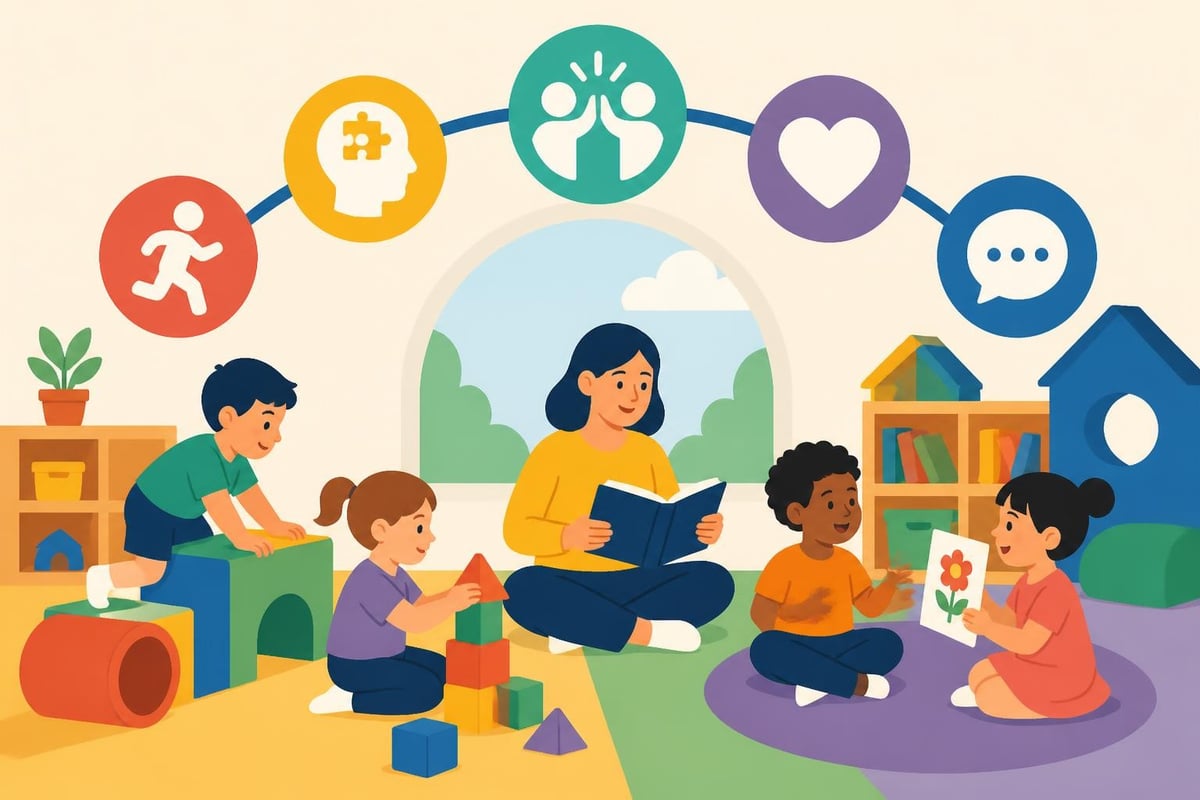
Quality early education daycare centers focus on developmentally appropriate practices that meet children where they are in their learning journey. These programs recognize that children from infancy through preschool age learn primarily through play, exploration, and hands-on experiences.
The most effective programs balance structured activities with free play, allowing children to develop at their own pace while meeting important developmental milestones. The Texas Education Agency outlines best practices in early childhood education, emphasizing the importance of creating learning environments that support individual growth patterns.
Core Components of Effective Programs
Successful early education daycare programs typically include:
- Age-appropriate curriculum aligned with developmental stages
- Low child-to-teacher ratios ensuring individualized attention
- Safe, stimulating environments designed for exploration
- Regular communication between caregivers and families
- Ongoing assessment and documentation of child progress
- Professional development for educators and staff
These elements work together to create comprehensive learning experiences. When implemented effectively, they support children's growth across multiple developmental domains simultaneously.
Age-Specific Approaches in Early Education Settings
Different age groups require distinct approaches to care and education. Understanding these differences helps parents appreciate how quality programs adapt to meet changing needs as children grow.
Infant Care and Early Learning
Infant programs in early education daycare settings focus on building secure attachments and supporting rapid developmental changes. Caregivers respond sensitively to individual needs, creating predictable routines that help babies feel safe and secure.
Even at this young age, learning opportunities abound. Simple activities like tummy time, sensory exploration, and responsive conversation lay foundations for future learning. Infant care programs emphasize the critical connection between nurturing relationships and brain development during the first year of life.
| Age Range | Primary Focus | Key Activities | Developmental Goals |
|---|---|---|---|
| 0-12 months | Attachment & sensory exploration | Tummy time, gentle music, tactile play | Motor skills, trust building |
| 12-24 months | Language & mobility | Simple songs, walking games, stacking toys | Communication, coordination |
| 2-3 years | Independence & social skills | Group play, art projects, storytelling | Self-help skills, sharing |
| 3-5 years | Pre-academic skills | Letter recognition, counting, problem-solving | School readiness, critical thinking |
Toddler Development Programs
Toddlers experience explosive growth in language, mobility, and independence. Quality early education daycare programs for this age group provide numerous opportunities for exploration while maintaining necessary safety boundaries.
Activities might include sensory bins, simple art projects, outdoor play, and beginning social interactions with peers. Caregivers guide toddlers through emerging conflicts, teaching basic problem-solving and emotional regulation skills.
Language development receives particular attention through:
- Constant narration of daily activities
- Reading books multiple times throughout the day
- Singing songs and nursery rhymes
- Encouraging children to express needs verbally
- Expanding on children's attempts at communication
Preschool Readiness and Beyond
As children approach preschool age, early education daycare programs introduce more structured learning activities while maintaining play-based approaches. This period focuses heavily on school readiness skills without pushing formal academic instruction too early.
Children engage in activities that build pre-literacy skills, mathematical thinking, scientific inquiry, and creative expression. They learn to follow multi-step directions, work cooperatively in groups, and manage their emotions in increasingly complex social situations.
The Role of Environment in Early Learning
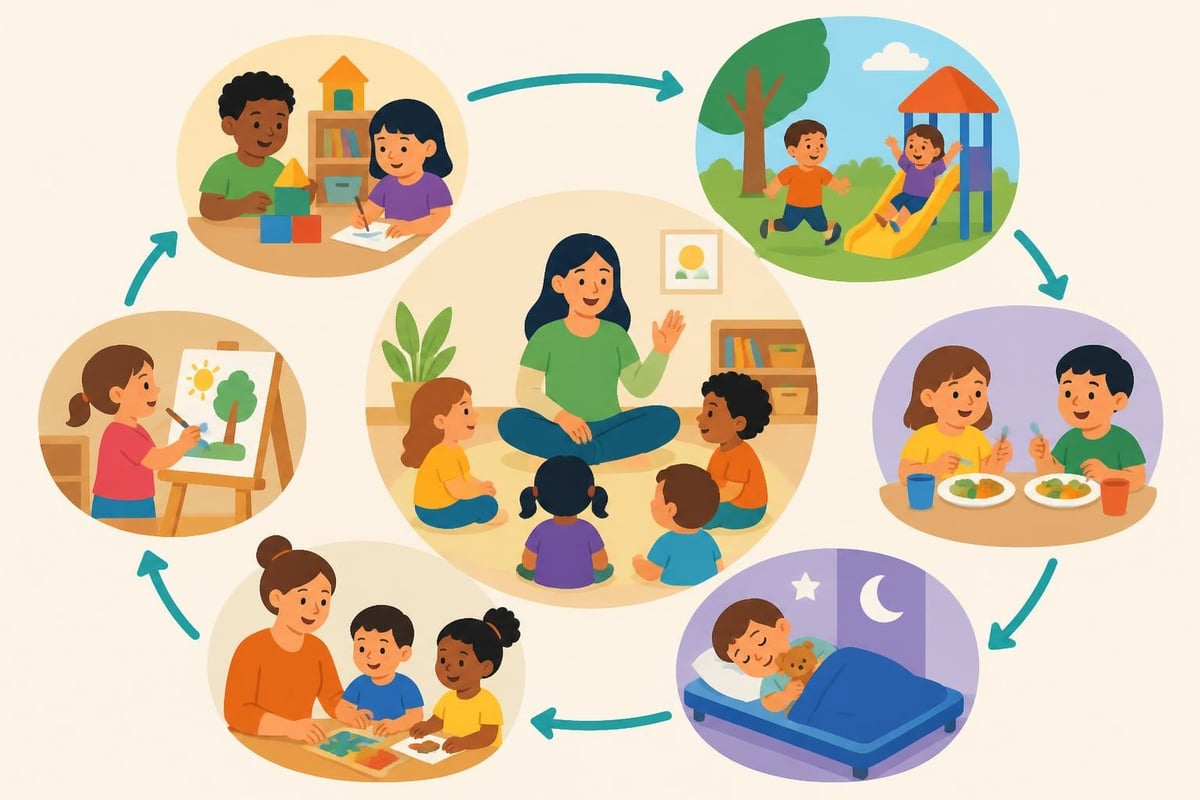
Physical space significantly impacts how children learn and develop. Thoughtfully designed early education daycare environments support exploration, encourage independence, and promote various types of play.
Well-organized classrooms feature distinct learning centers-blocks and building, dramatic play, art and creativity, books and quiet time, and sensory exploration. These areas allow children to choose activities based on their interests while ensuring exposure to diverse learning experiences.
Creating Developmentally Appropriate Spaces
Effective learning environments incorporate:
- Child-sized furniture and accessible materials
- Natural lighting and views of the outdoors
- Soft spaces for quiet activities and rest
- Open areas for gross motor movement
- Display areas showcasing children's work
- Organized storage systems children can navigate independently
Safety remains paramount, but the best programs balance protection with appropriate risk-taking that builds confidence and competence. Children need opportunities to climb, jump, and test their physical abilities in supervised settings.
Health and Nutrition in Early Education Settings
Quality early education daycare programs recognize the integral connection between physical health and learning capacity. The CDC provides strategies for early care and education settings that promote overall wellness through proper nutrition, physical activity, and health practices.
Programs should provide balanced meals and snacks that meet nutritional guidelines while introducing children to diverse, healthy foods. Mealtimes also serve as learning opportunities where children practice social skills, develop fine motor coordination, and build independence.
Physical Activity and Development
Young children require substantial physical activity throughout the day. Early education daycare programs should include both structured movement activities and free outdoor play when weather permits.
Physical development activities support:
- Gross motor skills through running, jumping, and climbing
- Fine motor coordination via manipulatives and art materials
- Balance and spatial awareness through obstacle courses
- Body awareness through movement games and dancing
Building Social-Emotional Intelligence
Perhaps no aspect of early education daycare proves more valuable than the development of social-emotional skills. Children learn to navigate relationships, manage feelings, and develop empathy through daily interactions with peers and caregivers.
Quality programs teach emotional literacy explicitly, helping children identify and name feelings. Caregivers model appropriate emotional responses and guide children through conflicts using positive discipline approaches.
Developing Critical Social Skills
The group setting of early education daycare naturally creates opportunities for social learning that cannot be replicated in home settings with limited peer interaction. Children learn to share, take turns, cooperate, and appreciate differences among their classmates.
| Social Skill | How It's Taught | Long-Term Benefit |
|---|---|---|
| Turn-taking | Structured activities with limited materials | Patience and fairness |
| Sharing | Modeling and positive reinforcement | Generosity and cooperation |
| Conflict resolution | Guided problem-solving conversations | Communication and compromise |
| Empathy | Discussing feelings and perspectives | Emotional intelligence |
Teachers facilitate these learning moments without solving every problem for children. This approach builds resilience and problem-solving capacity that serves children throughout life.
Family Partnership and Communication
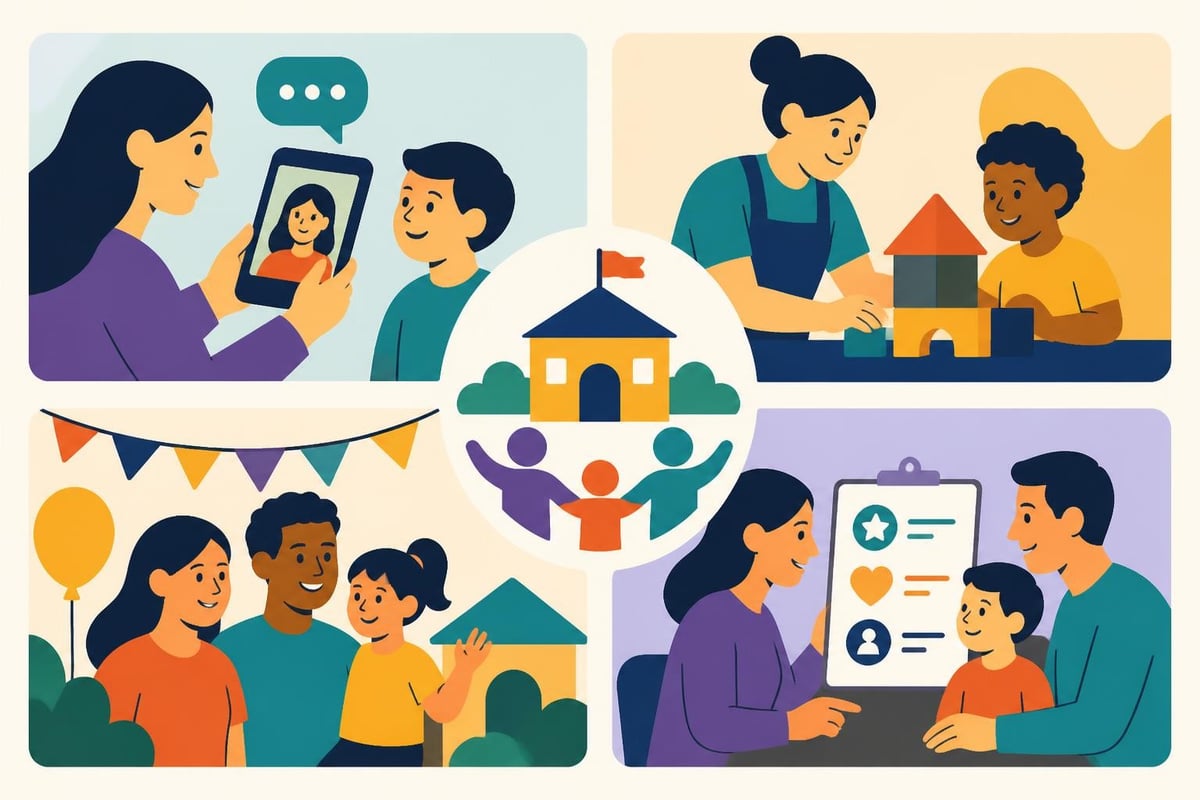
Effective early education daycare programs view families as essential partners in children's development. Regular, meaningful communication ensures continuity between home and school environments.
Programs should provide daily updates about children's activities, achievements, and challenges. Many centers use digital platforms for sharing photos, developmental observations, and milestone achievements. Research from NYU Steinhardt emphasizes how family engagement significantly enhances the benefits of quality early learning experiences.
Communication methods might include:
- Daily written or digital reports
- Regular parent-teacher conferences
- Monthly newsletters highlighting curriculum themes
- Open-door policies for family visits
- Family events and celebration gatherings
Measuring Quality and Outcomes
Parents evaluating early education daycare options should understand indicators of program quality. Beyond clean facilities and friendly staff, several factors distinguish exceptional programs from merely adequate ones.
Staff qualifications matter significantly. Teachers with specialized training in early childhood education understand developmental stages and implement evidence-based practices. Low turnover rates indicate satisfied staff who build meaningful relationships with children.
Assessment and Documentation
Quality programs systematically observe and document children's progress without relying on formal testing inappropriate for young children. Portfolio-based assessment captures growth through work samples, photographs, and narrative observations.
These assessments inform individualized learning plans and help identify children who might benefit from additional support services. Studies examining quality differences highlight how systematic assessment practices correlate with better developmental outcomes.
The Economic and Social Impact
Investment in quality early education daycare yields returns far beyond individual family benefits. Research from the National Bureau of Economic Research demonstrates that early childhood education programs generate substantial economic benefits through improved educational outcomes and reduced need for remedial services.
Communities with accessible, affordable early education options support working families while building a stronger future workforce. Children who attend quality programs enter kindergarten better prepared, reducing achievement gaps and setting positive trajectories.
Long-Term Benefits of Early Education
The advantages of quality early education daycare extend well into adulthood. Children who attend effective programs show higher graduation rates, increased earning potential, and better overall health outcomes decades later.
Research consistently shows benefits including:
- Enhanced language and literacy skills
- Stronger mathematical reasoning
- Better executive function and self-regulation
- More positive social relationships
- Reduced need for special education services
- Higher college attendance rates
Choosing the Right Early Education Environment
Parents selecting early education daycare should visit multiple programs, ask detailed questions, and trust their instincts about where their child will thrive. Observing how teachers interact with children provides valuable insights into program philosophy and practice.
Look for environments where children appear engaged and happy, where teachers speak respectfully to children at their eye level, and where the daily schedule balances active and quiet periods. Check whether programs maintain appropriate licensing, follow safety protocols, and employ qualified staff with background checks.
Finding top-rated daycares near me requires researching options thoroughly and considering factors beyond simple convenience. The right early education daycare becomes a true partner in your child's development, providing experiences that shape lifelong learning and success.
Consider the program's approach to curriculum, discipline, and family involvement. Ask about staff training, emergency procedures, and how they handle children's individual needs. A quality program welcomes questions and provides transparent answers about all aspects of their operation.
Supporting Transitions and Continuity
Starting early education daycare represents a significant transition for both children and families. Quality programs recognize this and implement gradual enrollment processes that ease separation anxiety and build trust.
Some programs offer shortened days initially, allowing children to adjust gradually to new routines and relationships. Teachers work closely with families to understand children's home routines, preferences, and comfort strategies, then incorporate familiar elements into the classroom environment.
Continuity of care-maintaining the same primary caregiver over extended periods-helps children form secure attachments that support healthy development. Programs that prioritize keeping children with familiar teachers as they age demonstrate understanding of attachment theory and its importance to early learning.
Quality early education daycare provides children with foundational experiences that influence lifelong learning, social development, and overall wellbeing. By combining nurturing care with intentional educational practices, these programs support families while giving children the best possible start. If you're seeking a home childcare environment that prioritizes individual attention, developmental appropriateness, and genuine partnership with families, Step by Step Care offers the nurturing, educational foundation your child deserves during these critical early years.


