

Family Day Care Educator Guide: Roles & Requirements
A family day care educator provides professional childcare services within a home environment, offering families a more intimate and personalized alternative to traditional daycare centers. These dedicated professionals create nurturing spaces where small groups of children receive individualized attention while parents work or attend to other responsibilities. The role combines educational expertise, childcare experience, and the warmth of a home setting to support early childhood development in meaningful ways.
Understanding the Family Day Care Educator Role
The position of a family day care educator extends far beyond simple babysitting. These professionals design and implement age-appropriate learning activities, ensure child safety, maintain detailed records, and communicate regularly with families about developmental progress.
Core Responsibilities and Daily Tasks
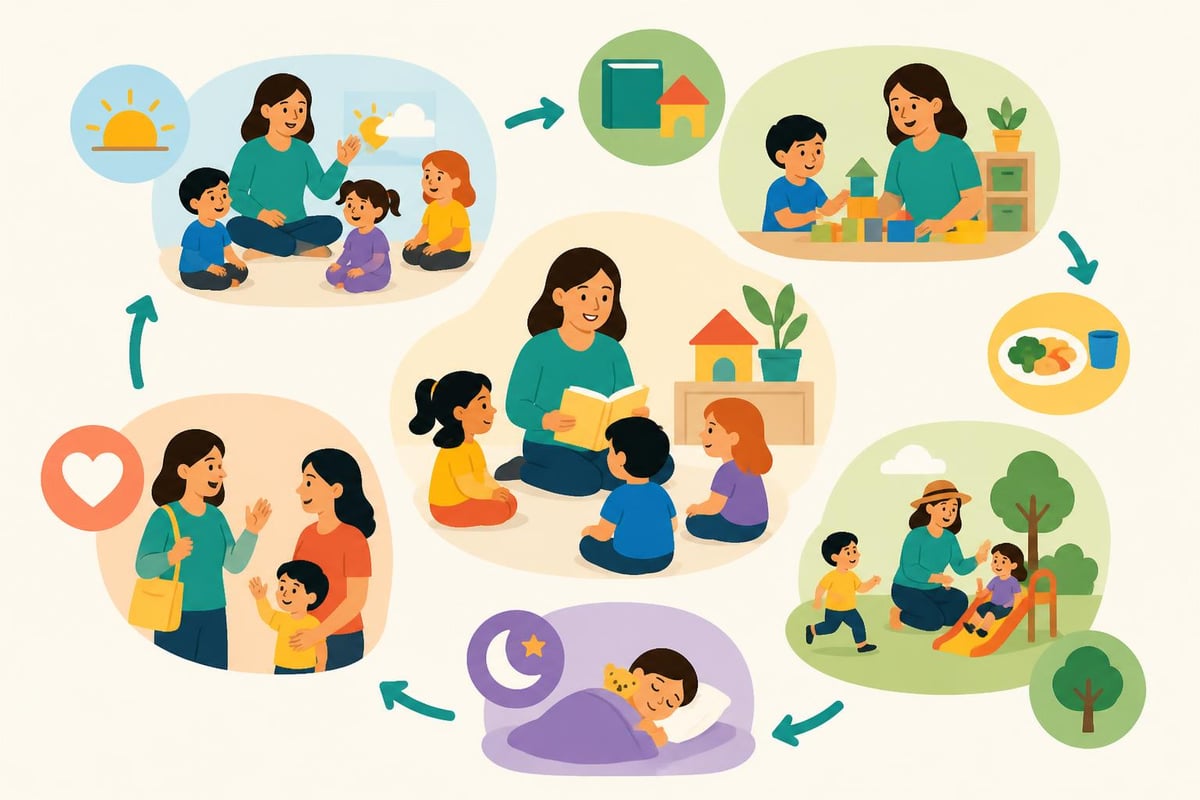
A family day care educator manages multiple responsibilities simultaneously throughout each day. Planning educational activities that align with developmental milestones forms the foundation of quality care. These activities might include storytelling sessions, sensory play, outdoor exploration, and creative arts projects.
Daily tasks include:
- Preparing nutritious meals and snacks that accommodate dietary restrictions
- Maintaining detailed attendance and incident reports
- Conducting developmental assessments and observations
- Creating a safe, clean, and stimulating environment
- Communicating with parents about daily activities and child progress
- Managing behavioral guidance using positive reinforcement techniques
Documentation requirements consume significant time but prove essential for regulatory compliance and parent communication. Most family day care educators spend 30-45 minutes daily on record-keeping, tracking everything from diaper changes for infants to learning milestones for preschoolers.
Educational and Developmental Focus
Quality family day care educators prioritize developmental domains including cognitive, social-emotional, physical, and language skills. Programs similar to those offered in infant care programs focus on age-appropriate stimulation and responsive caregiving practices.
The curriculum typically balances structured activities with free play opportunities. Intentional teaching moments occur throughout the day, whether during a diaper change conversation with a toddler or helping a preschooler problem-solve during block building.
Licensing and Regulatory Requirements
Operating as a family day care educator requires meeting specific state and local regulations. Requirements vary significantly by location, making it essential to understand your jurisdiction's specific mandates.
State Licensing Standards
Most states distinguish between different types of home-based childcare. Family day care homes typically serve 6-12 children, while small family day care programs might serve fewer children with less stringent requirements.
New York City family day care programs must meet specific operational guidelines including caregiver-to-child ratios and facility safety standards. These regulations ensure children receive appropriate supervision and care quality.
| Program Type | Typical Capacity | Licensing Level | Inspection Frequency |
|---|---|---|---|
| Small Family Day Care | 3-6 children | Basic registration | Annual |
| Family Day Care | 7-12 children | Full license | Bi-annual |
| Group Family Day Care | 13+ children | Enhanced license | Quarterly |
Training and Education Requirements
Professional development forms a cornerstone of quality family day care practice. Many states mandate specific training hours before opening a program and ongoing professional development thereafter.
New York State training requirements detail mandatory health and safety training for group family day care providers, establishing baseline competency standards. These requirements ensure educators understand critical topics like emergency response, illness prevention, and developmental appropriateness.
The biennial training requirements in New York specify both the number of hours and topic categories, covering areas such as child development, nutrition, and business practices. Similarly, Oregon’s certified family child care training criteria establish core knowledge categories and annual training hour expectations.
First-time family day care educators typically complete 15-30 hours of pre-service training covering:
- Health and safety fundamentals
- Child development principles
- Nutrition and meal planning
- Emergency preparedness procedures
- Business operations and record-keeping
- Cultural competency and inclusion
Continuing education maintains and expands professional knowledge. Most states require 12-24 hours annually, with specific topics mandated in areas like sudden infant death syndrome (SIDS) prevention, medication administration, and recognizing child abuse.
Creating a Nurturing Home Environment
The physical space a family day care educator maintains significantly impacts child development and learning outcomes. Successful educators transform residential spaces into engaging, safe learning environments.
Space Planning and Safety Considerations
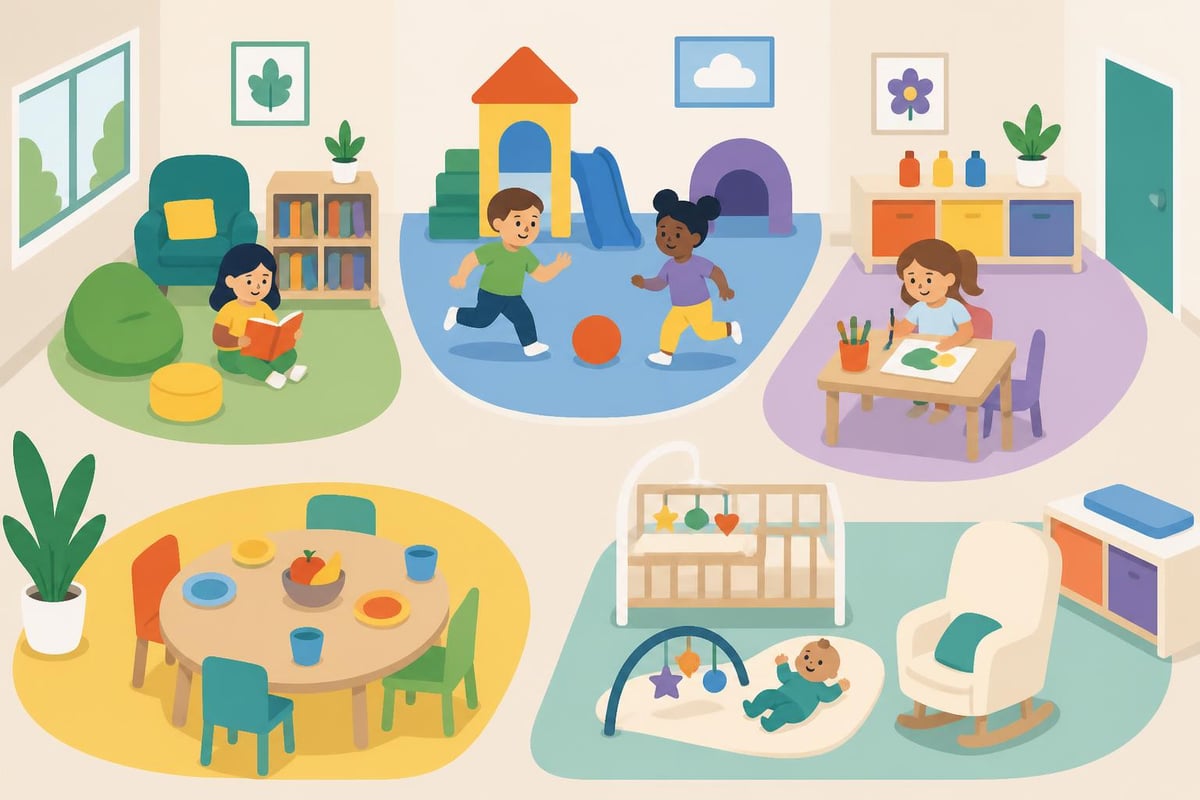
Zoning different areas helps children transition between activities smoothly. A well-designed family day care home includes quiet spaces for rest, active areas for gross motor play, creative zones for arts and crafts, and eating spaces for meals.
Safety modifications extend throughout the home. Cabinet locks, outlet covers, stair gates, and secure storage for cleaning products represent baseline requirements. Many educators create outdoor play areas with age-appropriate equipment, shade structures, and soft landing surfaces.
Materials and Learning Resources
Quality family day care educators curate materials that support open-ended exploration and learning. Rather than expensive commercial toys, many successful programs emphasize natural materials, loose parts, and everyday objects that encourage creativity.
Material rotation keeps the environment fresh and interesting. Educators typically maintain a larger collection of resources than displayed at once, rotating materials every 2-3 weeks based on children's interests and developmental progression.
Building Relationships with Families
Strong family partnerships distinguish exceptional family day care educators from adequate ones. These professionals view parents as essential collaborators in supporting child development.
Communication Strategies
Daily communication creates transparency and trust. Many family day care educators use:
- Morning conversations during drop-off about the child's needs or overnight events
- Brief written daily reports summarizing activities, meals, and highlights
- Weekly newsletters describing upcoming themes or field trips
- Monthly developmental progress summaries
- Quarterly formal conferences to discuss growth and goals
Digital communication tools have transformed family engagement. Photo-sharing apps, private social media groups, and messaging platforms enable real-time updates while respecting family privacy and maintaining professional boundaries.
Handling Challenging Conversations
Family day care educators occasionally navigate difficult discussions about behavioral concerns, developmental delays, or policy violations. Approaching these conversations with empathy, specific observations, and collaborative problem-solving strengthens rather than damages relationships.
Preparing documentation beforehand helps these discussions remain factual and productive. When an educator can reference specific dates, times, and behaviors, families better understand concerns and work together toward solutions.
Business Management Essentials
Operating as a family day care educator means running a small business. Financial management, marketing, and administrative systems determine long-term sustainability.
Financial Planning and Pricing
Establishing appropriate rates requires balancing competitive pricing with sustainable income. Successful family day care educators research local market rates while calculating actual costs including food, supplies, insurance, taxes, and facility maintenance.
| Expense Category | Monthly Average | Annual Total | Percentage of Revenue |
|---|---|---|---|
| Food and supplies | $300-500 | $3,600-6,000 | 12-18% |
| Insurance | $150-250 | $1,800-3,000 | 6-9% |
| Facility costs | $200-400 | $2,400-4,800 | 8-12% |
| Professional development | $50-100 | $600-1,200 | 2-4% |
| Marketing | $50-150 | $600-1,800 | 2-5% |
Payment policies should be clearly documented in enrollment contracts. Many educators require payment in advance, charge late fees after a grace period, and maintain waiting lists to ensure full enrollment.
Marketing Your Services
Building enrollment requires intentional marketing efforts. Successful family day care educators leverage:
- Personal networks and word-of-mouth referrals
- Online presence through websites and social media
- Local community partnerships with pediatricians and businesses
- Participation in childcare resource and referral agencies
- Professional affiliations and quality rating programs
Creating a visual portfolio helps prospective families envision their children in your program. Many educators maintain photo galleries showing the learning environment, daily activities, and special events while protecting current children's privacy.
Professional Development and Growth
Continuous learning separates career family day care educators from those who simply maintain minimum standards. Investing in professional growth enhances program quality and personal satisfaction.
Specialized Training Opportunities
Beyond mandatory training, many family day care educators pursue specialized credentials in areas like infant-toddler development, special needs inclusion, or bilingual education. These certifications differentiate programs in competitive markets.
National credentials such as the Child Development Associate (CDA) provide portable recognition of professional competence. The CDA requires 120 hours of formal education, 480 hours of experience, and successful portfolio review.
Advanced educators often pursue associate or bachelor's degrees in early childhood education. While not always required for family day care, these credentials increase credibility and expand career opportunities.
Networking and Peer Support
Isolation challenges many family day care educators who work independently without colleagues. Joining professional associations, attending local educator meetups, and participating in online communities provides valuable peer support.
Many regions organize family day care educator networks that facilitate:
- Sharing resources and best practices
- Group purchasing discounts on supplies
- Backup care arrangements during educator illness
- Professional advocacy on policy issues
- Emotional support during challenging situations
Quality Improvement and Accreditation
Family day care educators committed to excellence often pursue voluntary quality rating and accreditation programs. These systems provide frameworks for continuous improvement beyond minimum licensing standards.
Quality Rating Systems
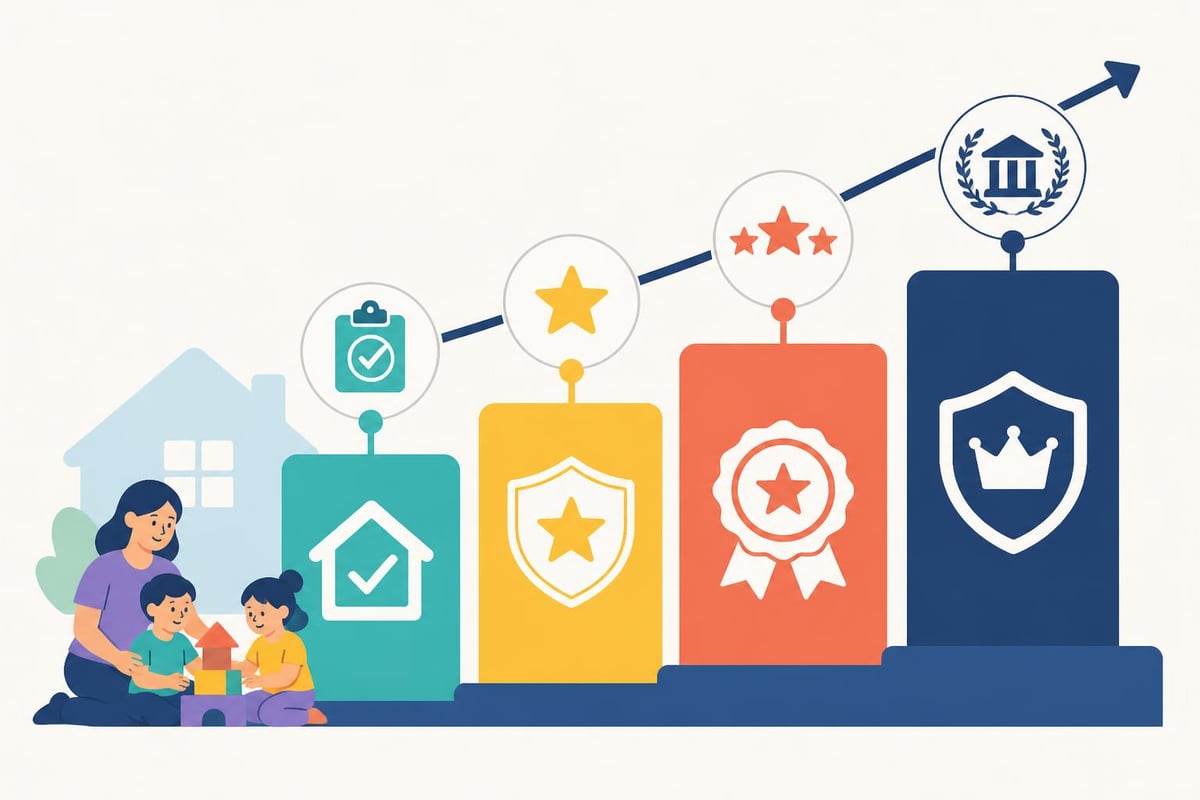
Many states operate Quality Rating and Improvement Systems (QRIS) that assess family day care programs across multiple dimensions. Programs earn ratings (often 1-5 stars) based on factors like educator qualifications, environment quality, and family engagement practices.
Financial incentives often accompany higher quality ratings, including increased subsidy reimbursement rates, professional development scholarships, and marketing support. These incentives make quality improvement economically beneficial beyond the inherent value of better outcomes.
National Accreditation
The National Association for Family Child Care (NAFCC) offers specialized accreditation recognizing high-quality family day care programs. The rigorous self-study process examines relationships, environment, activities, health and safety, and professional practices.
Accredited programs demonstrate commitment to excellence that resonates with educated families seeking the best possible care. While time-intensive, accreditation distinguishes programs in competitive markets and provides structure for systematic quality enhancement.
Challenges and Rewards of the Profession
Every career presents unique challenges and satisfactions. Understanding both helps prospective family day care educators make informed decisions about entering the field.
Common Professional Challenges
Work-life balance proves difficult when your home doubles as your workplace. Many family day care educators struggle to separate professional and personal time, especially when living in the same space where they provide care.
Financial inconsistency during enrollment fluctuations creates stress. Unlike center-based programs with stable funding, family day care educators experience direct income impacts when families relocate or children age out.
Regulatory compliance requires ongoing attention to changing requirements. Each policy update demands implementation time and sometimes facility modifications or additional training.
Professional Rewards and Satisfaction
Despite challenges, most family day care educators find deep satisfaction in their work. Witnessing developmental milestones firsthand-a first step, a new word, successful potty training-creates powerful emotional rewards.
Long-term relationships with families extend beyond the childcare years. Many educators maintain connections with former families, attending graduations and celebrating accomplishments years later.
Professional autonomy allows family day care educators to implement their educational philosophies without bureaucratic constraints. This independence attracts many educators who value creative freedom and personalized approaches.
The intimate scale enables genuine relationships with each child. Unlike center classrooms with 15-20 children, family day care educators typically know each child deeply, understanding individual temperaments, learning styles, and family contexts.
Navigating the Future of Family Day Care
The family day care sector continues evolving in response to changing family needs, workforce dynamics, and policy developments. Forward-thinking educators position themselves for success by anticipating trends.
Technology Integration
Digital tools increasingly support family day care operations. Curriculum planning apps, attendance tracking systems, and communication platforms streamline administrative tasks, freeing time for direct child interaction.
Educational technology appropriate for young children supplements hands-on learning. Many family day care educators thoughtfully integrate interactive educational programs, digital storytelling, and virtual field trips while maintaining emphasis on physical play and social interaction.
Specialized Programming Niches
Some family day care educators differentiate their programs through specialized focuses like nature-based learning, multilingual immersion, or extended-hours care for shift workers. These niches serve underserved populations while creating market advantages.
Evening and weekend care options address growing demand from parents working non-traditional schedules. Family day care educators offering flexible hours often maintain consistent enrollment despite premium pricing.
Becoming a successful family day care educator requires dedication to continuous learning, relationship building, and quality improvement alongside meeting regulatory requirements and managing business operations. The profession offers unique rewards for those committed to supporting young children and families through personalized, home-based care. If you're seeking exceptional childcare that combines professional expertise with the warmth of a home environment, Step by Step Care provides the nurturing, educational experiences that help children thrive during their crucial early years.


