

Childcare Reviews: A Parent’s Complete Guide for 2026
Choosing the right childcare provider represents one of the most important decisions parents make. In 2026, childcare reviews have become an essential tool for families researching care options, offering insights into everything from daily activities to safety protocols. These reviews provide real-world perspectives from other parents who have entrusted their children to specific providers, making them invaluable resources during the selection process. For home-based childcare options like Step by Step Care, understanding how to evaluate and interpret reviews can make the difference between finding the perfect fit and settling for something less than ideal.
Why Childcare Reviews Matter More Than Ever
The landscape of childcare decision-making has transformed significantly over the past decade. Parents now have access to more information than ever before, and online reviews influence parents’ choices in ways that traditional word-of-mouth recommendations simply cannot match.
Trust has become the currency of childcare selection. When parents read authentic experiences from other families, they gain confidence in their decision-making process. Reviews offer transparency into aspects of care that brochures and websites might not fully capture.

The Impact on Enrollment Decisions
Research shows that positive feedback plays a crucial role in building trust and credibility with prospective parents. In fact, childcare reviews often serve as the deciding factor when families narrow down their final choices.
| Review Impact Factor | Influence Level | Parent Priority Ranking |
|---|---|---|
| Safety mentions | Very High | #1 |
| Teacher qualifications | High | #2 |
| Communication quality | High | #3 |
| Cleanliness standards | Medium-High | #4 |
| Daily activity variety | Medium | #5 |
The data reveals that parents prioritize specific elements when reading reviews. Safety-related comments receive the most attention, followed closely by information about caregiver qualifications and responsiveness.
What to Look for in Quality Childcare Reviews
Not all reviews provide equal value. Learning to distinguish between helpful, detailed feedback and superficial comments helps parents make informed decisions about home childcare options.
Specific Details Over General Praise
The most useful childcare reviews include concrete examples and specific situations. Instead of simply stating "great daycare," valuable reviews describe particular interactions, activities, or policies that stood out.
Look for reviews that mention:
- Specific staff members by name
- Detailed descriptions of daily routines
- Examples of communication methods
- Concrete instances of problem-solving
- Particular activities or learning approaches
Reviews that provide this level of detail indicate genuine experience and thoughtful observation. Parents should value these comprehensive accounts more heavily than brief, generic comments.
Consistency Across Multiple Reviews
Pattern recognition becomes crucial when evaluating childcare reviews. A single glowing review or one negative comment rarely tells the complete story. Instead, parents should look for themes that appear across multiple reviews from different families.
When the same positive attributes appear repeatedly, this consistency suggests genuine strengths. Similarly, if multiple reviewers mention the same concern, that pattern deserves attention and follow-up questions during facility visits.
Red Flags and Warning Signs in Reviews
Understanding what constitutes a genuine concern versus a one-time incident requires careful analysis. Childcare reviews sometimes reveal serious issues that warrant immediate attention, while other complaints might reflect individual preferences rather than systemic problems.
Critical Safety and Health Concerns
Any review mentioning safety violations, inadequate supervision, or health code issues deserves serious consideration. These comments should prompt immediate investigation and direct questions to the provider.
Immediate red flags include:
- Multiple mentions of supervision gaps
- Reports of unexplained injuries
- Descriptions of unsanitary conditions
- Allegations of inadequate emergency procedures
- Concerns about staff screening or background checks
Parents researching daycare centers should understand common challenges providers face with online reviews while remaining vigilant about legitimate safety concerns.
Communication Breakdown Patterns
Recurring complaints about communication difficulties signal potential ongoing challenges. Whether reviews mention unreturned calls, lack of daily updates, or unclear policies, these patterns suggest organizational issues that might affect your family's experience.

Balancing Positive and Negative Feedback
No childcare provider maintains a perfect record, and expecting exclusively positive reviews sets unrealistic standards. Instead, parents should focus on how providers respond to criticism and whether they demonstrate continuous improvement.
The Response Matters
Professional childcare providers often respond to reviews, both positive and negative. These responses reveal valuable information about the provider's commitment to quality and accountability.
| Response Type | What It Reveals | Trustworthiness Signal |
|---|---|---|
| Defensive and dismissive | Unwillingness to improve | Low |
| Generic thank-you only | Minimal engagement | Medium-Low |
| Specific acknowledgment | Active listening | Medium-High |
| Detailed explanation + action plan | Commitment to excellence | High |
Providers who acknowledge concerns, explain their perspective professionally, and outline improvement steps demonstrate the kind of accountability parents should seek. Step by Step Care testimonials show how transparent communication builds lasting trust with families.
Context and Individual Circumstances
Some negative reviews reflect personality mismatches or individual circumstances rather than provider shortcomings. A family preferring highly structured environments might criticize a play-based program that other families adore.
Parents should consider whether negative comments align with their own values and priorities. What one family considers a weakness might actually represent a strength for your particular needs.
Using Reviews Alongside Other Research Methods
Childcare reviews should complement, not replace, other essential research activities. Comprehensive evaluation includes multiple verification methods to ensure you gather complete information about potential providers.
Essential Verification Steps
- Schedule in-person visits to observe the environment firsthand
- Request and contact references beyond online reviews
- Verify licensing and accreditation status through official channels
- Review safety and health inspection records from regulatory agencies
- Ask detailed questions about policies, procedures, and philosophy
Understanding childcare program accreditation standards helps parents evaluate whether providers meet recognized quality benchmarks beyond individual reviews.
Questions to Ask Based on Review Themes
Reviews often highlight areas worth exploring during provider interviews. If multiple reviews mention a particular strength or concern, prepare specific questions addressing those topics.
Sample question framework:
- "I noticed several reviews mentioned [specific topic]. Can you tell me more about your approach to this?"
- "How have you addressed concerns about [issue mentioned in reviews]?"
- "Reviews highlighted [positive aspect]. How do you maintain this standard consistently?"
Writing Your Own Helpful Childcare Reviews
After choosing a provider, parents have opportunities to contribute valuable feedback for future families. Well-written childcare reviews serve the community while helping providers understand their impact on families.
Components of Valuable Reviews
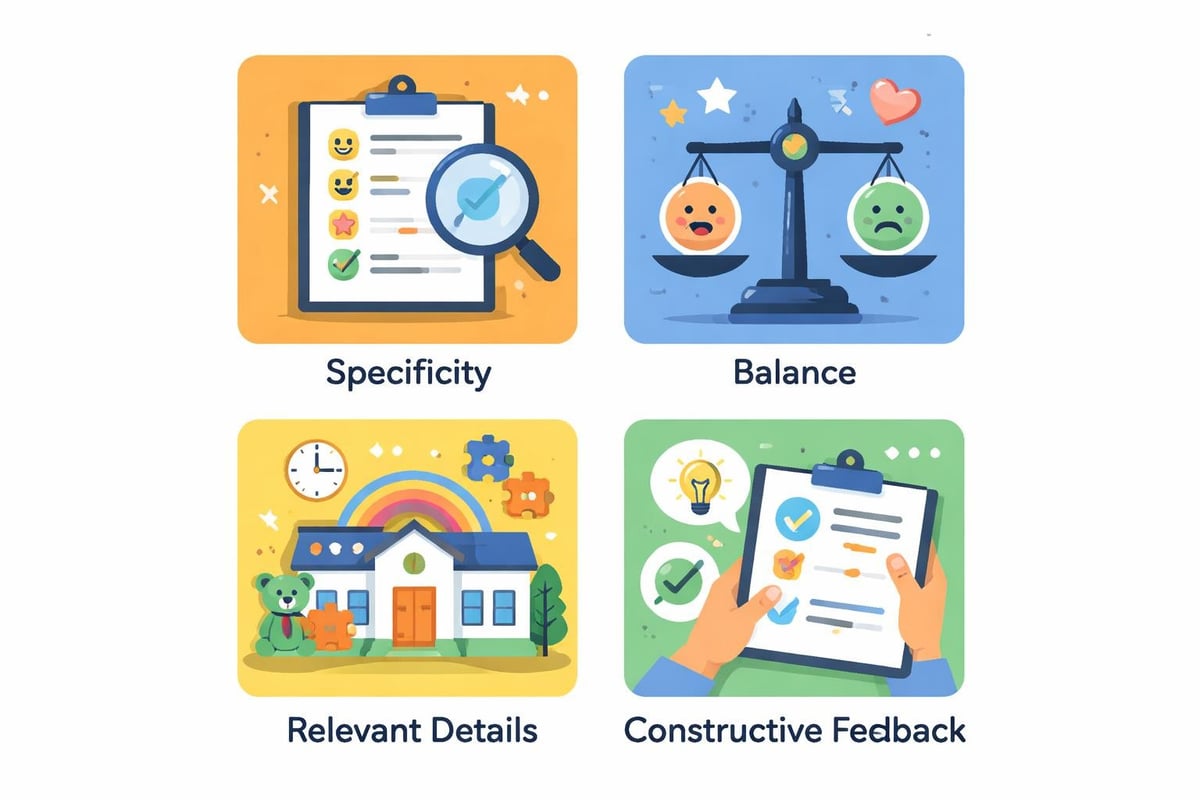
Effective reviews balance honest assessment with constructive detail. They provide specific information without identifying children or sharing confidential details.
Include these elements:
- Your child's age and length of enrollment
- Specific examples of positive experiences
- Areas where the provider excels
- Any concerns and how they were addressed
- Overall recommendation with clear reasoning
Timing and Updates
Consider writing reviews at meaningful milestones: after the first month, at six months, and annually. This approach captures how experiences evolve over time and provides perspective on consistency.
Updates also help when significant changes occur, such as new leadership, facility improvements, or policy modifications. These updates keep information current for families researching options.
The Role of Different Review Platforms
Childcare reviews appear across various platforms, each offering unique advantages and limitations. Understanding these differences helps parents gather comprehensive information while recognizing potential biases.
Platform Comparison
| Platform Type | Verification Level | Detail Quality | Bias Risk |
|---|---|---|---|
| Google Reviews | Medium | Variable | Medium |
| Provider website | Low | High | High (filtered) |
| Specialized childcare sites | High | High | Low |
| Social media | Low | Variable | Medium |
| BBB profiles | High | Medium-High | Low |
Specialized childcare review platforms typically require verification of enrollment, reducing fake reviews. However, following the right tips for finding safe daycare means consulting multiple sources rather than relying on any single platform.
Cross-Platform Verification
Compare reviews across different platforms to identify consistent themes. Discrepancies between platforms might indicate filtering on provider-controlled sites or targeted negative campaigns on open platforms.
Pay attention to review dates and frequency. A sudden influx of positive reviews might indicate solicited feedback, while clusters of negative reviews could suggest coordinated attacks or legitimate crisis periods.
Home-Based Childcare Considerations
Reviews for home-based childcare providers like Step by Step Care often emphasize different factors than large center-based programs. Understanding these unique aspects helps parents evaluate home childcare reviews appropriately.
What Home Childcare Reviews Reveal
Parents choosing home-based care typically prioritize intimate settings, personalized attention, and family-like atmospheres. Reviews for these providers often highlight relationship quality and individualized care approaches.
Common home childcare strengths in reviews:
- Close caregiver-child bonds
- Flexible scheduling and communication
- Multi-age interaction opportunities
- Home-like environment comfort
- Personalized learning approaches
Reviews mentioning these elements indicate providers successfully delivering the primary benefits families seek from home-based care. Exploring different home daycare options requires understanding how these unique characteristics appear in parent feedback.
Regulatory Compliance in Reviews
Home-based providers face specific licensing requirements that differ from commercial centers. Reviews sometimes mention inspections, capacity limits, or compliance issues unique to home settings.
Parents should verify that any compliance concerns mentioned in reviews have been addressed through official channels. State licensing databases provide objective information complementing subjective review content.
Managing Your Expectations Through Reviews
Reading extensive childcare reviews can create unrealistic expectations if parents don't maintain perspective. Every child, family, and provider relationship brings unique dynamics that reviews cannot fully predict.
Individual Experience Variation
Your child's temperament, your family's values, and your communication style all influence how you experience any childcare setting. Reviews describe other families' experiences, which may differ substantially from yours.
Use reviews to understand possibilities and probabilities rather than guarantees. A provider with mostly positive reviews still might not suit your family, while one with mixed reviews could prove perfect for your specific needs.
The Evolution of Quality
Childcare programs evolve continuously. Staff changes, new policies, facility improvements, and curriculum updates all affect quality over time. Recent reviews carry more weight than older feedback when evaluating current conditions.
However, long-term patterns revealed in years of reviews indicate stable organizational culture and consistent approaches. Both recent and historical reviews contribute valuable perspective when weighted appropriately.
Privacy and Ethical Review Practices
Writing and reading childcare reviews involves ethical responsibilities regarding privacy, honesty, and fairness. Parents should approach reviews with integrity while protecting children's confidentiality.
What Not to Include
Never share identifiable information about other children in your reviews. Avoid mentioning specific incidents involving other families, even without names. Focus your feedback on your own child's experience and your interactions with staff.
Privacy guidelines:
- Don't name other children or families
- Avoid sharing photos of other children
- Keep descriptions general regarding other students
- Focus on policies and practices rather than individual incidents
- Respect confidential information shared by providers
Honesty Without Malice
Negative reviews should focus on factual concerns and legitimate issues rather than personal attacks. Emotional reactions to difficult situations are understandable, but reviews should maintain professionalism and focus on behaviors and policies rather than character assassination.
Constructive criticism helps providers improve while serving future families. Vindictive reviews motivated by personal conflicts ultimately undermine the entire review system's credibility.
Responding to Reviews as Parents
Parents sometimes need to respond when providers address their reviews or when updates to situations occur. Understanding appropriate response practices maintains productive dialogue and helps future families.
When to Update Reviews
Consider updating your childcare review when significant changes occur: resolution of concerns, major improvements, new challenges, or program completion. Updates provide current information while maintaining your original perspective's context.
Brief updates with dates help readers understand the timeline of changes. This approach shows both the initial situation and how it evolved, offering complete information for decision-making.
Engaging with Provider Responses
When providers respond to your review, consider whether further dialogue would benefit future readers. If the response addresses your concerns satisfactorily, acknowledging this helps other parents understand the provider's accountability.
Avoid extended back-and-forth arguments in public review spaces. If significant disagreements remain, take conversations private while leaving your factual review standing for others' benefit.
Childcare reviews provide invaluable insights for parents navigating one of their most important decisions. By learning to evaluate reviews critically, recognizing red flags, and balancing feedback with other research methods, families can make informed choices about childcare providers. The key lies in viewing reviews as one component of comprehensive research rather than the sole decision-making factor. Step by Step Care understands that choosing home-based childcare requires trust built through transparency, authentic feedback, and demonstrated commitment to quality. Visit Step by Step Care to learn more about our approach to early childhood education and see how families in our community describe their experiences.


