

How to Start a Daycare at Home: Complete 2026 Guide
Starting a home-based childcare business offers the unique opportunity to combine professional growth with the comfort of working from home. Whether you're a parent seeking flexibility or an early childhood educator pursuing independence, launching a family daycare can be both rewarding and profitable. The process requires careful planning, regulatory compliance, and a genuine commitment to providing quality care. This comprehensive guide walks you through every essential step to transform your home into a thriving childcare environment.
Understanding the Home Daycare Business Model
When you start a daycare at home, you're entering a field that combines entrepreneurship with early childhood development. The home-based childcare model differs significantly from traditional daycare centers in both scale and approach.
Home daycare businesses typically serve between 4-12 children, depending on state regulations and your available space. This smaller group size allows for more personalized attention and a family-like atmosphere that many parents prefer. The intimate setting often creates stronger bonds between caregiver, children, and families.
Key Advantages of Home-Based Childcare
- Lower startup costs compared to commercial facilities
- Flexible scheduling that fits your lifestyle
- Tax deductions for home office and business expenses
- Personalized curriculum tailored to your educational philosophy
- Intimate learning environment with consistent caregivers
The home-based child care sector plays a critical role in early childhood education, particularly for families seeking personalized, flexible care options. Understanding this landscape helps position your business for success.
Financial Considerations
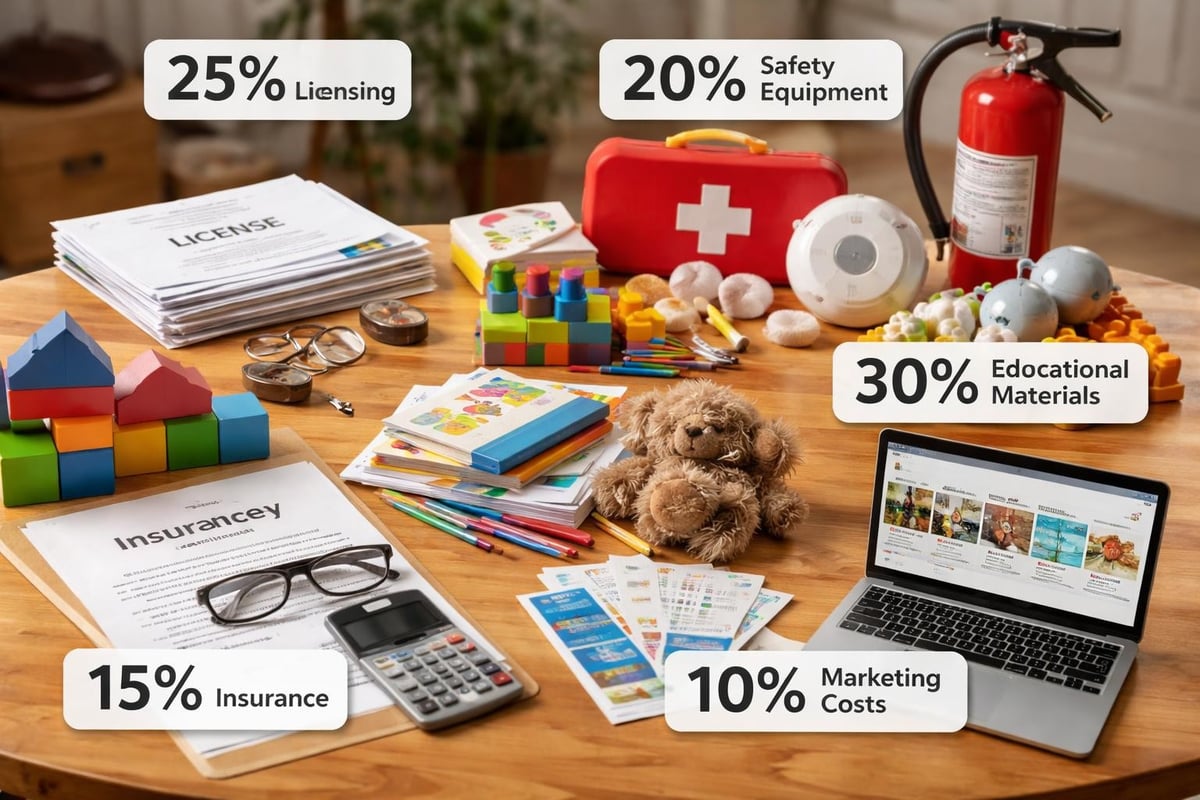
Before making commitments, evaluate the financial realities. Initial investments typically range from $3,000 to $10,000, covering licensing fees, safety equipment, educational materials, and basic renovations. Monthly operating expenses include insurance, supplies, food, utilities, and potential staff costs.
| Expense Category | Estimated Cost Range |
|---|---|
| Initial Licensing & Permits | $500 – $2,000 |
| Safety Equipment & Childproofing | $1,000 – $3,000 |
| Educational Materials & Toys | $500 – $1,500 |
| Insurance (Annual) | $800 – $2,500 |
| Marketing & Website | $300 – $1,000 |
Navigating Licensing and Legal Requirements
The regulatory framework for home daycares varies significantly by state and locality. Research your specific requirements early, as licensing and state-specific requirements can take several months to complete.
Most states categorize home daycares into two types: family daycare homes (serving 6-12 children) and small family daycare homes (serving fewer than 6 children). Each category has distinct regulatory requirements.
Essential Licensing Steps
- Contact your state's childcare licensing agency to obtain application materials
- Complete required background checks for all household members over 18
- Schedule and pass a home safety inspection covering fire safety, hazardous materials, and childproofing
- Obtain necessary certifications including CPR, First Aid, and food handler permits
- Secure proper insurance coverage for liability and property protection
- Submit your application with all supporting documentation
Your local zoning board may also require approval to operate a business from your residential property. Some neighborhoods have homeowners' association restrictions that prohibit commercial activities.
The comprehensive planning process involves coordinating multiple agencies and ensuring every regulatory requirement is met before accepting your first child.
Training and Educational Requirements
Most states mandate minimum training hours in early childhood education. Requirements typically include:
- Pre-service training (10-40 hours before opening)
- Ongoing professional development (15-30 hours annually)
- Specialized certifications in areas like infant care, special needs, or nutrition
Check whether your state accepts online courses or requires in-person training. Many community colleges offer affordable early childhood education programs that satisfy licensing requirements.
Preparing Your Home Environment
Converting your home into a safe, engaging childcare space requires strategic planning and investment. When you start a daycare at home, every room used for childcare must meet stringent safety standards.
Space Requirements and Setup
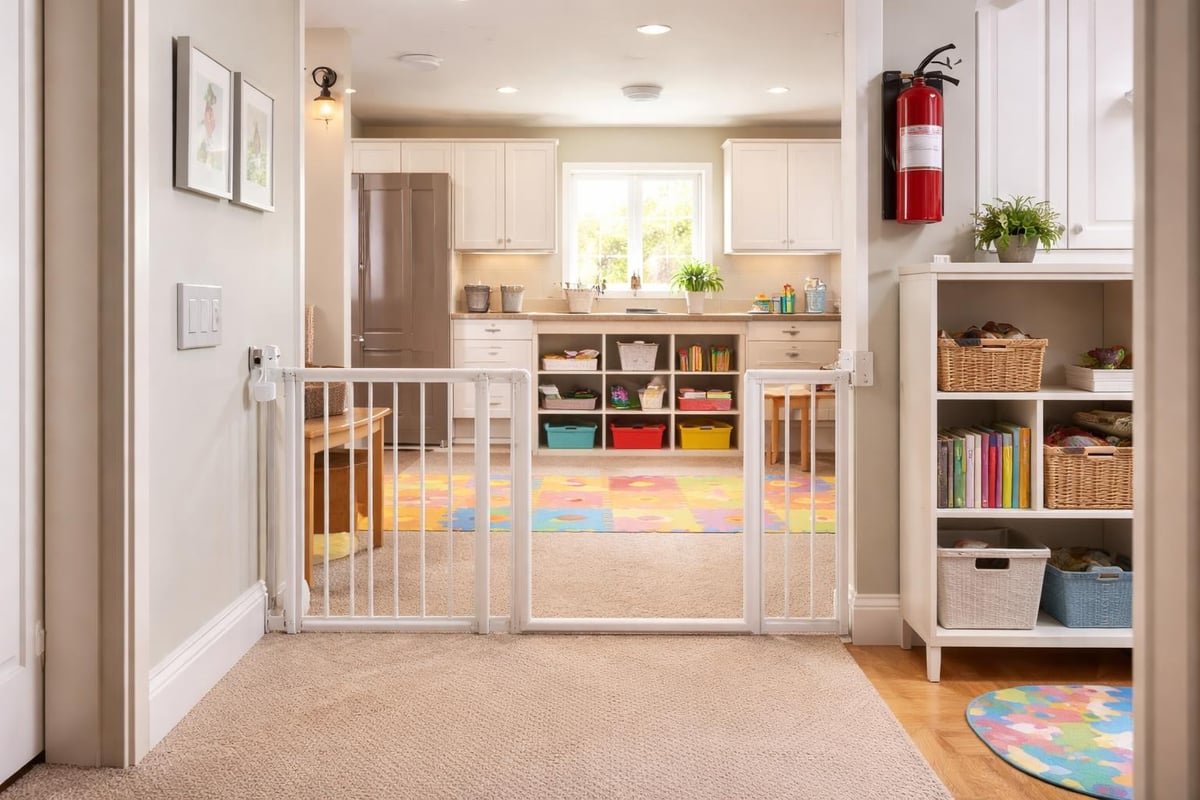
Designate specific areas for different activities: play spaces, nap areas, eating zones, and outdoor play. State regulations typically require minimum square footage per child (35-50 square feet indoors, 75 square feet outdoors).
Critical safety modifications include:
- Installing safety gates at stairs
- Securing furniture to walls to prevent tipping
- Covering electrical outlets with safety plugs
- Installing fire extinguishers and smoke detectors
- Creating emergency exit routes
- Removing or securing hazardous materials and plants
- Installing childproof locks on cabinets
- Padding sharp corners and edges
Visit Step by Step Care to see examples of well-designed home childcare environments that balance safety with warmth.
Equipment and Materials Investment
Quality equipment enhances your program while meeting regulatory standards. Essential purchases include age-appropriate toys, learning materials, nap mats, high chairs, safety gates, and outdoor play equipment.
| Equipment Category | Priority Level | Approximate Budget |
|---|---|---|
| Safety Equipment | Critical | $800 – $1,500 |
| Furniture (tables, chairs, cribs) | Critical | $1,000 – $2,000 |
| Educational Toys & Books | High | $500 – $1,200 |
| Outdoor Play Equipment | High | $600 – $1,500 |
| Art & Craft Supplies | Medium | $200 – $400 |
Developing Your Business Structure
Operating a legitimate home daycare requires formal business establishment. Choosing the right business structure impacts your taxes, liability protection, and administrative requirements.
Business Entity Options
Most home daycare providers operate as sole proprietorships or limited liability companies (LLCs). Sole proprietorships offer simplicity but provide no personal liability protection. LLCs require more paperwork but separate personal and business assets, protecting your home and savings from business-related lawsuits.
Consult with business formation resources to understand which structure best fits your situation. Consider factors including your risk tolerance, tax situation, and growth plans.
Essential Business Documentation
Create comprehensive policies covering:
- Enrollment procedures and contracts
- Payment schedules and late fee policies
- Sick child policies and medication administration
- Discipline and behavior management approaches
- Emergency procedures and contact protocols
- Pickup and drop-off procedures
- Vacation and closure schedules
Well-documented policies protect both your business and the families you serve. They establish clear expectations and reduce misunderstandings.
Creating Your Educational Program
Your curriculum distinguishes your daycare from competitors. When you start a daycare at home, developing a structured yet flexible program demonstrates professionalism and attracts quality-conscious parents.
Age-Appropriate Programming
Design separate activity plans for different age groups: infants (0-12 months), toddlers (1-3 years), and preschoolers (3-5 years). Each group requires distinct developmental approaches and materials.
Effective programs incorporate:
- Structured learning time with literacy and math concepts
- Creative expression through art, music, and dramatic play
- Physical activity and gross motor development
- Social-emotional learning and conflict resolution
- Outdoor exploration and nature activities
- Rest periods and quiet time
Review examples of effective daycare daily schedules to structure your programming appropriately. Balance between structured activities and free play supports comprehensive development.
Curriculum Development Resources
Numerous established curricula support home daycare providers. Popular options include Creative Curriculum, HighScope, and Montessori-inspired approaches. You can also develop your own curriculum based on early learning standards.
State early learning guidelines provide frameworks for age-appropriate milestones and activities. Aligning your program with these standards demonstrates quality and supports school readiness.
Financial Planning and Pricing Strategy
Sound financial management ensures sustainability. The nine-step planning process emphasizes creating realistic financial projections before opening your doors.
Setting Competitive Rates
Research local childcare costs to establish competitive pricing. Home daycares typically charge 20-40% less than commercial centers while maintaining quality. Consider your experience, credentials, location, and program features when setting rates.
Common pricing structures include:
- Full-time care (40+ hours weekly): $150-$300 per week
- Part-time care (20-30 hours weekly): $100-$200 per week
- Drop-in care (hourly): $8-$15 per hour
- Registration fees: $50-$200 (one-time)
- Supply fees: $25-$75 (monthly or annual)
Factor in all expenses when calculating rates. Your pricing should cover operating costs, provide reasonable compensation for your time, and allow for business growth and quality improvements.
Managing Cash Flow
Establish clear payment policies to maintain steady cash flow. Most successful providers require:
- Advance payment (first week or month upfront)
- Automatic payment systems through ACH transfers or apps
- Late payment penalties clearly outlined in contracts
- Non-refundable deposits to hold enrollment spots
Consider offering slight discounts for families enrolling multiple children or paying quarterly or annually in advance.
Marketing Your Home Daycare
Even the best childcare program requires effective marketing to attract families. When you start a daycare at home, building visibility in your community is essential for filling enrollment spots.
Building Your Online Presence
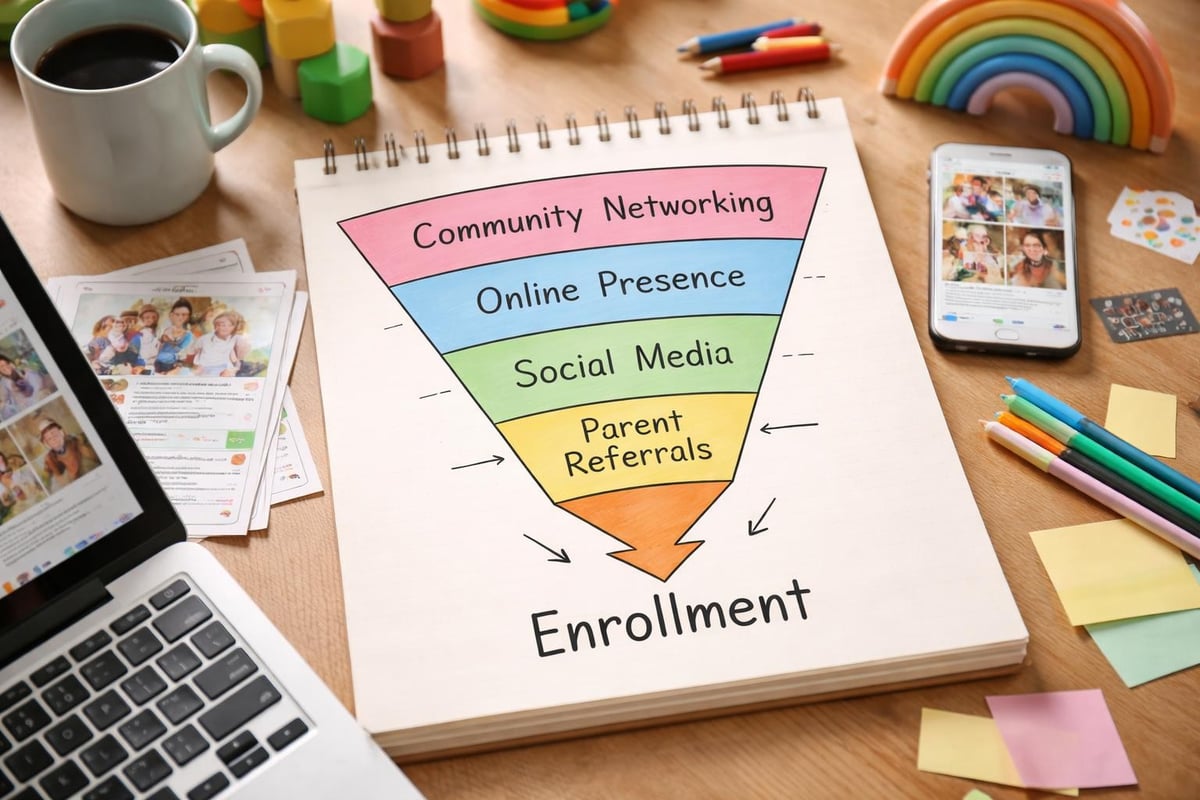
Create a professional website showcasing your program philosophy, daily schedule, safety measures, and credentials. Include high-quality photos of your space (without identifiable children), testimonials from current families, and clear contact information.
Learn from established providers like those featured in parent reviews to understand what families value most in childcare communications.
Local Marketing Strategies
- Join local parent groups on social media platforms
- Post flyers at pediatric offices, libraries, and community centers
- Network with real estate agents who work with families
- Participate in community events and early childhood fairs
- Partner with local businesses for cross-promotion
- Create a Google Business Profile for local search visibility
- Ask satisfied families for referrals and testimonials
Word-of-mouth remains the most powerful marketing tool. Exceptional care naturally generates recommendations from happy parents to friends and neighbors.
Insurance and Risk Management
Comprehensive insurance coverage protects your business, family, and assets. Standard homeowners' insurance doesn't cover business activities, making specialized childcare insurance essential.
Required Insurance Coverage
General liability insurance covers injuries or accidents occurring during business operations. Policies typically provide $1-2 million coverage and cost $800-$2,500 annually.
Property insurance protects business equipment and materials. Some providers add professional liability insurance covering claims of negligence or educational harm.
Additional coverage options include:
| Insurance Type | Coverage Purpose | Approximate Annual Cost |
|---|---|---|
| General Liability | Injury/accident claims | $800 – $2,000 |
| Property | Equipment/materials damage | $300 – $600 |
| Professional Liability | Negligence claims | $400 – $800 |
| Vehicle | Transportation coverage | $200 – $500 |
| Workers' Compensation | Employee injuries (if applicable) | Varies by state |
Safety Protocols and Emergency Preparedness
Develop comprehensive emergency plans covering fires, severe weather, medical emergencies, and intruders. Practice emergency drills monthly with children, making safety procedures routine.
Maintain detailed emergency contact information for every child, including parents, backup contacts, pediatricians, and medical authorization forms. Keep first aid supplies easily accessible and check expiration dates regularly.
Operational Systems and Daily Management
Efficient operations free you to focus on childcare quality rather than administrative chaos. When you start a daycare at home, establishing systems from day one prevents future headaches.
Record-Keeping Requirements
Maintain organized records including:
- Enrollment files with contracts, emergency contacts, and medical information
- Attendance logs documenting daily arrival and departure times
- Incident reports recording injuries, behavioral issues, or concerns
- Developmental assessments tracking each child's progress
- Financial records for tax purposes and business analysis
- Communication logs documenting conversations with parents
Many providers use childcare management software to streamline record-keeping, billing, and parent communication. Digital systems reduce paperwork while maintaining required documentation.
Daily Schedule Structure
Successful home daycares balance routine with flexibility. An infant daycare daily schedule differs significantly from preschool programming, requiring separate planning for mixed-age groups.
Sample daily framework:
- Morning arrival and free play (7:00-9:00 AM)
- Breakfast and group circle time (9:00-9:30 AM)
- Structured learning activities (9:30-10:30 AM)
- Outdoor play and physical activity (10:30-11:30 AM)
- Lunch preparation and eating (11:30 AM-12:15 PM)
- Nap time and quiet activities (12:15-2:30 PM)
- Afternoon snack and free play (2:30-3:30 PM)
- Creative activities and outdoor time (3:30-5:00 PM)
- Evening pickup and departure (5:00-6:00 PM)
Adjust this framework based on the ages you serve and your licensing capacity. Consistency helps children feel secure while flexibility accommodates individual needs.
Building Relationships with Families
Strong family partnerships distinguish exceptional childcare programs. Regular, transparent communication builds trust and creates collaborative relationships supporting each child's development.
Communication Best Practices
Share daily updates through apps, journals, or quick conversations at pickup. Parents appreciate knowing what their children ate, how they napped, developmental milestones, and special moments.
Schedule regular parent conferences (quarterly or semi-annually) to discuss developmental progress, goals, and concerns in depth. Use these meetings to align your approach with family values and preferences.
For inspiration on building strong family relationships, explore how established providers share their approach through services that emphasize family partnership.
Handling Challenges Professionally
Difficult conversations arise in any childcare setting. Address concerns promptly, privately, and professionally. Listen actively to parent perspectives, explain your reasoning clearly, and collaborate on solutions.
Document all significant communications, especially those involving behavioral concerns, developmental delays, or policy violations. Written records protect both parties and ensure accountability.
Continuing Education and Professional Growth
The early childhood field constantly evolves with new research, methodologies, and best practices. Successful providers commit to ongoing learning throughout their careers.
Professional Development Opportunities
Beyond required annual training hours, seek opportunities to enhance your expertise:
- Attend early childhood education conferences
- Join professional organizations like NAFCC or NAEYC
- Take specialized courses in areas like special needs, bilingual education, or infant care
- Network with other home providers through local associations
- Subscribe to early childhood education journals and publications
Advanced credentials like the Child Development Associate (CDA) or state-specific quality recognition programs enhance your credibility and allow higher rates.
Quality Improvement Initiatives
Many states offer quality rating systems providing frameworks for continuous improvement. Participation demonstrates commitment to excellence and often unlocks additional funding streams or subsidies.
Regular self-evaluation using quality assessment tools identifies strengths and growth areas. Consider inviting mentors or consultants to observe your program and provide constructive feedback.
Scaling and Growth Considerations
As your business stabilizes, you may consider expansion options. Some providers eventually transition to commercial facilities, while others maintain home-based operations with enhanced offerings.
Expansion Possibilities
- Hiring assistant teachers to increase capacity within your home
- Opening additional locations in other homes with employed providers
- Adding specialized programs like summer camps, evening care, or weekend services
- Creating parent education workshops generating supplemental income
- Developing consulting services helping others start their own programs
Review updated business planning resources before making expansion decisions. Growth requires additional capital, regulatory compliance, and management capacity.
Starting a home daycare requires careful planning, regulatory compliance, and genuine dedication to children's wellbeing. Success comes from balancing business acumen with educational excellence while building strong family partnerships. If you're considering home-based childcare options, Step by Step Care provides insights into creating nurturing environments where children thrive and families feel confident in their care choices. Contact us to learn more about quality home childcare practices.


