

Daycare for a Day: Flexible Childcare When You Need It
Modern families face increasingly complex scheduling demands, making traditional five-day-per-week childcare arrangements impractical for many households. Parents working irregular shifts, freelancing from home, or managing unexpected appointments need flexible solutions that don't require long-term commitments. Daycare for a day has emerged as a practical alternative that provides professional childcare exactly when families need it, without the financial burden or scheduling constraints of full-time enrollment.
Understanding the Daycare for a Day Model
The concept of daycare for a day represents a fundamental shift in how childcare services accommodate modern family structures. This flexible approach allows parents to purchase childcare services on an as-needed basis, whether for a single afternoon, a full day, or multiple days throughout the month.
Unlike traditional childcare centers that require weekly or monthly commitments, this model recognizes that not every family operates on a predictable schedule. Freelance professionals, shift workers, parents managing medical appointments, or those needing occasional respite care benefit significantly from these arrangements.
How Drop-In Services Differ from Traditional Care
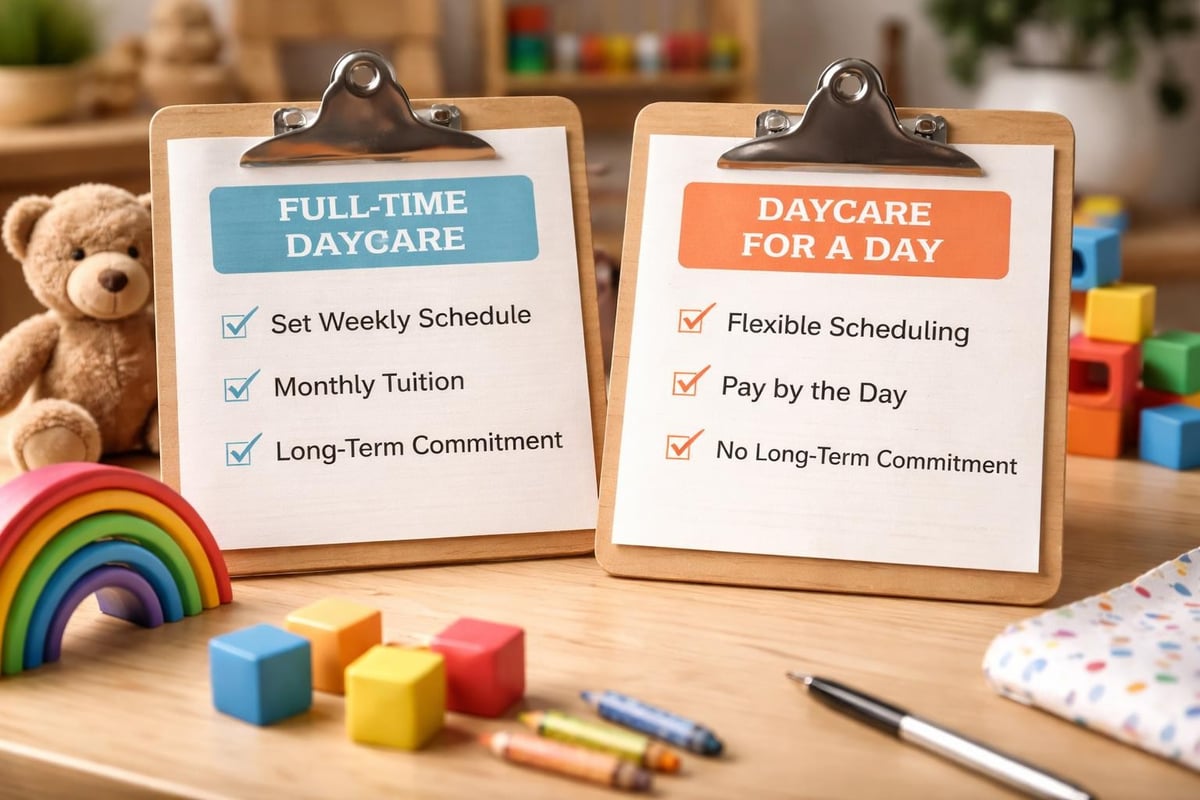
The primary distinction lies in commitment and flexibility. Traditional daycare typically requires enrollment contracts, set schedules, and payment for reserved slots regardless of attendance. Drop-in services operate differently:
- No long-term contracts or monthly commitments required
- Payment only for days used, making it cost-effective for occasional needs
- Advanced booking options that allow planning without permanent slots
- Flexible cancellation policies that accommodate changing schedules
- Mixed-age or specialized groupings that differ from traditional classroom structures
Many providers now offer hybrid models. Childtime offers a flexible Drop-In Care program that allows parents to purchase days in advance and use them throughout the year, combining the benefits of both approaches.
Who Benefits Most from Single-Day Childcare
Daycare for a day serves diverse family situations that don't align with conventional childcare models. Understanding which circumstances benefit most helps parents make informed decisions about their childcare strategies.
Parents with Non-Traditional Work Schedules
Shift workers, healthcare professionals, and service industry employees often face rotating schedules that change weekly or monthly. Committing to five full days of care when you only work three irregular days creates unnecessary expense. Single-day options allow these families to purchase exactly what they need.
Freelancers and gig economy workers experience similar challenges. Project-based work means busy periods followed by lighter weeks. Paying for full-time care during slow periods strains budgets unnecessarily.
Families Managing Special Circumstances
Several specific situations make daycare for a day particularly valuable:
| Situation | How Single-Day Care Helps | Typical Duration |
|---|---|---|
| Medical appointments | Childcare during doctor visits or procedures | 2-4 hours |
| School breaks | Coverage during holidays when regular programs close | Full days |
| Emergency coverage | Backup when regular provider is unavailable | Variable |
| Parental education | Care during classes or training sessions | Half or full days |
| Interview needs | Professional childcare for job-seeking parents | 2-6 hours |
Stay-at-home parents occasionally need personal time for errands, self-care, or appointments where children cannot attend. Rather than enrolling in ongoing programs, they can utilize occasional day services for these specific needs.
Selecting the Right Provider for Temporary Care
Choosing a daycare for a day requires different considerations than selecting a traditional childcare center. Quality, safety, and convenience remain paramount, but additional factors come into play with drop-in arrangements.
Licensing and Safety Standards
All childcare facilities, regardless of their scheduling model, must meet state licensing requirements. Home-based providers like Step by Step Care often provide more personalized attention in smaller group settings while maintaining all necessary certifications and safety protocols.
Verify these essential credentials before using any daycare for a day service:
- Current state childcare licensing
- Staff background checks and training certifications
- Proper child-to-staff ratios maintained
- Health and safety inspection records
- Liability insurance coverage
- Emergency preparedness plans
The benefits of selecting home-based daycare programs include individualized attention, flexible hours, and more intimate learning environments that can be particularly beneficial for children in temporary care situations.
Evaluating Program Quality and Activities
Even for temporary care, children deserve enriching experiences. Quality programs structure their days with age-appropriate activities, learning opportunities, and social interaction regardless of attendance frequency.

Ask potential providers about their daily structure:
- What activities are planned for different age groups?
- How are drop-in children integrated with regularly enrolled students?
- What meals and snacks are provided?
- How much outdoor or physical activity time is included?
- Are educational components incorporated throughout the day?
La Petite Academy provides a Flex Care program that enables parents to buy prepaid days while maintaining access to their full curriculum and enrichment activities.
Booking and Preparation Strategies
Successfully utilizing daycare for a day requires planning and preparation to ensure smooth transitions for both parents and children. Understanding booking systems and preparing your child appropriately maximizes the benefits of flexible care.
Advance Reservation Systems
Most quality providers require advance notice for drop-in services. Same-day availability varies by location and demand, but planning ahead secures your preferred times and ensures adequate staffing.
Common booking structures include:
- Credit packages: Purchase blocks of days or hours at discounted rates
- Pay-per-use: Reserve and pay for individual days as needed
- Membership models: Monthly fees that include certain drop-in hours
- Prepaid programs: Buy future days at current rates, use them flexibly
The Young School offers Flex Care with days purchased ahead of time, accommodating various schedules and unexpected needs. This approach provides financial predictability while maintaining scheduling flexibility.
Preparing Your Child for Drop-In Experiences
Children thrive on routine, so occasional daycare visits require thoughtful preparation. Younger children especially benefit from advance discussion about what to expect during their day away from home.
Preparation checklist for parents:
- Discuss the upcoming day positively several times beforehand
- Visit the facility together before the first drop-in day if possible
- Pack familiar comfort items (favorite blanket, stuffed animal)
- Provide detailed written instructions about routines, allergies, and preferences
- Arrive early to allow gradual transition and settle-in time
- Maintain consistent drop-off and pickup rituals
Home childcare settings often ease this transition. The intimate environment and consistent caregiver relationships help children feel more secure even during occasional visits. Reviewing parent testimonials can provide insight into how other families have successfully navigated occasional care arrangements.
Cost Considerations and Budgeting
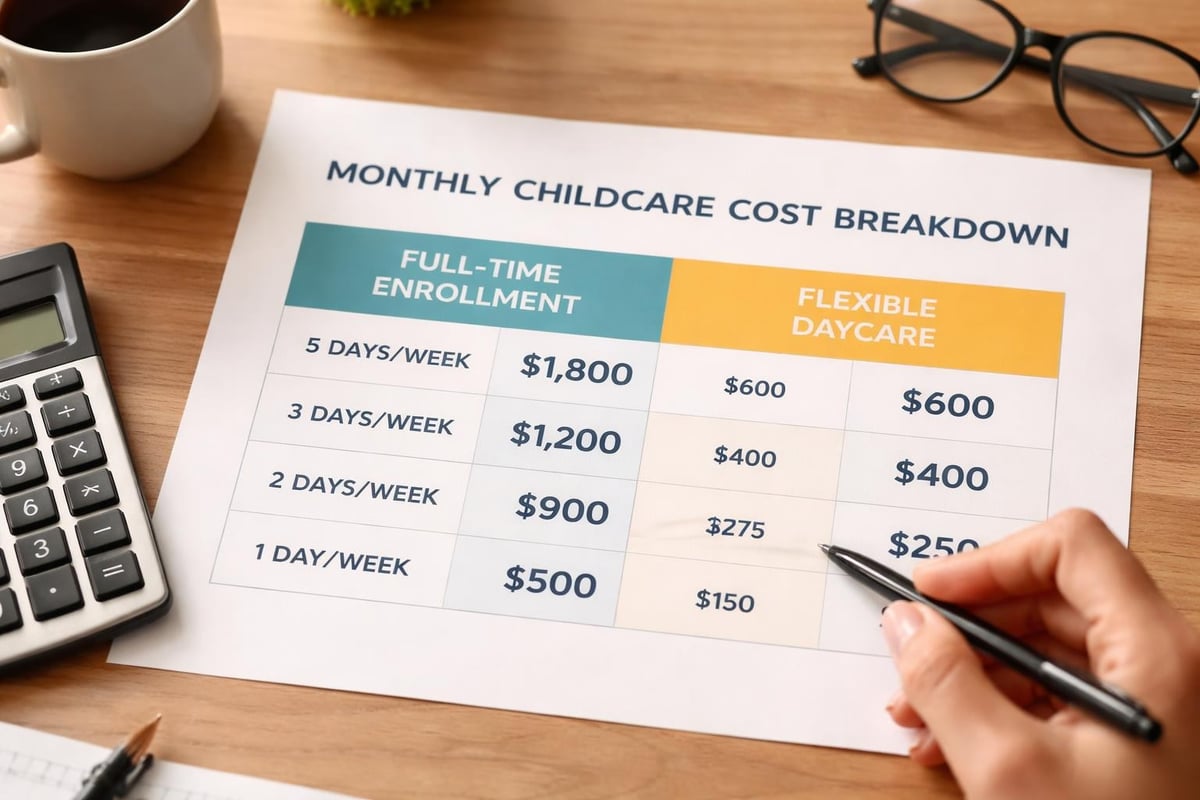
Understanding the financial aspects of daycare for a day helps families budget appropriately and compare it against traditional childcare expenses. While hourly or daily rates may appear higher than monthly tuition averages, the total cost often proves more economical for families with limited needs.
Pricing Structures Across Different Models
Drop-in childcare pricing varies significantly based on location, provider type, and service level. National averages for daycare for a day typically range from $40 to $75 per full day, though premium services in metropolitan areas may charge more.
| Provider Type | Typical Daily Rate | Advantages | Considerations |
|---|---|---|---|
| Home-based care | $35-$55 | Lower cost, personalized attention | Limited availability |
| Chain centers | $50-$80 | Consistent standards, multiple locations | Higher rates, less flexibility |
| Specialized drop-in | $45-$70 | Purpose-built for flexibility | May lack curriculum depth |
| Nanny shares | $30-$50 per family | Familiar environment | Requires coordination |
When comparing costs, calculate your actual monthly childcare needs. If you only require three days per month, paying $150-$225 for drop-in care makes significantly more financial sense than $800-$1,200 for full-time enrollment you won't fully utilize.
Hidden Savings and Value Propositions
Beyond the obvious comparison of daily rates versus monthly tuition, daycare for a day offers additional financial advantages that aren't immediately apparent.
Consider these value factors when evaluating options:
- No registration fees or annual enrollment costs at many drop-in facilities
- Eliminated payment for unused days during family vacations or illnesses
- Reduced supply costs since programs typically provide meals and materials
- Avoided last-minute babysitter premiums when regular arrangements fall through
Comparing drop-in versus regular daycare models reveals different revenue structures and operational approaches that directly impact family expenses and provider sustainability.
Maximizing Developmental Benefits in Short-Term Settings
Parents sometimes worry that occasional childcare won't provide the same developmental advantages as consistent, full-time programs. However, even single-day experiences offer valuable opportunities for growth, socialization, and learning when programs are thoughtfully designed.
Social and Emotional Development Opportunities
Children benefit from social interaction regardless of attendance frequency. Even occasional exposure to group settings helps develop critical skills:
- Peer interaction: Learning to share, take turns, and cooperate with other children
- Separation practice: Building independence and confidence away from parents
- Authority recognition: Following instructions from caregivers beyond family members
- Adaptability skills: Adjusting to new environments and routines
- Emotional regulation: Managing feelings in different social contexts
The benefits of sending children to daycare include socialization, routine development, and professional care that apply equally to occasional attendance when quality programs are selected.
Cognitive and Physical Growth Through Structured Activities
Quality daycare for a day programs incorporate age-appropriate learning activities that stimulate cognitive development during each visit. Children don't need daily attendance to benefit from enrichment opportunities.
Key developmental areas addressed in single-day programs:
- Language development through songs, stories, and conversation
- Fine motor skills via crafts, puzzles, and manipulative toys
- Gross motor abilities during outdoor play and movement activities
- Cognitive growth through problem-solving games and exploration
- Creative expression using art materials and imaginative play
Home-based providers often excel at incorporating developmental activities into natural daily routines, creating learning moments throughout the day rather than relying solely on structured lesson times.
Navigating Common Challenges and Solutions
Parents utilizing daycare for a day occasionally encounter obstacles that differ from those faced in traditional childcare arrangements. Understanding potential challenges and their solutions helps families maximize the benefits of flexible care.
Managing Inconsistent Provider Availability
Peak demand periods-school holidays, summer months, and Mondays-can create availability constraints. Parents may find their preferred daycare for a day options fully booked during high-need times.
Strategies to ensure access:
- Book recurring needs weeks or months in advance
- Establish relationships with multiple backup providers
- Purchase prepaid packages during low-demand periods
- Consider flexible childcare options like Moxi that offer no minimum commitment
- Join waitlists and cancellation notification systems
Building relationships with home childcare providers often provides more flexibility. Smaller operations can sometimes accommodate last-minute requests that larger centers cannot due to strict ratio requirements.
Addressing Child Adjustment Concerns
Some children struggle with inconsistent care arrangements, particularly those who thrive on routine. Parents notice behavioral changes, separation anxiety, or reluctance to attend occasional daycare visits.
Solutions for smoother transitions include:
- Maintaining the same provider for all drop-in needs rather than rotating facilities
- Increasing visit frequency initially to build familiarity and comfort
- Creating consistent home routines around daycare days
- Communicating openly with providers about your child's specific needs and preferences
- Celebrating daycare days positively without showing parental anxiety
Viewing photos and updates through provider galleries helps children recall positive experiences and builds anticipation for return visits.
Integrating Occasional Care into Your Family Routine
Successfully incorporating daycare for a day into your family's life requires intentional planning and communication. Families who approach flexible childcare strategically find it seamlessly supports their lifestyle rather than creating additional stress.
Creating Sustainable Scheduling Patterns
Even flexible arrangements benefit from predictability where possible. Rather than completely random usage, consider establishing semi-regular patterns that work for your family's unique situation.
Effective scheduling approaches include:
- Booking the same day each week during busy work periods
- Planning quarterly blocks around anticipated project deadlines
- Coordinating with a partner's rotating schedule for predictable coverage
- Utilizing monthly planning sessions to book the upcoming month's needs
- Keeping a running list of potential care needs for advance booking
For families in the Northern Virginia area, exploring local daycare options provides region-specific information about available programs and scheduling possibilities.
Communication Best Practices with Providers
Strong provider relationships enhance the daycare for a day experience for everyone involved. Clear, proactive communication prevents misunderstandings and ensures your child receives consistent, high-quality care.
Essential information to share with providers:
| Category | Details to Provide | Update Frequency |
|---|---|---|
| Health information | Allergies, medications, conditions | As changes occur |
| Developmental updates | New skills, current challenges | Each visit |
| Behavioral notes | Sleep patterns, eating habits, fears | Weekly or as needed |
| Schedule changes | Pickup time modifications | Immediately |
| Emergency contacts | Updated phone numbers, authorized adults | Quarterly review |
Providers like those at Step by Step Care appreciate detailed information that helps them deliver personalized attention aligned with your child's specific needs and your family's values.
Evaluating Whether This Model Fits Your Family
Daycare for a day isn't the optimal solution for every family. Honest assessment of your specific circumstances, priorities, and childcare needs determines whether this flexible approach serves you better than traditional arrangements.
Assessing Your Childcare Need Frequency
Calculate your actual monthly childcare requirements before committing to any arrangement. Track your schedule over several weeks, noting when you genuinely need professional childcare versus when informal options suffice.
Questions to guide your evaluation:
- How many days per month do you require childcare?
- Are these needs predictable or variable week-to-week?
- Do you have reliable backup options for emergency situations?
- Would your child benefit from more frequent socialization?
- Can your budget accommodate flexibility versus locked-in costs?
Families needing care fewer than 10-12 days monthly often find per-day arrangements more economical. Those requiring consistent weekly care typically benefit from traditional enrollment despite paying for occasional unused days.
Weighing Convenience Against Consistency
The convenience of paying only for what you use must balance against the benefits of routine and familiarity that consistent attendance provides. This calculation varies by child temperament, family values, and practical logistics.
Some children adapt easily to varied schedules and different caregivers, finding occasional daycare experiences exciting and enriching. Others feel most secure with predictable routines and the same faces daily. Neither approach is inherently superior-the right choice depends on your individual child's needs and your family's circumstances.
Exploring different childcare service options helps families understand the full spectrum of available arrangements and identify which best aligns with their priorities.
Daycare for a day offers modern families the flexibility to access professional childcare exactly when needed, without the commitment and expense of full-time enrollment. Whether you're managing irregular work schedules, seeking occasional respite care, or navigating special circumstances, this model provides quality options that adapt to your life. If you're looking for personalized, home-based care in Northern Virginia that understands the unique needs of families requiring flexible arrangements, Step by Step Care provides the professional attention and nurturing environment your child deserves. Contact us today to discuss how we can support your family's specific childcare needs.


