

Little Ones Daycare: A Complete Guide for Parents
Selecting the right care environment for your child represents one of the most significant decisions parents face during early childhood years. Little ones daycare facilities provide structured educational experiences, socialization opportunities, and professional supervision that support children's growth during critical developmental periods. Understanding what distinguishes exceptional childcare programs from standard options empowers families to make informed choices that align with their values and their children's unique needs.
Understanding the Core Benefits of Quality Early Childhood Programs
Quality early childhood education delivers measurable advantages that extend far beyond basic supervision. Research from the National Institute for Early Education Research demonstrates that children enrolled in high-quality programs show improved cognitive development, stronger social skills, and better academic preparation compared to peers without structured care experiences.
Cognitive Development and School Readiness
Little ones daycare programs implement age-appropriate curricula that introduce foundational concepts through play-based learning. Children develop pre-literacy skills through storytelling sessions, build mathematical thinking through counting games, and enhance problem-solving abilities through interactive activities.
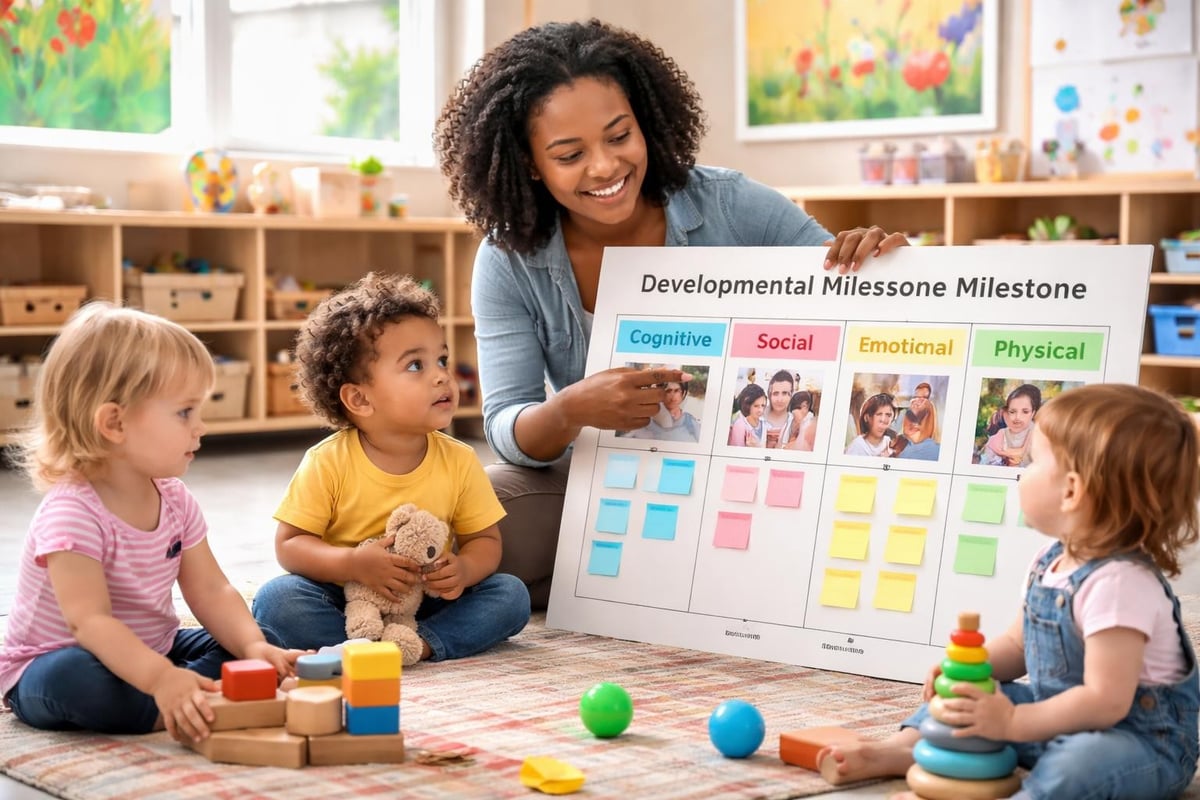
Key developmental milestones supported in quality programs include:
- Language acquisition through conversation and vocabulary building
- Fine motor skills development via arts, crafts, and manipulative toys
- Gross motor advancement through structured outdoor play
- Critical thinking cultivation using puzzles and discovery activities
- Emotional regulation practice in group settings
The structured environment helps children establish routines, follow directions, and develop independence. These competencies create a strong foundation for kindergarten entry and long-term academic success.
Social and Emotional Growth
Peer interaction in little ones daycare settings teaches children essential social competencies they cannot develop in isolated home environments. Daily engagement with age-matched peers provides natural opportunities to practice sharing, cooperation, conflict resolution, and empathy.
Children learn to navigate social hierarchies, form friendships, and communicate their needs effectively. Professional caregivers guide these interactions, modeling appropriate behavior and intervening when necessary to ensure positive experiences. This supported socialization builds confidence and prepares children for increasingly complex social environments throughout their educational journey.

Essential Safety Standards Every Parent Should Verify
Safety represents the non-negotiable foundation of quality childcare. Before enrolling your child in any little ones daycare program, parents should thoroughly evaluate safety protocols, facility design, and staff qualifications to ensure comprehensive protection.
Physical Environment and Security Measures
A safe facility features multiple layers of protection designed to prevent accidents and unauthorized access. Best practices for daycare child safety include controlled entry systems, visual supervision capabilities, and hazard-free spaces.
| Safety Category | Required Standards | Verification Method |
|---|---|---|
| Facility Access | Locked doors, sign-in systems, visitor protocols | Tour during pickup time |
| Playground Equipment | Age-appropriate, well-maintained, safety surfacing | Physical inspection |
| Indoor Hazards | Covered outlets, secured furniture, gated stairs | Room-by-room review |
| Emergency Exits | Clearly marked, unobstructed, functional | Walk emergency routes |
| First Aid Supplies | Fully stocked, accessible, current medications | Request to view kits |
The physical layout should provide clear sightlines for caregivers to monitor children continuously. Outdoor play areas require appropriate fencing, impact-absorbing surfaces beneath climbing structures, and regular equipment inspections to identify wear or damage.
Staff Qualifications and Background Checks
Professional caregivers form the human infrastructure of safe little ones daycare environments. Every staff member should complete comprehensive background checks, maintain current CPR and first aid certifications, and demonstrate early childhood education training.
Essential staff qualifications include:
- Criminal background clearance at state and federal levels
- Child abuse registry verification
- Current pediatric first aid and CPR certification
- Minimum educational requirements in early childhood development
- Ongoing professional development participation
Parents should inquire about staff-to-child ratios, which vary by age group. Younger children require more intensive supervision, with ratios typically ranging from 1:4 for infants to 1:10 for preschoolers. Lower ratios enable more individualized attention and faster emergency response.
Evaluating Program Quality and Educational Approach
Not all little ones daycare facilities offer equivalent educational experiences. Understanding different pedagogical approaches helps parents identify programs aligned with their priorities and children's learning styles.
Curriculum Philosophy and Daily Structure
Quality programs balance structured learning activities with free play opportunities. The curriculum should address multiple developmental domains through integrated activities that feel natural and enjoyable to young children.
A typical day might include circle time for group learning, center-based activities allowing individual exploration, outdoor play for physical development, quiet rest periods, and meal times that teach self-help skills. Effective daycare experiences incorporate varied activities that maintain engagement while preventing overstimulation.
Parents should request detailed daily schedules and sample lesson plans. Strong programs document learning objectives, assessment methods, and individualized goal-setting for each child. This intentional planning distinguishes educational childcare from basic supervision.
Communication and Family Partnership
Transparent communication systems keep parents informed about their children's daily experiences, developmental progress, and any concerns requiring attention. Little ones daycare programs should provide regular updates through multiple channels.
Modern facilities often utilize digital platforms that share photos, activity descriptions, meal records, and developmental observations in real-time. Scheduled parent-teacher conferences offer opportunities for in-depth discussions about milestones, challenges, and collaborative strategies to support growth at home and in care.
Partnership extends beyond information sharing to include parent involvement opportunities. Quality programs welcome family participation in special events, volunteer activities, and decision-making processes that shape program policies and procedures. At Step by Step Care, maintaining strong communication with families ensures consistent support across all environments where children learn and grow.

Health and Wellness Protocols That Protect Children
Illness prevention and health management represent critical components of responsible little ones daycare operation. Comprehensive policies protect individual children while maintaining community health across the entire program.
Illness Policies and Infection Control
Clear illness policies establish expectations for when children should remain home, how quickly parents must retrieve sick children, and requirements for medical clearance before returning. These guidelines prevent disease transmission while acknowledging the reality that young children experience frequent minor illnesses.
Standard health protocols include:
- Temperature checks upon arrival
- Exclusion criteria for contagious conditions
- Handwashing requirements for children and staff
- Regular sanitization of toys and surfaces
- Diapering procedures that prevent cross-contamination
- Food handling safety for meals and snacks
Programs should maintain detailed health records for each child, including immunization documentation, allergy information, emergency contacts, and medication administration permissions. Safety measures parents should know extend to nutrition policies that accommodate dietary restrictions while providing balanced, age-appropriate meals.
Emergency Preparedness and Response Plans
Comprehensive emergency plans address potential scenarios ranging from medical incidents to natural disasters. Little ones daycare facilities should conduct regular drills, maintain current emergency supplies, and train all staff in response protocols.
Parents deserve transparency about evacuation routes, lockdown procedures, emergency communication methods, and backup care arrangements during facility closures. Programs should document and share these plans, updating families about any changes or improvements to safety systems.
The Long-Term Impact of Quality Early Education
Investment in quality little ones daycare extends far beyond immediate childcare needs. UNESCO research on early childhood care and education reveals that quality programs generate lifelong benefits for participants, affecting educational attainment, career success, and overall well-being.
Academic Achievement and Career Outcomes
Children who attend high-quality early education programs demonstrate stronger academic performance throughout their school years. They exhibit better reading skills, mathematical proficiency, and overall scholastic achievement compared to peers without quality early learning experiences.
These advantages compound over time. The Federal Reserve Bank of Cleveland’s analysis of early childhood education economics shows that participants experience higher graduation rates, increased college enrollment, and improved career prospects. The return on investment benefits not only individual families but society through reduced public assistance needs and increased tax contributions.
Social Mobility and Reduced Inequality
Quality early education serves as a powerful equalizer, providing children from all backgrounds with foundational skills that enable future success. The Brookings Institution’s research on early childhood education demonstrates that effective programs reduce achievement gaps and promote social mobility across socioeconomic groups.
| Outcome Measure | Children With Quality Care | Children Without Quality Care |
|---|---|---|
| Kindergarten Readiness | 85% meet benchmarks | 58% meet benchmarks |
| 3rd Grade Reading Proficiency | 72% proficient | 51% proficient |
| High School Graduation | 89% graduate | 73% graduate |
| College Attendance | 64% attend | 42% attend |
These disparities highlight the transformative potential of accessible, high-quality little ones daycare programs. When families across all income levels access excellent early education, children gain equitable opportunities for success regardless of their starting circumstances.
Selecting the Right Provider for Your Family
Choosing among available little ones daycare options requires systematic evaluation of multiple factors. Parents should develop a structured approach to touring facilities, interviewing staff, and assessing program fit with family needs.
Creating Your Evaluation Checklist
Develop a comprehensive checklist covering all priority areas before beginning your search. This tool enables consistent comparison across multiple providers and prevents important considerations from being overlooked during emotionally charged decision-making.
Essential evaluation categories include:
- Licensing status and compliance history
- Staff qualifications, training, and turnover rates
- Curriculum approach and daily schedule structure
- Safety protocols and emergency procedures
- Health and illness policies
- Communication systems and family involvement
- Physical environment and available resources
- Enrollment capacity and current availability
Schedule tours during regular operating hours when you can observe typical activities and interactions. Notice how staff members engage with children, whether the environment appears clean and organized, and how children respond to caregivers. Trust your instincts about the overall atmosphere and whether it feels welcoming and nurturing.
Questions That Reveal Program Quality
Prepared questions help parents gather essential information while demonstrating their engagement and priorities to potential providers. Beyond basic logistics, inquire about philosophy, problem-solving approaches, and continuous improvement efforts.
Ask about staff professional development opportunities, curriculum adaptation for individual learning styles, and strategies for managing challenging behaviors. Request references from current families and inquire about parent satisfaction surveys or feedback mechanisms. Quality programs welcome these questions and provide detailed, thoughtful responses that demonstrate their commitment to excellence.
The team at Step by Step Care understands that thorough evaluation helps families identify the best fit for their unique circumstances. Transparency throughout the selection process builds trust and establishes the foundation for successful long-term partnerships.
Financial Considerations and Planning Strategies
Little ones daycare represents a significant financial investment for most families. Understanding costs, available assistance programs, and budgeting strategies helps parents secure quality care while managing household finances effectively.
Understanding Cost Structures and Payment Options
Childcare costs vary considerably based on geographic location, program type, child age, and service hours. Urban areas typically charge higher rates than rural communities, while infant care costs more than preschool programs due to lower staff-to-child ratios.
Full-time care generally costs less per hour than part-time arrangements. Some programs offer sibling discounts, flexible scheduling options, or reduced rates for extended enrollment commitments. Parents should inquire about all available payment structures to identify the most cost-effective approach for their specific needs.
Assistance Programs and Tax Benefits
Multiple resources help families afford quality little ones daycare despite high costs. State childcare subsidy programs provide financial assistance to eligible low and moderate-income families. These programs typically base eligibility on household income, family size, and work or education requirements.
Federal tax benefits include the Child and Dependent Care Credit, which allows parents to claim a percentage of qualifying childcare expenses when filing annual returns. Employer-sponsored Dependent Care Flexible Spending Accounts enable families to pay childcare costs with pre-tax dollars, reducing overall tax liability while making care more affordable.
Research from First Focus on Children confirms that public investment in early learning generates substantial returns through improved outcomes and reduced long-term costs. Advocacy for expanded assistance programs continues as policymakers recognize the economic and social benefits of accessible quality childcare.
Transition Planning and Ongoing Support
Successfully integrating your child into a new little ones daycare environment requires thoughtful preparation and ongoing attention. Strategic transition planning reduces anxiety for both children and parents while establishing positive relationships with caregivers.
Preparing Your Child for the Transition
Gradual exposure helps young children adjust to new environments, routines, and caregivers. Schedule multiple pre-enrollment visits where your child can explore the space, meet teachers, and participate in brief activities while you remain present. This familiarization reduces fear of the unknown and creates positive associations with the new setting.
Discuss the upcoming change using age-appropriate language that emphasizes exciting aspects while acknowledging normal feelings. Read books about starting daycare, practice separation through short outings with trusted relatives, and establish consistent goodbye routines that provide predictability during drop-off.
Supporting Ongoing Adjustment and Development
Monitor your child's adjustment through the initial weeks and months, maintaining open communication with caregivers about observations at home and in care. Some regression in sleep, eating, or behavior is normal as children adapt to new demands and stimulation levels.
Partner with teachers to reinforce learning at home, extending classroom concepts through everyday activities and conversations. Attend parent events, volunteer when possible, and engage with other families to build community connections that enrich your child's experience. Reviewing parent testimonials helps normalize common experiences and provides perspective on typical adjustment timelines.
The Provider's Perspective on Quality Care
Understanding what distinguishes exceptional providers helps parents recognize quality when evaluating little ones daycare options. Professional caregivers committed to excellence demonstrate specific characteristics and practices that reflect their dedication to children's well-being.
Commitment to Professional Growth
Outstanding providers pursue ongoing education, stay current with research on child development, and continuously refine their practices based on new knowledge. They participate in professional organizations, attend conferences, and engage in peer learning communities that challenge them to improve.
This commitment extends to seeking and incorporating family feedback, conducting regular program evaluations, and implementing quality improvement initiatives. They view their work as a profession requiring specialized knowledge and skills rather than simply a job providing basic supervision.
Building Meaningful Relationships
Quality caregivers invest in knowing each child as an individual with unique interests, learning styles, communication preferences, and developmental trajectories. They observe carefully, document progress systematically, and adjust their approaches to meet evolving needs.
These relationships extend to families, recognizing parents as children's first teachers and essential partners in supporting development. Learning more about the providers caring for your child helps you understand their qualifications, experience, and approach to early education.
Selecting quality little ones daycare requires careful evaluation of safety standards, educational approaches, staff qualifications, and family partnership practices. The research clearly demonstrates that high-quality early education generates lifelong benefits for children while supporting working families and strengthening communities. Step by Step Care provides home-based childcare that combines professional expertise with a nurturing environment where children thrive. Contact us today to learn how we support your child's development during these critical early years.


