

Best Day Care for Infants: Essential Guide 2026
Choosing the best day care for infants represents one of the most significant decisions parents make during their child's early years. With infants requiring specialized attention, nurturing relationships, and developmentally appropriate care, finding a provider that meets both your family's needs and your baby's developmental requirements takes careful research and consideration. Whether you're exploring traditional daycare centers or home-based childcare options, understanding the key quality indicators will empower you to make an informed choice that supports your infant's growth and provides you with peace of mind.
Understanding Infant Developmental Needs
Infants experience rapid growth during their first year, making this period crucial for brain development and emotional security. The best day care for infants prioritizes responsive caregiving that supports these developmental milestones.
Critical First-Year Milestones
During the first twelve months, babies develop foundational skills across multiple domains. Physical development includes rolling over, sitting, crawling, and potentially taking first steps. Cognitive development involves exploring objects, recognizing familiar faces, and beginning to understand cause and effect.
Emotional development centers on forming secure attachments with consistent caregivers. Language development starts with cooing and babbling, progressing toward first words by the end of the first year.
Quality infant care providers understand these milestones and create environments that support each developmental area. They incorporate tummy time for physical development, provide age-appropriate toys for cognitive exploration, and establish predictable routines that build emotional security.

Essential Quality Indicators
Identifying the best day care for infants requires evaluating specific quality markers that distinguish exceptional programs from adequate ones.
Low Child-to-Caregiver Ratios
Infant rooms should maintain lower ratios than other age groups. Many states require no more than four infants per caregiver, though the best programs often exceed these minimum standards.
Optimal ratio benefits include:
- More individualized attention for each baby
- Faster response times to infant needs
- Stronger caregiver-infant bonds
- Reduced stress for both babies and caregivers
- Better monitoring of developmental progress
When visiting potential providers, observe how caregivers interact with infants during peak activity times. Are babies being held and comforted promptly? Do caregivers engage in one-on-one interactions throughout the day?
Licensing and Accreditation Standards
Proper licensing and accreditation serve as fundamental quality markers. State licensing ensures facilities meet minimum health, safety, and operational standards. Accreditation from organizations like the National Association for the Education of Young Children (NAEYC) indicates programs voluntarily meet higher quality benchmarks.
| Credential Type | What It Verifies | Why It Matters |
|---|---|---|
| State License | Basic safety, health, staff background checks | Legal requirement, baseline protection |
| NAEYC Accreditation | Curriculum quality, teacher qualifications, family engagement | Voluntary higher standards |
| CPR/First Aid Certification | Emergency response capabilities | Immediate safety response |
| Specialized Infant Training | Infant development knowledge, safe sleep practices | Age-specific expertise |
Always verify current licensing status and ask about any past violations or corrective actions. The California Department of Education provides excellent guidance on evaluating childcare credentials.
Evaluating the Physical Environment
The physical space where your infant spends their day significantly impacts their safety, comfort, and developmental opportunities.
Safety Protocols and Cleanliness
Walk through infant areas with a critical eye for safety hazards. Outlets should have covers, furniture should be stable and age-appropriate, and cleaning supplies must be stored securely away from children's reach.
Cleanliness extends beyond visual tidiness. Ask about sanitization schedules for toys, changing areas, and feeding equipment. The best facilities maintain detailed cleaning logs and follow strict protocols for diaper changing to prevent illness spread.
Key safety elements to observe:
- Secure sleep areas with firm, bare cribs
- Proper temperature control in infant rooms
- Adequate ventilation and natural lighting
- Safe outdoor spaces with shade
- Clear emergency evacuation plans
Age-Appropriate Learning Spaces
Even tiny babies benefit from thoughtfully designed environments. Quality infant rooms include areas for different activities: quiet spaces for sleeping, engaging areas with age-appropriate toys, and comfortable spots for feeding and cuddling.
Quality child care environments incorporate sensory experiences appropriate for infant development. Mirrors at floor level encourage self-awareness, contrasting colors and patterns stimulate visual development, and safe objects with different textures promote tactile exploration.
Caregiver Qualifications and Interaction Styles
The people caring for your infant matter more than any other factor when determining the best day care for infants.
Educational Background and Experience
Research consistently shows that caregiver education correlates with quality care. Look for providers where infant room teachers have early childhood education degrees or specialized infant-toddler credentials.
Experience working specifically with infants adds practical knowledge to theoretical understanding. Caregivers who've spent years with babies develop intuition about infant communication, recognize subtle signs of discomfort or illness, and manage multiple infants' needs efficiently.
At Step by Step Care, our caregivers bring both formal training and hands-on experience to create nurturing environments where infants thrive. You can learn more about our team's qualifications and approach to infant care.
Responsive Caregiving Practices
Responsive caregiving means caregivers consistently and appropriately respond to infant cues. When babies cry, quality caregivers investigate the cause and provide comfort. When babies show interest in objects or activities, caregivers engage and expand on that interest.
First Things First explains how close, consistent relationships with responsive caregivers form the foundation of quality infant care. During visits, watch how caregivers interact during routine care moments like diaper changes and feeding times. Do they make eye contact, talk to babies, and treat these moments as opportunities for connection?

Daily Schedules and Routines
Structured yet flexible daily routines provide infants with the predictability they need while accommodating individual schedules.
Balancing Structure and Flexibility
The best day care for infants maintains consistent daily rhythms while respecting each baby's unique needs. Newborns and young infants follow individual feeding and sleeping schedules based on their home routines.
As babies grow, programs gradually introduce more structured group activities while remaining responsive to individual needs. A four-month-old might need three naps while a ten-month-old needs only two.
Sample daily routine components:
- Arrival and greeting time with individual attention
- Indoor and outdoor play opportunities
- Feeding times aligned with home schedules
- Multiple rest periods in safe sleep environments
- Diaper changes with one-on-one interaction
- Sensory exploration activities
- Language-rich interactions throughout the day
- Departure and parent communication
For detailed examples of how quality programs structure infant days, explore our infant daycare daily schedule resource.
Communication About Your Baby's Day
Excellent programs maintain detailed communication about your infant's daily experiences. This should include feeding times and amounts, diaper changes, sleep duration, developmental observations, and mood notes.
Many facilities use daily reports or apps that provide real-time updates. This communication helps you understand your baby's day and ensures continuity between home and care settings.
Nutrition and Feeding Practices
Proper nutrition during infancy supports healthy growth and development, making feeding practices a crucial evaluation factor.
Supporting Breastfeeding Families
Programs supporting breastfeeding families provide designated spaces for nursing, proper storage for breast milk, and staff trained in safe handling of expressed milk. They should follow your instructions precisely regarding storage, warming, and feeding schedules.
Ask about bottle preparation practices, including who prepares bottles, how they're labeled, and procedures preventing mix-ups between babies.
Introduction to Solid Foods
As infants approach six months, quality programs coordinate with families about introducing solid foods. They should never introduce new foods without parental permission and should follow family preferences regarding organic foods, allergen introduction timing, and dietary restrictions.
| Feeding Practice | Quality Standard | Red Flag |
|---|---|---|
| Breast milk handling | Labeled storage, proper refrigeration, documented feeding times | Unlabeled bottles, unclear procedures |
| Formula preparation | Fresh bottles per feeding, correct ratio, appropriate temperature | Batch preparation, room temperature storage |
| Solid food introduction | Family consultation, allergy awareness, developmental readiness | Introducing foods without permission |
| Mealtime environment | Held for bottle feeding, supportive seating for solids, calm atmosphere | Propped bottles, rushed feeding |
Health and Safety Policies
Comprehensive health and safety policies protect your infant and demonstrate professional program management.
Illness Prevention and Management
WebMD’s childcare guide emphasizes the importance of clear illness policies. Quality programs maintain strict policies about when children should stay home, how they handle mild illnesses during the day, and procedures for contacting parents about health concerns.
Ask about immunization requirements for enrolled children and staff. While some programs accommodate families with varying vaccination philosophies, they should clearly communicate policies so you can make informed decisions.
Essential health policies include:
- Temperature thresholds requiring exclusion
- Procedures for administering medications
- Hand washing protocols for staff and children
- Sanitization schedules for toys and surfaces
- Sick leave policies encouraging staff to stay home when ill
Emergency Preparedness
Every facility should have detailed emergency plans covering medical emergencies, natural disasters, and facility evacuations. Staff should maintain current CPR and first aid certification specific to infants.
Visit the parent reviews section to see how families evaluate safety practices at different programs.
Building Family-Provider Partnerships
The relationship between families and caregivers significantly impacts infant care quality and family satisfaction.
Open Communication Channels
The best day care for infants establishes multiple communication methods. Daily reports provide immediate information, while regular conferences allow deeper conversations about development and concerns.
Quality programs welcome questions and treat parents as partners in care. They should encourage you to call during the day, visit during operating hours, and participate in program activities.
Transition and Adaptation Support
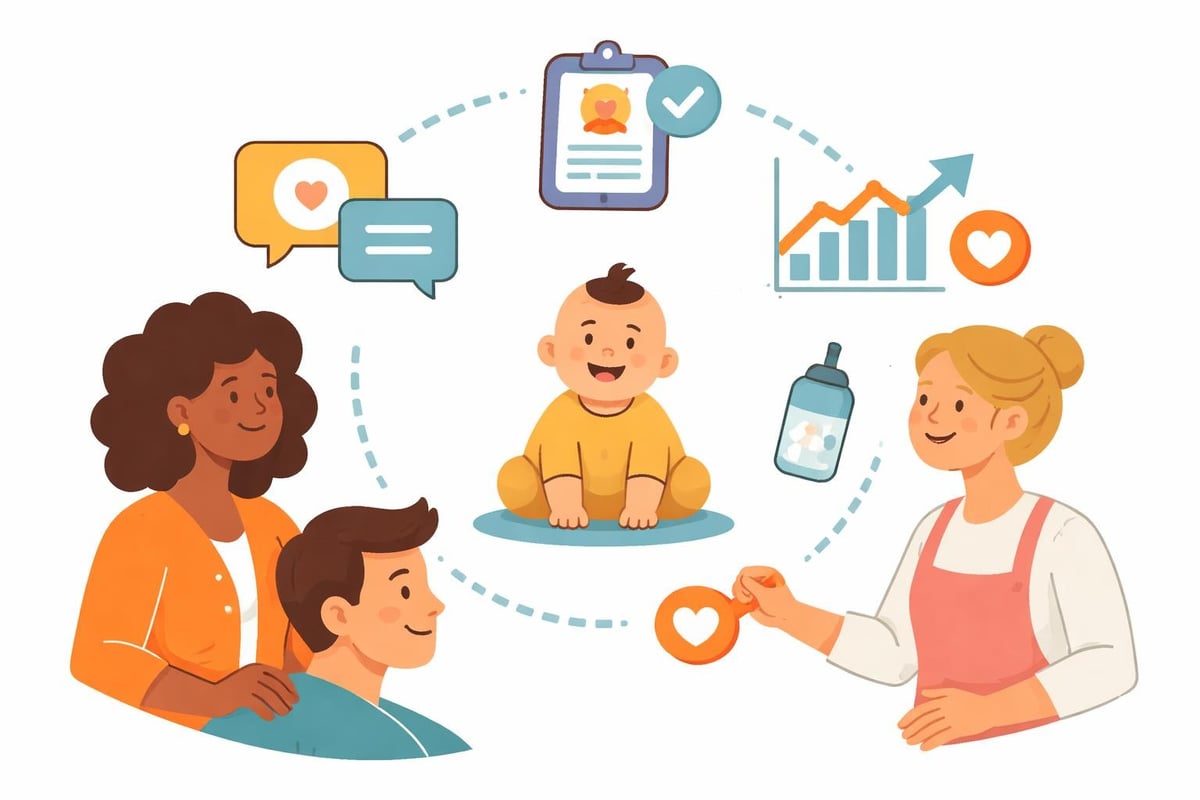
Starting daycare represents a major transition for infants and families. Excellent programs facilitate this transition through gradual entry schedules, allowing parents to stay during initial visits, and providing extra support during adjustment periods.
Home-Based Versus Center-Based Care
Understanding different care models helps you determine which type of setting best matches your family's needs and values.
Benefits of Home-Based Childcare
Home-based programs, like those offered through in-home childcare providers, create intimate, family-like environments. These settings typically include mixed-age groups, allowing infants to interact with older children who model skills and behaviors.
Smaller group sizes mean more individualized attention and greater flexibility in scheduling and routines. Many families appreciate the consistency of the same caregiver throughout their child's early years.
Home-based care advantages:
- Lower child-to-caregiver ratios
- Homelike, comfortable atmosphere
- Greater schedule flexibility
- Consistent primary caregiver
- Mixed-age learning opportunities
- Often more affordable than centers
Center-Based Program Features
Center-based programs offer structured environments with specialized infant rooms, multiple staff members providing coverage, and typically more formal curricula. They often have backup coverage when teachers are absent and more extensive resources and equipment.
Larger centers may provide additional services like developmental screenings, specialist consultations, and more comprehensive record-keeping systems.
Making Your Decision
After researching and visiting potential providers, use a systematic approach to make your final choice.
The Visit and Observation Process
Babylist recommends visiting during typical program hours when you can observe caregiver-infant interactions, daily routines, and the overall atmosphere. Arrive unannounced if policies allow, or schedule visits at different times to see various parts of the day.
Questions to ask during visits:
- What is your current infant-to-caregiver ratio?
- How do you handle separation anxiety and transitions?
- What training do caregivers receive specific to infant development?
- How do you communicate with families about daily activities?
- What is your policy on holding and comforting babies?
- How do you ensure safe sleep practices?
- Can you walk me through a typical day for an infant?
- What happens if my regular caregiver is absent?
- How do you support developmental milestones?
- What are your enrollment policies and wait list procedures?
Trusting Your Instincts
While checklists and credentials matter, your instincts as a parent provide valuable information. Pay attention to how you feel in the space, whether caregivers seem genuinely engaged with babies, and if the program's philosophy aligns with your parenting values.
The best day care for infants combines professional qualifications with warm, nurturing care that makes both you and your baby feel comfortable and supported.
Financial Considerations and Planning
Understanding costs and payment structures helps you budget appropriately and explore available assistance.
Typical Cost Structures
Infant care typically costs more than care for older children due to lower ratio requirements and specialized needs. Costs vary significantly by region, provider type, and program features.
Payment structures may include weekly, bi-weekly, or monthly billing. Some programs require registration fees, supply fees, or annual material costs. Clarify all fees before enrolling.
| Cost Factor | Average Impact | Questions to Ask |
|---|---|---|
| Location | Urban areas cost 20-40% more | Are rates competitive for this area? |
| Provider Type | Home-based often costs less | What's included in tuition? |
| Ratio | Lower ratios increase costs | How do your ratios compare to state minimums? |
| Operating Hours | Extended hours add fees | What are charges for late pickup? |
| Additional Services | Meals, supplies can add 10-15% | What supplies must families provide? |
Available Financial Assistance
Many families qualify for childcare assistance programs. State subsidy programs help eligible families afford quality care. Employer-sponsored benefits might include dependent care flexible spending accounts or childcare subsidies.
Tax benefits like the Child and Dependent Care Credit provide relief at tax time. Research resources for paying for early childhood education to understand available options.
Red Flags and Warning Signs
Recognizing concerning practices helps you avoid inadequate care situations.
Critical Warning Signs
Certain observations should prompt you to continue your search elsewhere. These include inconsistent or unclear licensing status, caregivers who seem overwhelmed or disengaged, poor cleanliness or safety hazards, and reluctance to answer questions or allow observation.
Additional red flags include high staff turnover, negative interactions between staff and children, lack of age-appropriate toys and materials, and unwillingness to accommodate family needs around feeding or sleeping routines.
If something feels wrong during your visit, trust that instinct. The stakes are too high to compromise on quality when selecting the best day care for infants.
Handling Concerns After Enrollment
Even after careful selection, concerns may arise. Quality programs welcome feedback and work with families to address issues. Establish open communication with your child's caregivers and program director.
Document specific concerns with dates and details. Schedule meetings to discuss issues privately rather than during busy drop-off or pickup times. If concerns persist or involve safety violations, contact your state licensing agency.
Special Considerations for Unique Needs
Some families require specialized care considerations when finding the best day care for infants.
Infants with Special Needs
Families of infants with developmental delays, medical conditions, or disabilities should seek providers experienced with special needs care. Ask about staff training in inclusive practices, coordination with early intervention services, and ability to implement specialized care plans.
Quality inclusive programs welcome all children and work collaboratively with families and specialists to provide appropriate support.
Multiple Infants and Siblings
Families with twins, triplets, or multiple young children often prioritize programs that can accommodate all children. Some providers offer sibling discounts, making care more affordable.
Consider whether you prefer siblings in the same classroom or separate spaces, and discuss your preferences during the selection process. Learn more about Step by Step Care’s approach to supporting families with multiple young children.
Non-Traditional Work Schedules
Parents working evenings, nights, or weekends face additional challenges finding appropriate care. While less common, some programs offer extended or non-traditional hours.
If you need care during unusual hours, start your search early and be prepared to explore creative solutions like nanny shares or specialized providers focusing on non-traditional schedule families.
Selecting the best day care for infants requires thorough research, careful observation, and trust in your parental instincts. By evaluating quality indicators including caregiver qualifications, safety standards, developmental appropriateness, and family-provider partnerships, you can identify programs that support your infant's growth while providing you with confidence and peace of mind. Step by Step Care offers home-based infant care that combines the nurturing, family-like environment of a home setting with professional early childhood education expertise. Contact us to learn how we can support your family's childcare needs with responsive, individualized care that helps your infant thrive.


