

Finding the Best Day Care Home Near Me in 2026
Finding quality childcare that meets your family's unique needs can feel overwhelming, especially when balancing work schedules, developmental goals, and budget considerations. Searching for a "day care home near me" opens up a world of intimate, home-based care options that provide personalized attention in nurturing environments. Unlike large commercial centers, home childcare settings offer smaller group sizes, mixed-age learning opportunities, and the warmth of a residential setting where children can thrive. Understanding what makes an exceptional day care home and knowing how to evaluate your options will help you make the best decision for your child's early years.
Understanding Home-Based Childcare Options
Day care homes operate differently from traditional childcare centers, offering distinct advantages that many families prefer. These programs run out of the provider's residence, creating a homelike atmosphere where children experience routines similar to their own households.
What Defines a Day Care Home
A day care home typically cares for a small group of children in the provider's personal residence. State regulations vary, but most licensed day care homes care for between four and twelve children depending on the ages served and the number of staff present.
The intimate setting allows providers to develop deep relationships with each family, understanding individual children's temperaments, preferences, and developmental needs. This personalized approach extends to meal planning, daily schedules, and learning activities that can flex around each child's natural rhythms.
Key characteristics of quality day care homes include:
- Small group sizes promoting individualized attention
- Mixed-age groupings encouraging peer mentoring
- Homelike environments reducing institutional stress
- Consistent caregiver relationships supporting attachment
- Flexible scheduling accommodating varied family needs
Types of Home Childcare Arrangements
When you search for a day care home near me, you'll encounter different models. Family childcare homes are the most common, where one or two providers care for children in a residential setting. Some operate as licensed facilities meeting state standards, while others may be license-exempt depending on local regulations.
Group family childcare homes represent a larger model, often caring for up to twelve children with multiple staff members. These programs bridge the gap between small home settings and traditional centers, offering more peer interaction while maintaining residential warmth.
Evaluating Licensing and Safety Standards
Licensing represents a critical factor when choosing any childcare arrangement. Understanding child care licensing helps parents verify that providers meet minimum health and safety requirements established by state authorities.
Verifying Proper Credentials
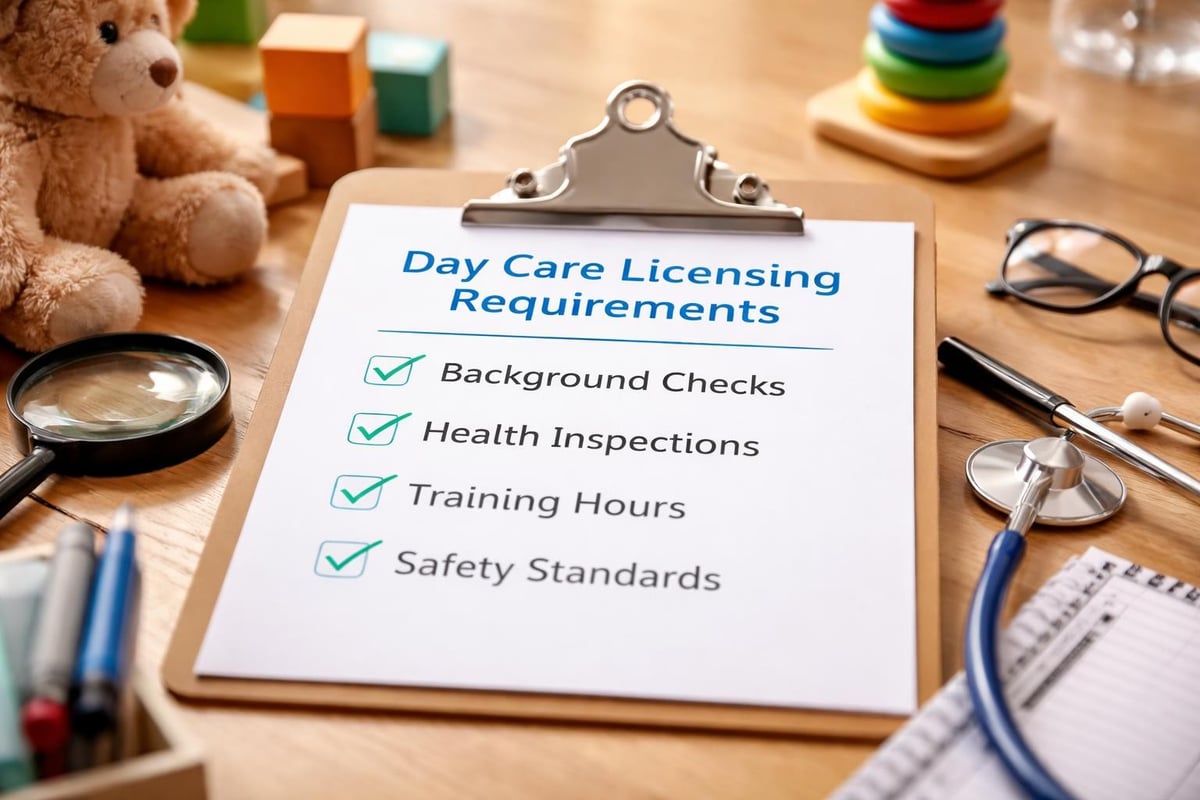
Licensed providers undergo background checks, home inspections, and ongoing training to maintain their credentials. When evaluating a day care home near me, request to see current licensing documentation and verify its status with your state's childcare regulatory agency.
Providers should readily share their license number, inspection reports, and proof of required training hours. Transparency in these areas indicates professionalism and commitment to quality standards.
| Licensing Component | What to Verify | Why It Matters |
|---|---|---|
| Current License | Valid through 2026 or later | Ensures ongoing compliance |
| Background Checks | All household members | Protects child safety |
| Inspection Reports | Recent health/safety reviews | Reveals maintenance standards |
| Training Certificates | First aid, CPR, child development | Demonstrates competency |
| Insurance Coverage | Liability and property coverage | Provides financial protection |
Health and Safety Requirements
Federal health and safety requirements establish baseline standards that licensed programs must meet. These include safe sleep practices, proper food handling, emergency preparedness, and sanitation protocols.
During your visit to a potential day care home near me, observe physical safety features such as outlet covers, stair gates, secure storage for cleaning products, and age-appropriate furniture. The outdoor play area should have proper fencing, safe equipment, and clear sightlines for supervision.
Providers following national health and safety performance standards demonstrate commitment beyond minimum requirements, incorporating best practices that enhance children's wellbeing.
Assessing Educational Approach and Daily Structure
Quality day care homes offer more than supervision. They provide intentional learning experiences that support children's cognitive, social, emotional, and physical development throughout each day.
Curriculum and Learning Philosophy
Ask providers about their educational approach when searching for a day care home near me. Some follow established frameworks like Montessori, Reggio Emilia, or play-based learning philosophies. Others develop their own curriculum incorporating elements from various approaches.
The best programs balance structured activities with free play, allowing children to explore interests while building foundational skills. Providers should articulate clear developmental goals and explain how daily activities support these objectives.
Effective curriculum elements include:
- Age-appropriate learning materials rotated regularly
- Literacy-rich environments with diverse books
- Math and science exploration through hands-on activities
- Creative arts encouraging self-expression
- Outdoor time supporting gross motor development
- Social-emotional learning through guided interactions
Daily Schedules and Routines
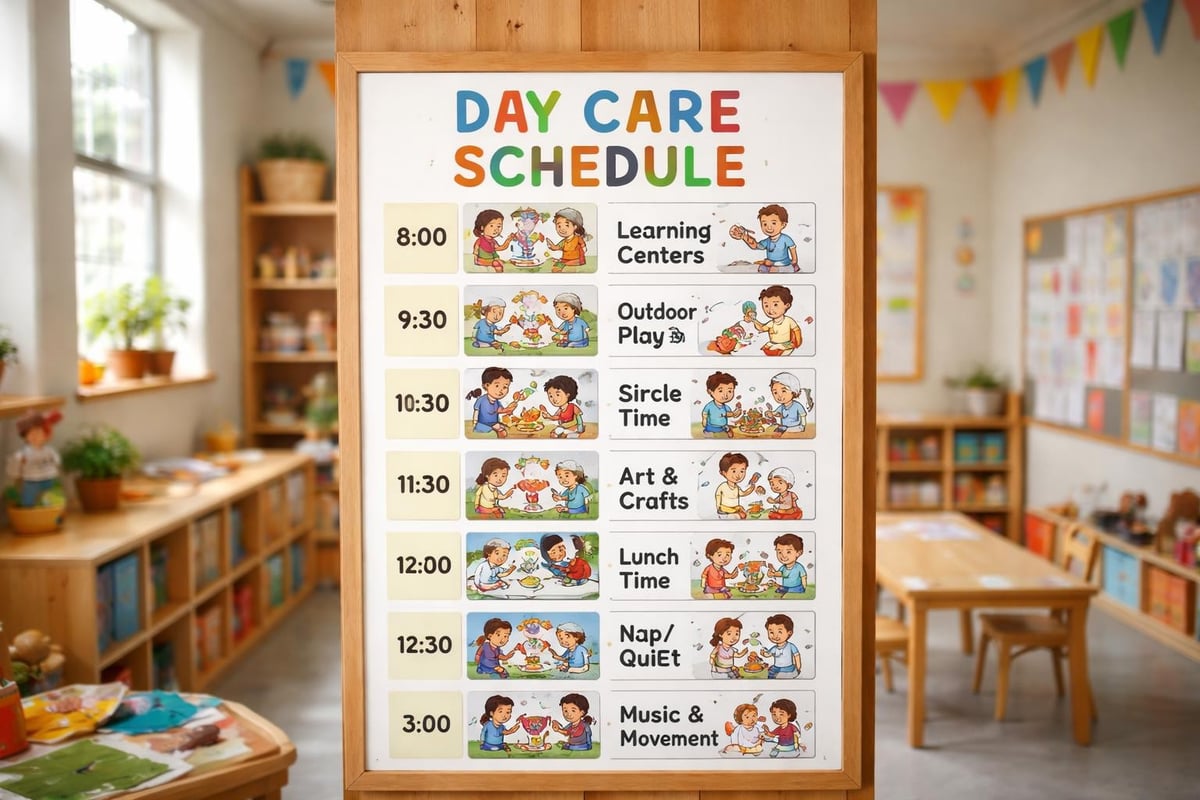
Consistent routines help children feel secure and understand expectations. Review the daily schedule to ensure it balances active and quiet times, indoor and outdoor play, and group and individual activities.
For families with infants, understanding the infant daycare daily schedule becomes particularly important. Quality providers follow each baby's unique eating and sleeping patterns rather than imposing rigid schedules.
Nutrition and Meal Programs
Proper nutrition supports healthy development, making meal quality an essential consideration when evaluating any day care home near me. Many licensed providers participate in the Child and Adult Care Food Program, which provides reimbursement for nutritious meals meeting federal guidelines.
Meal Planning and Dietary Accommodations
Quality programs serve balanced meals incorporating fruits, vegetables, whole grains, and lean proteins. Providers should accommodate allergies, religious restrictions, and cultural preferences with appropriate substitutions.
Ask about meal preparation practices, including food safety protocols and how meals are served. Family-style dining, where children serve themselves with guidance, promotes independence and healthy eating habits.
The federal meal program requirements ensure that participating providers offer adequate nutrition without additional cost to families, making quality care more accessible.
Provider Qualifications and Experience
The caregiver's background significantly impacts your child's experience. When researching a day care home near me, investigate the provider's education, training, and years of experience working with children.
Educational Background and Specialized Training
While requirements vary by state, quality providers often exceed minimum training standards. Look for early childhood education credentials, child development coursework, and specialized certifications in areas like infant care or special needs support.
Ongoing professional development demonstrates commitment to excellence. Providers who regularly attend workshops, conferences, and training sessions stay current with best practices in early childhood education.
Essential provider qualifications:
- CPR and first aid certification (current)
- Child development training (minimum 12-20 hours annually)
- Safe sleep training for infant care
- Medication administration certification
- Background check clearance (renewed regularly)
Building Trust Through References
Speaking with current and former families provides valuable insights into the provider's character and program quality. Request at least three references and ask specific questions about communication, reliability, conflict resolution, and children's developmental progress.
You can also explore parent reviews and testimonials to understand other families' experiences with home-based childcare programs.
Location, Hours, and Practical Considerations
Convenience factors heavily into childcare decisions. The ideal day care home near me balances quality care with practical accessibility that fits your family's lifestyle.
Proximity and Transportation
Consider drive time during peak traffic hours when evaluating location. A program fifteen minutes away might take thirty minutes during your commute, affecting drop-off and pickup stress levels.
Some providers offer flexible arrangements for families needing occasional early drop-off or late pickup. Discuss your schedule requirements upfront to ensure compatibility.
Operating Hours and Backup Care
Standard operating hours for most day care homes run from 7:00 AM to 6:00 PM on weekdays, though some providers offer extended or non-traditional hours. Clarify policies regarding holidays, provider vacation days, and weather closures.
Understanding backup care options protects against schedule disruptions. Some providers maintain relationships with substitute caregivers for planned absences, while others may offer makeup days.
| Schedule Factor | Questions to Ask | Impact on Families |
|---|---|---|
| Daily Hours | What are opening and closing times? | Affects commute planning |
| Late Pickup | What's the grace period and fee? | Determines schedule flexibility |
| Holidays | Which holidays are you closed? | Requires backup arrangements |
| Sick Days | How do you handle provider illness? | May disrupt work schedules |
| Vacation | How much notice for planned closures? | Allows advanced planning |

Communication and Parent Partnership
Strong provider-parent relationships create consistency between home and childcare environments, supporting children's development and wellbeing. When evaluating a day care home near me, assess how the provider approaches family communication.
Daily Updates and Progress Reports
Quality providers share information about your child's day through daily reports, photos, or communication apps. These updates might include meal consumption, nap times, activities, developmental milestones, and social interactions.
Regular conferences allow deeper discussion about your child's progress, upcoming developmental goals, and any concerns either party might have.
Open Door Policy and Parental Involvement
The best programs welcome parent visits and encourage family involvement. Providers should never hesitate when you ask to observe the program or drop in unexpectedly during operating hours.
Opportunities for parent participation might include celebrating birthdays, sharing cultural traditions, or joining special activities. This involvement strengthens the childcare community and helps children feel proud of their families.
Cost Structures and Financial Assistance
Understanding the full cost of care helps families budget appropriately and explore available assistance programs. When researching a day care home near me, request detailed information about all fees and payment expectations.
Tuition Rates and Additional Fees
Weekly or monthly tuition typically covers standard care hours, meals, and basic supplies. Additional fees might apply for registration, late pickup, field trips, or special activities.
Compare payment options for early childhood education and ask about sibling discounts, payment plans, or reduced rates for part-time attendance.
Subsidies and Assistance Programs
Many families qualify for childcare subsidies that significantly reduce out-of-pocket costs. State voucher programs, employer-sponsored benefits, and federal tax credits can make quality care more affordable.
Licensed providers typically accept subsidy payments, though verification requirements and payment structures vary by state. Understanding compliance with federal programs ensures providers meet standards required for subsidy participation.
Making Your Final Decision
After researching options and visiting programs, synthesizing your observations helps identify the best fit for your family. Trust both objective criteria and your instincts when choosing where your child will spend their days.
Comparing Multiple Options
Visit at least three day care homes before deciding. This comparison provides perspective on different approaches, helping you recognize what matters most for your child's temperament and your family's values.
Create a simple scoring system evaluating factors like safety, educational approach, provider qualifications, schedule compatibility, and overall atmosphere. Weight each category according to your priorities.
Trial Periods and Transition Planning
Many providers offer trial days or shorter initial contracts, allowing families to ensure goodness of fit before making long-term commitments. Gradual transitions with increasingly longer stays help young children adjust to new environments and caregivers.
Discuss the provider's approach to separation anxiety and how they'll support both you and your child during the adjustment period.
Red Flags to Watch For
While most providers offer loving, quality care, certain warning signs warrant caution when evaluating any day care home near me. Trust concerns that arise during your search and investigation process.
Safety and Licensing Concerns
Never overlook safety issues, even minor ones. Uncovered outlets, unsecured cabinets containing hazardous materials, damaged equipment, or inadequate supervision ratios represent serious risks. Similarly, providers who cannot produce current licensing, inspection reports, or background check documentation should be avoided.
Evasiveness about policies, reluctance to allow unannounced visits, or pressure to make immediate decisions without adequate information also signal potential problems.
Communication and Professionalism Issues
Providers who seem distracted during your visit, cannot articulate their educational philosophy, or speak negatively about current families demonstrate concerning unprofessionalism. Quality caregivers respect both children and parents, maintaining confidentiality and positive communication.
Building Long-Term Relationships
Finding the right day care home near me represents just the beginning of your childcare journey. Nurturing positive relationships with your provider creates stability that benefits your child for years.
Supporting Your Provider's Success
Treating your childcare provider as a valued professional partner encourages their best work. Respect their policies, communicate openly about concerns, provide necessary supplies promptly, and pay tuition on time.
Small gestures of appreciation during holidays or provider appreciation week acknowledge the critical role they play in your child's life. Learning more about in-home childcare professionals can deepen your understanding of their important work.
Adapting as Your Child Grows
Your child's needs will evolve from infancy through preschool years. Regular conversations with your provider about developmental changes ensure the program continues meeting your child's growing capabilities and interests.
Some families maintain relationships with day care homes for multiple years, even enrolling siblings in programs that served older children well. These long-term connections provide continuity that supports healthy development.
Finding the perfect day care home near me requires thorough research, careful observation, and attention to both practical factors and intuitive feelings about where your child will thrive. By evaluating licensing, safety standards, educational approaches, and provider qualifications, you can make an informed decision that supports your child's growth and your family's needs. If you're searching for exceptional home-based childcare that combines nurturing care with intentional learning experiences, Step by Step Care offers the personalized attention and professional expertise your family deserves. Contact us today to schedule a visit and discover how our program can support your child's developmental journey.


