

First Step Daycare: Building Foundations for Success
Choosing the right childcare environment for young children represents one of the most important decisions families make during their child's formative years. A first step daycare serves as the crucial foundation where infants and toddlers begin their educational journey, develop social skills, and build emotional security outside the family home. Whether you're a parent evaluating childcare options or an entrepreneur considering launching a home-based childcare business, understanding what makes a quality first step daycare program successful is essential. This comprehensive guide explores the fundamental elements that define excellence in early childhood care, from initial planning and licensing to daily operations and developmental programming.
Understanding the First Step Daycare Concept
A first step daycare program focuses specifically on the earliest stages of childhood development, typically serving infants from six weeks through toddlers up to three years old. This specialized approach recognizes that the first three years of life involve rapid brain development, making quality care during this period particularly significant.
The concept extends beyond simple custodial care. These programs integrate age-appropriate learning activities, nurturing interactions, and safe exploration opportunities that support cognitive, physical, social, and emotional growth. According to Zero to Three, early experiences shape brain architecture, making the quality of care during these formative years critically important.
Key Components of Quality Programs
Successful first step daycare programs share several distinguishing characteristics that set them apart from standard childcare options:
- Low child-to-caregiver ratios ensuring individualized attention
- Developmentally appropriate activities tailored to each age group
- Safe, stimulating environments that encourage exploration
- Consistent routines providing security and predictability
- Strong parent-provider communication creating partnership in child development
Home-based childcare settings often excel in providing the intimate, family-like atmosphere that benefits very young children. Smaller group sizes allow providers to form deeper bonds with each child and respond more attentively to individual needs and developmental timelines.

Planning Your First Step Daycare Business
Launching a first step daycare requires careful planning, particularly for home-based providers who want to create a sustainable, legally compliant business. The planning phase sets the foundation for long-term success and helps you navigate the complex requirements of childcare entrepreneurship.
Developing Your Business Foundation
Creating a comprehensive business plan is your first critical task. The Small Business Administration provides excellent templates and guidance for structuring your plan. Your document should address several key areas:
Market Analysis and Positioning
- Research local childcare demand and competition
- Identify your target demographic and service area
- Define your unique value proposition
- Determine pricing structures based on market rates and operational costs
Operational Planning
- Establish your capacity based on space and licensing limits
- Design daily schedules and programming
- Plan staffing needs and responsibilities
- Outline safety protocols and emergency procedures
| Business Element | Home-Based Advantage | Considerations |
|---|---|---|
| Startup Costs | Lower overhead, existing space | Home modifications needed |
| Capacity | Intimate group sizes (4-8 children) | Income limited by capacity |
| Flexibility | Control over schedule and curriculum | Work-life boundary challenges |
| Atmosphere | Warm, family-like environment | Professional standards in home setting |
Many providers exploring in-home childcare options find that the home setting naturally creates the nurturing environment essential for first step daycare programs while offering entrepreneurial flexibility.
Licensing and Regulatory Compliance
Navigating licensing requirements represents one of the most challenging aspects of starting a first step daycare. Requirements vary significantly by state, making thorough research essential.
Understanding Your Regulatory Landscape
Child Care Aware provides comprehensive state-by-state resources for understanding licensing requirements. Most states distinguish between licensed childcare centers, licensed family childcare homes, and exempt providers based on capacity and operational structure.
Common licensing requirements include:
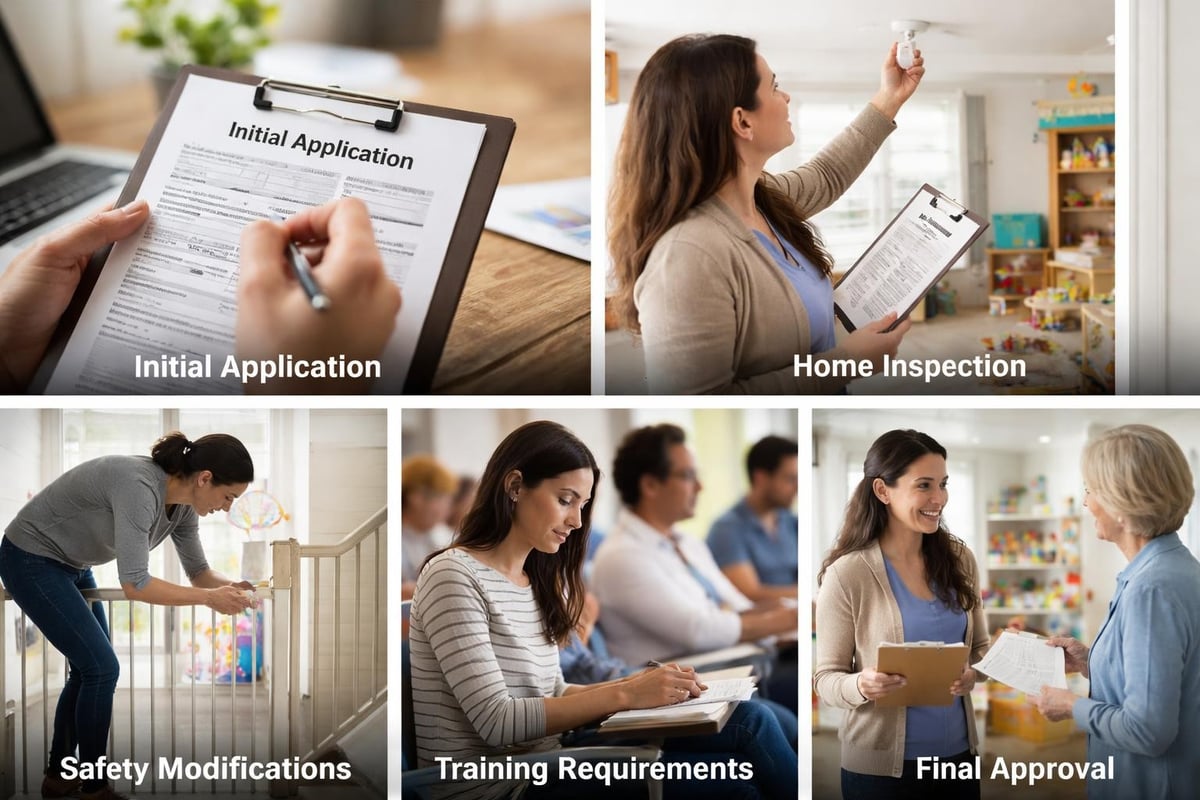
- Background checks and fingerprinting for all household members
- Health and safety inspections of the physical space
- First aid and CPR certification
- Minimum training hours in early childhood education
- Verification of immunizations and health screenings
- Fire safety and emergency preparedness plans
The Office of Child Care offers guidance on federal regulations and funding opportunities that may support your first step daycare program. Understanding these resources can help you access grants, subsidies, and professional development opportunities.
Meeting Health and Safety Standards
Beyond basic licensing, implementing comprehensive health and safety protocols protects the children in your care and demonstrates your professionalism to families:
- Environmental safety: Childproofing, toxic substance storage, secure outdoor areas
- Health policies: Illness protocols, medication administration, allergy management
- Nutrition standards: Age-appropriate meal planning, food safety, special dietary needs
- Sanitation practices: Cleaning schedules, diapering procedures, handwashing protocols
Documentation of all policies and procedures creates transparency with families and provides protection should questions arise about your operational practices.
Creating Developmentally Appropriate Programming
The curriculum and daily activities you provide distinguish your first step daycare as an educational environment rather than simple babysitting. Age-appropriate programming respects developmental stages while gently encouraging growth and learning.
Infant Care Programming (6 weeks to 12 months)
Infants require highly individualized care that responds to their unique schedules and developmental progress. Your programming should emphasize:
Responsive caregiving practices
- On-demand feeding following each child's hunger cues
- Flexible napping based on individual sleep needs
- Abundant one-on-one interaction during routine care
- Tummy time and gentle physical activities
Sensory exploration activities
- High-contrast visual stimulation
- Safe textures and materials for tactile exploration
- Music, singing, and varied sounds
- Simple cause-and-effect toys
Many providers find that having a structured yet flexible infant daycare daily schedule helps balance individual needs with operational efficiency.
Toddler Programming (12 to 36 months)
As children transition from infancy, their growing independence and capabilities require different approaches. Effective toddler programming balances structure with flexibility:
| Developmental Area | Sample Activities | Learning Outcomes |
|---|---|---|
| Language | Reading books, naming objects, songs | Vocabulary expansion, communication skills |
| Motor Skills | Climbing structures, art projects, puzzles | Coordination, strength, fine motor control |
| Social-Emotional | Group play, sharing practice, emotion naming | Relationship skills, self-regulation |
| Cognitive | Sorting games, matching activities, problem-solving | Logical thinking, memory, concentration |
Your first step daycare curriculum should document planned activities while allowing spontaneous learning opportunities. Children this age learn primarily through play, exploration, and imitation of trusted caregivers.
Building Strong Family Partnerships
Success in first step daycare depends heavily on establishing trust and open communication with families. Parents entrusting you with their infants and toddlers need reassurance, transparency, and partnership.
Communication Systems That Work
Implement multiple communication channels to keep families informed and engaged:
- Daily reports documenting meals, naps, diaper changes, and activities
- Photo sharing through secure platforms showing daily moments
- Regular updates via email or apps about developmental progress
- Scheduled conferences to discuss growth and address concerns
- Open-door policies welcoming parent visits and involvement
Strong communication transforms anxious parents into confident partners who actively support your program. Reading parent reviews from established programs can provide insight into what families value most in their childcare relationships.
Managing Expectations and Boundaries
Clear policies established from enrollment prevent misunderstandings and protect your business operations:
- Written agreements covering fees, schedules, pickup procedures, and termination policies
- Handbook distribution outlining all operational policies and expectations
- Regular policy reviews ensuring families stay informed of any changes
- Professional boundaries maintaining appropriate provider-family relationships
Setting clear expectations doesn't create distance; rather, it establishes the professional framework that allows warm, trusting relationships to flourish within appropriate boundaries.

Financial Management and Sustainability
Running a sustainable first step daycare requires balancing competitive pricing with adequate income to support quality care. Financial planning often challenges new providers who underestimate true operational costs.
Pricing Your Services Appropriately
Research local market rates for infant and toddler care, which typically command premium pricing due to lower ratios and specialized care requirements. Your pricing structure should account for:
Direct operational costs:
- Food and supplies (diapers, wipes, formula if provided)
- Educational materials and toys
- Cleaning and sanitation supplies
- Utilities and increased household expenses
Professional expenses:
- Licensing and renewal fees
- Insurance (liability, property, and vehicle if applicable)
- Continuing education and training
- Marketing and advertising
Compensation:
- Your own salary or draw
- Any assistant caregivers
- Taxes and retirement contributions
Many successful providers implement tiered pricing based on age, with infant care priced higher than toddler care to reflect the increased demands and lower ratios required.
Payment Policies and Financial Protection
Establish clear payment policies that protect your income while remaining family-friendly:
- Tuition-based model charging consistent weekly or monthly rates regardless of attendance
- Deposit requirements holding enrollment spots and covering final weeks
- Late payment fees encouraging timely payment
- Vacation policies defining paid versus unpaid time off
- Subsidy acceptance determining if you'll accept state assistance programs
Documentation of all financial transactions protects both you and the families you serve. Professional invoicing and clear receipts demonstrate your business legitimacy.
Marketing Your First Step Daycare
Even the highest-quality program requires effective marketing to maintain enrollment. Strategic promotion helps the right families discover your services.
Building Your Professional Presence
Creating visibility in your community establishes your first step daycare as a trusted resource:
Digital presence:
- Professional website showcasing your program, philosophy, and credentials
- Social media accounts sharing daily activities and early childhood education tips
- Google Business Profile enabling local search visibility
- Online directories and childcare referral platforms
Community connections:
- Relationships with pediatricians and family practitioners
- Participation in local parenting groups and events
- Partnerships with prenatal classes and birthing centers
- Word-of-mouth referrals from satisfied families
Exploring resources through your local childcare network can provide marketing ideas and partnership opportunities that benefit new providers.
Showcasing Quality Through Documentation
Parents researching first step daycare options want evidence of quality care. Document and share:
- Your credentials, training, and ongoing professional development
- Your curriculum and daily schedule frameworks
- Photos and stories of activities and learning moments
- Testimonials from current and former families
- Your safety protocols and emergency preparedness
Transparency about your program builds confidence among prospective families who need assurance that their children will receive excellent care.
Professional Development and Growth
Committing to ongoing learning distinguishes exceptional first step daycare providers from those offering basic care. The early childhood education field continually evolves with new research and best practices.
Continuous Learning Opportunities
Invest in your professional growth through various channels:
- Formal education: Early childhood education coursework or credentials
- Professional conferences: Networking and learning from field experts
- Online training: Convenient, focused modules on specific topics
- Professional associations: Membership in childcare organizations
- Peer learning: Connections with other providers for idea sharing
Each training hour enhances your ability to support child development and strengthens your program's reputation. Many states require ongoing training hours for license maintenance, making professional development both personally enriching and professionally necessary.
Specialization and Program Enhancement
As your first step daycare matures, consider program enhancements that differentiate your services:
| Enhancement Area | Benefits | Implementation Considerations |
|---|---|---|
| Language immersion | Bilingual development advantages | Provider fluency requirements |
| Nature-based focus | Outdoor learning, environmental connection | Outdoor space needs, weather planning |
| Arts integration | Creative expression, fine motor development | Materials investment, mess management |
| Music emphasis | Rhythm, movement, auditory development | Musical knowledge, instrument costs |
Specialization attracts families seeking specific educational approaches while allowing you to develop deep expertise in areas that align with your passions and skills.
Creating Smooth Transitions
Children in first step daycare programs eventually transition to preschool or other care arrangements. Managing these transitions thoughtfully benefits children and maintains positive relationships with families.
Preparing Children for Next Steps
Support developmental readiness for the next educational environment:
- Independence skills: Self-feeding, basic hygiene, following simple instructions
- Social readiness: Sharing, turn-taking, group participation
- Communication abilities: Expressing needs, engaging with peers
- Emotional regulation: Managing frustration, separating from caregivers
Documenting developmental progress throughout enrollment provides valuable information for receiving programs and helps parents understand their child's readiness for new challenges.
Maintaining Alumni Connections
Families who complete your program represent your best marketing assets. Stay connected through:
- Alumni events and reunions
- Holiday cards or periodic check-ins
- Referral incentive programs
- Continued presence on social media
These relationships often result in sibling enrollments and enthusiastic recommendations to friends and neighbors seeking quality childcare.
Adapting to Changing Needs
The childcare landscape constantly evolves with shifting family needs, regulatory changes, and economic conditions. Flexibility and responsiveness ensure your first step daycare remains relevant and sustainable.
Responding to Family Preferences
Modern families seek various arrangements beyond traditional full-time care:
- Part-time schedules accommodating work-from-home parents
- Drop-in care for occasional needs
- Extended hours serving shift workers
- Backup care for families with unreliable primary arrangements
Evaluating whether alternative scheduling serves your business model and family needs helps you remain competitive while maintaining operational efficiency. Many successful providers find that understanding daycare daily schedule variations helps them accommodate diverse family needs.
Technology Integration
Appropriate technology enhances communication and operational efficiency without replacing human interaction:
- Childcare management software streamlining enrollment, billing, and attendance
- Parent communication apps enabling real-time updates and photo sharing
- Digital portfolios documenting developmental progress with photos and observations
- Online enrollment systems simplifying the admission process
Technology serves as a tool supporting your relationships and operations, never replacing the personal attention that defines quality first step daycare.
Establishing a successful first step daycare requires dedication to child development, business acumen, and genuine passion for supporting families during their children's earliest years. The combination of proper licensing, developmentally appropriate programming, strong family partnerships, and sound business practices creates programs where children thrive and families feel confident in their childcare choice. If you're seeking quality home-based childcare that prioritizes individual attention and developmental excellence, Step by Step Care offers the nurturing environment where your child's educational journey can begin with the strong foundation every family deserves.


