

Country Home Day Care: A Complete Guide for 2026
Parents seeking personalized child care in a nurturing environment increasingly turn to country home day care as their preferred option. This model combines the comfort of a residential setting with professional early childhood education, all within the peaceful backdrop of rural communities. Unlike larger institutional facilities, country home day care typically serves smaller groups of children, allowing caregivers to focus on individual developmental needs while fostering a true family atmosphere. The rising demand for home-based child care reflects changing parent priorities in 2026, with families valuing intimate learning environments and strong caregiver-child relationships over facility size.
Understanding the Country Home Day Care Model
Country home day care operates within a licensed provider's residence, typically located in rural or semi-rural areas. These programs serve mixed-age groups ranging from infants to school-age children, with most states limiting capacity to six to twelve children depending on staff ratios and square footage.
The rural setting offers distinct advantages that urban centers cannot replicate. Children benefit from:
- Expansive outdoor play areas with natural landscapes
- Quieter environments conducive to learning and rest
- Connection to nature through gardens, wildlife observation, and seasonal activities
- Reduced exposure to urban pollution and traffic hazards
- Community integration within tight-knit rural neighborhoods
These programs operate under state-specific regulations that govern everything from safety protocols to educational requirements. Providers must meet rigorous standards to ensure quality care delivery.
Regulatory Framework and Licensing
Operating a country home day care requires compliance with comprehensive state regulations. Each state maintains its own licensing structure, though common elements exist across jurisdictions. Pennsylvania’s child care regulations exemplify the detailed standards providers must meet.
| Regulatory Area | Typical Requirements | Inspection Frequency |
|---|---|---|
| Physical Space | Minimum square footage per child, safe outdoor areas | Annual or biannual |
| Staff Qualifications | Background checks, CPR/First Aid, early childhood education credits | At hiring and renewal |
| Health & Safety | Fire extinguishers, emergency plans, sanitation protocols | Quarterly to annual |
| Child-to-Staff Ratios | Varies by age group (often 4:1 for infants, 6:1 for toddlers) | Every visit |
| Record Keeping | Attendance logs, medical records, incident reports | Reviewed during inspections |
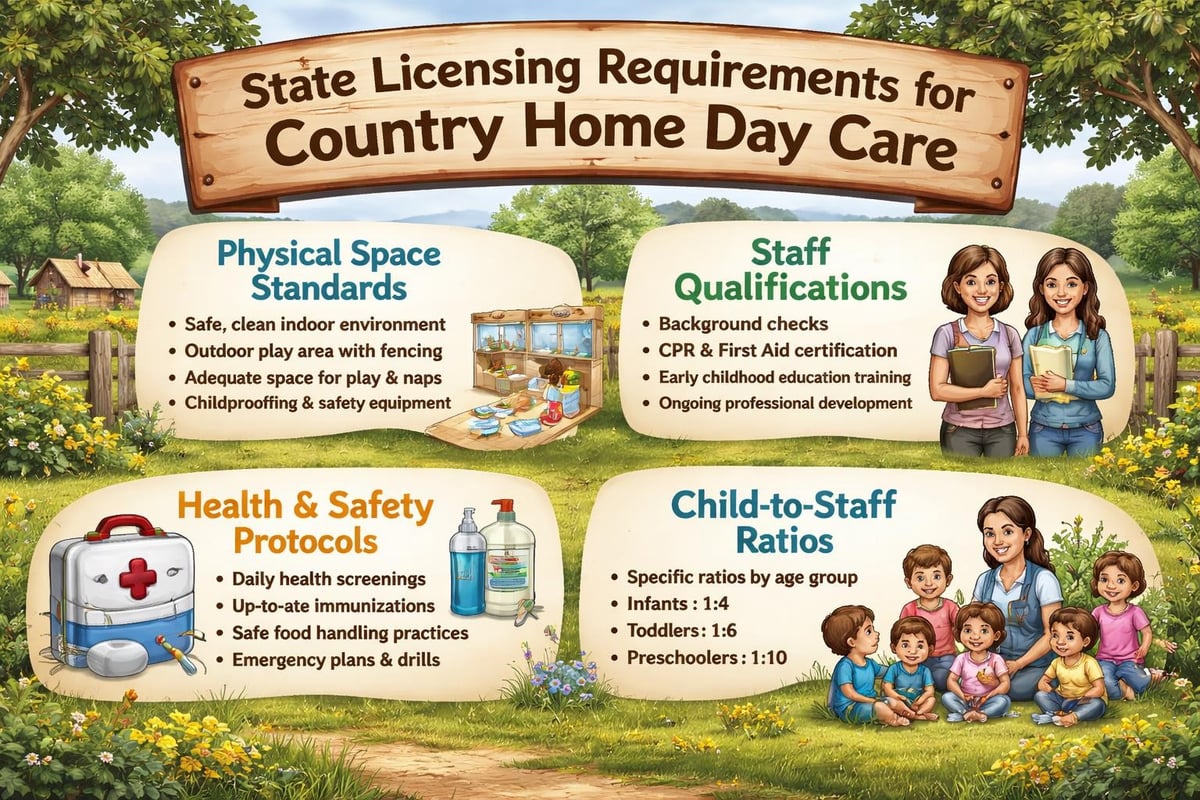
Prospective providers should research their specific state requirements early in the planning process. Kentucky’s certification process for family child care homes demonstrates the structured pathway many states require, while Iowa’s Child Development Home guidelines offer another perspective on registration procedures.
Benefits of Choosing Country Home Day Care
Parents selecting country home day care gain access to advantages that larger facilities struggle to provide. The intimate setting creates opportunities for personalized attention and flexible programming.
Individualized Attention and Development
With smaller enrollment numbers, caregivers develop deep familiarity with each child's personality, learning style, and developmental trajectory. This knowledge enables truly customized educational approaches.
Developmental benefits include:
- One-on-one time for skill building in areas like language development or fine motor skills
- Personalized meal planning accommodating allergies and cultural preferences
- Flexible scheduling that adapts to individual sleep patterns and energy levels
- Strong emotional bonds that provide security and confidence
- Continuous communication between providers and parents about daily progress
Multi-age groupings common in country home day care naturally promote peer learning. Younger children observe and imitate older peers, while older children develop leadership skills and empathy through helping younger classmates.
Natural Learning Environment
The rural setting transforms everyday surroundings into educational opportunities. Children engage with their environment through hands-on exploration rather than solely structured activities.
Seasonal changes become living lessons in science and observation. Spring planting teaches responsibility and biology. Summer gardening demonstrates patience and nutrition. Fall harvests connect effort to reward. Winter wildlife tracking develops attention to detail and scientific thinking.
Physical development flourishes with access to open spaces. Children run, climb, balance, and coordinate movements across varied terrain rather than confined playgrounds. This unrestricted movement supports gross motor development and healthy physical habits.
Establishing Quality Programming in Rural Settings
Successful country home day care balances structure with flexibility, creating routines that provide security while allowing spontaneous learning moments. Quality programming requires intentional planning and continuous improvement.
Curriculum Development and Daily Structure
Effective daily schedules incorporate predictable routines with room for child-led exploration. A typical day might include:
- Morning arrival and free play (7:00-8:30 AM)
- Circle time with songs and stories (8:30-9:00 AM)
- Outdoor exploration or structured activity (9:00-10:30 AM)
- Snack and quiet activities (10:30-11:00 AM)
- Lunch and hygiene routines (11:00 AM-12:00 PM)
- Nap time for younger children, quiet activities for older (12:00-2:30 PM)
- Afternoon snack and creative play (2:30-3:30 PM)
- Outdoor free play and pickup (3:30-6:00 PM)
This framework remains flexible enough to accommodate weather changes, special interests, or teachable moments that arise naturally throughout the day.
Curriculum planning should align with early childhood development standards while leveraging rural resources. Nature walks become science lessons. Cooking with garden vegetables teaches math through measuring and following sequences. Animal care develops responsibility and empathy.
Building Community Connections
Country home day care providers often integrate their programs within broader rural communities. These connections enrich children's experiences and build family support networks.
Partnerships with local resources might include:
- Library story time visits for literacy exposure
- Farm tours demonstrating agricultural processes
- Senior center interactions fostering intergenerational relationships
- Local business field trips teaching community roles
- Seasonal festival participation celebrating cultural traditions
These experiences broaden children's worldviews beyond their immediate environments while maintaining the comfort of familiar faces and places.

Nutritional Programming and Meal Planning
Quality nutrition supports optimal development and learning capacity. Many country home day care providers participate in the Child and Adult Care Food Program (CACFP), which provides meal reimbursements while ensuring nutritional standards.
Meal Planning Strategies
Home-based settings allow for fresh, home-cooked meals rather than institutional food service. Providers can accommodate dietary restrictions, cultural preferences, and individual tastes more easily than larger centers.
Effective meal planning incorporates:
- Seasonal produce from local farms or program gardens
- Child involvement in meal preparation for skill development
- Family-style dining promoting social skills and independence
- Cultural diversity representing children's backgrounds
- Educational components teaching nutrition and food origins
| Meal Component | CACFP Requirements | Country Home Advantage |
|---|---|---|
| Breakfast | Milk, grain, fruit | Fresh eggs from chickens, garden berries |
| Lunch | Milk, meat/protein, two vegetables, grain | Home-cooked soups, salads from garden |
| Snacks | Two food groups | Homemade treats, fresh fruit |
| Special Diets | Documented accommodations | Personalized adjustments, family recipes |
The informal setting encourages relaxed mealtimes where conversation flourishes and children develop healthy eating habits through modeling rather than pressure.
Safety and Emergency Preparedness
Operating a country home day care requires comprehensive safety planning that addresses both universal childcare concerns and rural-specific considerations. Distance from emergency services demands particular attention to preparedness.
Essential Safety Protocols
Home environments must meet safety standards equivalent to or exceeding commercial facilities. Regular inspections verify compliance with fire codes, structural integrity, and hazardous material storage.
Critical safety elements include:
- Secure storage for cleaning supplies, medications, and tools
- Outlet covers, stair gates, and cabinet locks throughout accessible areas
- Fenced outdoor play areas preventing access to roads, ponds, or farm equipment
- Regular equipment maintenance checking for wear or damage
- Emergency contact information and medical authorization forms
Providers should maintain current certification in pediatric CPR and first aid, with skills refreshed annually. Many states require these certifications for initial licensing and renewal.
Emergency Planning for Rural Locations
Distance from hospitals and fire stations necessitates detailed emergency response plans. Providers must identify the nearest emergency services and establish clear communication protocols.
Emergency plans should address:
- Medical emergencies requiring rapid response or transport
- Fire evacuation routes and meeting locations
- Severe weather protocols including tornado or flood procedures
- Power outages affecting heating, cooling, or refrigeration
- Communication methods if phone service fails
Regular drills familiarize children with emergency procedures, reducing panic during actual events. Documented practice sessions demonstrate compliance during inspections.
Financial Considerations and Business Management
Running a successful country home day care requires balancing quality care with financial sustainability. Providers must understand both income potential and operational expenses.
Pricing and Revenue Streams
Country home day care rates vary significantly by region, services offered, and local competition. Rural areas typically charge less than urban markets, though lower overhead costs can maintain profitability.
Rate structures might include:
- Full-time care (typically 40-50 hours weekly)
- Part-time options for families needing flexible arrangements
- Drop-in care at premium hourly rates
- Before and after school care for older children
- Special services like extended hours or weekend care
Payment policies should clearly outline due dates, late fees, and deposit requirements. Many providers require registration fees to hold enrollment slots and advance payment to manage cash flow.
Operational Expenses and Budgeting
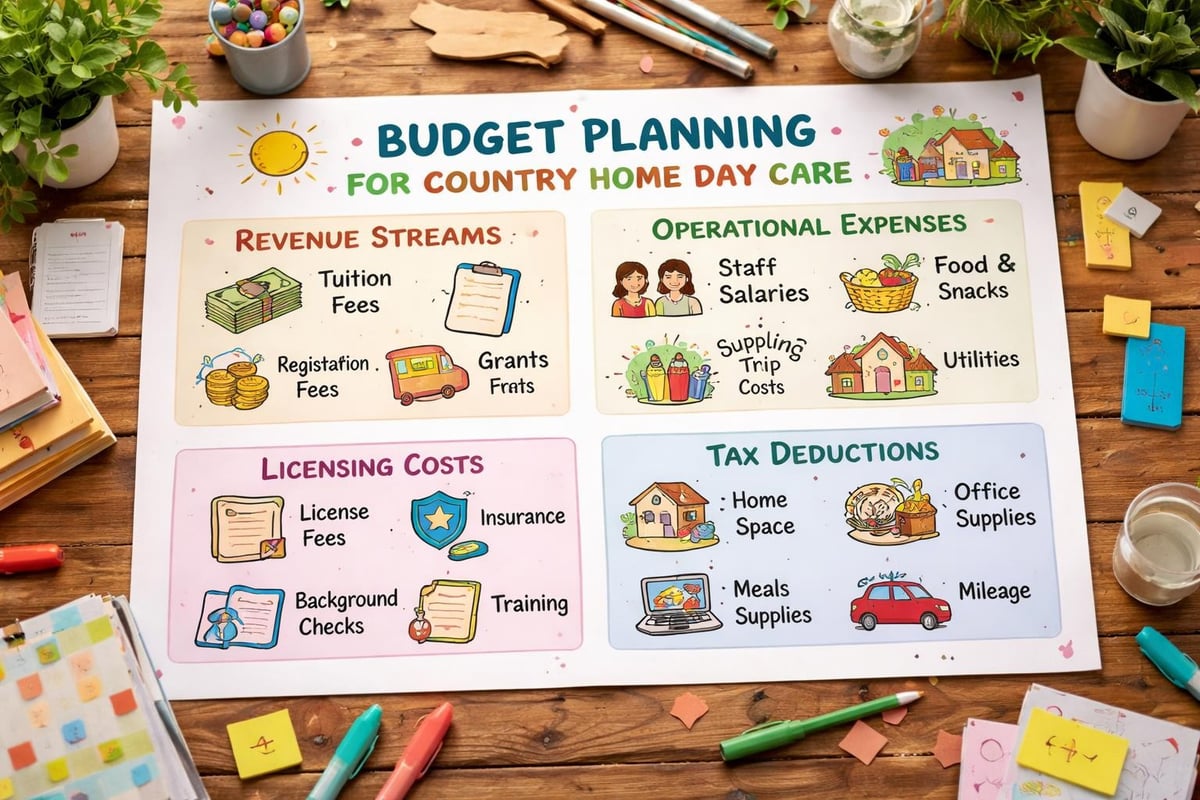
Understanding true operational costs prevents underpricing that leads to burnout or program closure. Connecticut’s family child care home regulations and similar state resources outline mandatory expenses providers must budget for.
| Expense Category | Monthly Cost Range | Annual Total |
|---|---|---|
| Liability Insurance | $150-$300 | $1,800-$3,600 |
| Food and Supplies | $400-$800 | $4,800-$9,600 |
| Toys and Equipment | $100-$200 | $1,200-$2,400 |
| Licensing and Training | Variable | $500-$2,000 |
| Utilities Increase | $75-$150 | $900-$1,800 |
| Maintenance and Repairs | $100-$250 | $1,200-$3,000 |
Tax implications deserve professional guidance. Home providers can deduct business-use percentages of mortgage/rent, utilities, and property taxes, plus direct expenses like supplies and equipment.
Marketing Your Country Home Day Care
Attracting families to rural programs requires strategic marketing emphasizing unique advantages while building trust within the community. Digital presence matters even in country settings as parents research options online.
Building Your Reputation
Word-of-mouth recommendations remain the strongest marketing tool for home-based care. Satisfied families become ambassadors, referring friends and neighbors based on personal experience.
Strategies to build positive reputation include:
- Maintaining consistent communication through daily reports or photos
- Celebrating milestones and achievements with families
- Hosting parent events showcasing children's learning
- Seeking online reviews and testimonials from current families
- Engaging with community events to increase visibility
Professional development demonstrates commitment to quality. Completing continuing education courses and maintaining current certifications signals dedication that parents value when selecting care.
Digital Marketing Approaches
Even rural providers benefit from online presence. Parents search for childcare options digitally before visiting facilities or requesting tours.
Essential digital marketing elements include:
- Professional website with photos, philosophy, and enrollment information
- Active social media sharing daily activities and learning moments
- Google Business Profile optimizing local search visibility
- Online reviews on platforms parents commonly use
- Email newsletters keeping current and prospective families informed
High-quality photos showcasing your environment, activities, and happy children create emotional connections with prospective families. Video tours allow virtual visits before scheduling in-person meetings.
Step by Step Care’s approach demonstrates how home childcare providers effectively communicate their values and services to families seeking quality care options.
Professional Development and Continuous Improvement
Quality country home day care requires ongoing learning and adaptation. The early childhood education field continuously evolves with new research on development, learning theories, and best practices.
Training and Certification Opportunities
Most states require minimum annual training hours for license renewal. Many providers exceed these minimums to enhance skills and program quality.
Valuable professional development areas include:
- Child development stages and milestone recognition
- Behavior guidance strategies and positive discipline
- Curriculum planning and activity design
- Special needs awareness and inclusive practices
- Business management and financial planning
- Health, safety, and nutrition updates
Online courses offer flexibility for busy providers who cannot easily attend in-person trainings. Professional organizations provide webinars, conferences, and networking opportunities connecting providers with peers and mentors.
Quality Assessment and Improvement
Self-evaluation helps identify strengths and opportunities for enhancement. Structured assessment tools provide frameworks for reviewing all program aspects.
Regular reflection questions might include:
- Are children engaged and enthusiastic during activities?
- Do daily schedules balance structure with flexibility?
- How effectively do I communicate with families?
- What new skills or knowledge would improve my program?
- Are my business practices sustainable long-term?
Parent feedback offers valuable perspectives on program effectiveness. Annual surveys or informal conversations reveal family satisfaction levels and improvement suggestions.
Creating Family Partnerships
Success in country home day care depends heavily on strong relationships with enrolled families. These partnerships ensure consistency between home and care environments while building trust and mutual respect.
Communication Systems
Daily communication keeps families informed and engaged in their children's experiences. Effective providers establish multiple communication channels accommodating different family preferences.
Communication methods include:
- Daily written reports documenting meals, naps, activities, and milestones
- Photo sharing apps providing real-time glimpses into daily experiences
- Monthly newsletters highlighting upcoming themes or events
- Scheduled conferences discussing development and goals
- Informal conversations during pickup and dropoff
Transparency about both successes and challenges builds authentic relationships. Parents appreciate honesty about difficult days or behavioral concerns, trusting providers who communicate openly.
Involving Families in Programming
Inviting family participation strengthens community and enriches children's experiences. Parents bring diverse skills, backgrounds, and interests that enhance programming.
Participation opportunities might include:
- Sharing cultural traditions or career experiences
- Contributing items for projects or dramatic play
- Attending special events or celebrations
- Volunteering for field trips or special activities
- Providing feedback on curriculum and activities
These interactions help children see connections between their home lives and care environments, supporting emotional security and identity development.
Quality country home day care provides children with nurturing environments where individual attention, natural learning opportunities, and family-style care support healthy development. Whether you're considering becoming a provider or seeking care for your child, understanding the unique benefits and requirements of rural home-based programs helps you make informed decisions. If you're looking for a childcare provider that values personalized attention and developmental excellence, explore what Step by Step Care offers families in your community.


