

How to Pay for Early Childhood Education in 2026
Finding ways to pay for early childhood education represents one of the most significant financial challenges facing American families today. With costs frequently exceeding college tuition in many states, parents need comprehensive strategies to access quality care while ensuring educators receive fair compensation. Understanding the full landscape of funding options, government programs, and emerging policy initiatives can help families navigate this complex terrain while supporting the professionals who shape our children's earliest learning experiences.
Understanding the True Cost of Quality Early Education
The financial reality of early childhood education has reached unprecedented levels. Full-time infant care now averages $14,000 to $20,000 annually in most metropolitan areas, with some regions seeing costs exceed $25,000 per year. These figures represent a substantial portion of household income, particularly for families with multiple young children.
Quality programs command higher prices for good reason:
- Lower teacher-to-child ratios requiring more staff
- Comprehensive developmental curricula and materials
- Ongoing professional development for educators
- Safe, well-maintained facilities with age-appropriate equipment
- Nutritious meal programs meeting dietary guidelines
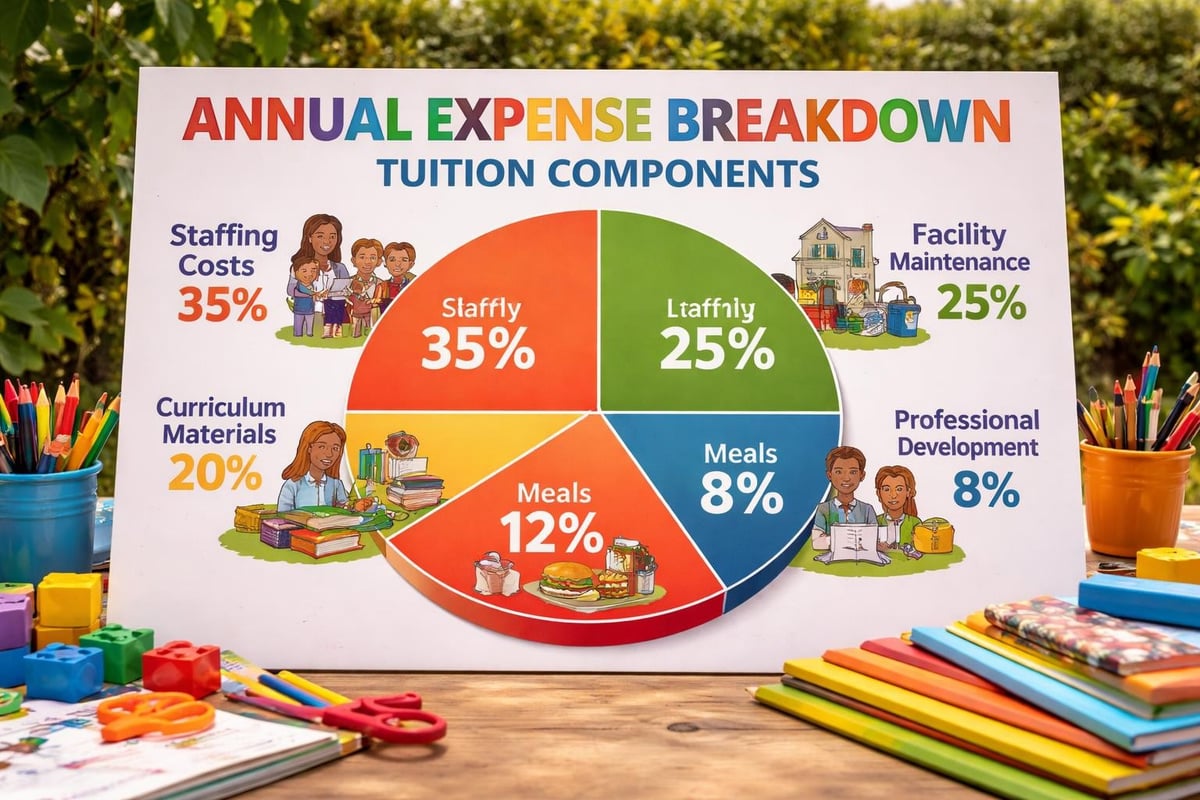
The challenge to pay for early childhood education extends beyond families to the educators themselves. Early childhood professionals earn median wages significantly below elementary school teachers, despite requiring similar qualifications in many states. This compensation gap drives high turnover rates, which ultimately affects program quality and consistency for children.
Federal Programs and Tax Benefits
Child and Dependent Care Tax Credit
The federal tax code provides meaningful relief for families managing childcare expenses. The Child and Dependent Care Tax Credit allows parents to claim 20% to 35% of qualifying expenses, depending on adjusted gross income. For 2026, families can claim up to $3,000 for one child or $6,000 for two or more children.
Eligibility requirements include:
- Care must enable parents to work or actively seek employment
- Children must be under age 13
- Care providers must be properly reported with tax identification
- Expenses cannot exceed earned income
Dependent Care Flexible Spending Accounts
Employer-sponsored Dependent Care FSAs offer pre-tax savings that reduce overall childcare costs. Employees can contribute up to $5,000 annually (or $2,500 if married filing separately), effectively lowering their taxable income while setting aside funds specifically for care expenses.
The strategic advantage comes from the pre-tax nature of contributions. A family in the 22% tax bracket saves approximately $1,100 in federal taxes by maximizing their FSA contribution, plus additional savings on state and payroll taxes.
State and Local Subsidy Programs
Child Care Assistance Programs
Every state administers child care subsidy programs funded through the Child Care and Development Block Grant. These programs help low-income families pay for early childhood education by covering all or part of tuition costs. Eligibility thresholds vary significantly by state, typically ranging from 150% to 300% of the federal poverty level.
| State Program Feature | Typical Parameters | Family Impact |
|---|---|---|
| Income Eligibility | 150-300% FPL | $41,000-$82,000 for family of four |
| Copayment | 0-10% of income | Sliding scale based on earnings |
| Coverage Period | 6-12 months | Continuous care during recertification |
| Provider Types | Licensed centers, family care | Flexibility in choosing quality programs |
Washington, D.C.’s Early Childhood Educator Pay Equity Fund represents an innovative approach by directly addressing educator compensation while maintaining affordability for families. This groundbreaking initiative works to achieve pay parity between early childhood educators and K-12 teachers.
Head Start and Early Head Start
These federally funded programs serve children from birth to age five in families meeting specific income guidelines. Head Start provides comprehensive services including education, health screenings, nutrition, and parent engagement at no cost to eligible families. Early Head Start extends these benefits to infants and toddlers, addressing critical developmental needs during the earliest years.
Emerging Compensation Initiatives for Educators
The movement to improve how we pay for early childhood education increasingly focuses on educator compensation as a quality indicator. Multiple states have launched wage supplement programs recognizing that fair pay directly correlates with program stability and child outcomes.
North Carolina’s Child Care WAGE$® Program provides education-based salary supplements ranging from $300 to $3,600 biannually. Teachers and providers receive additional compensation based on their educational credentials and position, helping retain qualified professionals in the field.
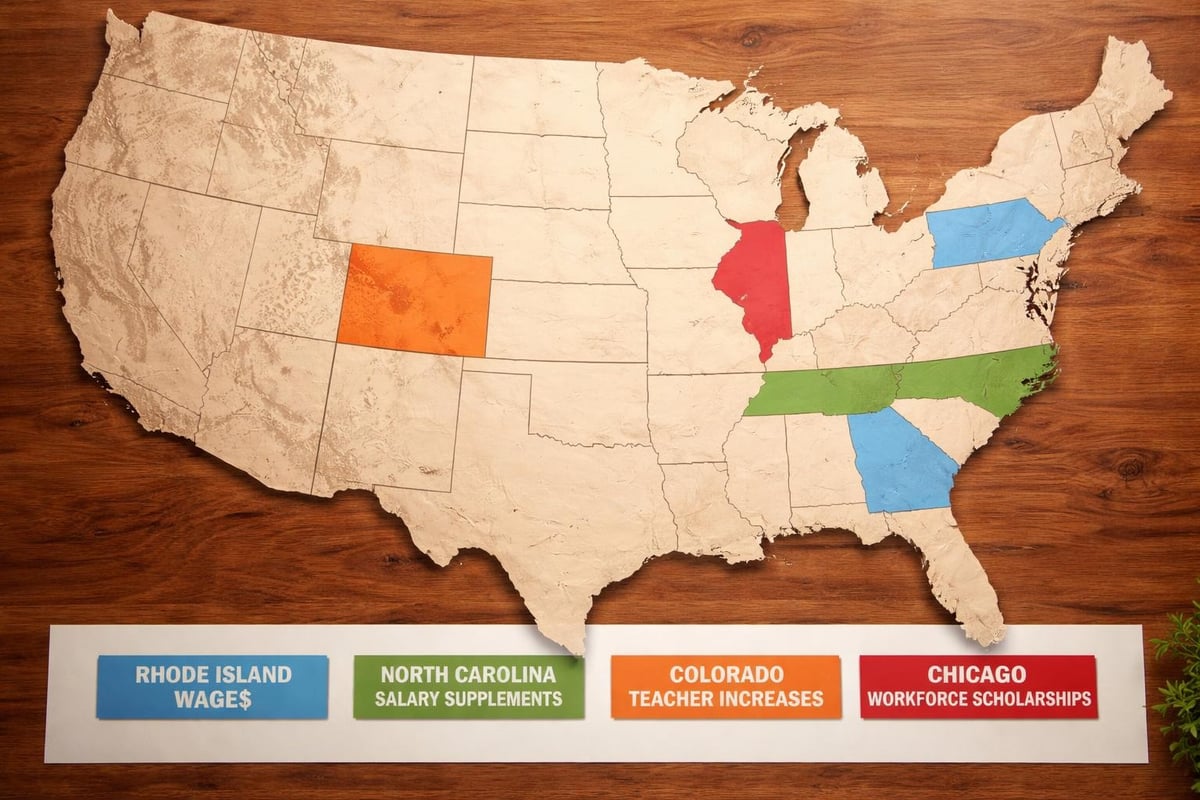
Rhode Island’s similar initiative complements base salaries with supplements tied to educational attainment and tenure. These programs recognize that investing in educator compensation represents an investment in program quality that benefits all children.
City-Level Pay Equity Movements
Urban areas are pioneering aggressive compensation reforms. San Francisco announced a landmark initiative committing up to $60 million annually to raise wages for educators in city-funded programs. This investment aims to establish competitive compensation that reflects the professional expertise required in early childhood education.
Colorado has implemented teacher salary increases specifically targeting early childhood programs participating in state subsidy programs. By supplementing educator wages, the state improves retention while maintaining tuition stability for families.
Scholarship and Workforce Development Programs
Professional Development Funding
Chicago’s Workforce Scholarship program provides financial assistance for educators pursuing higher education credentials. These scholarships reduce personal debt burdens while elevating professional qualifications across the early childhood workforce.
Typical scholarship benefits include:
- Tuition coverage for associate and bachelor's degrees
- Stipends for books, materials, and technology
- Support for credential and certification programs
- Mentorship and professional learning communities
- Career advancement planning and guidance
New Mexico’s comprehensive approach combines scholarships with pay incentives, creating a coordinated system that supports educators throughout their career trajectory. Providers can access funding for initial credentials, continuing education, and specialized training in areas like infant-toddler care or special needs support.
Employer-Sponsored Benefits and Partnerships
Progressive employers increasingly recognize childcare as a recruitment and retention tool. Companies are implementing varied strategies to help employees pay for early childhood education, from direct subsidies to preferred provider partnerships.
On-Site and Near-Site Centers
Employer-sponsored centers provide convenient, often subsidized care for working parents. While establishment costs are substantial, large employers find these programs improve attendance, reduce turnover, and enhance employee satisfaction. Some companies partner with professional childcare operators to manage facilities while providing tuition discounts to employees.
Childcare Benefits and Reimbursements
| Benefit Type | How It Works | Employer Investment |
|---|---|---|
| Tuition Subsidy | Direct payment to providers | $2,000-$5,000 annually per child |
| Backup Care | Emergency care for schedule gaps | $1,000-$2,000 annually per employee |
| Referral Services | Resources for finding quality care | $50-$100 per employee annually |
| Enhanced FSA | Employer contribution to FSA | $500-$1,500 annual contribution |
For home-based childcare providers like Step by Step Care, establishing relationships with local employers can create stable enrollment while offering working families accessible solutions. These partnerships benefit all parties by ensuring consistent care, reliable income for providers, and workforce stability for businesses.
Legislative Reforms and Future Policy Directions
The national conversation around childcare affordability has intensified, with multiple states advancing comprehensive reform legislation. Massachusetts has proposed bills aimed at making child care more accessible through expanded subsidies, increased income eligibility thresholds, and enhanced educator compensation requirements.
These policy initiatives recognize that affordability and quality cannot be separated. Families need help to pay for early childhood education, but sustainable programs require adequate funding that supports fair wages for educators. The challenge lies in creating systems where public investment bridges the gap between what families can afford and what quality programs cost to operate.
Universal Pre-K Expansion
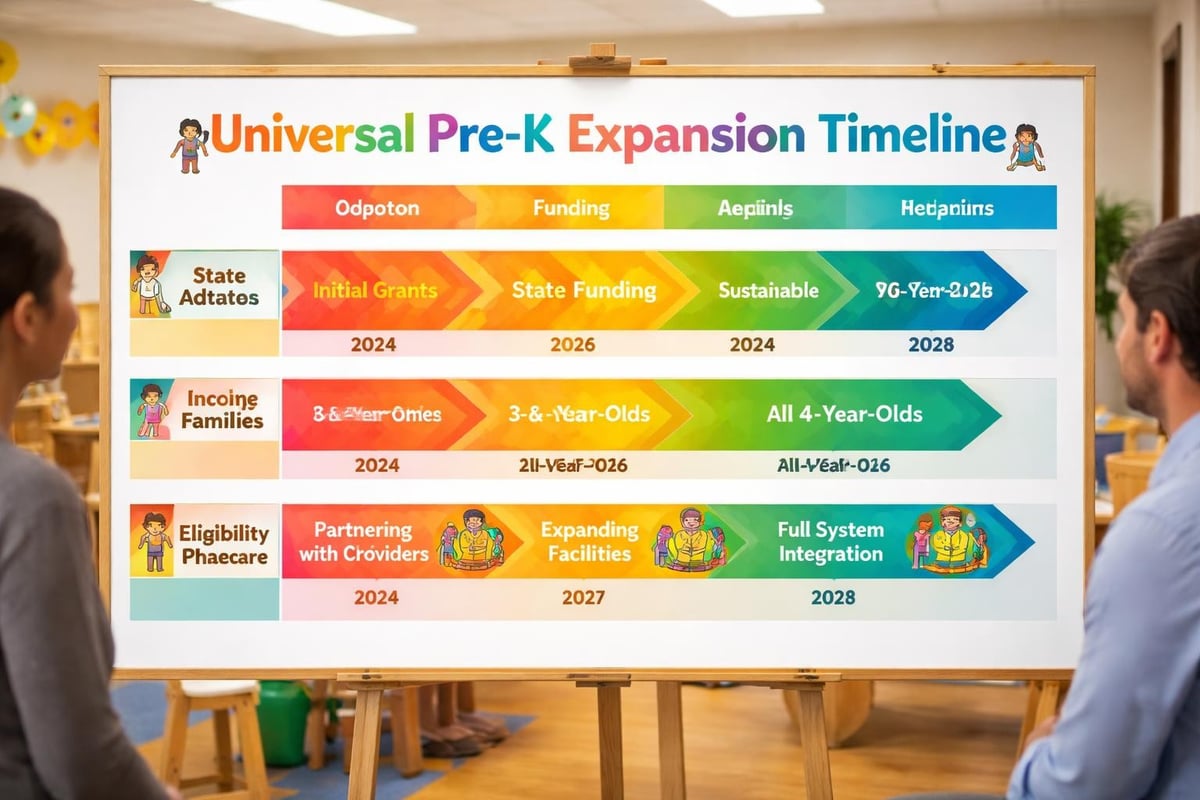
Multiple states are implementing or expanding universal pre-kindergarten programs that provide free care for three and four-year-old children regardless of family income. These programs reduce household expenses during critical years while establishing quality standards that benefit all children.
Key features of universal pre-K programs:
- Free or low-cost care for specified age groups
- Quality standards including teacher credentials
- Comprehensive curricula aligned with kindergarten readiness
- Integration with existing community providers
- Family engagement and support services
Maximizing Available Resources
Families seeking to pay for early childhood education benefit from combining multiple funding sources. Strategic planning can significantly reduce out-of-pocket costs while accessing quality programs that support child development.
Creating a Comprehensive Funding Strategy
- Determine program eligibility by researching state subsidy programs, Head Start availability, and universal pre-K options in your area
- Maximize tax benefits through proper FSA enrollment and careful tracking of eligible expenses for tax credit claims
- Explore employer benefits including subsidies, backup care, and referral services that may be available
- Investigate local programs such as community scholarships, sliding scale tuition, and nonprofit childcare initiatives
- Consider timing by aligning care needs with program enrollment periods and benefit year cycles
Quality home childcare providers often offer more flexible payment structures than larger centers, including sibling discounts, part-time options, and customized schedules that help families manage costs while receiving personalized attention.
Supporting Both Families and Educators
The tension between affordability for families and fair compensation for educators creates a fundamental challenge in early childhood education. Sustainable solutions require recognizing that public investment serves both constituencies while benefiting society through improved child outcomes and workforce stability.
The Economic Argument for Investment
Research consistently demonstrates that quality early childhood education generates substantial economic returns. Every dollar invested yields an estimated $4 to $9 in long-term benefits through improved educational outcomes, higher lifetime earnings, and reduced social costs. When we adequately pay for early childhood education, we invest in human capital development that strengthens communities for decades.
Parents searching for quality care should consider providers who demonstrate commitment to professional development and educator retention. Experienced, well-compensated educators provide more stable, nurturing environments that support optimal child development. Understanding what parent reviews reveal about program quality helps families identify providers who balance affordability with excellence.
Making Informed Provider Decisions
Selecting a childcare provider involves balancing cost considerations with quality indicators. Families should evaluate multiple factors beyond price when determining how to pay for early childhood education and where to invest those resources.
Essential quality indicators include:
- Educator credentials and ongoing professional development
- Staff turnover rates and tenure
- Adult-to-child ratios below state minimums
- Comprehensive developmental curriculum
- Strong communication and family engagement practices
- Safe, stimulating learning environments
- Positive reviews and community reputation
Home-based providers often deliver exceptional quality at more accessible price points than center-based care. Smaller group sizes, individualized attention, and family-like environments provide developmental benefits that larger settings may struggle to replicate. Families can learn more by exploring provider backgrounds and understanding their educational philosophy.
Navigating the Application Process
Accessing subsidy programs and assistance requires careful attention to application requirements and documentation. Families should begin the process well before care needs arise, as approval timelines vary from several weeks to several months.
Required Documentation Typically Includes
| Document Category | Specific Requirements | Purpose |
|---|---|---|
| Income Verification | Pay stubs, tax returns, benefit statements | Establish financial eligibility |
| Employment Status | Work schedules, offer letters, school enrollment | Confirm qualifying activities |
| Family Composition | Birth certificates, custody agreements | Determine household size and needs |
| Residency | Utility bills, lease agreements | Verify local program eligibility |
Many states have streamlined applications through online portals that guide families through requirements and provide real-time status updates. Maintaining organized records throughout the process ensures smooth approval and timely recertification when required.
Navigating how to pay for early childhood education requires understanding the complex landscape of subsidies, tax benefits, employer programs, and emerging policy initiatives. By combining available resources strategically, families can access quality care that supports child development while ensuring educators receive fair compensation for their professional expertise. If you're seeking a home childcare environment that balances quality with accessibility, Step by Step Care provides experienced, nurturing care with flexible solutions tailored to your family's needs.


